



580 California St., Suite 400
San Francisco, CA, 94104
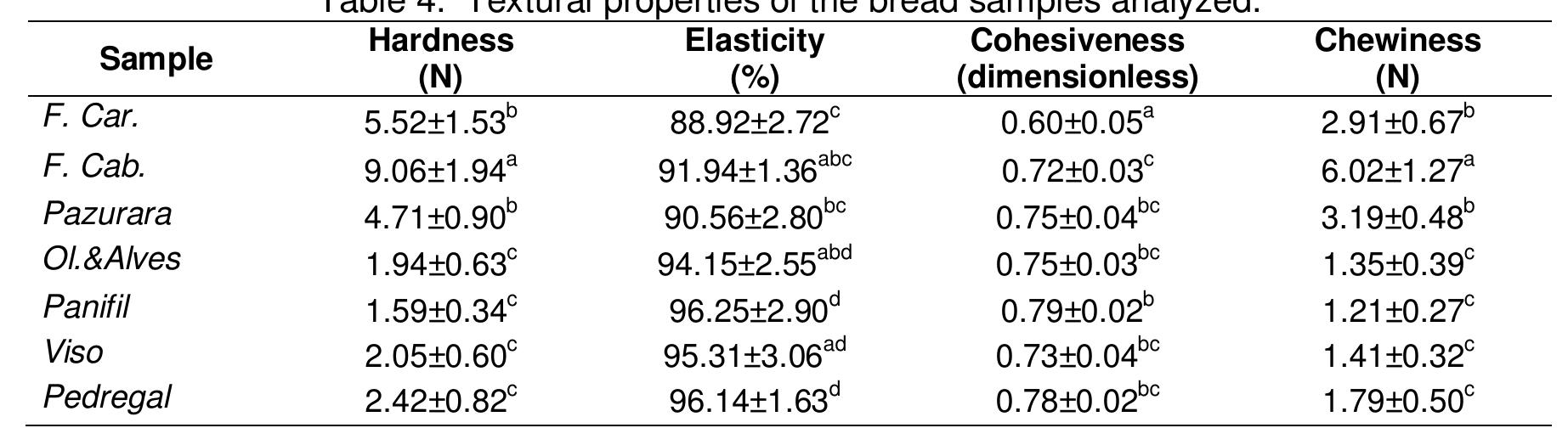
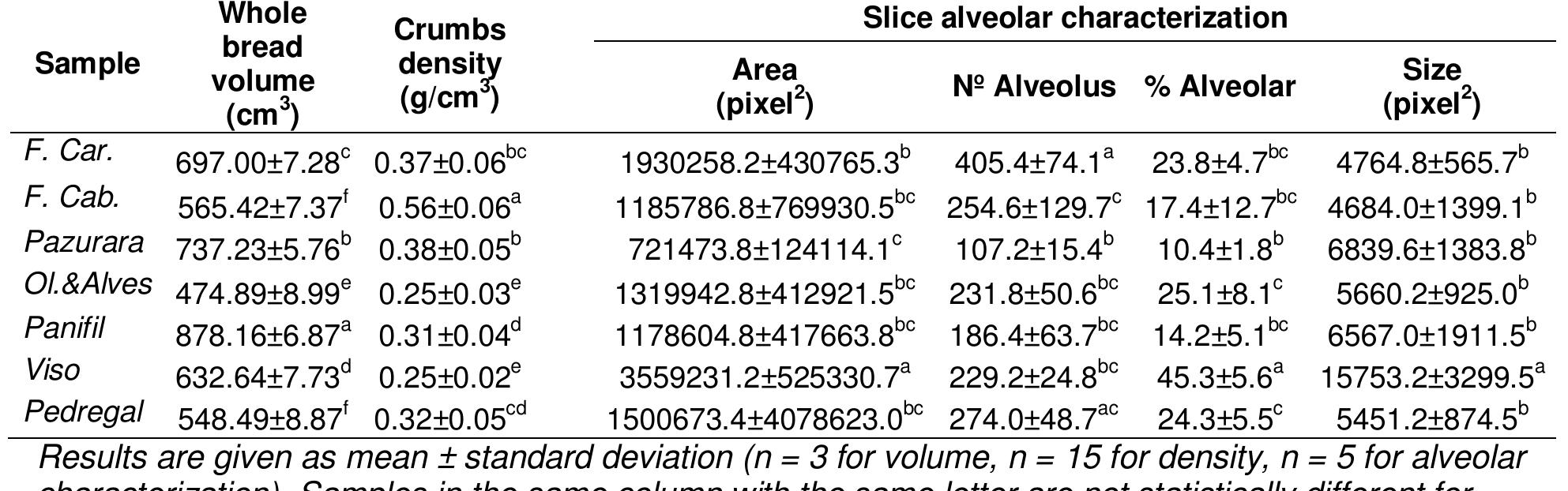
Results are given as mean + standard deviation (n = 7). Samples in the same column with the same letter are not statistically different for p>0.05. By analyzing the results of textural properties in Table 4., it was found that in general the samples are very similar. The parameters chewiness and hardness in the sample from Flor de Cabanas are higher, which might be explained by the higher density as previously reported. In terms of cohesiveness and elasticity, it was the sample from Panifil that showed the highest values.
Figure source:
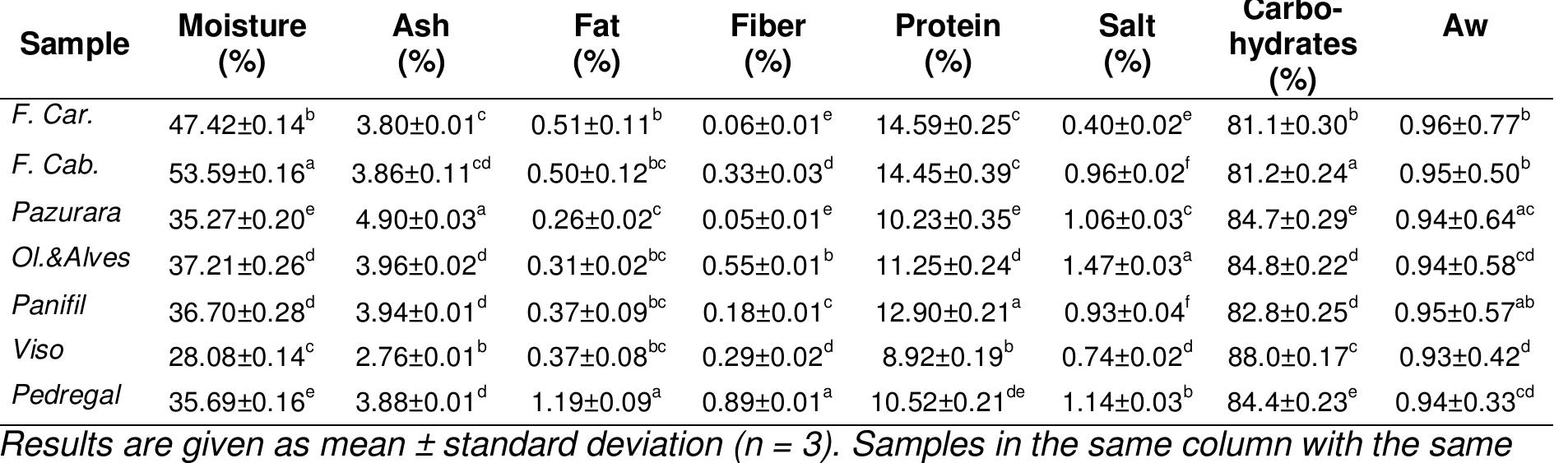
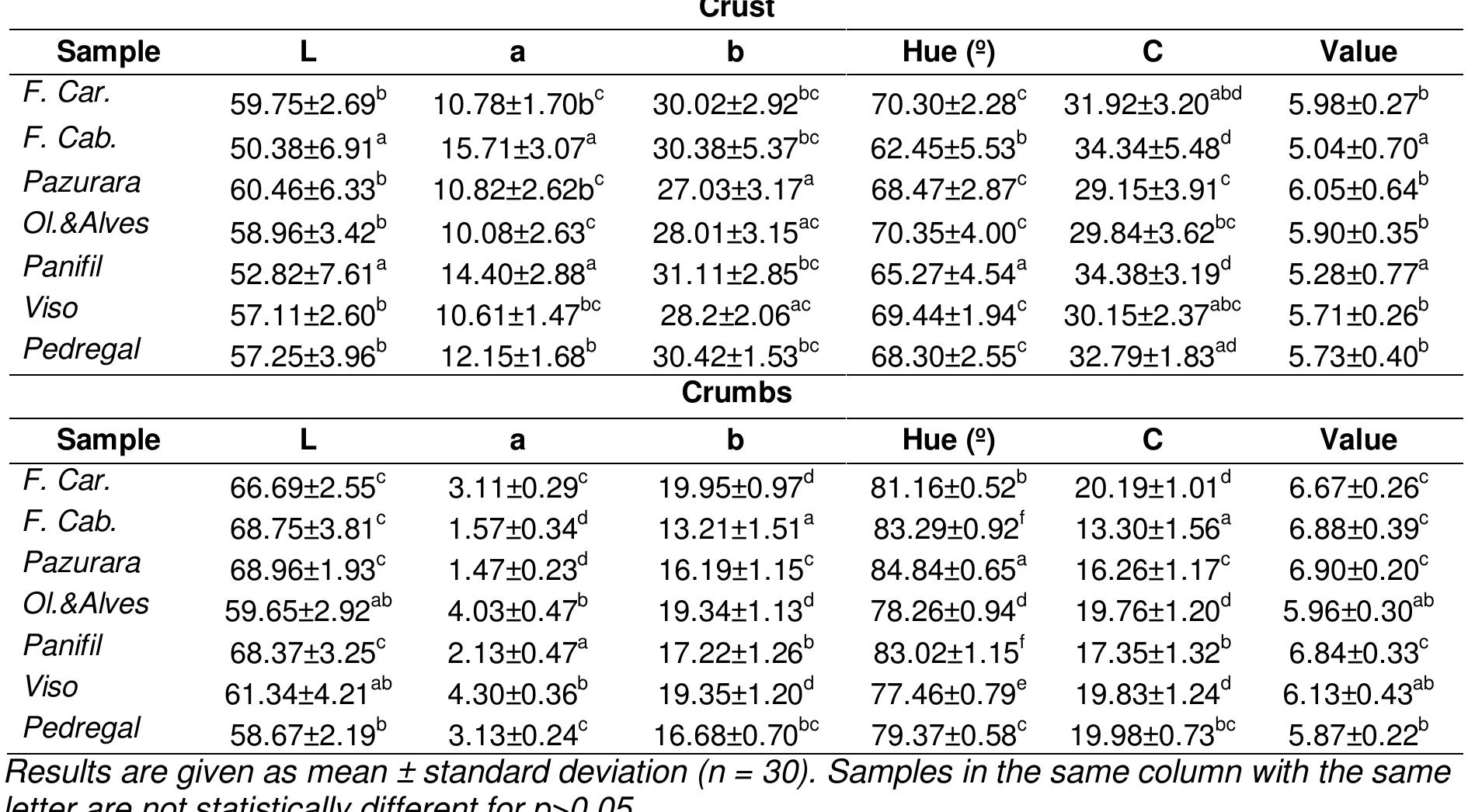
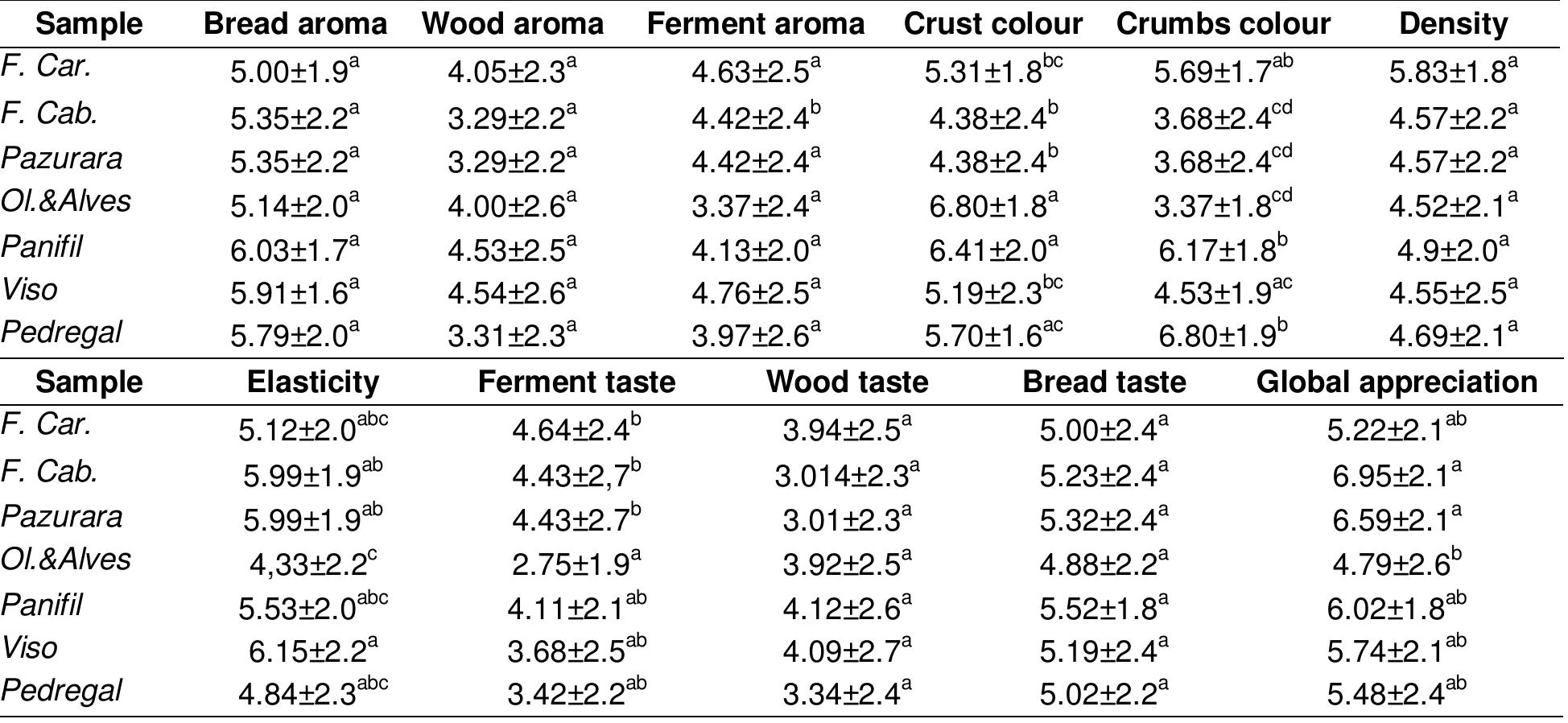
Abstract: The aim of this study was to characterise the most typical flour mixture bread (wheat flour and rye flour) produced in the Portuguese region of Viseu and evaluate if there are relevant differences between the samples tested. Nine samples from local producers were analysed considering the morphology, physicochemical (density, alveolus percentage, texture, colour and water activity) and sensorial properties. The form and dimensions of all breads were determined, as well as proximate composition and total salt content. The forms of the breads were different, some round and others long. Nutritionally this type of bread turned out to be a food with high nutritional value, high percentage of ash (2.8-4.9%) and low values of fat, with a high range of salt content (0.4-1.4%). The physical properties were quite different between samples, although some of them are not perceptible by the consumer. This was the case of bread density whose results were 0.25-0.56 and the sensorial panel, constituted by a panel of 40 untrained tasters aged 7 to 63 years, did not find any difference. The traditional breads presented overall appreciation between 4.8 and 6.8, related with different colour and elasticity parameters.
