Abstract: In the past, Ancient Egyptian medicinal prescriptions have been the focus of research by scientists from a variety of disciplines, especially
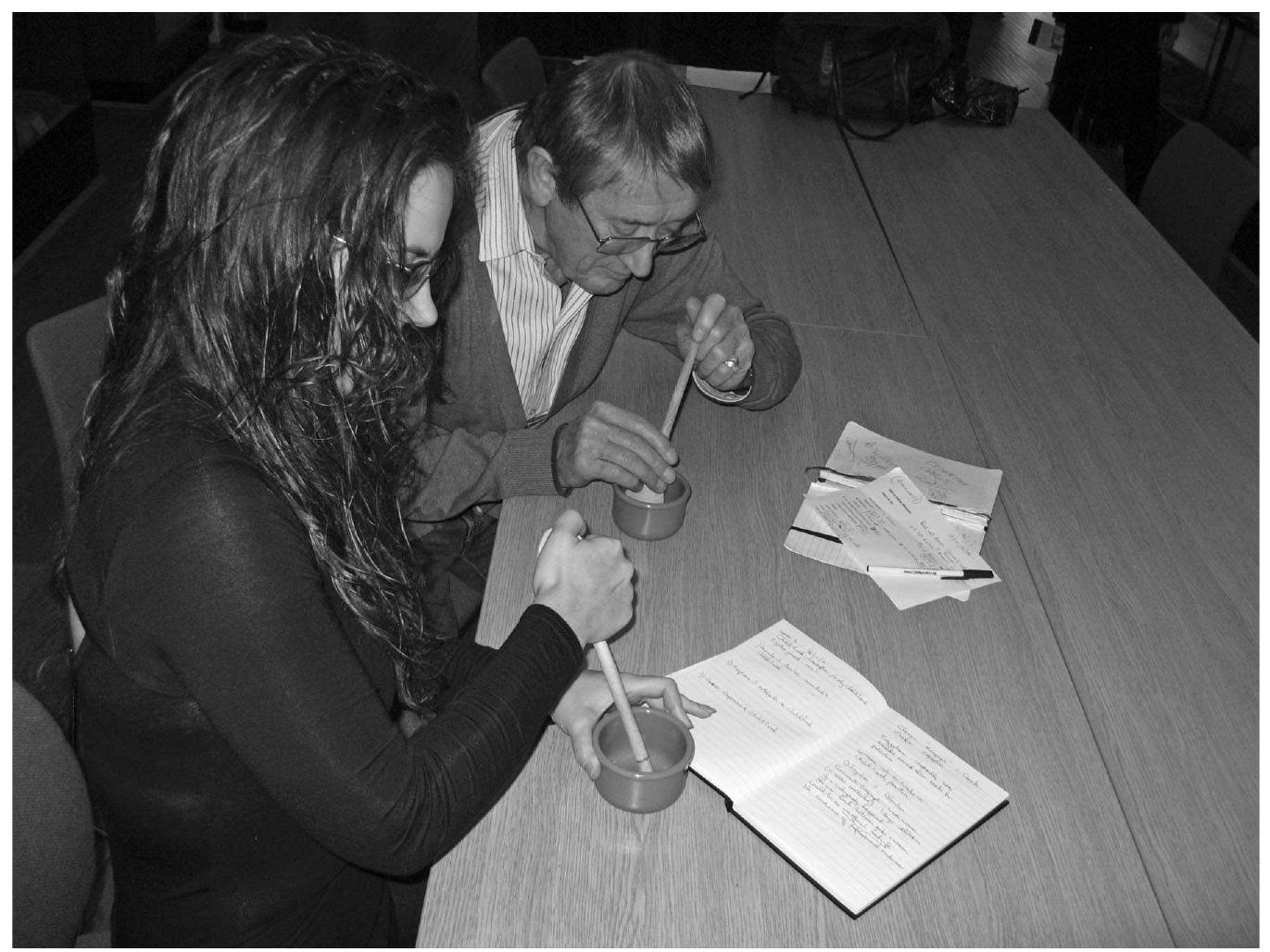
Egyptologists, historians of science, physicians, biologists, and pharmacists. Their work considers, in most cases, today’s natural scientific perspective, namely the question whether a remedy may have had an effect in a ‘modern’ sense. Some of the lexicographical works concerning drug or symptom names, are based on such a correlation, proposing a drug or disease name for an untranslatable word in a prescription by evaluating the indications and looking for effective drugs, which could have been available in Ancient Egypt. This paper points in the opposite direction. The aim is to introduce new methodological tools to gain an emic, namely an insider’s, perspective on medicinal prescriptions, by applying an experimental-archaeological perspective and by focussing on manufacturing processes, its terminology and its interrelations with ingredients, symptoms and patients. The paper starts with a pharmacological and philological examination of a prescription against worms, questioning its conventional translation. Afterwards, the new approach is introduced. With the help of three concrete recipe examples, semantic and process-oriented readings of prescription texts as medical re-enactments of symptoms and healing processes will be demonstrated. As a result, we will achieve conceptual structures in order to recover features of previously philologically undetermined drugs and symptoms, and new perspectives that will help to broaden our knowledge of the concepts of Ancient Egyptian ‘physiology’ and ‘pathophysiology’.