



580 California St., Suite 400
San Francisco, CA, 94104
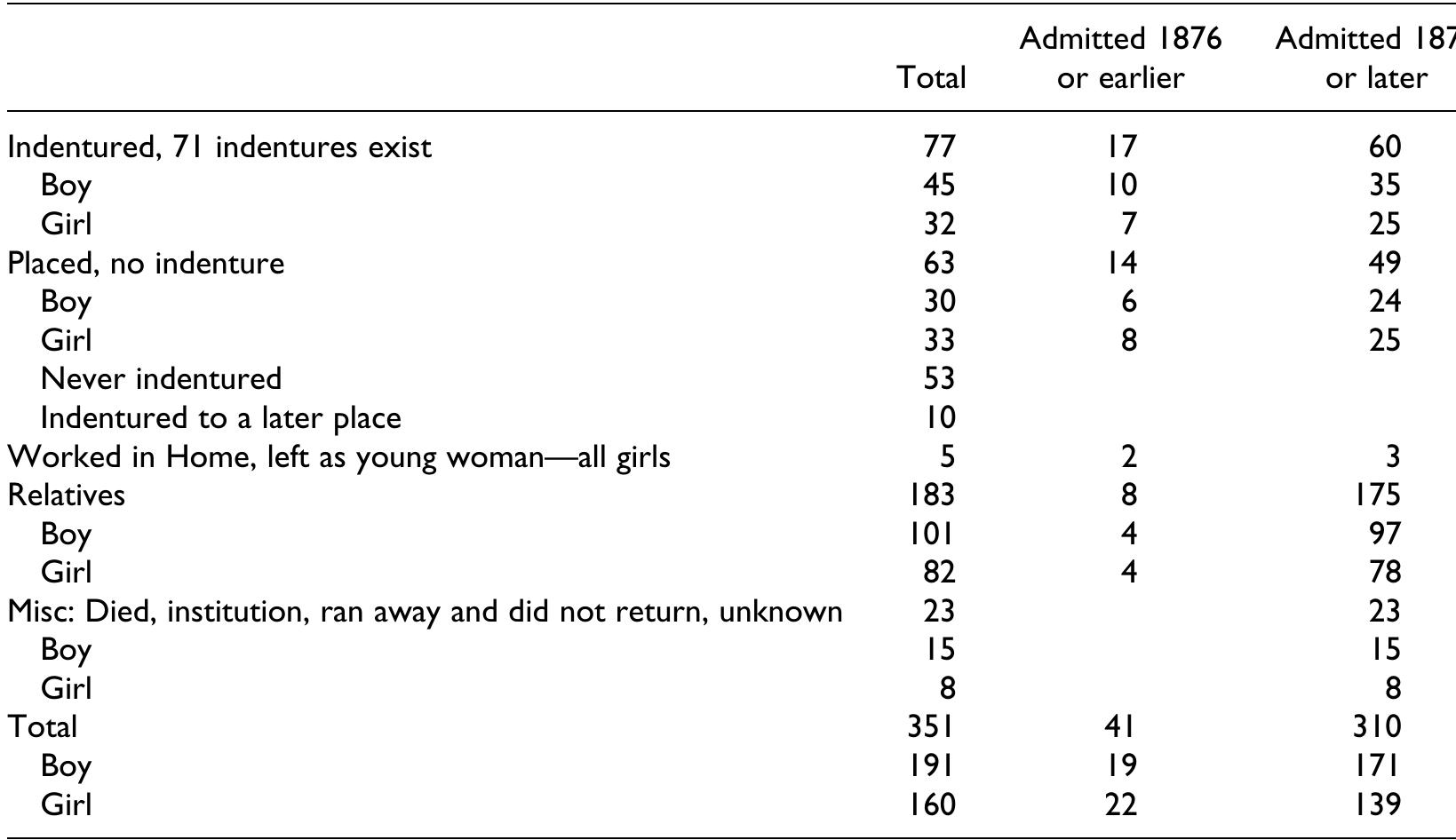
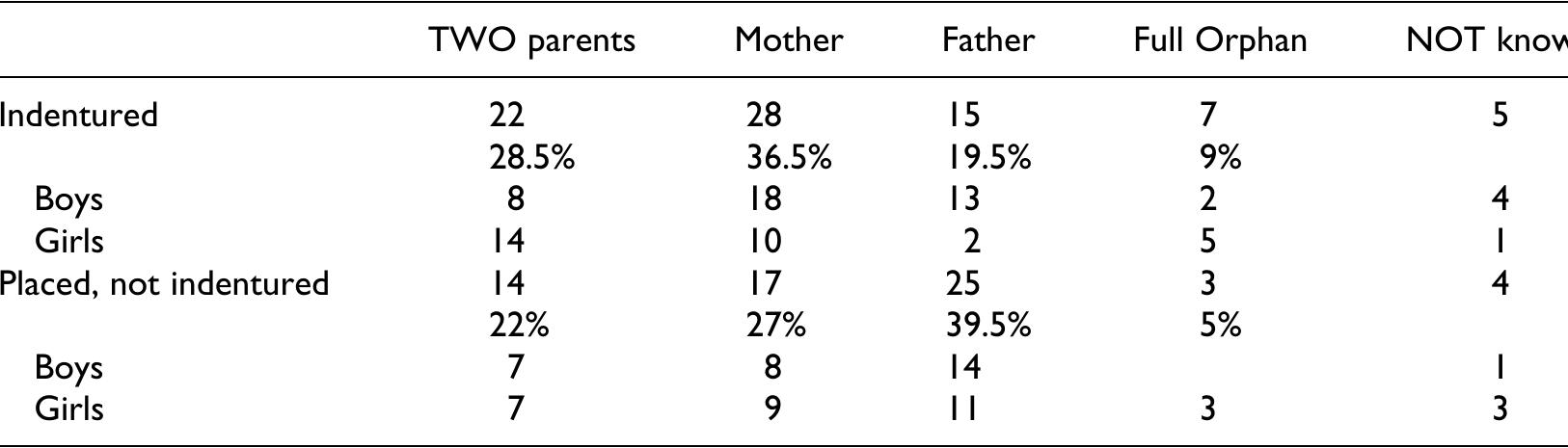
Indentured versus Placed Why did so many children continue to be placed without indentures? One explanation could be that some indentures have not survived. Since six children were apparently indentured although no indenture exists, and since for twenty-three children the only evidence that they were indentured is the form, it is probable that some children were indentured without any evidence surviving in the Home’s records. It is also possible that the Home at the request of the masters returned or destroyed signed indentures when the placement failed, although there is no evidence of this.
Figure source:
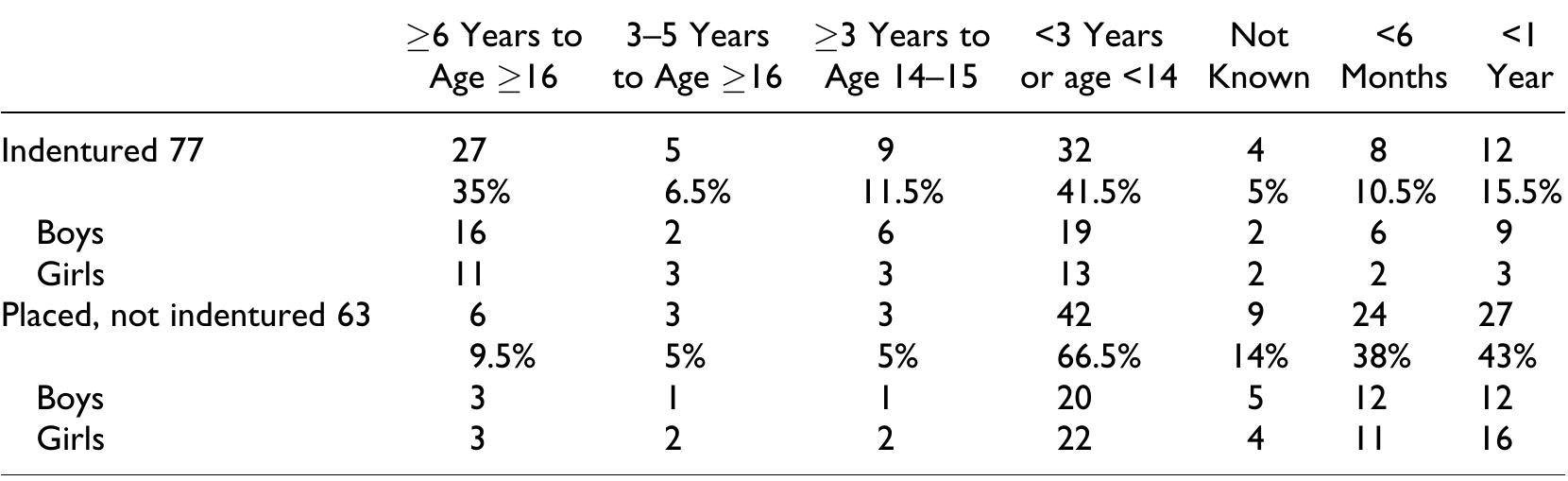
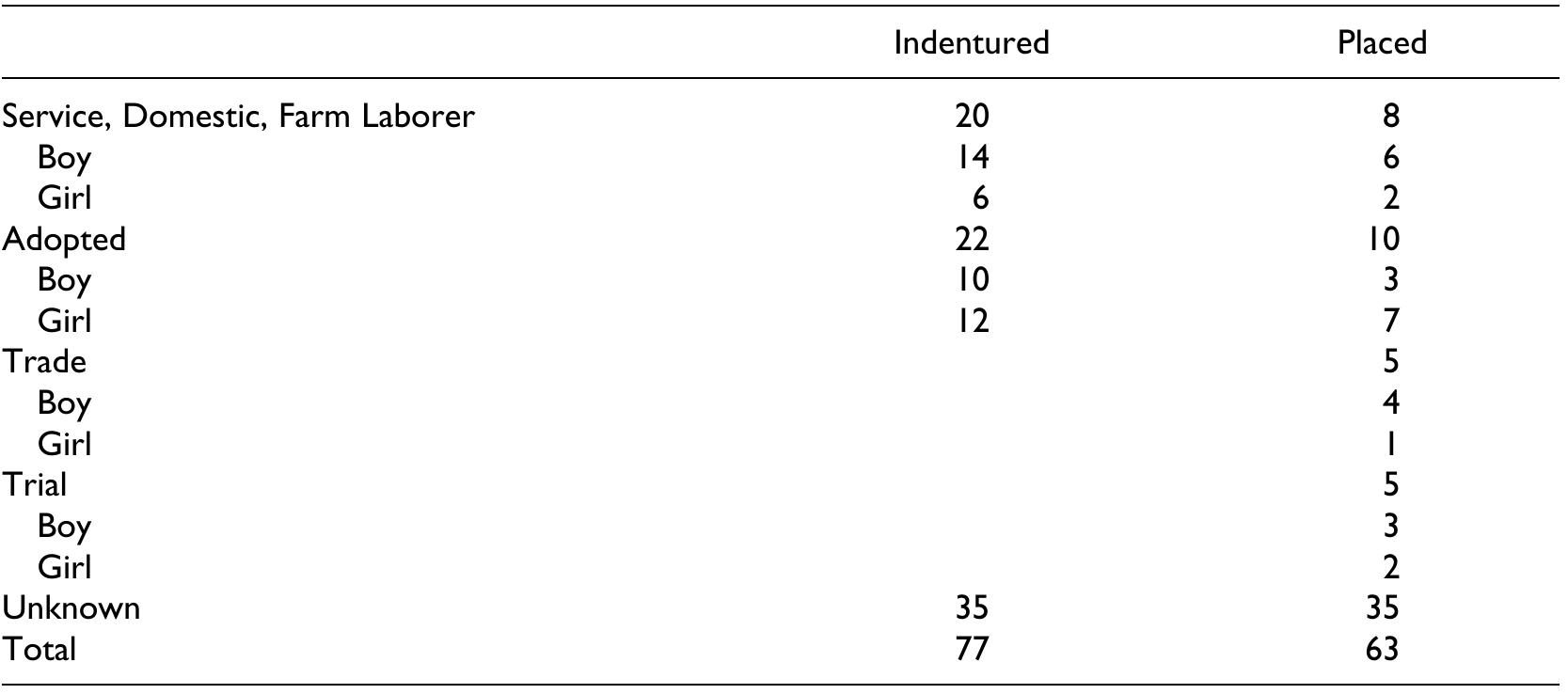
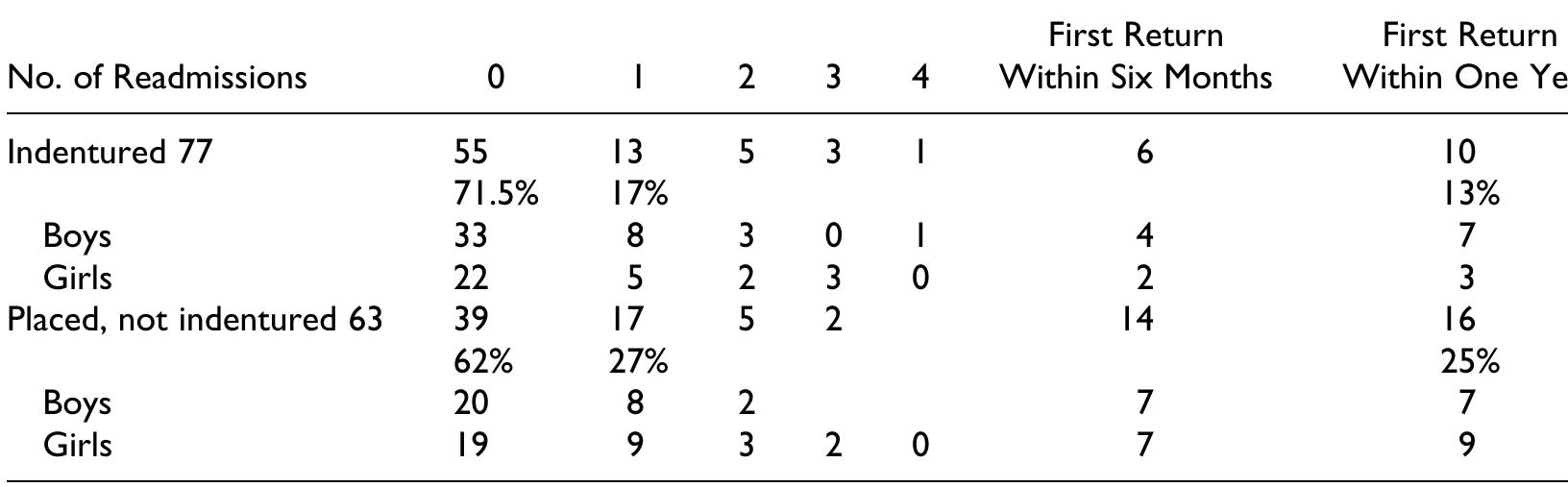
Abstract: In December 1876, the Kingston Orphans' Home adopted an indenture form to be used for children placed out in private homes. From December 12, 1876, to May 31, 1894, 140 children were placed on their first discharge from the Home, but only 77 were apparently indentured. The background and experiences of the two groups and of children placed by the Home from 1857 to 1876, as recorded in the Home's records and in Census, birth, marriage, and death records, are compared to determine the indentures' effectiveness in achieving better placements and greater stability for the children. Keywords Kingston (Ontario) Orphans' Home, pauper apprenticeship, indentured children, orphanages nineteenth-century Ontario, dependent children The term pauper apprenticeship has been adopted by academics to describe a relationship created by written indentures to bind dependent children, including orphans and poor, neglected, and abandoned children of all ages to the age of sixteen to twenty-one. While the indentures were roughly modeled on trade apprenticeship indentures, their purpose was quite different, although this varied over time and between places. The relationship had its origins in the sixteenth century under the English Poor Law, under which it was systematically used by urban poor law authorities to relieve their communities of the burden of supporting poor children. However, in England during the industrial revolution, it came to be used primarily for older children entering the work force to provide cheap labor, often in factories a considerable distance from the children's homes, rather than for young children in need of homes. 1 In the 1830s and again starting in 1869, large numbers of children were instead sent to the colonies, including Canada, far from their homes and families where again they were commonly indentured by the immigration agencies. 2 Indentures were also extensively used in early America by poor law overseers and later by children's institutions; these indentures generally required the children be provided with room and board, be taught to read and write, and at the end of their term to be given significant property,
