Academia.eduAcademia.edu

Figure 1 - from "Enabling Adaptivity in User Interfaces"

See full PDFdownloadDownloadfigure

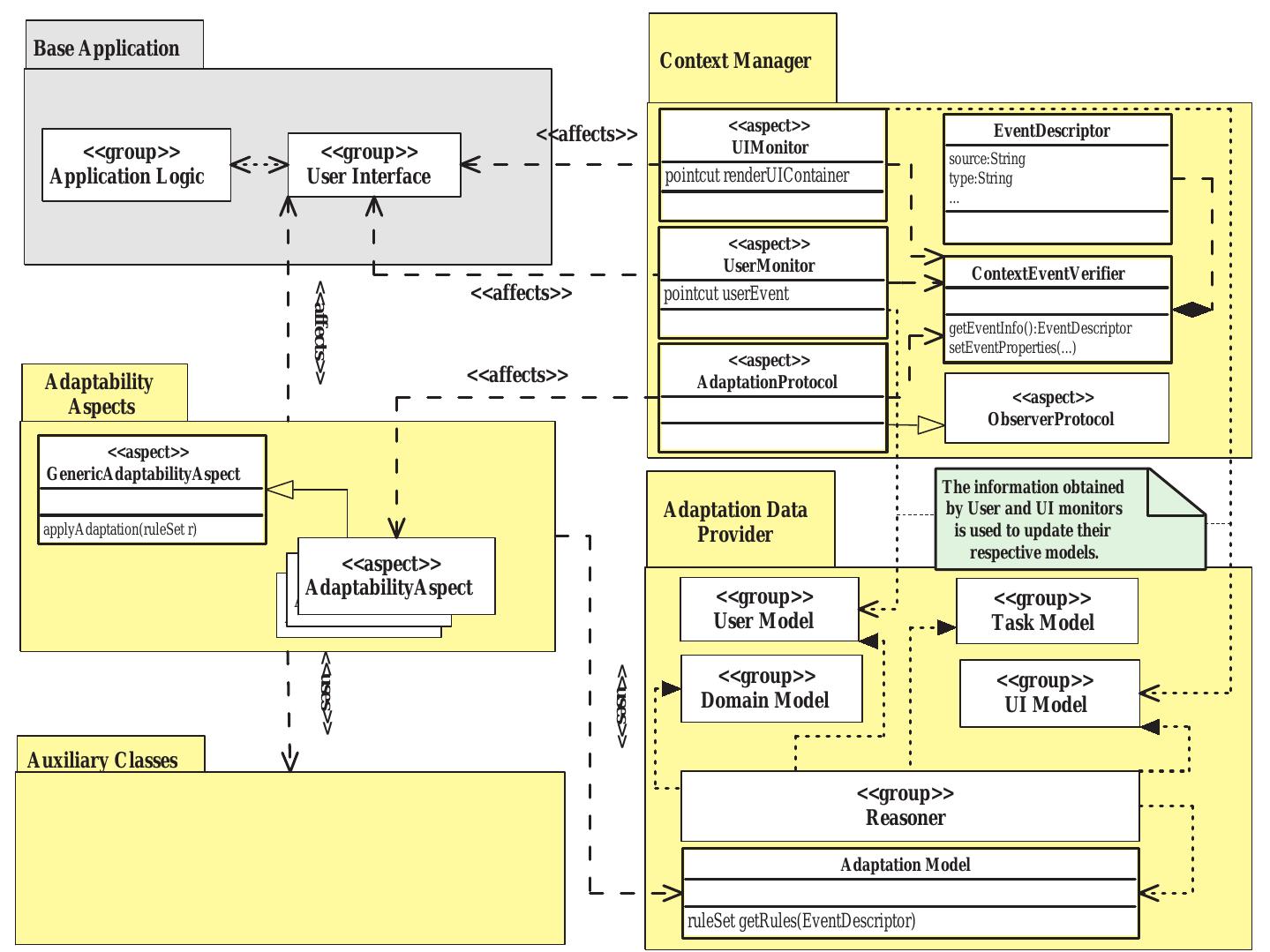
Fig. 1. Framework Architecture. Stereotypes <<affects>> and <<uses>> are used in some dependency relationships to represent classes whose behavior is monitored or changed by an aspect, or those used as auxiliary classes by an aspect, respectively.

subdirectory_arrow_right

Figure source:

Fig. 1. Framework Architecture. Stereotypes <<affects>> and <<uses>> are used in some dependency relationships to represent classes whose behavior is monitored or changed by an aspect, or those used as auxiliary classes by an aspect, respectively.
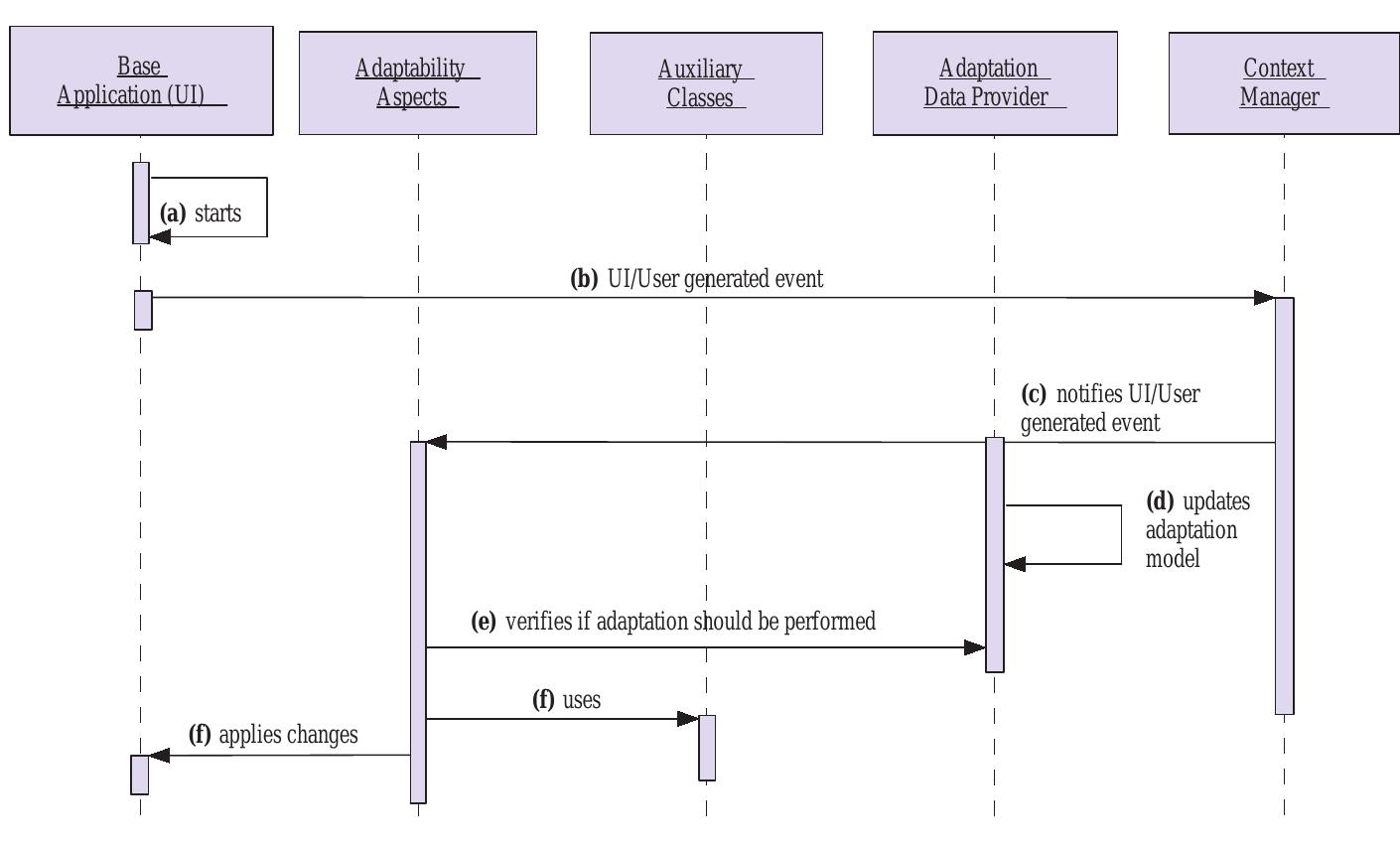
Fig. 2. Dynamics of the process followed for UI adaptation.
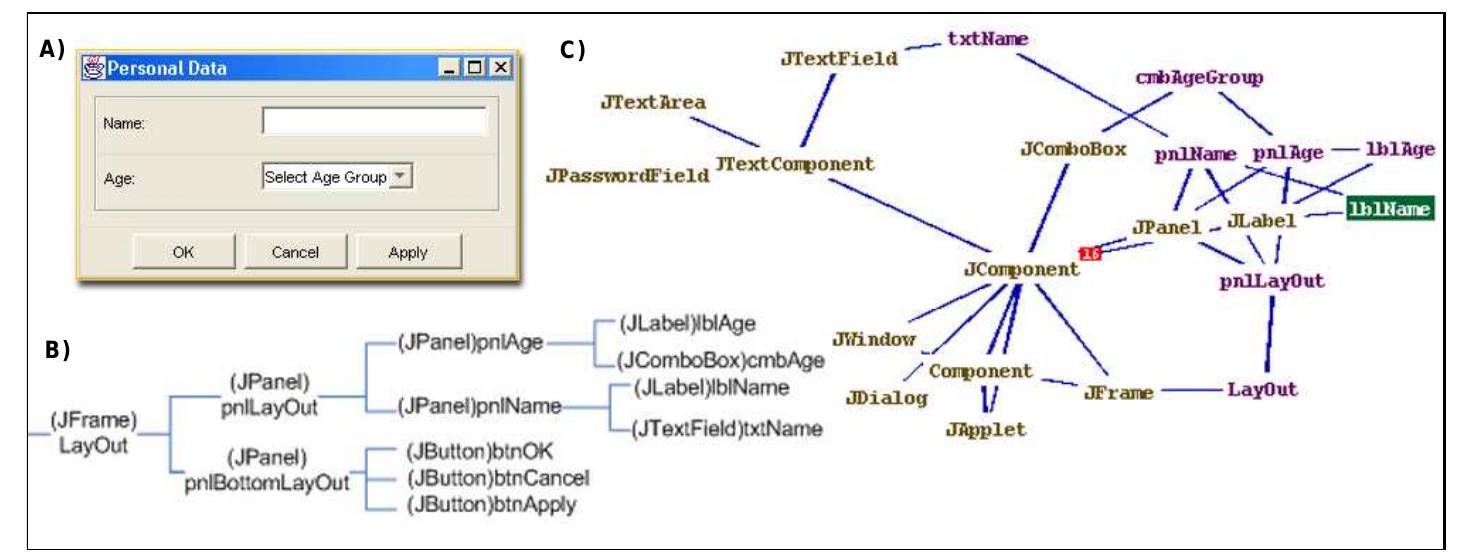
Fig. 3. A) Sample application dialog.B) Component hierarchy.C) Lattice representa- tion of the UI Model ontology extended with the component hierarchy from the dialog.  The Adaptation Data Provider produces appropriate corres between user action and UI adaptation. This module enables the  pondences system to  appropriately process the information which has been previously acquired. In  order to represent UI components, the framework uses UI-specific onto domain-specific ontologies for representing the application’s domain.  ogies, and Semantic  information present in components is used to establish relations between UI  and domain-specific ontologies. For the task model, we integrate a tas based on ConcurTaskTrees [16], which is a hierarchical notation which  k ontology allows the  specification of (sub)tasks or nodes that need to be performed to successfully  complete a task.

Abstract: The development of adaptive user interfaces has traditionally been restricted to research prototypes and few commercial products. Although there have been relevant achievements in the architectural support for self-adaptive context-aware systems [3, 19], the notion of context commonly supported is restricted and does not explicitly contemplate the facets of context related to user-application interaction. Furthermore, applications need to comply with the proposed architectures, making the incorporation of adaptivity more difficult (or not possible at all) in the case of already existing applications. This work addresses key issues for the incorporation of self-adaptive behaviour in GUI-Based applications, and proposes an aspect-based framework in order to overcome current limitations.