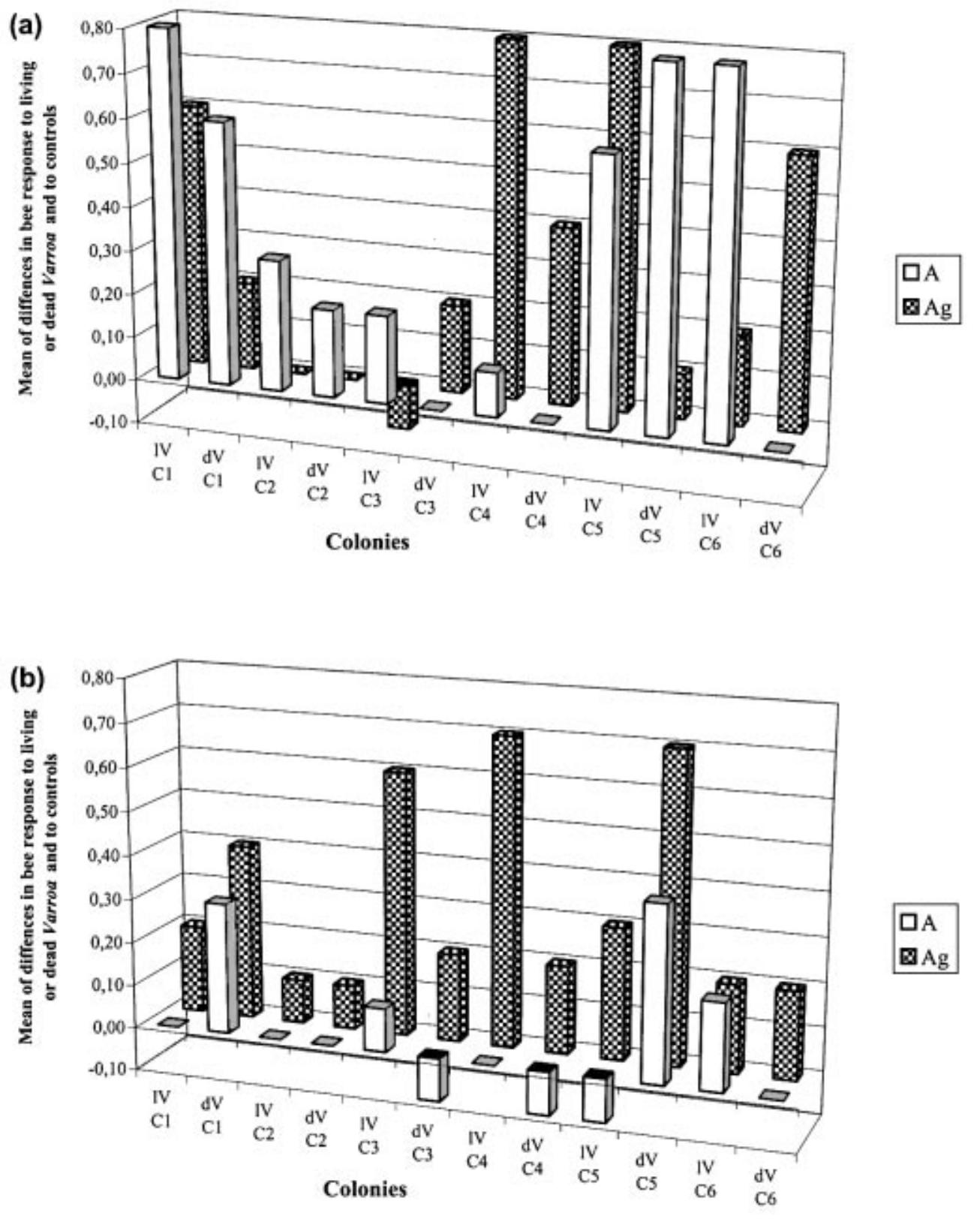
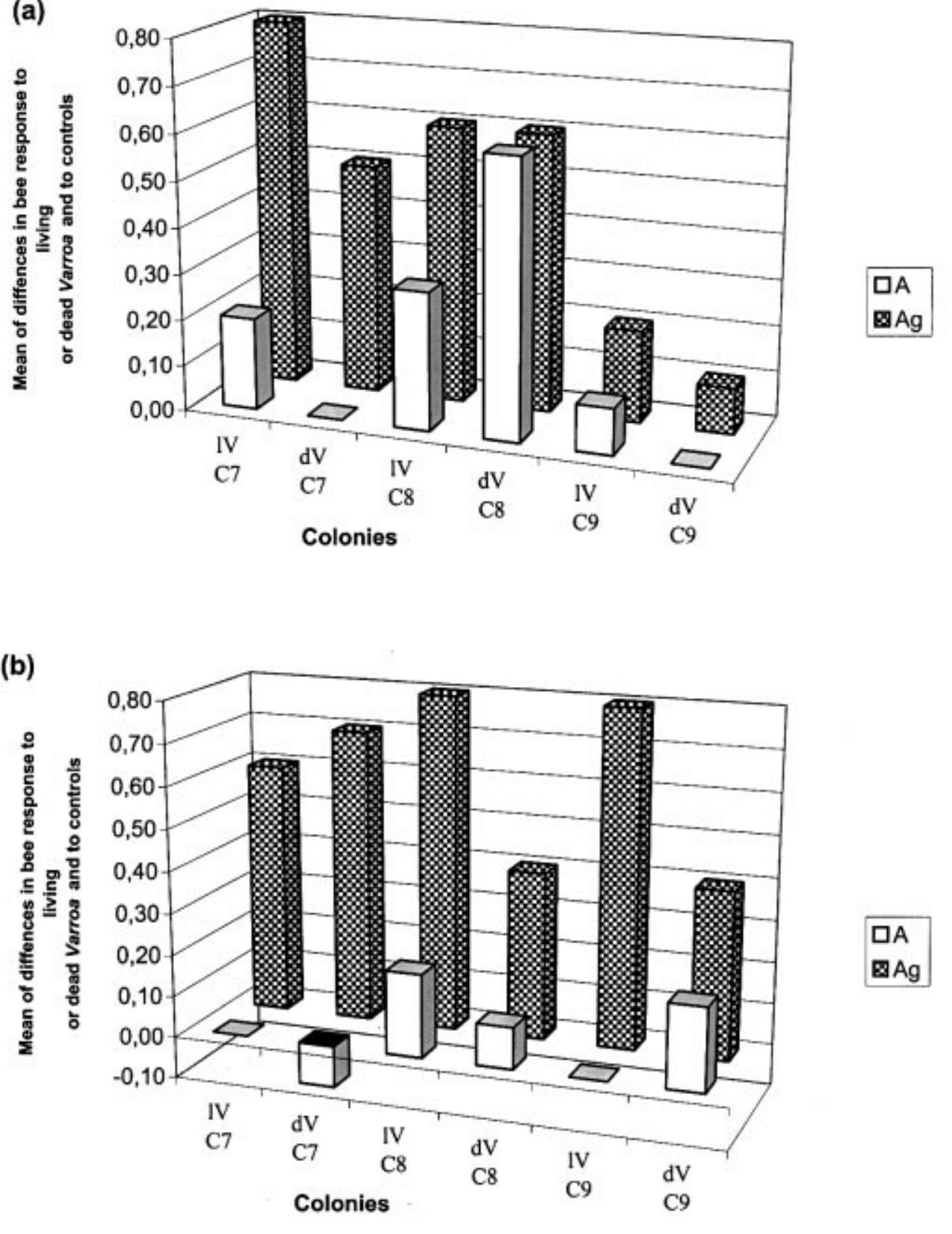
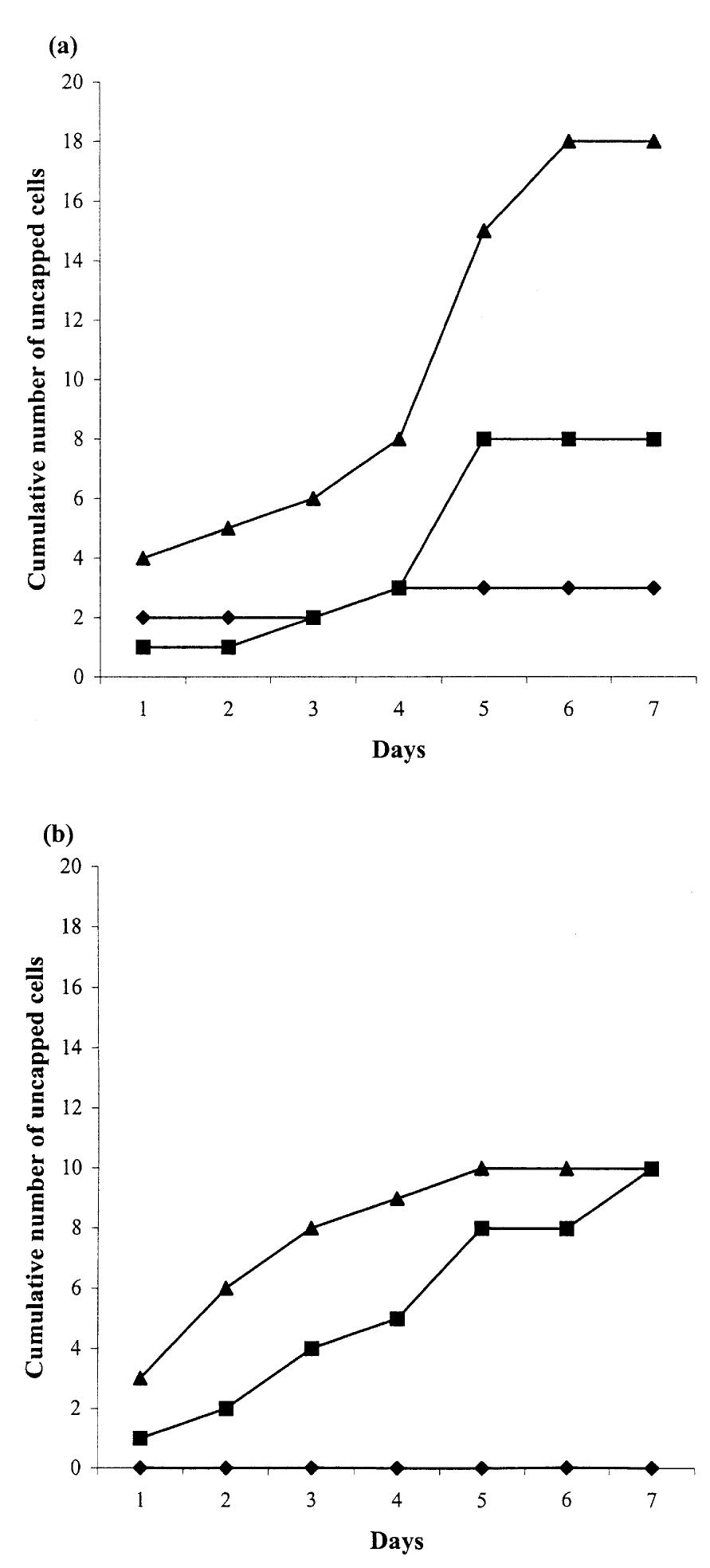
Fig. 1. Grooming behaviour. Mean differences in bee response to Varroa attached to wax balls and control wax balls with no Varroa. Antennation with (Ag) or without (A) aggressive behaviour in tests confronting bees from set A colonies with living (IV) or dead (dV) Varroa attached to a wax ball (a) or a bee (b).
subdirectory_arrow_right Figure source:
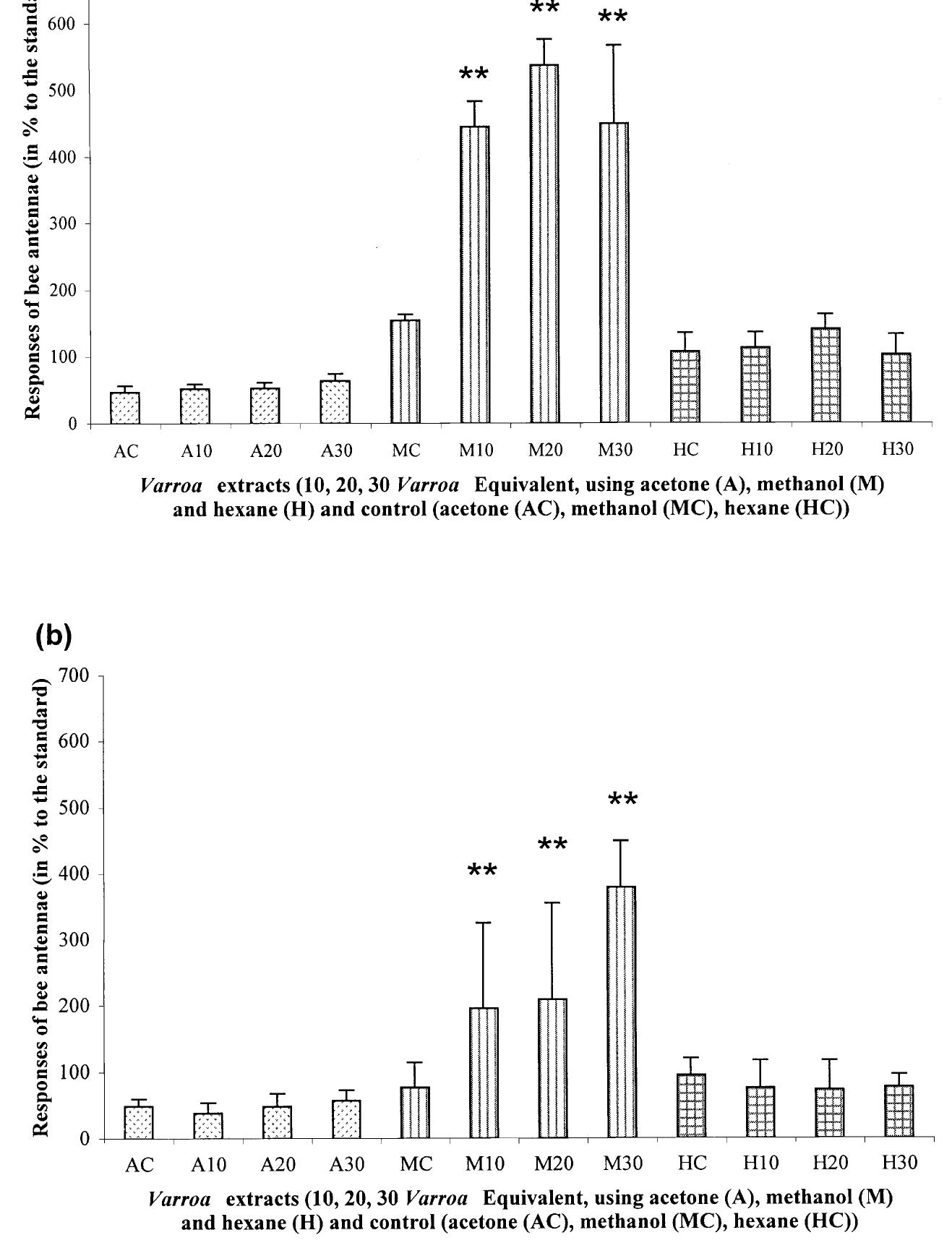
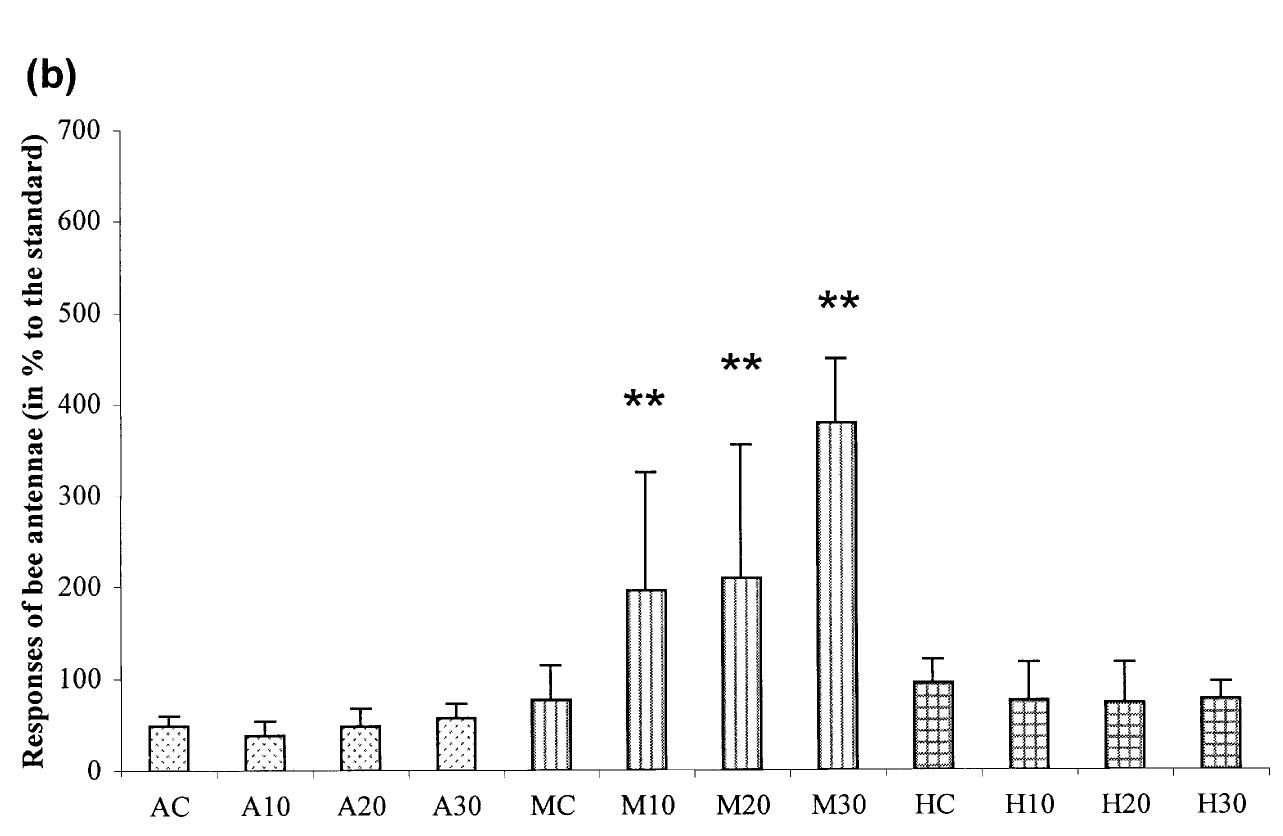
Abstract: One way in which Apis mellifera honey bees resist Varroa destructor is by detection and elimination of nestmates. This study uses behavioural tests and electroanntennography to assess the role of chemostimuli in recognition by honey bees of this acarian ectoparasite. Behavioural tests using living or dead parasites involved observation of honey bee grooming activity (antennation) under controlled conditions in Petri dishes, and removal behaviour (uncapping and elimination of parasitized and unparasitized control brood cells) under natural conditions. Some bees from colonies with both small and large parasite populations showed aggressive behaviour (biting). No difference was observed according to whether the mite was dead or alive. Under natural conditions, bees uncapped more parasitized cells than control cells. Electroantennographic tests were performed to measure sensitivity to various Varroa extracts at three concentrations (10, 20 and 30 Varroa Equivalents). Only 30 Varroa Equivalent methanol extracts made from Varroa collected from brood cells elicited signi®cantly greater antennal response than controls (pure solvent). All three methanol extracts elicited signi®cantly greater antennal response than controls. No response was observed using Varroa extracts made with acetone or hexane. These ®ndings suggest that polar products may act as chemostimuli for recognition of V. destructor by honey bees. Further study will be necessary to determine which polar products are involved in this recognition and assess grooming and removal behaviour using these products.
... Read more Related topics:
Botany Physiology Zoology Biology Physiological Entomology Honey bee Honey Bees Varroa destructor Related Papers Abstract: Varroa destructor is one of the main causes of colony losses of the western honey bee (Apis mellifera). Many efforts exist to breed honey bees resistant to V. destructor. Varroa sensitive hygiene (VSH) is a commonly selected behavioural trait; VSH workers remove the pupae of mite infested brood cells with high efficiency, interrupting the reproduction of the mite. The cues and triggers for this behaviour are not yet fully understood. To determine what elicits this removal behaviour, we examined preselected VSH workers´ responses to four different groups of objects inserted into freshly capped cells: live mites, dead mites, odour reduced mites, and glass beads. These were also compared to control cells that were opened and closed without inserting any object. The pupae in cells containing inorganic objects (glass beads) were removed at similar rates to the control, demonstrating that an object alone does not trigger a removal response. Dead and odour reduced mites were removed at a higher frequency than control cells, but less frequently than live mites. Workers sometimes removed items resting near the top of the cell without removing the pupa. Our results demonstrate that although mite odour from dead mites triggers removal behaviour, the pupa of cells containing live mites were removed more frequently, suggesting that other cues (i.e. odour from feeding wound) or signals (i.e. pupal movement to signal distress) are important. Future research should focus on elucidating these other cues or signals from the brood and mites, as mite presence alone seems to be insufficient.
... Read more
Abstract: The mechanical defense behavior of honey bee workers (Apis mellifera carnica) against varroa infestation including Grooming and hygienic behaviors were tested after treated honey bee colonies by an essential oil and chemical acaricides to evaluate how effects occurred to reduction varroa mite population with conception role of the sensory behavior. The sensillae organs were determined, counted on the 10 flagellomeres and photographed by the Scanning Electron Microscope (SEM). The results revealed presence 4 categories character to biting varroa body. These behaviors began to produce after 12 consecutive treatments, that faster 2 months than untreated bee colonies. Total numbers of the fallen dead varroa mites and the removal behavior of the dead worker brood cells were higher with formic acid treatment followed with black cumin seed oil. Thus increased as the treatments period increased, reached their maximum effects after 20 treatments. The Grooming behavior leads to decrease mite population at low levels. There were force relationship between different treatments and sensation responses. Little negative effects on the sensilla organs were detected with formic acid application began to produce after 32 treatments. These treatments increased some biological activities of bee colonies.
... Read more
Abstract: Varroa mite, Varroa destructor is the most important ectoparasite of the honey bee, Apis mellifera worldwide, contributing to colony collapse. The development of alternative non-toxic methods against this pest is needed, as most of the wide-used acaricides in apiculture are banned in the European Union, which increase the risk of developing resistant mite populations against the remaining few products. In order to reveal biological basis of a new, semiochemical-based method, the aim of this study was to search for olfactory stimuli, used by female Varroa mites in orienting to drone brood for egglaying. Volatiles of uncapped drone brood were collected in situ, inside beehives , using either charcoal, or HayeSep ® Q filters. Collections were analyzed by gas chromatograph linked to an electrotarsogram detector (GC-ETD), using the foreleg of female mite. Results showed that most components were present in collections trapped by any of these filters. However, some components appreared only in charcoal-, while others only in HayeSep ® collections, respectively. Out of the large number of components, a few elicited electrophysiological responses. Structure elucidation of these active components are underways. Futher behavioral studies should reveal, which components play role in attraction of Varroa mites.
... Read more
Abstract: Varroa destructor Anderson and Trueman (Acari: Varroidae) is an obligatory ectoparasitic mite of honey bees. In view of limited success in mite control, the use of synthetic repellent was evaluated. The objective of the present study was to investigate the effect of common arthropod repellent N,N-diethyl-m-toluamide (DEET) on the chemosensing of the V. destructor and its hosts, the European honey bee (Apis mellifera L.), by electrophysiological and behavioural bioassays. In electrophysiological assays, the nurse headspace served as a positive stimulus for the V. destructor foreleg, whereas a queen headspace was used as a positive stimulus for honey bee antennae. Two effects of DEET on V. destructor host chemosensing were evaluated: short-term inhibition and longterm inhibition. The inhibition observed in the presence of DEET simultaneously with a positive stimulus was termed "short term inhibition", while inhibition that occurred following the administration of the compound alone was termed "long term inhibition". In V. destructor , DEET served as a long-term inhibitor to the response of the chemosensory organ to nurse bee headspace volatiles, whereas in honey bee, it caused short-term inhibition of antenna response to queen volatiles. Consistent with electrophysiological studies, DEET significantly inhibited host choice of mites, whereas even a 10 times higher dose did not alter honey bee behaviours (e.g. antennating, grooming, fanning etc.) or worker attraction to a queen. These data suggest that DEET may selectively disrupt the honey bee chemosensing of V. destructor.
... Read more
Abstract: The parasitic mite Varroa destructor is responsible for heavy losses in honey bee colonies and represents a major threat to the beekeeping industry. Essential oils offer an attractive alternative to the use of synthetic chemicals for the control of varroa. Amongst them, thymol appears to be particularly promising. However, treatments using thymol as their active substance, such as the gel formulation Apiguard Ò , are suspected to have adverse effects on honey bee colonies. In this study, laboratory assays are used to investigate the effects of Apiguard Ò exposure on honey bee behaviour. Our results reveal that honey bee responses to this anti-varroa treatment change with honey bee age. While 2-day-old bees respond neutrally to Apiguard Ò , older bees generally avoid the Apiguard Ò gel. Responses of forager bees were particularly striking. Foragers appear to be repelled by Apiguard Ò . Touching their antennae with Apiguard Ò induces robust fanning behaviour. Our data suggest, however, that forager bees exposed to Apiguard Ò in the hive can become habituated to this treatment. These results offer interesting new perspectives on the effects of Apiguard Ò on honey bee behaviour and serve to highlight age-related changes in honey bee responses to gustatory, as well as olfactory cues.
... Read more