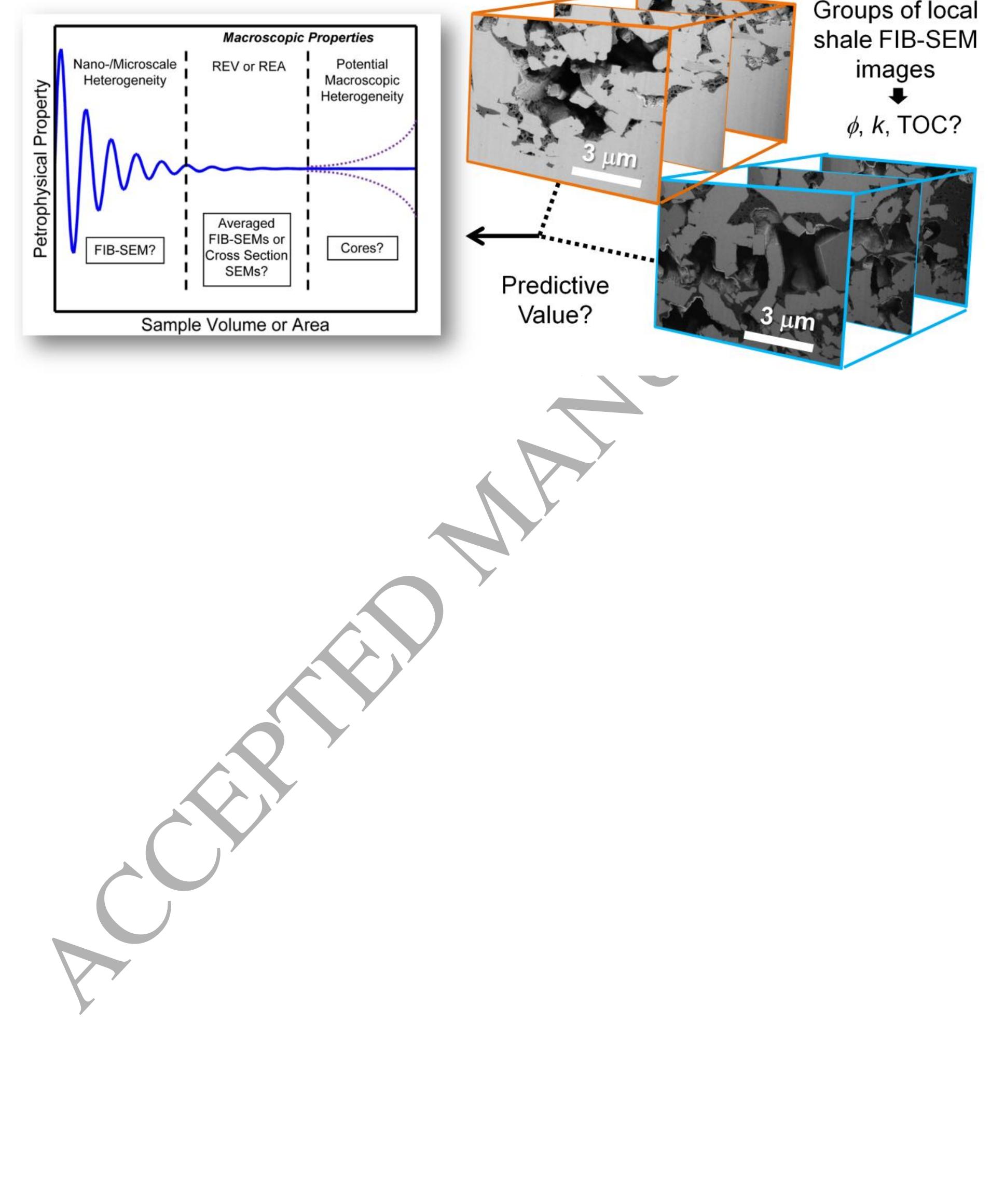
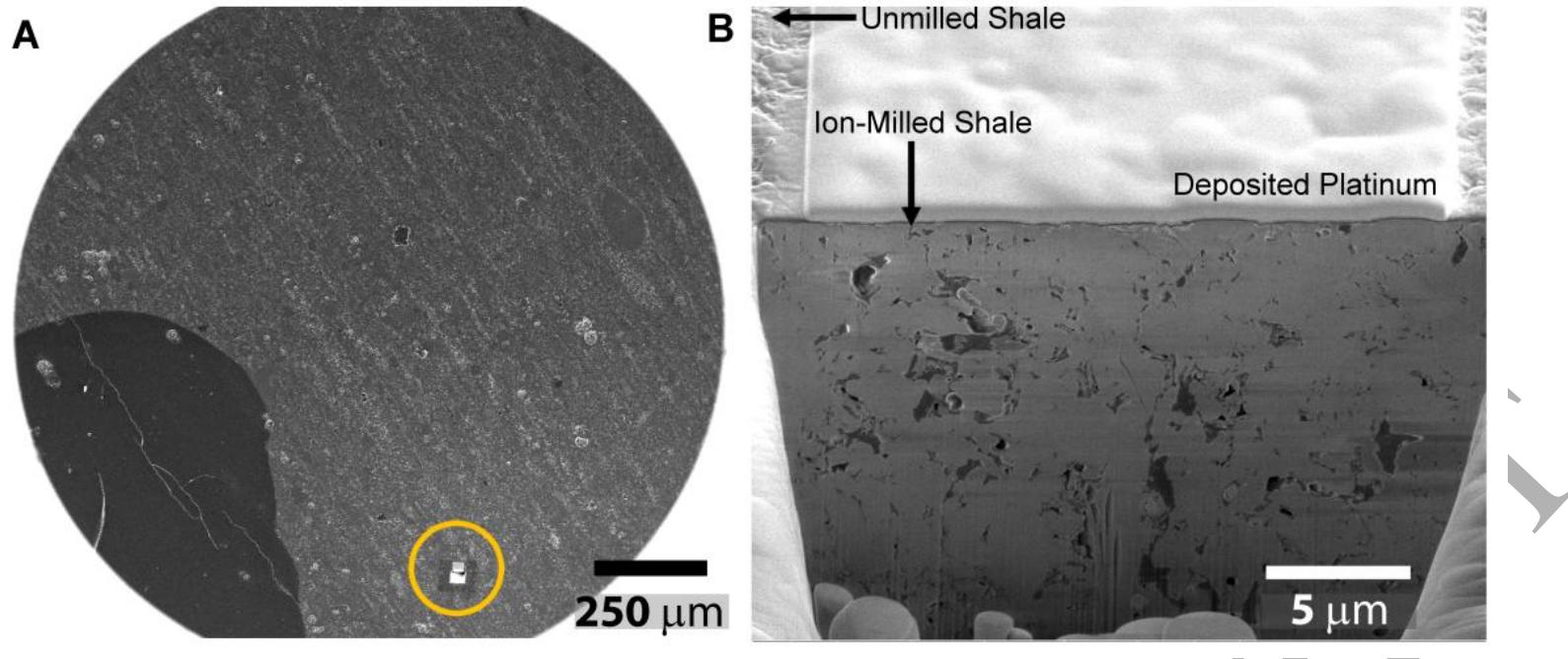
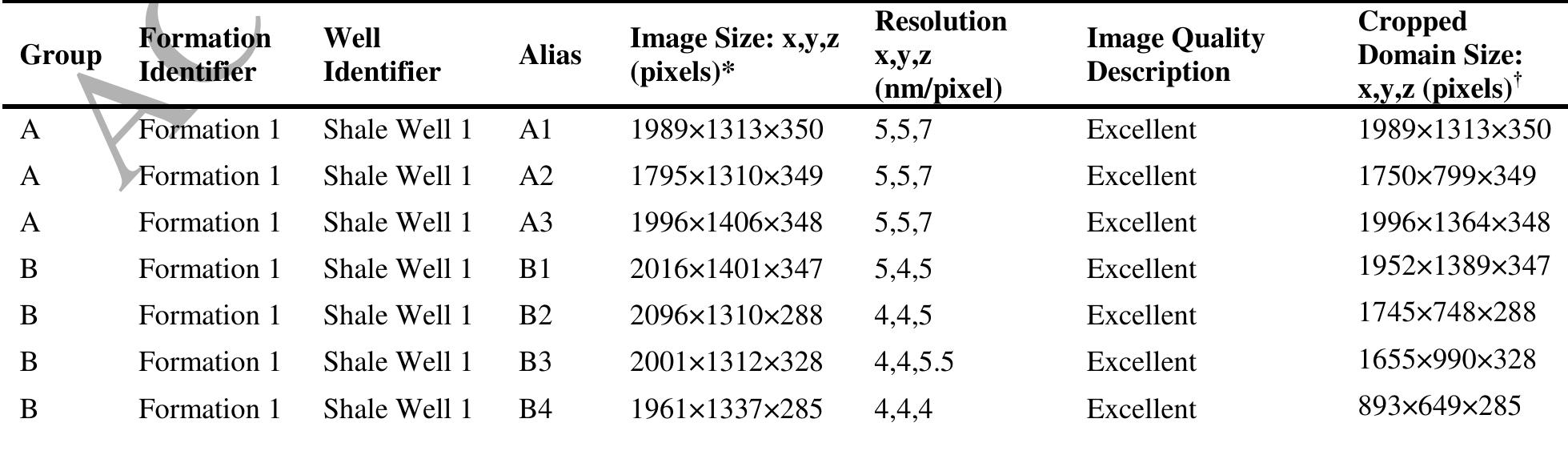
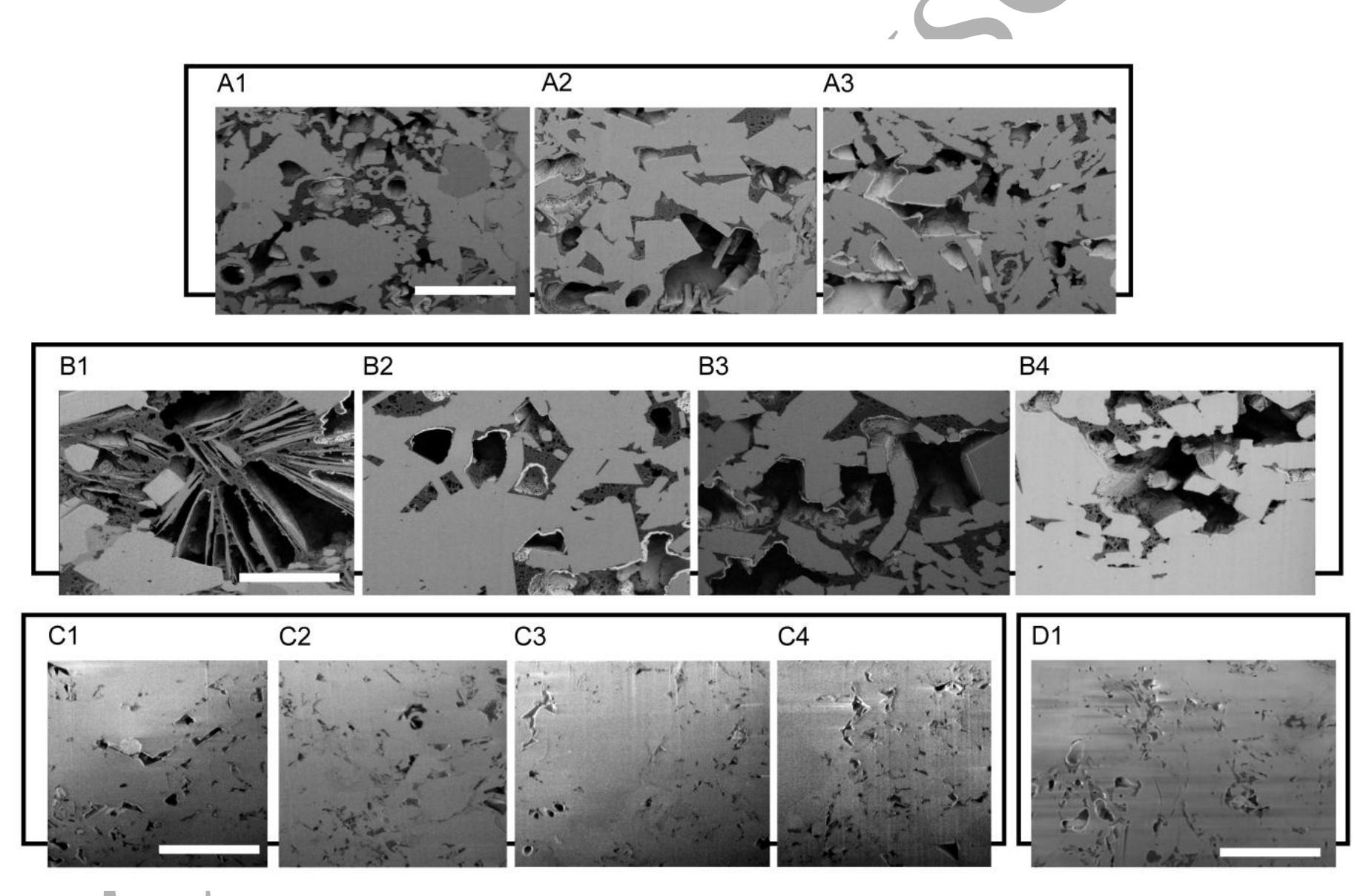
Abstract: The need for more accessible energy resources makes shale formations increasingly important. Characterization of such low-permeability formations is complicated, due to the presence of multiscale features, and defies conventional methods. High-quality 3D imaging may be an ultimate solution for revealing the complexities of such porous media, but acquiring them is costly and time consuming. High-quality 2D images, on the other hand, are widely available. A novel three-step, multiscale, multiresolution reconstruction method is presented that directly uses 2D images in order to develop 3D models of shales. It uses a high-resolution 2D image representing the small-scale features to reproduce the nanopores and their network, a large scale, low-resolution 2D image to create the larger-scale characteristics, and generates stochastic realizations of the porous formation. The method is used to develop a model for a shale system for which the full 3D image is available and its properties can be computed. The predictions of the reconstructed models are in excellent agreement with the data. The method is, however, quite general and can be used for reconstructing models of other important heterogeneous materials and media. Two biological examples and from materials science are also reconstructed to demonstrate the generality of the method. Due to the substantial amount of natural gas that they store, shales have emerged as one of the most promising current and future energy resources. Shale gas can be dissolved in kerogen, be adsorbed on clay and kerogen, and/or appear as free gas in pores and natural fractures 1,2. Most of the gas production in such porous formations occurs in the source area because, owing to the low permeability of the formations 3 , the gas does not migrate significantly. Unlike conventional large-scale reservoirs that have been characterized through countless methodologies 4 , shale formations have not yet undergone advanced characterization, and much remains to be done. A most important obstacle to characterization and modeling of shales, which up to now has seemed insurmountable, is their multiscale structure that defies the conventional techniques of characterization. Pores of all sizes, ranging from nano to micro exist in shales 5,6 , which play a vital role in fluid flow 7,8. The intrinsic small scale and spatial variability of such pores require a very large number of samples for direct characterization of shales that, if available, will make it possible to better understand the depositional environment, mineralogy, maturation, thermal condition, total organic carbon, strain/stress properties, porosity, and permeability of shales. But, shales are also large-scale porous media and, therefore, the spatial variations of their properties also occur not only at very large scales. Thus, there are several distinct and disparate length scales that are relevant to modeling and characterization of shales. Two-or three-dimensional (3D) imaging of shale samples have become an important tool for their characterization, because they reveal very useful information about their pore network and their spatial connectivity, and provide a reliable platform for their characterization. In addition, some of the aforementioned key morphological and flow properties of shales, such as the TOC, mineralogy, porosity,
... Read more