Figure 32
subdirectory_arrow_right Figure source:
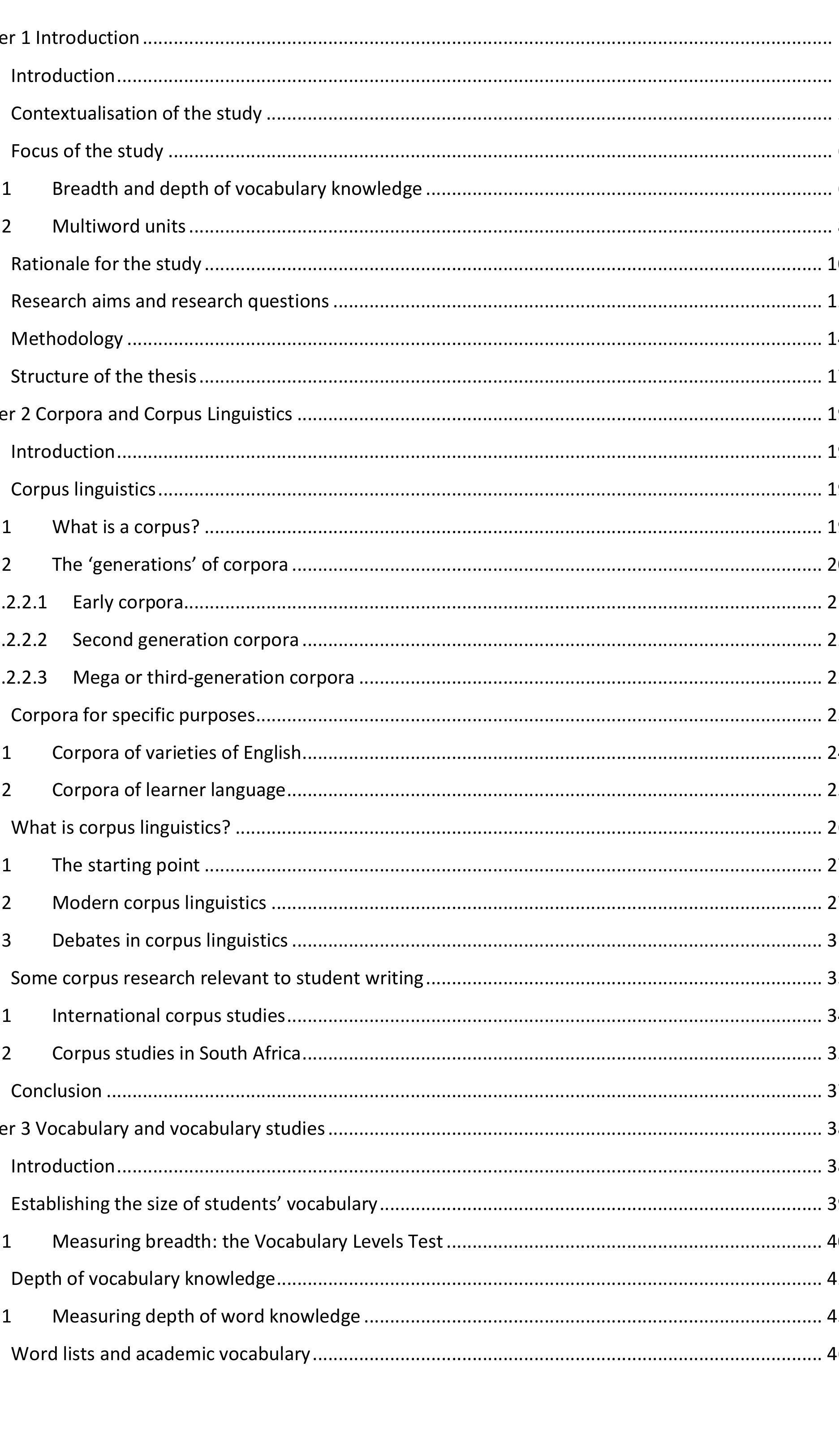
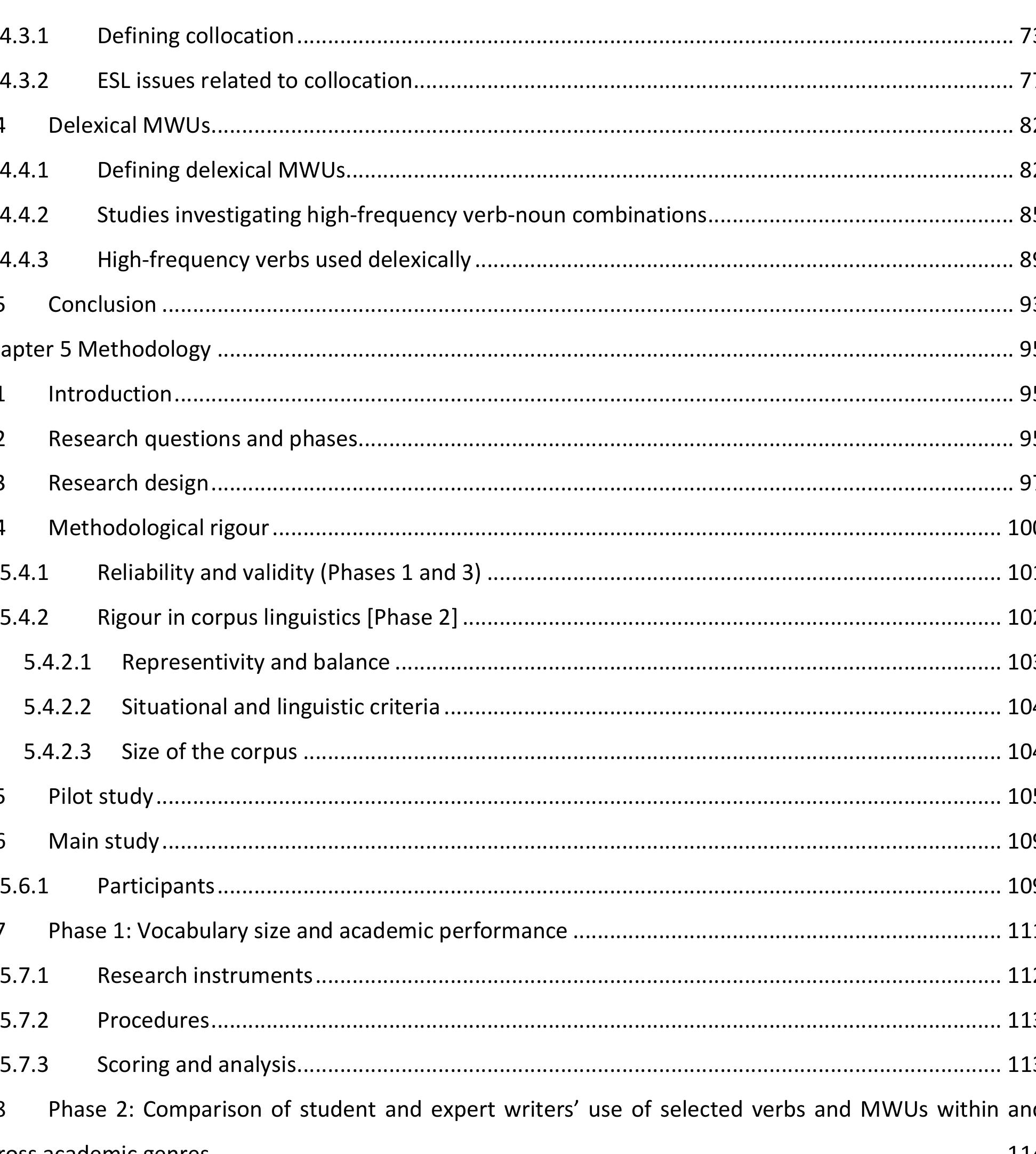
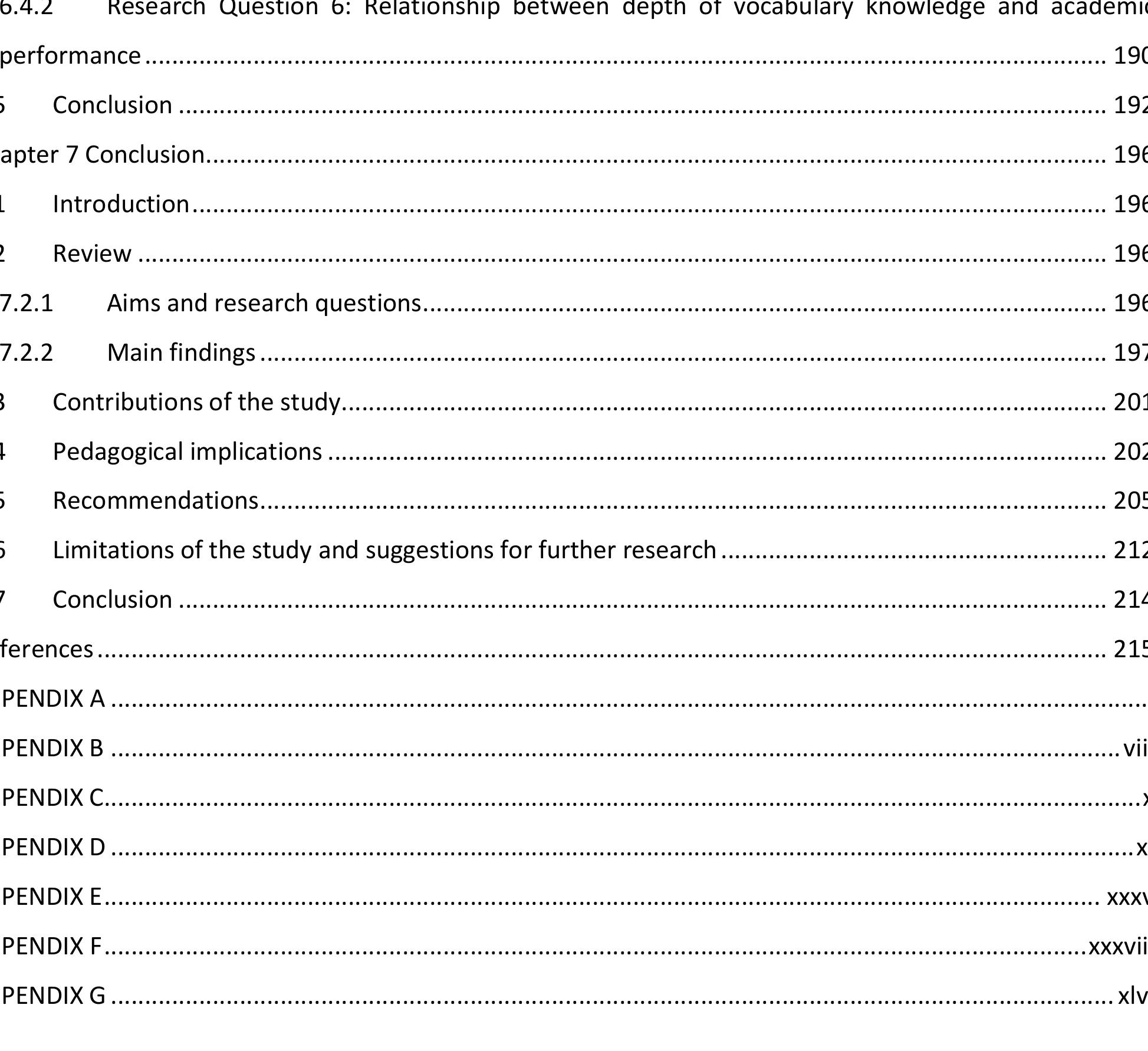
Abstract: This study investigates undergraduate students’ vocabulary size, and their use of formulaic language. Using the Vocabulary Levels Test (Laufer and Nation 1995), it measures the vocabulary size of native and nonnative speakers of English and explores relationships between this and course of study, gender, age and home language, and their academic performance. A corpus linguistic approach is then applied to compare student writers’ uses of three high-frequency verbs (have, make and take) relative to expert writers. Multiword units (MWUs) featuring these verbs are identified and analysed, focusing on delexical MWUs as one very specific aspect of depth of vocabulary knowledge. Student and expert use of these MWUs is compared. Grammatically and semantically deviant MWUs are also analysed. Finally, relationships between the size and depth of students’ vocabulary knowledge, and between the latter and academic performance, are explored. Findings reveal that Literature students had larger vo...
... Read more Related topics:
Computer Science Related Papers Abstract: An aspect of vocabulary research that tends to be somewhat neglected is that based on qualitative investigation. While a number of studies have considered the differences in vocabulary size between first-language (L1) and additional language (AL) speakers of English, there has been relatively little in-depth investigation into the nature of the vocabulary differences between these groups. The aim of this paper is to shed light on some of the vocabulary features of both L1 and AL student writing in relation to published writing as a benchmark. This study is based on the results of a qualitative investigation conducted using a corpus-driven approach which focused on differences in the use of academic vocabulary by both L1 and AL groups across first-, second- and third-year psychology students. The method used to identify vocabulary differences was keyness analysis, in which vocabulary items are compared on the basis of significantly different frequencies. One of the patterns that emerged serves to support the assumption that L1 students have a better grasp of academic vocabulary than AL students, as there are a greater number of grammatical, semantic and collocational idiosyncrasies in AL writing. The analysis also confirms that high achievers tend to use a broader range of academic words than low achievers. Given the evidence that a good knowledge of academic vocabulary in particular is essential for success at the level of tertiary education, the results of this study contribute to the question of what the specific vocabulary needs of undergraduate students are within the university context.
... Read more
Abstract: This study examined the trajectories of the multi-word constructions (MWCs) in 98 advanced second language (L2) learners during their first-year at an Englishmedium university in a non-English-speaking country, using linear mixed-effects modelling, over one academic year. In addition, this study traced the academic reading input that L2 learners received at university, and it was investigated whether the frequency and dispersion of the MWCs in the input corpus would predict the frequencies of MWCs in L2 writers' essays. The findings revealed variations in the frequencies of different functional and structural categories of MWCs over time. This study provides empirical evidence for the effects of both frequency and dispersion of MWCs in the input corpus on the frequency of MWCs in L2 writers' essays, underscoring the importance of both frequency and dispersion in learning MWCs and the reciprocity of academic reading and writing. The findings have significant implications for usage-based approaches to language learning, modelling MWCs in L2 academic writing, and L2 materials design for teaching academic writing.
... Read more
Abstract: This article describes a corpus-linguistic investigation of undergraduates' production of delexical multiword units (MWUs) comprising high-frequency verb + noun combinations. The aim was to shed more light on the difficulties these deceptively simple combinations pose for writers in a multilingual South African context. Two corpora of learner writing from different areas of English studies (literature and communication for law) and a reference corpus of scholarly writing were compared, focusing on the frequency of MWUs in the student corpora and errors in these combinations. That these MWUs and the common verbs they feature are "error-prone" (Altenberg and Granger 2001:179) in learner language is well attested in current research. This study found that student writers did indeed have difficulty producing error-free delexical MWUs. A detailed analysis of their errors found that these were caused mainly by the verb in the combination, particularly verb collocation. These findings highlight the difficulties these combinations pose for South African learners. Such combinations are common in everyday language and academic writing, and the findings underline the importance of a sound knowledge of high-frequency verbs and their collocations for students writing in an academic milieu.
... Read more
Abstract: This study aims to investigate EFL students’ performance in recognizing and using academic vocabulary across three different proficiency levels of English, i.e., elementary, intermediate and advanced. A quantitative approach was employed with a cross-sectional design to examine the difference and the correlation between the two variables and 150 subjects from a private university in Jakarta, some interesting results were uncovered in this study. First, there was a significant difference in overall calculation of students’ academic vocabulary across proficiency levels, even though such a difference does not appear between intermediate and advanced level. Second, the overall calculation shows that there was a significant correlation between students’ academic vocabulary and their proficiency levels with Sig. 0.249, but surprisingly, a more detail calculation did not present any correlation at all between the variables. These results confirm that the gap among proficiency levels was no...
... Read more
Abstract: Lexical evaluation has become undoubtedly one of the cornerstones in the study of second language learning. Not only can it cast some light on the process of second language learning, but also help us gain some insights into the shared characteristics of language learners. Based on a self-built corpus of 120 English timed compositions on the same topic written by 30 Chinese English majors throughout their four-year undergraduate study, this paper tends to explore the features of lexical development in English writing by English majors. The findings are as follows: a solid lexical development in general increases along with the grade, but the progress is not straight-line. Academic word lists present a linear increase; the lexical variation is also rising and learners have a wider range of words to choose from. However, compared with the lexical variation and lexical sophistication, lexical density shows a slower increase. In addition, some high-frequency words are overused by the students in their writings.
... Read more