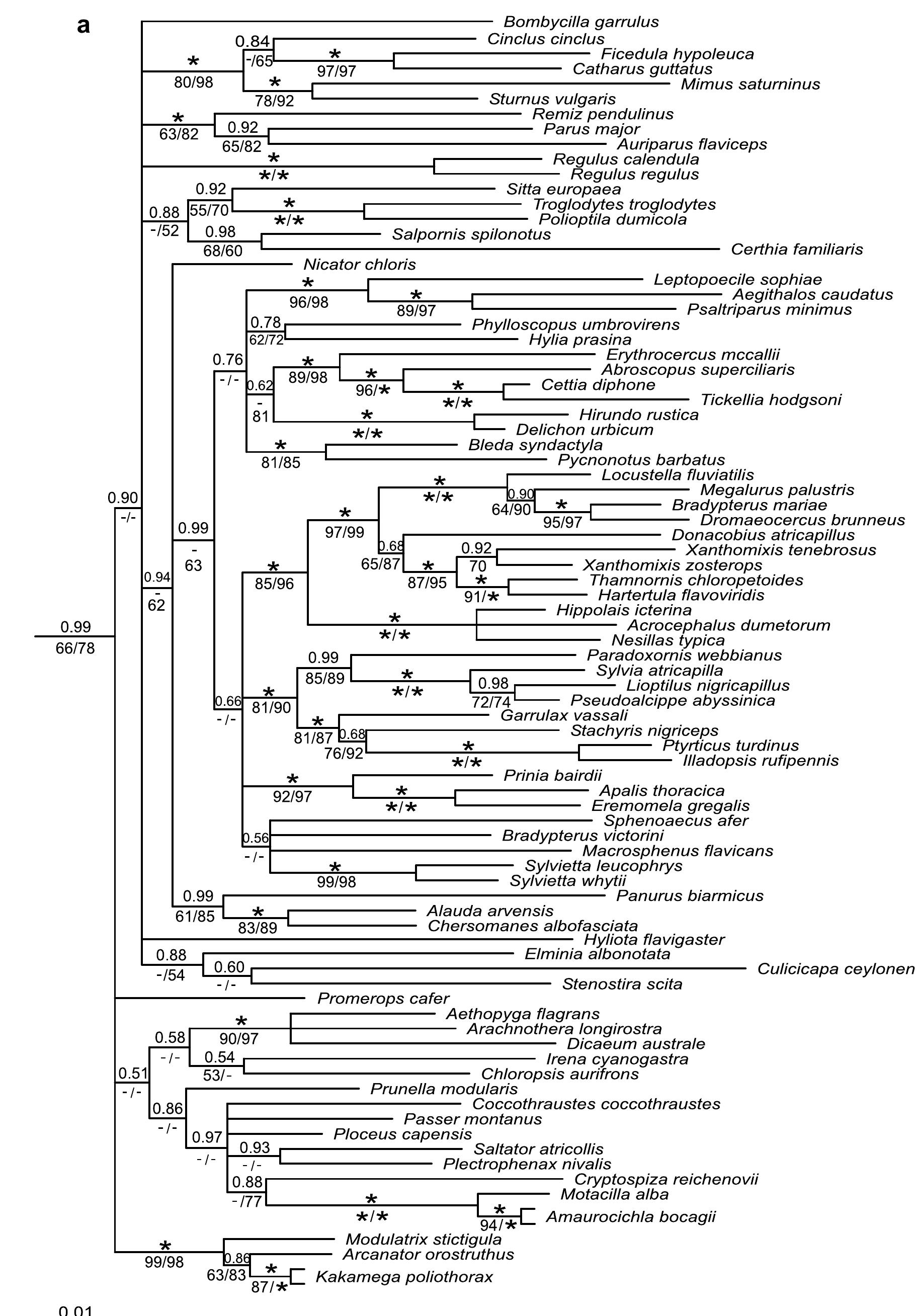
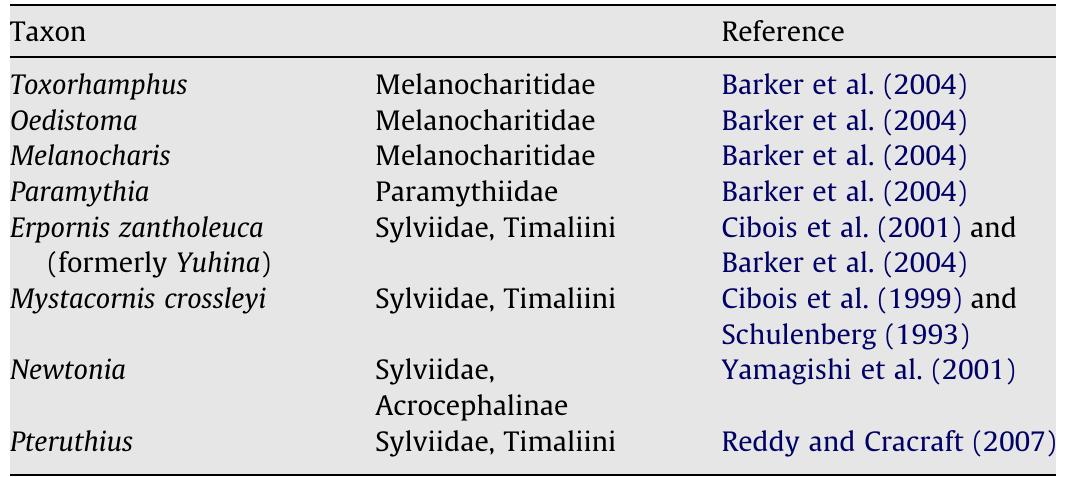
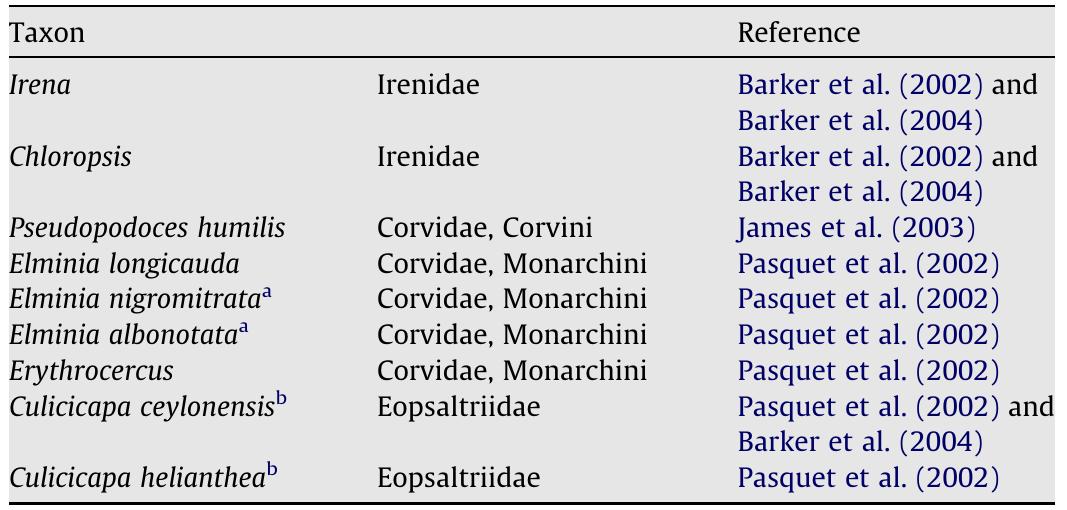
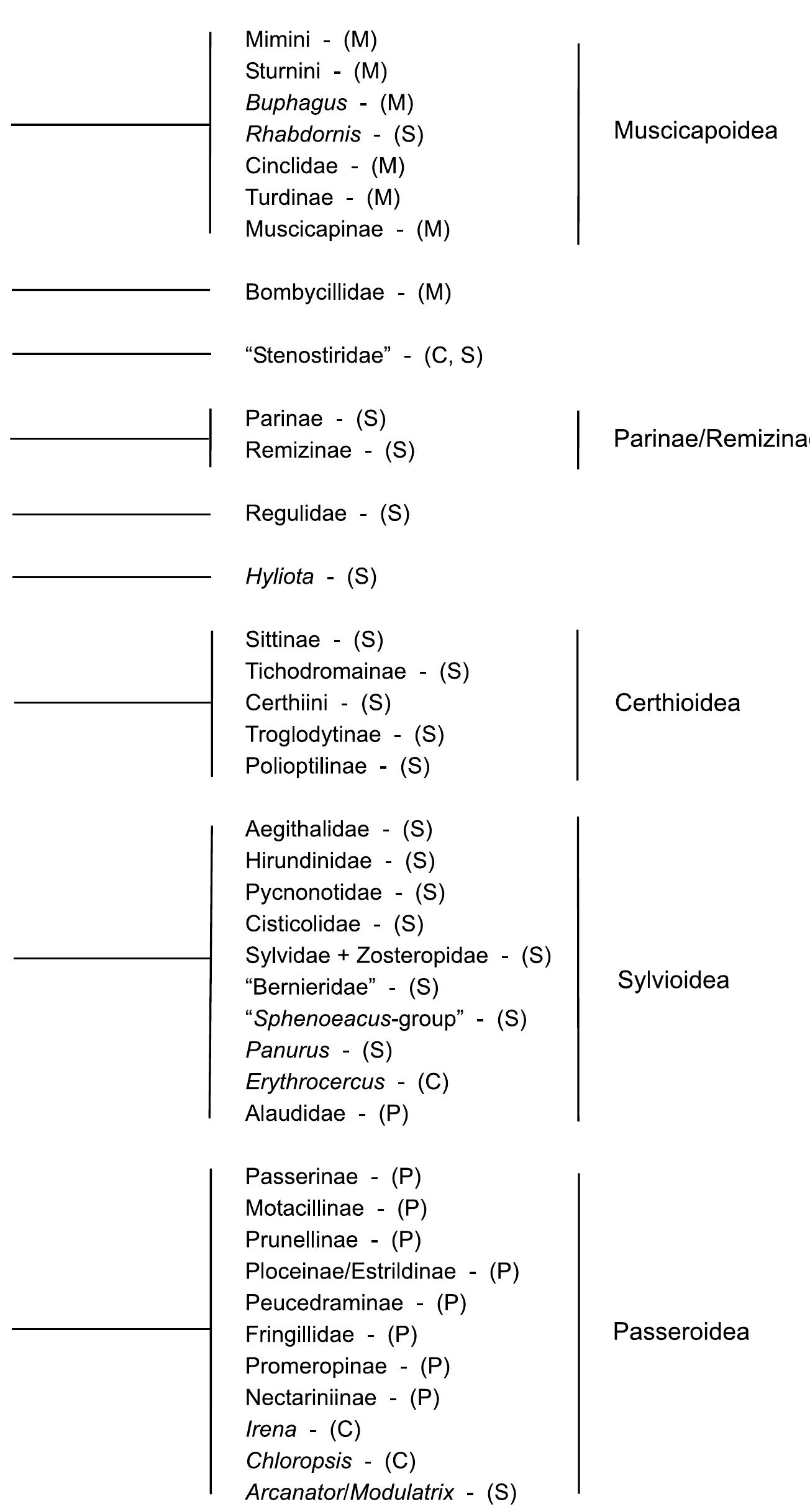
Figure 4
subdirectory_arrow_right Figure source:
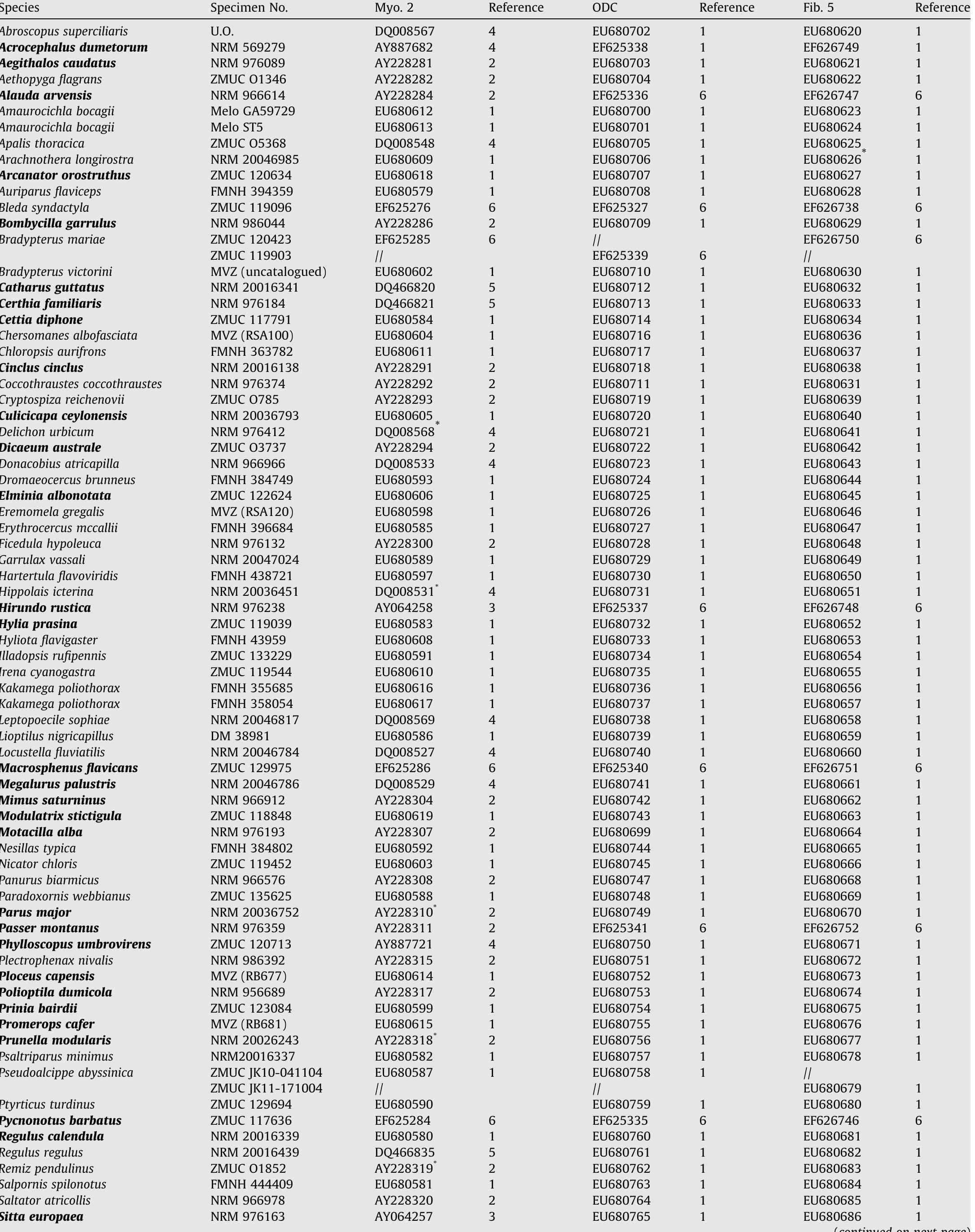
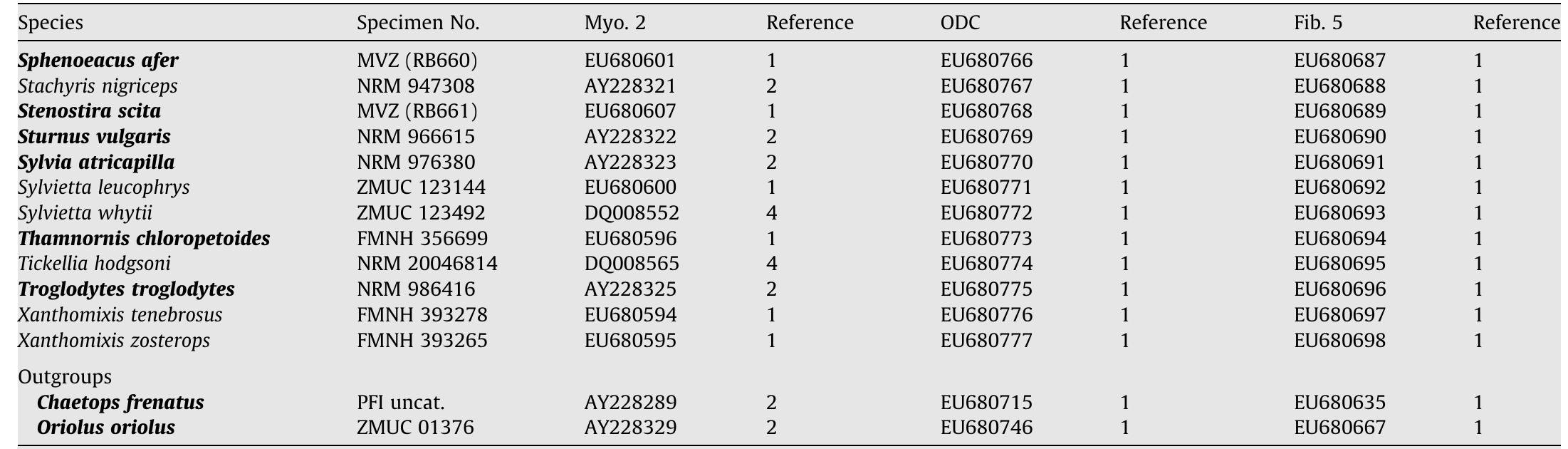
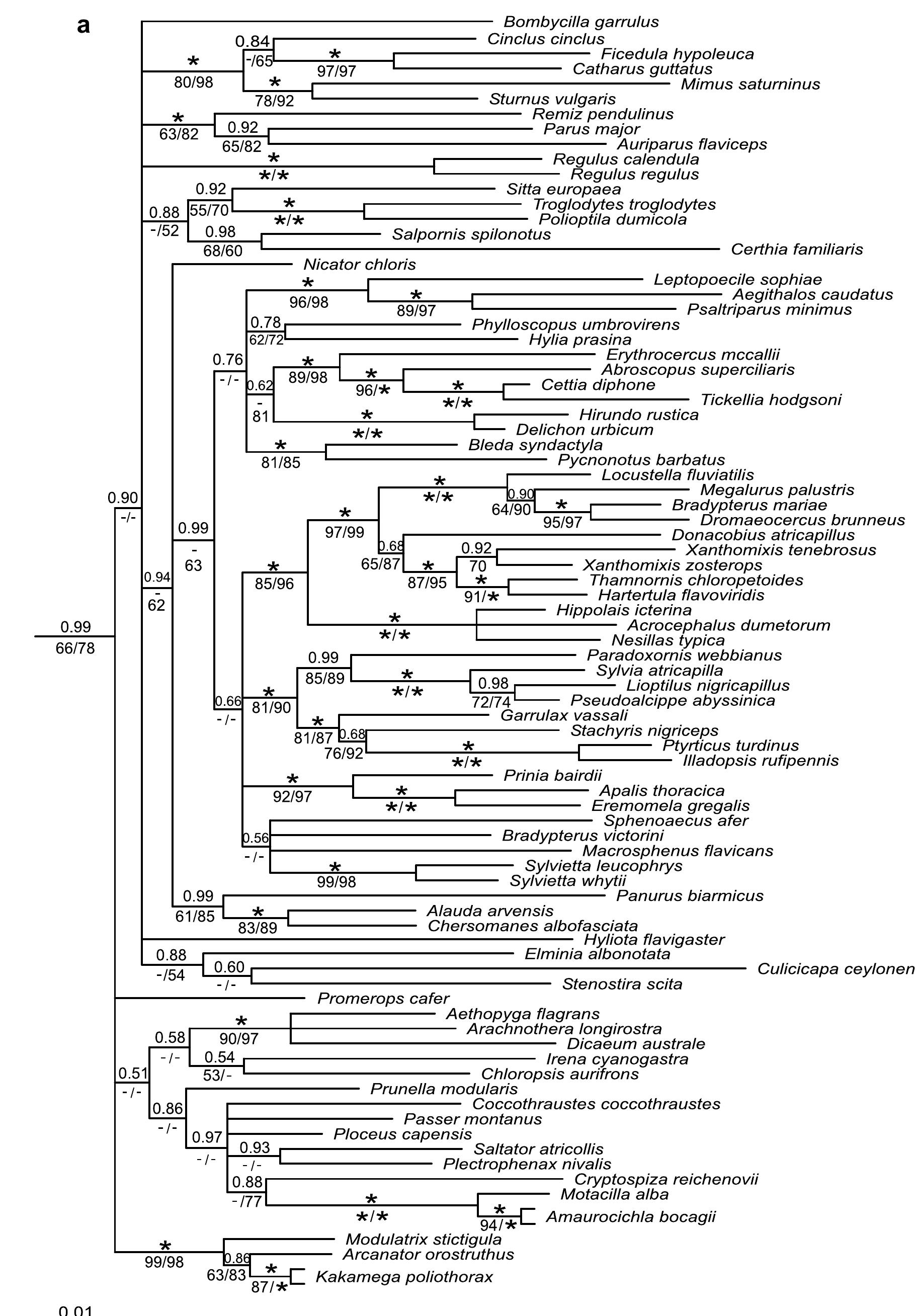
Abstract: The avian clade Passerida was first identified based on DNA-DNA hybridization data [C.G. Sibley, J.E. Ahlquist, Phylogeny and Classification of Birds, 1990, Yale University Press, New Haven, CT]. Monophyly of the Passerida, with the exception of a few taxa, has later been corroborated in several studies; however, the basal phylogenetic relationships have remained poorly understood. In this paper, we review the current knowledge of the phylogenetic relationships within Passerida and present a new phylogeny based on three nuclear introns (myoglobin intron 2, ornithine decarboxylase introns 6 and 7, as well as b-fibrinogen intron 5). Our findings corroborate recent molecular hypotheses, but also identify several hitherto unrecognized relationships.
... Read more Related topics:
Evolutionary Biology Genetics Zoology DNA hybridization Molecular Phylogenetics and Evolution Related Papers Abstract: Passerida is a monophyletic group of oscine passerines that includes almost 3500 species (about 36%) of all bird species in the world. The current understanding of higher-level relationships within Passerida is based on DNA-DNA hybridizations [C.G. Sibley, J.E. Ahlquist, Phylogeny and Classification of Birds, 1990, Yale University Press, New Haven, CT]. Our results are based on analyses of 3130 aligned nucleotide sequence data obtained from 48 ingroup and 13 outgroup genera. Three nuclear genes were sequenced: c-myc (498-510 bp), RAG-1 (930 bp), and myoglobin (693-722 bp), as well one mitochondrial gene; cytochrome b (879 bp). The data were analysed by parsimony, maximum-likelihood, and Bayesian inference. The African rockfowl and rockjumper are found to constitute the deepest branch within Passerida, but relationships among the other taxa are poorly resolvedonly four major clades receive statistical support. One clade corresponds to Passeroidea of [C.G.
... Read more
Abstract: Passerine birds comprise over half of avian diversity, but have proved difficult to classify. Despite a long history of work on this group, no comprehensive hypothesis of passerine family-level relationships was available until recent analyses of DNA-DNA hybridization data. Unfortunately, given the value of such a hypothesis in comparative studies of passerine ecology and behaviour, the DNA-hybridization results have not been well tested using independent data and analytical approaches. Therefore, we analysed nucleotide sequence variation at the nuclear RAG-1 and c-mos genes from 69 passerine taxa, including representatives of most currently recognized families. In contradiction to previous DNA-hybridization studies, our analyses suggest paraphyly of suboscine passerines because the suboscine New Zealand wren Acanthisitta was found to be sister to all other passerines. Additionally, we reconstructed the parvorder Corvida as a basal paraphyletic grade within the oscine passerines. Finally, we found strong evidence that several family-level taxa are misplaced in the hybridization results, including the Alaudidae, Irenidae, and Melanocharitidae. The hypothesis of relationships we present here suggests that the oscine passerines arose on the Australian continental plate while it was isolated by oceanic barriers and that a major northern radiation of oscines (i.e. the parvorder Passerida) originated subsequent to dispersal from the south.
... Read more
Abstract: The infraorder Furnariides is a diverse group of suboscine passerine birds comprising a substantial component of the Neotropical avifauna. The included species encompass a broad array of morphologies and behaviours, making them appealing for evolutionary studies, but the size of the group (ca. 600 species) has limited well-sampled higher-level phylogenetic studies. Using DNA sequence data from the nuclear RAG-1 and RAG-2 exons, we undertook a phylogenetic analysis of the Furnariides sampling 124 (more than 88%) of the genera. Basal relationships among family-level taxa differed depending on phylogenetic method, but all topologies had little nodal support, mirroring the results from earlier studies in which discerning relationships at the base of the radiation was also difficult. In contrast, branch support for family-rank taxa and for many relationships within those clades was generally high. Our results support the Melanopareidae and Grallariidae as distinct from the Rhinocryptidae and Formicariidae, respectively. Within the Furnariides our data contradict some recent phylogenetic hypotheses and suggest that further study is needed to resolve these discrepancies. Of the few genera represented by multiple species, several were not monophyletic, indicating that additional systematic work remains within furnariine families and must include dense taxon sampling. We use this study as a basis for proposing a new phylogenetic classification for the group and in the process erect new family-group names for clades having high branch support across methods.
... Read more