Revista Latinoamericana de Psicología (2018) 50(2), 79-88 Doi: http://dx.doi.org/10.14349/rlp.2018.v50.n2.1
Revista Latinoamericana
de Psicología
www.editorial.konradlorenz.edu.co/rlp
ORIGINAL
The Role of Inner Speech in Emotion Dysregulation
and Emotion Regulation Strategy Use
Christian E. Salasa,*, Osvaldo Castrob, Darinka Radovicc, James J. Grossd
y Oliver Turnbulle
a
Laboratorio de Neurociencia Cognitiva y Social, Facultad de Psicología, Universidad Diego Portales, Santiago, Chile
b
Escuela de Terapia Ocupacional, Universidad Autónoma de Chile, Santiago, Chile
c
Centro de Modelamiento Matemático, Universidad de Chile, Santiago, Chile
d
Department of Psychology, Stanford University, Stanford, USA
e
School of Psychology, Bangor University, Bangor, Wales, UK
Received 6 July 2017; accepted 7 May 2018
KEYWORDS Abstract Recent studies have suggested that emotion regulation (ER) strategies, such as reappraisal
Emotion Regulation; and suppression, rely on the use of verbal thinking. Outside the field of ER, verbal thinking, partic-
Inner Speech; ularly in the form of inner speech, has been largely linked to behaviour and cognitive regulation.
Reappraisal; However, no article has yet directly addressed the potential role of inner speech in ER. In this
Suppression; study, 180 participants completed a survey that included measures of inner speech usage (Inner
Self-Regulation Speech Questionnaire), ER difficulties (Difficulties in Emotion Regulation Scale), ER strategy use
(Emotion Regulation Questionnaire) and symptoms (HADS). Correlational analyses and hierarchical
linear regression models were used to explore the potential relationship between inner speech
and ER variables. A positive relationship was found between Inner Speech usage and the Difficul-
ties in Emotion Regulation Scale overall score. This relationship was, however, heavily mediated
by level of symptomatology. As for the ER strategies, only reappraisal presented a significant posi-
tive relationship, of medium size, with inner speech usage, which was independent of the level of
symptoms. The results of this study are discussed in relation to the current conceptualization of
reappraisal as well as its implications for clinical practice.
© 2018 Fundación Universitaria Konrad Lorenz. Este es un artículo Open Access bajo la licencia
CC BY-NC-ND (http://creativecommons.org/licenses/bync-nd/4.0/).
PALABRAS CLAVE El Rol del Habla Interna en la Desregulación Emocional y el uso de Estrategias de Regu-
Regulación Emocional, lación Emocional
Habla Interna,
Reinterpretación, Resumen Estudios recientes han sugerido que estrategias de regulación emocional (RE) como
Supresión, la re-interpretación y supresión dependen del pensamiento verbal. Fuera del campo de la RE, el
Autoregulación pensamiento verbal, como habla interna, ha sido vinculado con la regulación cognitivo/conduc-
tual. Sin embargo, a la fecha ningún estudio ha explorado el rol del habla interna en la RE. En
Premio al mejor artículo del número
* Corresponding author.
E-mail address:
[email protected]
http://dx.doi.org/10.14349/rlp.2018.v50.n2.1
0120-0534/© 2018 Fundación Universitaria Konrad Lorenz. Este es un artículo Open Access bajo la licencia CC BY-NC-ND (http://creative-
commons.org/licenses/by-nc-nd/4.0/).
80 Christian E. Salas et al.
esta investigación, 180 sujetos completaron cuestionarios de uso de habla interna (Inner Speech
Questionnaire, ISQ), dificultades en la RE (Difficulties in Emotion Regulation Scale, DERS), uso de
estrategias de RE (Emotion Regulation Questionnaire, ERQ) y sintomatología (HADS). Se realizaron
análisis correlacionales y modelos de regresión lineal para explorar la relación entre habla interna
y variables de RE. Una relación positiva fue encontrada entre frecuencia de uso de habla interna
y la puntuación global de la escala de dificultades en RE -relación altamente mediada por el
nivel de sintomatología. Respecto a las estrategias de RE, solo la reinterpretación presentó una
relación positiva y significativa, de tamaño medio, con la frecuencia de uso de habla interna –con
independencia del nivel de síntomas. Los resultados de este estudio son discutidos en relación a
la conceptualización actual de la re-interpretación así como su relevancia para la práctica clínica.
© 2018 Fundación Universitaria Konrad Lorenz. This is an open access article under the CC BY-NC-
ND license (http://creativecommons.org/licenses/bync-nd/4.0/).
“Come, there is no use in crying like that!” said Alice to her- (IS), and has recently been proposed as a potential com-
self rather sharply. “I advise you to leave off this minute!” ponent of ER (Salas, Gross, Rafal, Viñas-Guasch, & Turn-
She generally gave herself very good advice (though she very bull, 2013, Salas, Radovic, Yuen, Yeates, Castro, & Turnbull,
seldom followed it), and sometimes scolded herself so severe- 2014b). Unfortunately, the existing ER models have not yet
ly as to bring tears into her eyes”. explored the role that inner speech may have in implement-
ing ER strategies.
Lewis Carroll, Alice’s Adventures in Wonderland
It is interesting to note that, outside the field of ER, there
is large body of research documenting the development of
It has long been appreciated that healthy human beings verbal thought and its role in self-regulation (for a review
constantly attempt to maximize their positive and minimize of this early research see Luria & Yudovic, 1971; Sokolov,
their negative feelings. This ancient human ability to modu- 1972). Vygotsky, for example, noted that when children are
late how we feel has been referred to as ‘intrinsic’ emotion between 3-7 they move from egocentric speech to inner
regulation (ER) (Gross & Thompson, 2007). The last decade speech. Egocentric speech is typically defined as overt au-
has witnessed an explosive increase of studies exploring dible speech that is not addressed to another person but to
how intrinsic ER is related to mental health and well-be- oneself (Winsler, 2009), and is used as a ‘mental orienta-
ing (for reviews see Gross, 2013; Nyklícek, Vingerhoets, & tion’, particularly when facing difficult situations that de-
Zeelenberg, 2011; Werner & Gross, 2010). Two ER strategies mand consciousness and reflection (Vygotsky, 1934/2012).
have been the main focus of attention: re-appraisal and As children grow up, egocentric speech fades away, the fre-
suppression. Reappraisal is a cognitively oriented form of quency of vocalizations decrease, and speech becomes in-
ER, in which a person tries to think about a situation in ways ternalized. With this inner speech, children start thinking in
that alter the emotional response (Gross, 2014), commonly words instead of pronouncing them (Vygotsky, 1934/2012)
re-framing its meaning in more positive (or less negative) and begin talking to themselves inside their heads (Winsler,
terms (Gross & Thompson, 2007; McRae, Ochsner, & Gross, 2009). According to Sokolov (1972), in adulthood, elements
2011). On the other hand, suppression is a behaviourally ori- of inner speech can be found in conscious perceptions, in
ented form of ER in which a person decreases emotion-ex- actions and also in emotional experiences, where they man-
pressive behaviour while emotionally aroused (Gross, 2014). ifest themselves as verbal sets, instructions to oneself, or as
In other words, suppression does not involve changes in verbal interpretations of sensations and perceptions.
meaning but refers to the capacity to voluntarily manipu- In recent years, researchers have shown an increased
late the expression of emotions (Gross & Thompson, 2007). interest in exploring the role of inner speech in the regula-
Reappraisal and suppression are both voluntary forms of tion of cognition and behaviour. For example, several arti-
ER, appearing to rely -at different levels- on the use of ver- cles have provided evidence to support a link between inner
bal thinking. This is quite clear in the case of reappraisal, a speech and cognitive flexibility (e.g. Miyake, Emerson, Padil-
cognitively oriented form of ER, where individuals need to la, & Ahn, 2004), cognitive performance and self-monitoring
generate alternative narratives to buffer the emotional im- (e.g. Perrone-Bertolotti, Rapin, Lachaux, Baciu, & Loeven-
pact of negative events (McRae, Jacobs, Ray, John, & Gross, bruck, 2014), planning (e.g. Lidstone, Meins, & Fernyhough,
2011). In response modulation, which is a behaviourally ori- 2010), reflexive awareness (e.g. Morin, 2005) and self-regu-
ented ER, the role of verbal thinking is less clear. However, lation (e.g. Clowes, 2007; Emerson & Miyake, 2003; Tullett
it is common to find that individuals often talk to them- & Inzlicht, 2010). Even though existing research appears to
selves as a way of reinforcing the inhibition of emotion-ex- offer strong evidence to support inner speech’s central role
pressive behaviour. This idea is supported by data from in the regulation of cognition and behaviour, no studies have
neuropsychological studies suggesting that both forms of ER yet explored its relevance in the regulation of emotion.
rely on verbal thinking. Indeed, together with inhibition, A related topic of relevance is found in the growing
verbal fluency (or the capacity to generate language-based number of studies linking inner speech to psychopathology
mental representations) has been reported as a key com- (for a review see Alderson-Day & Fernyhough, 2015). Most
ponent in both reappraisal and suppression (Gyurak, Good- of the research on this area has focused on the relation-
kind, Madan, Kramer, Miller, & Levenson, 2009; McRae et ship between inner speech and psychotic phenomena, such
al., 2011; Salas, Gross, & Turnbull, 2014). In sum, it seems as hallucinations (Perona-Garcelan et al., 2017) or disso-
that several forms of voluntary ER require the use of verbal ciation and ideas of reference (Bellido-Zanin et al., 2017).
thought addressed to the self. This form of verbal thinking For example, some studies have shown a positive relation-
has commonly been described as ‘self-talk’, or inner speech ship between ‘dialogic’ forms of inner speech and auditory
The Role of Inner Speech in Emotion Dysregulation and Emotion Regulation Strategy Use 81
hallucination-proneness (e.g. McCarthy-Jones & Fernyhough, The Inner Speech Scale or ISS (Siegrist, 1995) is an 18-item
2011). Depression has also been linked to inner speech, par- questionnaire designed to measure the frequency of inner
ticularly in the context of ruminative thought process, which speech usage. Participants are asked to report on their level
typically has a verbal quality (Nolen-Hoeskema, 2000, 2004). of agreement with each statement (e.g. If I am not feeling
However, this link has been rather conceptual, with very few well I often talk to myself about my state; In difficult situa-
studies directly exploring the relationship between inner tions, I sometimes say to myself: ‘you can do this, you will
speech and perseverative negative thinking (Holmes, Lang, do all right’) using a 6-point Likert scale (1= strongly dis-
& Shah, 2009; Holmes, Mathews, Dalgleish, & Mackintosh, agree; 6 = strongly agree). Uttl, Morin, and Hamper (2011)
2006), with some studies even contesting this claim. For used the ISS with a sample of 380 students and reported
example, in a study by Siegrist (1995), the frequency of inner high reliability with a Cronbach’s alpha of .85. The Emotion
speech usage, assessed via a self-report questionnaire, was Regulation Questionnaire or ERQ (Gross & John, 2003) is a
not associated with measures of depression. Anxiety has 10-item questionnaire designed to capture the frequency
been another psychopathological symptom associated with use of ER strategies. It has two sub-scales: Reappraisal (e.g.
inner speech. It has been noted, for example, that worrying When I want to feel more positive emotion (such as joy or
is a form of negative repetitive thinking, often verbal, that amusement), I change what I’m thinking about) and Sup-
is uncontrollable and aimed at a problem that has no clear pression (e.g. I keep my emotions to myself). Individuals
solution (Watkins, 2008). One study (McCarthy-Jones, & and rate each of these items using a 7-point Likert scale (1 =
Fernyhough, 2011) has reported that anxiety is positively re- strongly disagree, 7 = strongly agree). The ERQ has shown
lated to evaluative/motivational forms of inner speech, and high reliability and has a Cronbach’s alpha of .79 for the
the presence of other voices in inner speech. Reappraisal scale and .73 for the Suppression scale. The Dif-
Taken together, the available evidence appears to sug- ficulties in Emotion Regulation Scale or DERS (Gratz & Ro-
gest that inner speech has a role in the regulation of cog- emer, 2004) is a 36-item questionnaire designed to capture
nition and behaviour, and may be a mechanism involved in emotion dysregulation. It has six subscales: Non Acceptance
some clinical populations that present a dysregulation of of Emotional Responses (e.g. When I’m upset, I feel guilty
emotional processes. However, to date, the relationship be- for feeling that way), Difficulties Engaging in Goal Directed
tween IS and emotion dysregulation, or between IS and the Behaviour (e.g. When I’m upset, I have difficulty focusing
use of ER strategies, has not yet been directly explored. In on other things), Impulse Control Difficulties (e.g. When I’m
view of the above-mentioned studies that link inner speech upset, I feel out of control), Lack of Emotional Awareness
to cognitive and behaviour regulation, the first question (e.g. When I’m upset, I take time to figure out what I’m
addressed by the present investigation was whether indi- really feeling), Limited Access to Emotion Regulation Stra-
viduals with a higher usage of IS present fewer difficulties tegies (e.g. When I’m upset, I believe that wallowing in it is
regulating emotion (ER Difficulty Hypothesis). In addition, all I can do) and Lack of Emotional Clarity (e.g. I have dif-
and because there is evidence suggesting that inner speech ficulties making sense out of my feelings). Individuals rate
usage may be related to psychopathology, a secondary each item using a 5-point Likert scale to indicate how often
question was whether the level of symptomatology (anxiety the statements apply to them (1 = almost never (0-10%), 5
and depression) had a mediating role between inner speech = almost always (91-100%)). All the subscales in the DERS
usage and the level of emotion dysregulation. We predicted
have shown high reliability with Cronbach’s alphas ranging
that the negative relationship between inner speech and
from .80 to .89. The Hospital Anxiety and Depression Scale
emotion dysregulation decreases in individuals who have
(HADS, Olssøn, Mykletun, & Dahl, 2005) is a self-rating ques-
high levels of symptomatology. Furthermore, the present
tionnaire that assesses the presence of emotional symp-
study explored whether inner speech usage was associated
toms. The scale consists of 14 items that measure different
with particular ER strategies. More specifically, and due to
manifestations of anxiety and depression. For each item,
the fact that reappraisal is a cognitively oriented form of ER
participants are expected to select an answer from four
and suppression a behaviourally oriented form, it might be
possible choices that reflect the frequency of such symp-
expected that inner speech would be positively associated
toms experienced during a week.
with reappraisal but negatively associated with suppression
(ER Strategies Hypothesis).
Procedures
Method Bangor School of Psychology’s Ethical Board reviewed
and approved this research project. Participants completed
Participants the assessment using an online survey platform provided by
Bangor University that allowed no missing data. Information
180 psychology students participated in this study (Sex: fe- about the main goal of the study was provided in writing,
male = 135, 75%; male = 45, 25%; Age: M = 19.85; SD = 2.77, and consent was obtained electronically. Once the ques-
tionnaires were complete, participants were debriefed on
range 18 - 36). Participants were recruited from Bangor Uni-
the investigation’s main goals.
versity and received credits as payment for their participation.
Analysis
Instruments
In order to test Hypothesis 1 (ER Difficulty Hypothesis),
This is a correlational study since the association of in- different models of relationship between inner speech us-
ner speech and ER was the main focus of investigation. One age (ISS) and difficulties in ER (DERS) were explored. We
self-report inner speech questionnaire and two ER related initially built a hierarchical linear regression by succes-
questionnaires were used. In addition, a questionnaire that sively incorporating new predictors. First we tested the
assesses emotional symptomatology was also employed. independent relationship between the dependent vari-
82 Christian E. Salas et al.
able Difficulties in Emotion Regulation (DERS total score) the total scale presented a Cronbach alpha of .94, while
with Inner Speech usage (ISS total score). Then we added its subscales ranged between .80 and .90. As for the ERQ,
the level of symptomatology as a predictor to the mod- both subscales also exhibited adequate levels of internal
el, using the HADS total score. In order to investigate this consistency (Reappraisal = .89; Suppression = .77). Final-
hypothesis further, a similar approach, using hierarchical ly, The Hospital Anxiety and Depression Scale presented a
linear regression models, was employed to explore the re- Cronbach alpha of .83.
lationship between inner speech usage (ISS total score) and When exploring the concurrent validity of both ER ins-
specific types of difficulty in regulating emotions (DERS sub- truments, a moderate correlation between scales was ob-
scales). In relationship to Hypothesis 2 [ER Strategies Hypoth- served. This was higher between the DERS and the ERQ
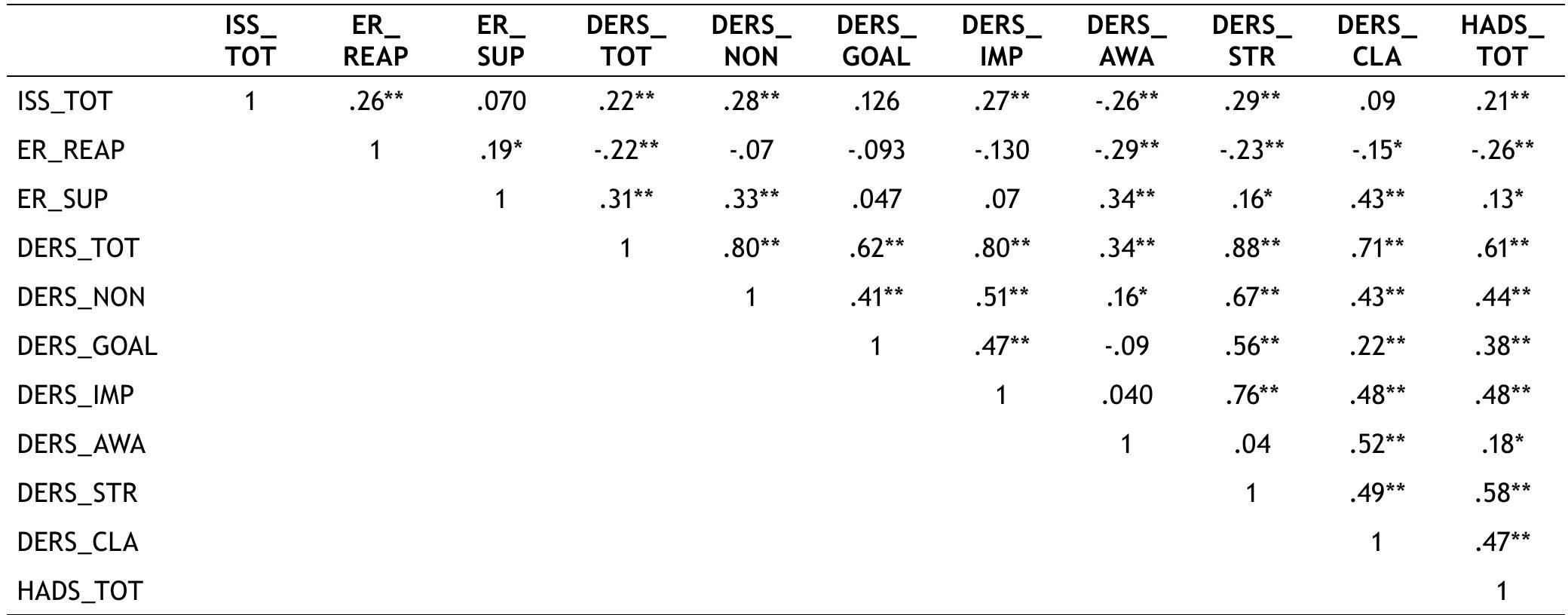
esis] a similar approach was followed. Two different linear subscales (see Table 2). More specifically, the DERS total
regressions, with reappraisal and suppression frequency use score presented a negative correlation of small size with
as dependent variables, were carried out separately, both the Reappraisal subscale (r = -.22, p= .002) but a positive
following the same structure. In the first step, the indepen- correlation of medium size with the Suppression subscale
dent effect of inner speech was assessed including the total (r = .31, p< .001). When looking at how specific subscales from
score of the ISS. In the second step, the model was controlled the DERS related to the ERQ subscales, we observed that the
for the level of difficulties regulating emotions reported by Suppression scale exhibited medium positive correlations
subjects (DERS total score) and the interaction of this vari- with a lack of Emotional Clarity (r = .43, p< .001), Non-ac-
able with Inner speech usage (DERS*ISS). The interaction ceptance of Emotional experience (r = .33, p< .001) and Lack
term was computed on the variables centred by their mean of Emotional Awareness (r = .34, p< .001). Only a small po-
(to avoid problems of multicollinearity). This step allowed ex- sitive correlation between Suppression and Limited Access
ploring if the effect of inner speech remained the same when to Emotion Regulation Strategies was found (r = .16, p= .04).
controlling for difficulties in ER and if this effect changed In contrast, the subscale of Reappraisal only presented a
at different levels of ER difficulty. Finally, in the third and medium negative correlation with Lack of Emotional Aware-
final step, the level of symptomatology as control was add- ness (r = -.29, p< .001) and a small negative correlation with
ed (HADS total score). When addressing hypothesis 1 and 2, Limited Access to Emotion Regulation Strategies (r = -.23,
assumptions of multicollinearity, homoscedasticity and inde- p= .002) and lack of Emotional Clarity (r = -.15, p= .05). It is
pendence of errors were tested by exploring residual plots, also interesting to note that both ER scales were associated
Durbin-Watson test and the variance inflation factor. If any with levels of emotional distress (HADS). The DERS total sco-
of these assumptions were not met, this was reported in the re presented a large positive association with the levels of
manuscript. symptomatology (r = .61, p< .01). In contrast, the asociations
of the ERQ with the HADS were of small size, negative for
Results Reappraisal (r = -.26, p< .01) and possitive for Suppression
(r= .13, p< .05).
Instrument reliability and concurrent validity
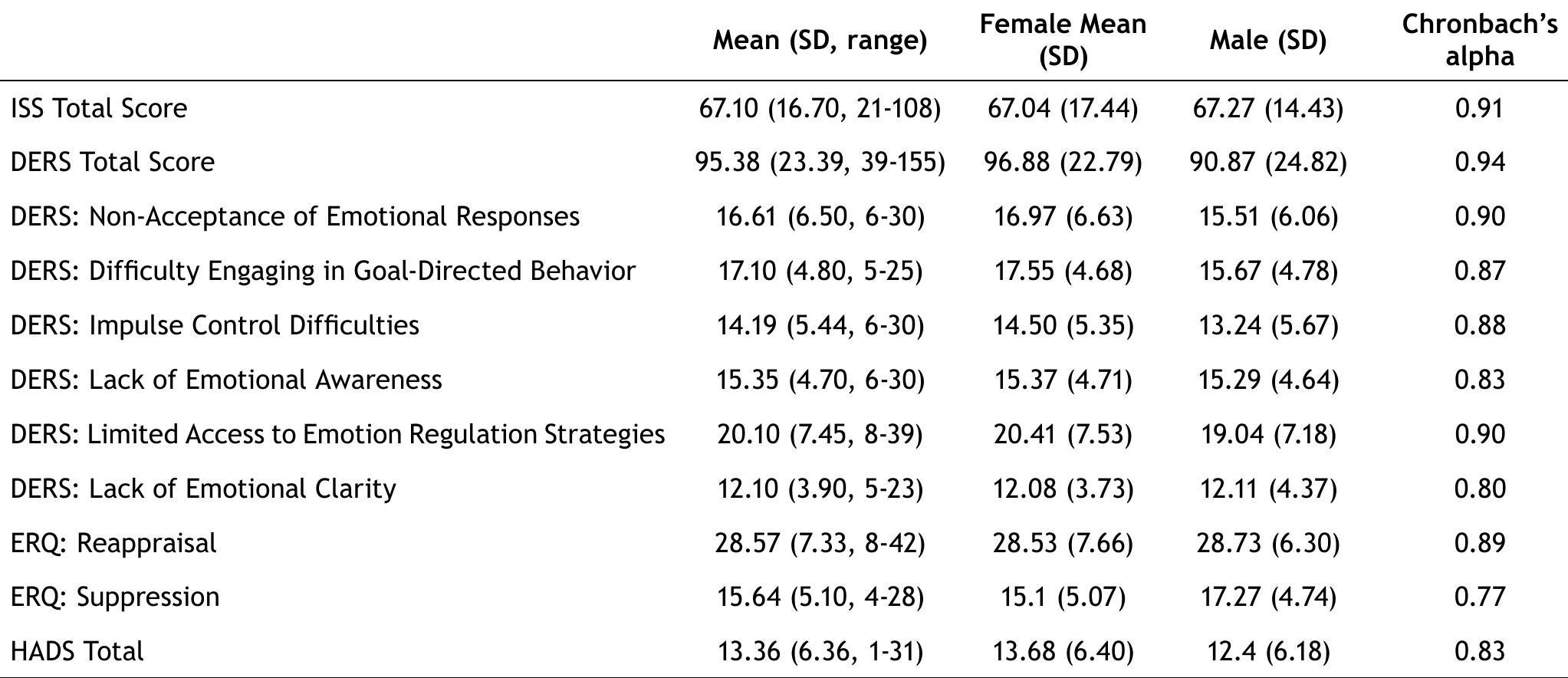
As can be observed in Table 1, the Inner Speech Scale
Emotion Regulation Difficulties
presented adequate levels of internal consistency, with a
Cronbach alpha of .91. Regarding the instruments that mea- Investigating the relationship between inner speech and
sured ER and symptomatology, adequate levels of internal ER produced mixed results. The ER difficulty hypothesis
consistency were also observed. In the case of the DERS, suggested that inner speech usage would be negatively as-
Table 1 Descriptive Results and Reliability Information of Questionnaires
Female Mean Chronbach’s
Mean (SD, range) Male (SD)
(SD) alpha
ISS Total Score 67.10 (16.70, 21-108) 67.04 (17.44) 67.27 (14.43) 0.91
DERS Total Score 95.38 (23.39, 39-155) 96.88 (22.79) 90.87 (24.82) 0.94
DERS: Non-Acceptance of Emotional Responses 16.61 (6.50, 6-30) 16.97 (6.63) 15.51 (6.06) 0.90
DERS: Difficulty Engaging in Goal-Directed Behavior 17.10 (4.80, 5-25) 17.55 (4.68) 15.67 (4.78) 0.87
DERS: Impulse Control Difficulties 14.19 (5.44, 6-30) 14.50 (5.35) 13.24 (5.67) 0.88
DERS: Lack of Emotional Awareness 15.35 (4.70, 6-30) 15.37 (4.71) 15.29 (4.64) 0.83
DERS: Limited Access to Emotion Regulation Strategies 20.10 (7.45, 8-39) 20.41 (7.53) 19.04 (7.18) 0.90
DERS: Lack of Emotional Clarity 12.10 (3.90, 5-23) 12.08 (3.73) 12.11 (4.37) 0.80
ERQ: Reappraisal 28.57 (7.33, 8-42) 28.53 (7.66) 28.73 (6.30) 0.89
ERQ: Suppression 15.64 (5.10, 4-28) 15.1 (5.07) 17.27 (4.74) 0.77
HADS Total 13.36 (6.36, 1-31) 13.68 (6.40) 12.4 (6.18) 0.83
ISS: Inner Speech Scale; DERS: Difficulties in Emotion Regulation Scale; ERQ: Emotion Regulation Questionnaire; HADS: Hospital
Depression and Anxiety Scale
The Role of Inner Speech in Emotion Dysregulation and Emotion Regulation Strategy Use 83
Table 2 Bivariate Correlations (Pearson)
ISS_ ER_ ER_ DERS_ DERS_ DERS_ DERS_ DERS_ DERS_ DERS_ HADS_
TOT REAP SUP TOT NON GOAL IMP AWA STR CLA TOT
ISS_TOT 1 .26** .070 .22** .28** .126 .27** -.26** .29** .09 .21**
ER_REAP 1 .19* -.22** -.07 -.093 -.130 -.29** -.23** -.15* -.26**
ER_SUP 1 .31** .33** .047 .07 .34** .16* .43** .13*
DERS_TOT 1 .80** .62** .80** .34** .88** .71** .61**
DERS_NON 1 .41** .51** .16* .67** .43** .44**
DERS_GOAL 1 .47** -.09 .56** .22** .38**
DERS_IMP 1 .040 .76** .48** .48**
DERS_AWA 1 .04 .52** .18*
DERS_STR 1 .49** .58**
DERS_CLA 1 .47**
HADS_TOT 1
** Correlation is significant at the 0.01 level (2-tailed). * Correlation is significant at the 0.05 level (2 tailed).
ISS_TOT = Inner Speech Scale Total; ERQ_REAP = Reappraisal subscale; ERQ_SUP = Suppression Subscale; DERS_TOTAL = Difficulties in
Emotion Regulation Scale total score; DERS_NON = Non-Acceptance of Emotional Responses subscale; DERS_GOA = Difficulties Engaging
in Goal Directed Behaviour Scale; DERS_IMP = Impulse Control Difficulties Subscale; DERS_AWA = Lack of Emotional Awareness Subscale;
DERS_STR = Limited Access to Emotion Regulation Strategies Subscale; DERS_CLA = Lack of Emotional Clarity Subscale; HADS_TOT = Hospital
Anxiety and Depression Scale.
sociated with ER difficulties. In other words, this hypothesis to note that, when controlling for level of symptomatology
expected that individuals who frequently used inner speech (HADS), the size of all three relationships decreased, but did
would have fewer difficulties regulating negative emotions. not disappear. This suggested that there is a small indepen-
However, this hypothesis was not supported in the present dent positive relationship between inner speech usage and
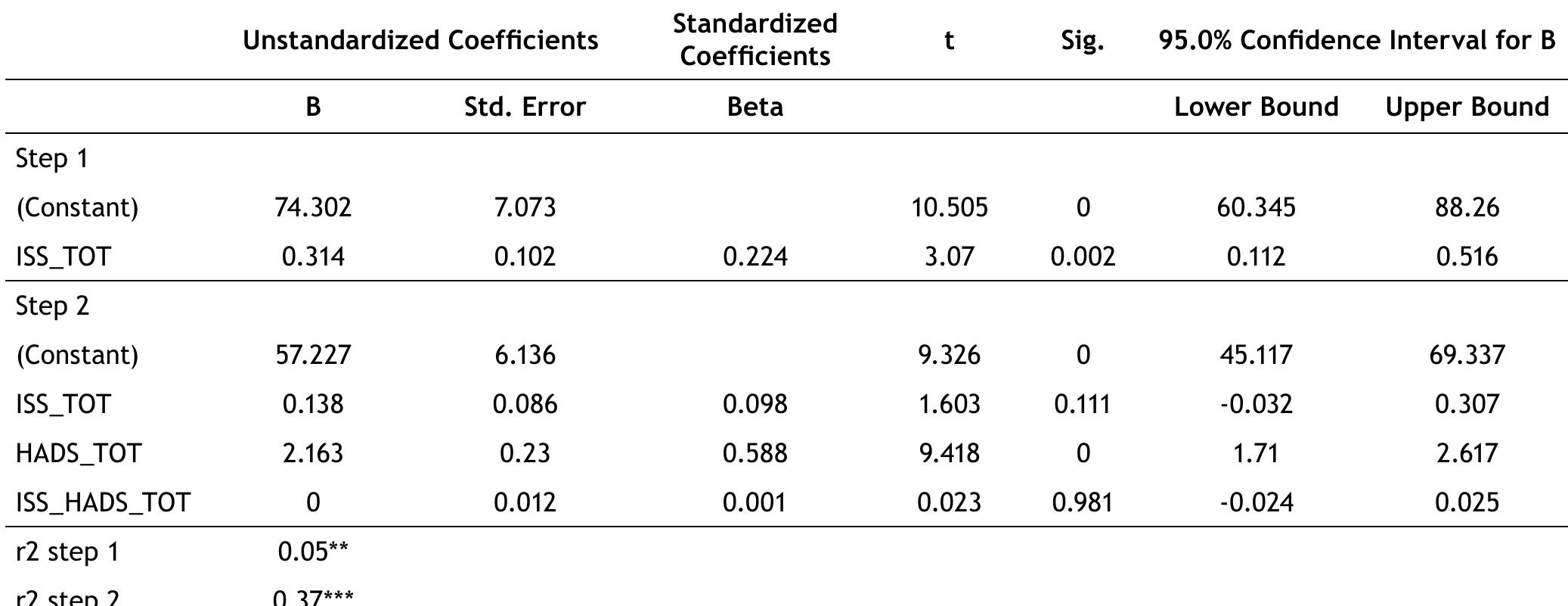
study. On the contrary, a positive relationship was found these types of ER difficulties. In other words, individuals
( = .22, p < .001), with the model accounting for 5% of the that frequently experience difficulties accepting their
variance (F (1, 178) = 9.43, p = .002). On further exploration, emotional responses, refraining from impulsive behaviour,
it was also found that the level of symptomatology (HADS or accessing to ER strategies when experiencing negative
total score) fully mediated this relationship. More specifical- emotions, also tend to frequently use inner speech. Only
ly, when adding to the linear regression a second block that one subscale of the DERS, Lack of Emotional Awareness,
included level of reported depression and anxiety symp- presented a negative relationship with inner speech usage
toms, the relationship between inner speech usage and ER (= -.26, p< .001). Interestingly, this association appears
difficulties dropped and became non-significant ( = .098, not to be mediated by symptomatology, for when the HADS
p = .108). This model explained 37% of the variance, a signifi- was included in the model, the relationship even slightly in-
cantly higher proportion than the previous model (R 2= .33, creased (= -.29, p< .001). This result suggests that individu-
F (1, 176) = 46.94, p < .001). For further details on this mod- als who report high levels of inner speech usage also report
el see Table 3. In sum, the ER Hypothesis was not supported fewer difficulties becoming aware of their feelings when
since individuals with a high IS usage also presented higher experiencing negative emotions. Overall, these results ap-
levels of ER difficulties. This relation, however, was com- pear to suggest that inner speech is not equally related to
pletely mediated by the level of symptomatology, which different types of difficulties experienced by people when
indicated that, when controlled by emotional distress (anx- attempting to regulate their negative emotions.
iety/depression), the frequency of use of inner speech does
not have an effect on difficulties to regulate emotions.
The Emotion Regulation Hypothesis was also explored Emotion Regulation Strategies
by using models that tested whether IS usage presented
significant associations with different types of difficulty in The ER Strategies Hypothesis suggested that inner speech
regulating emotions (DERS subscales). Here results were usage would be negatively associated with suppression but
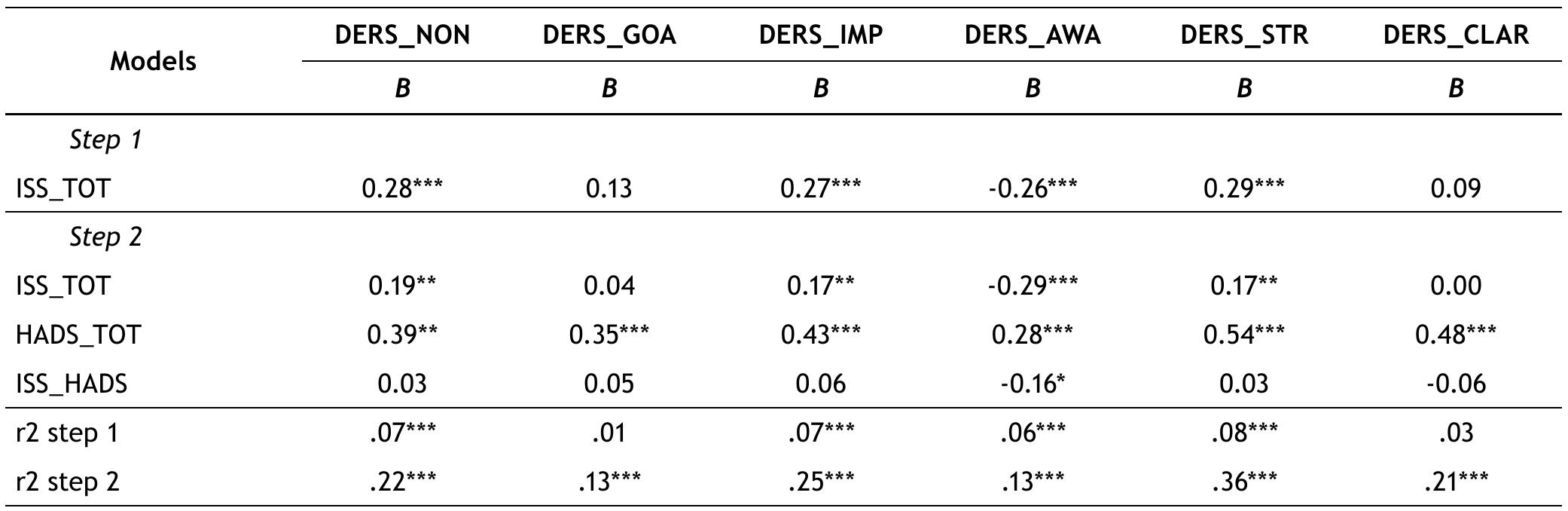
mixed (see Table 4). IS usage did not present significant as- positively associated with reappraisal. Results from this
sociations with the Difficulties Engaging in Goal Directed study partially supported this hypothesis (see Table 5). In the
Behaviour (= 0.13, p= .09) or Lack of Emotional Clarity case of suppression, no significant associations were found
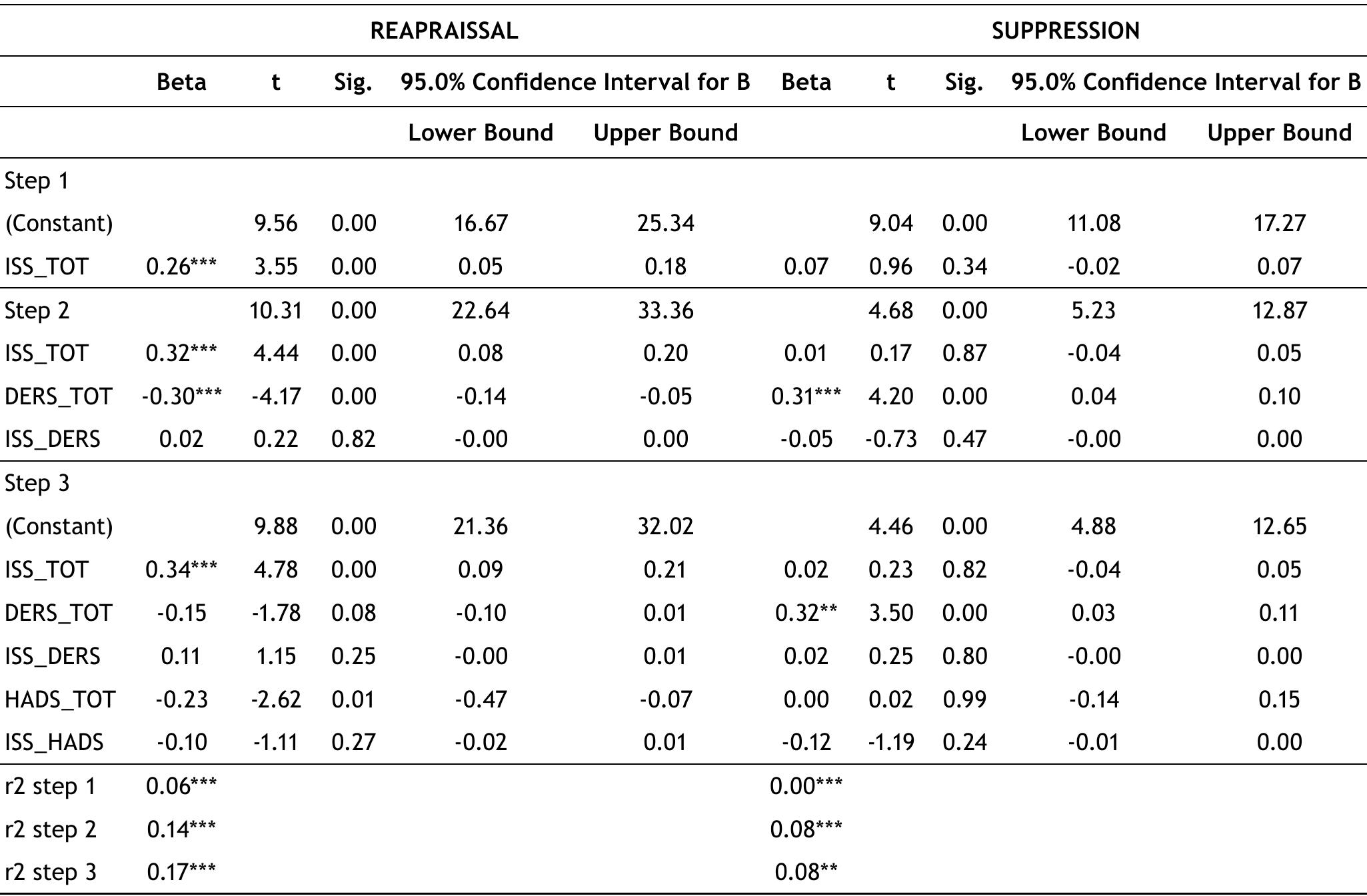
subscales (= .09, p= .22). In contrast, significant positive with inner speech usage (= .07, p= .34). In fact, data sug-
correlations were found between inner speech usage and gested that suppression rather depended on the level of ER
Non-Acceptance of Emotional Responses (= .28, p< .001), difficulties experienced by individuals (DERS controlled by ISS
Impulse Control Difficulties (= .27, p< .001) and Limited = .31, p< .001), and was not associated with self-reported
Access to ER Strategies (= .29, p< .001). It is interesting level of symptomatology (HADS controlled by ISS and DERS
84 Christian E. Salas et al.
Table 3 Regression Models for Inner Speech and DERS total score.
Standardized
Unstandardized Coefficients t Sig. 95.0% Confidence Interval for B
Coefficients
B Std. Error Beta Lower Bound Upper Bound
Step 1
(Constant) 74.302 7.073 10.505 0 60.345 88.26
ISS_TOT 0.314 0.102 0.224 3.07 0.002 0.112 0.516
Step 2
(Constant) 57.227 6.136 9.326 0 45.117 69.337
ISS_TOT 0.138 0.086 0.098 1.603 0.111 -0.032 0.307
HADS_TOT 2.163 0.23 0.588 9.418 0 1.71 2.617
ISS_HADS_TOT 0 0.012 0.001 0.023 0.981 -0.024 0.025
r2 step 1 0.05**
r2 step 2 0.37***
a Dependent Variable: DERS_TOT
ISS_TOT = Inner Speech Scale Total; DERS_TOTAL = Difficulties in Emotion Regulation Scale total score; HADS_TOT = Hospital Anxiety and
Depression Scale.
Table 4 Regression Models for Inner Speech and DERS Subscales
DERS_NON DERS_GOA DERS_IMP DERS_AWA DERS_STR DERS_CLAR
Models
B B B B B B
Step 1
ISS_TOT 0.28*** 0.13 0.27*** -0.26*** 0.29*** 0.09
Step 2
ISS_TOT 0.19** 0.04 0.17** -0.29*** 0.17** 0.00
HADS_TOT 0.39** 0.35*** 0.43*** 0.28*** 0.54*** 0.48***
ISS_HADS 0.03 0.05 0.06 -0.16* 0.03 -0.06
r2 step 1 .07*** .01 .07*** .06*** .08*** .03
r2 step 2 .22*** .13*** .25*** .13*** .36*** .21***
* p< .05; ** p< .01; *** p< .001
ISS_TOT = Inner Speech Scale Total; DERS_NON = Non-Acceptance of Emotional Responses subscale; DERS_GOA = Difficulties Engaging in
Goal Directed Behaviour Scale; DERS_IMP = Impulse Control Difficulties Subscale; DERS_AWA = Lack of Emotional Awareness Subscale;
DERS_STR = Limited Access to Emotion Regulation Strategies Subscale; DERS_CLA = Lack of Emotional Clarity Subscale; HADS_TOT = Hospital
Anxiety and Depression Scale.
= .00, p= .99). Reappraisal presented a positive and sig- Discussion
nificant association with IS usage (= .26, p< .001). In oth-
er words, participants with higher levels of inner speech did During the last decade, research on ER has offered valu-
use reappraisal more often. Interestingly, even though diffi- able insights into how human beings voluntarily modulate
culties in ER (DERS controlled by ISS = -.30, p< .001) and negative feelings (for a revision, see Gross, 2014). In this
levels of symptomatology (HADS controlled by ISS and DERS context, a handful of studies have attempted to under-
stand, or ‘unpack’, the underlying cognitive processes re-
= -.23, p= .01) had a negative association with reappraisal
quired by different ER strategies. It is known, for example,
use, these two variables did not moderate the medium-size
that both reappraisal and suppression involve the use of in-
relationship between inner speech usage and reappraisal use. hibition and verbal fluency (Gyurak et al., 2009; McRae et
This result suggests that IS usage and reappraisal are inde- al., 2011; Salas, Gross, & Turnbull, 2014). Even though this
pendently related. In conclusion, data from this analysis sug- knowledge offers valuable information on the problem, it is
gests that reappraisal and suppression are not equally related still preliminary and more theoretical and experimental
to inner speech. work on the matter is required. The main goal of this article
The Role of Inner Speech in Emotion Dysregulation and Emotion Regulation Strategy Use 85
Table 5 Regression Models for Inner Speech and Emotion Regulation Strategies
REAPRAISSAL SUPPRESSION
Beta t Sig. 95.0% Confidence Interval for B Beta t Sig. 95.0% Confidence Interval for B
Lower Bound Upper Bound Lower Bound Upper Bound
Step 1
(Constant) 9.56 0.00 16.67 25.34 9.04 0.00 11.08 17.27
ISS_TOT 0.26*** 3.55 0.00 0.05 0.18 0.07 0.96 0.34 -0.02 0.07
Step 2 10.31 0.00 22.64 33.36 4.68 0.00 5.23 12.87
ISS_TOT 0.32*** 4.44 0.00 0.08 0.20 0.01 0.17 0.87 -0.04 0.05
DERS_TOT -0.30*** -4.17 0.00 -0.14 -0.05 0.31*** 4.20 0.00 0.04 0.10
ISS_DERS 0.02 0.22 0.82 -0.00 0.00 -0.05 -0.73 0.47 -0.00 0.00
Step 3
(Constant) 9.88 0.00 21.36 32.02 4.46 0.00 4.88 12.65
ISS_TOT 0.34*** 4.78 0.00 0.09 0.21 0.02 0.23 0.82 -0.04 0.05
DERS_TOT -0.15 -1.78 0.08 -0.10 0.01 0.32** 3.50 0.00 0.03 0.11
ISS_DERS 0.11 1.15 0.25 -0.00 0.01 0.02 0.25 0.80 -0.00 0.00
HADS_TOT -0.23 -2.62 0.01 -0.47 -0.07 0.00 0.02 0.99 -0.14 0.15
ISS_HADS -0.10 -1.11 0.27 -0.02 0.01 -0.12 -1.19 0.24 -0.01 0.00
r2 step 1 0.06*** 0.00***
r2 step 2 0.14*** 0.08***
r2 step 3 0.17*** 0.08**
*** Correlation is significant at the 0.001 level (2-tailed), ** Correlation is significant at the 0.01 level (2-tailed)
ISS_TOT = Inner Speech Scale Total; DERS_TOTAL = Difficulties in Emotion Regulation Scale total score; HADS_TOT = Hospital Anxiety and
Depression Scale.
has been to contribute to this particular strand of litera- 2011; Newby & Moulds, 2012; Stokes & Hirsch, 2010). This
ture, by exploring the potential role of a specific cognitive line of argument appears to be supported by evidence from
process in ER: inner speech. As noted in the introduction, this study, which suggests that individuals who exhibited
inner speech -or the capacity to talk to ourselves silently high levels of IS usage also reported a high frequency of
inside our heads- has been generally associated with cog- ‘secondary’ negative emotions when feeling upset (Non-Ac-
nitive and behavioural regulation. Its link to ER, however, ceptance of Emotional Responses). In moments of emotional
has been largely neglected. An example of this omission turmoil, these subjects reported feelings of shame, guilt or
is the fact that IS is only mentioned once in the recent- even anger towards themselves for being upset. Thus, it can
ly edited Handbook of Emotion Regulation (Gross, 2014). be suggested that IS could reinforce a negative emotional
This contrasts markedly with the level of attention that IS loop by acting as an overly evaluative or harsh inner voice.
has received in other areas of research, where its role in However, IS was not equally related to all types of ‘diffi-
self-regulation and psychopathology has been widely ac- culties’ regulating emotions, offering valuable insights into
knowledged (for reviews see Alderson-Day & Fernyhough, the specific roles that IS might play in ER. For example,
2015; Winsler, 2009). This study is the first to offer prelim- IS was frequently used by individuals who also reported
inary evidence on the relationship between inner speech having a high frequency of difficulties controlling their be-
and emotion regulation. haviour when upset (Impulse Control Difficulties subscale)
A first clear finding is that the use of IS is not related or those who presented problems envisaging potential solu-
to the self-reported level of difficulties regulating negative tions when upset (Limited Access to ER Strategies subscale).
emotions, since individuals with high levels of IS usage also Here, a question that remains to be answered by future
tended to exhibit high overall levels of ER difficulties. Fur- experiments, which cannot be addressed here due to the
thermore, the level of symptomatology heavily mediated correlational nature of this study, is whether the use of
this relationship. This finding appears to be in line with the inner speech in individuals with high levels of ER difficul-
existing literature that links IS with certain psychopathologi- ties reflects ‘regulatory’ efforts. In other words, whether
cal presentations. It has been suggested by several studies inner speech is recruited as metacognitive tool to refrain
that, in individuals with high levels of anxiety or depression, behaviour from impulsive responses, or to find alternative
IS may fuel negative cognitions and feelings by acting as an ‘over- solutions during emotionally negative situations. This inter-
ly evaluative’ internal voice (McCarthy-Jones & Fernyhough, pretation of data would be in line with the existing literature
86 Christian E. Salas et al.
in cognitive psychology, where IS has been largely linked to 1959; Luria & Yudovich, 1971). Future studies will need to
impulse control (Luria, 1966; Tullet & Inzlicht, 2010) and address this point by exploring how behavioural measures
problem solving (Emerson & Miyake, 2003; Lidstone, Meins, of inner speech relate to cognitive reappraisal performance
& Fernyhough, 2010). Behavioural studies, where the use of and its underlying cognitive control components.
inner speech to regulate emotions is allowed or obstructed
(for a review see Guerrero, 2005), could offer valuable in-
sights into this question.
Limitations of the Study
It is also interesting that another type of ER difficulty
The present study had several limitations that need to
that appeared related to IS usage was emotional aware-
be considered when interpreting its results. Firstly, data was
ness. However, in this case, individuals who used IS more
collected from a student sample, thus, only reflecting a frag-
frequently had fewer problems paying attention to, and
ment of the population that is not necessarily representative
acknowledging, their emotions (Lack of Emotional Aware-
ness subscale). These data suggest that the act of talking of it in terms of age, educational level or presence of psycho-
to ourselves -inside our heads- may facilitate the process by logical problems. Furthermore, as noted in the description
which we become aware of inner states in moments of neg- of the sample, women were overrepresented compared to
ative arousal, thus acquiring a more reflective stance to- men, a fact that did not allow the proper exploration of sex
wards present emotional experience. This idea is consistent as a potential moderator variable. A second methodological
with a current view of IS as having a role in metacognition, limitation refers to the correlational nature of the study, and
self-awareness and self-understanding (Morin, 2005, 2011). the fact that data was gathered from surveys. New investiga-
Perhaps the main finding of the present study is that IS tions should consider experimental designs where variables,
does not have the same role for different ER strategies. This such as inner speech ability, are behaviourally manipulated
confirms the idea that ER strategies rely on dissimilar psy- and participants engage in true emotion regulation tasks.
chological processes (Gross, 2014). More specifically, data Such approach will allow to control potential bias inherent to
from this investigation suggests that only reappraisal –and the use of self-report questionnaires.
not suppression- is related to IS since individuals with high
use of IS, despite their level of symptomatology, tended to Conclusions
employ reappraisal as an ER strategy more often. Such find-
ing contributes to a small literature exploring the underlying As noted before, this study is the first one exploring the
‘mechanisms’ of ER strategies, which has suggested inhibi- relationship between inner speech and ER. Even though
tion, verbal fluency and working memory as key components results are preliminary -requiring further testing using ex-
of reappraisal (McRae et al., 2011; Salas, Gross, & Turnbull, perimental designs and non-student populations- they con-
2014). Why, then, is IS associated with reappraisal and not tribute importantly to the field of ER and have the poten-
with suppression? A possible explanation may well be that tial to inform clinical work in two main ways. Firstly, data
reappraisal, as a cognitively oriented strategy, relies more from this study suggests that people’s inner speech should
heavily on the manipulation of mental representations, be routinely explored during clinical assessments since the
which are predominantly verbal in nature (McRae et al., frequency of use of inner speech can be associated with
2011). Suppression, in contrast, because it is a behavioural- both emotion dysregulation and the use of reappraisal. In
ly oriented ER strategy (Gross, 2014), appears to rely more other words, and contrary to existing data that positively
heavily on motor control (Beer & Lombardo, 2007) and links inner speech to cognitive and behaviour regulation,
response inhibition (Gross, 1999; Gross & John, 2003; Gross the relationship between inner speech and ER is more com-
& Thompson, 2007; Kühn, Gallinat, & Brass, 2011). plex. Consequently, during clinical interview, it appears
A related research question that remains to be explored necessary to determine whether inner speech is used adap-
by future studies is the specific role that IS may have for tively with regulatory ends or employed pathologically as a
reappraisal itself, and how it relates to other components. self-critical voice that perpetuates negative emotion. Sur-
It has been suggested, for example, that in order to re- prisingly, inner speech is rarely considered a psychological
appraise, several cognitive control sub-processes need to process to be assessed during clinical interviews despite it
take place (e.g. working memory, inhibition, verbal fluency, playing a key role in perpetuating symptomatology or acting
McRae et al., 2011). It is surprising, however, that theoriza- as a vehicle for therapeutic change. The use of self-reports
tions such as this tend to omit the fact that reappraisal, in of inner speech and the careful exploration of this process
general, involves the manipulation of verbal representations during patients’ assessment process could offer some im-
about reality, which are addressed to the self, as an object portant insights to guide treatment.
of ER. In other words, re-interpretations of negative events Secondly, and relating to this last point, inner speech
often occur in the context of a conscious internal dialogue should be considered both as a target of psychological inter-
where the self is at the same time the agent and object ventions as well as a tool to facilitate therapeutic change.
of a new narrative. Even though psychological components Several intervention models designed to treat psychopatho-
such as working memory, inhibition and verbal fluency offer logical populations with ER disorders have stressed the need
some insight into the building blocks of reappraisal as an ER to tackle perseverative cognitive processes that perpetuate
strategy, it is unlikely that they operate in isolation. On the negative affect. As noted in the introduction, several authors
contrary, a more ecological view of this complex process have linked inner speech to depressive rumination. Interest-
would suggest that they occur in the context of an internal ingly, many intervention models have also considered the
narrative, which acts as a vehicle where cognitive control use of self-talk itself as a tool to modify cognitive persevera-
sub-processes take place, thus directing behaviour (Luria, tive processes. Emotion Regulation Therapy (Menin & Fresco,
The Role of Inner Speech in Emotion Dysregulation and Emotion Regulation Strategy Use 87
2014), for example, describes re-framing/re-appraising Guerrero, M. (2005). Inner speech – L2. Thinking words in a second
or the capacity to change cognitions to alter their emotional language. New York: Springer.
significance as a key component of their regulatory skills Gyurak, A., Goodkind, M. S., Madan, A., Kramer, J. H., Miller, B.
programme: an ability that was positively related to inner L., & Levenson, R. W. (2009). Do tests of executive functioning
speech in this study. Furthermore, as a part of this training, predict ability to downregulate emotions spontaneously and
clients are encouraged to develop compassionate internal when instructed to suppress? Cognitive, Affective & Behavioral
Neuroscience, 9(2), 144-152.
dialogues and self-validating statements, which aim to soft-
Holmes, E. A., Lang, T. J., & Shah, D. M. (2009). Developing inter-
en automatic self-critical thoughts. Other therapeutic mod-
pretation bias modification as a “cognitive vaccine” for de-
els, such as Dialectical Behavioural Therapy (Neacsiu, Bo- pressed mood: Imagining positive events makes you feel better
hus, & Linehan, 2014) or Affect Regulation Training (Berking than thinking about them verbally. Journal of Abnormal Psy-
& Schwarz, 2014), also consider compassionate self-support chology, 118, 76-88.
(self-soothing or self- encouraging strategies) as key ingredi- Holmes, E. A., Mathews, A., Dalgleish, T., & Mackintosh, B. (2006).
ents in achieving therapeutic change. Positive interpretation training: Effects of mental imagery ver-
sus verbal training on positive mood. Behavior Therapy, 37,
237-247.
Acknowledge Kühn, S., Gallinat, J., & Brass, M. (2011). “Keep calm and carry
on”: Structural correlates of expressive suppression of emo-
The first author of this article was supported by a tions. PloS One, 6(1), e16569.
Post-doctoral grant from the Government of Chile [CONICYT] Lidstone, J. S. M., Meins, E., & Fernyhough, C. (2010). The roles
and an early-career researcher grant from the Neuropsycho- of private speech and inner speech in planning during mid-
analysis Foundation. dle childhood: Evidence from a dual task paradigm. Journal of
Experimental Child Psychology, 107(4), 438-451. http://dx.doi.
References org/10.1016/j.jecp.2010.06.002
Luria, A. R. (1959). The directive function of speech in develop-
Alderson-Day, B., & Fernyhough, C. (2015). Inner speech: Develop- ment and dissolution. Word, 15(3), 341-464.
ment, cognitive functions, phenomenology, and neurobiology. Luria, A. R. (1966). Higher cortical functions in man. London: Tav-
Psychological Bulletin, 141(5), 931-965. istock Publications.
Beer, J. S., Lombardo, M. V., & Gross, J. J. (2007). Insights into Luria, A., & Yudovich, F. (1971). Speech and the development of
emotion regulation from neuropsychology. In J. Gross (Ed.), mental processes in the child. Harmondsworth: Penguin Books.
Handbook of Emotion Regulation (pp. 69-86). New York: Guil- McCarthy-Jones, S., & Fernyhough, C. (2011). The varieties of in-
ford Press. ner speech: Links between quality of inner speech and psycho-
Bellido‐Zanin, G., Perona‐Garcelán, S., Senín‐Calderón, C., López‐ pathological variables in a sample of young adults. Conscious-
Jiménez, A. M., & Rodríguez‐Testal, J. F. (2017). Relationship ness and cognition, 20(4), 1586-1593.
between inner dialog and ideas of reference and the mediating McRae, K., Jacobs, S. E., Ray, R. D., John, O. P., & Gross, J. J.
role of dissociation. Scandinavian Journal of Psychology, 58(1), (2011). Individual differences in reappraisal ability: Links to re-
100-106. appraisal frequency, well-being, and cognitive control. Journal
Berking, M., & Schwarz, J. (2014). Affect Regulation Training. In of Research in Personality, 46(1), 2-7.
J. Gross (Ed.), Handbook of Emotion Regulation (pp. 529-547). McRae, K., Ochsner, K. N., & Gross, J. J. (2011). The reason in
New York: The Guilford Press. passion: A social cognitive neuroscience approach to emotion
Clowes, R. (2007). A self-regulation model of inner speech and its regulation. In K. D. Vohs & R. F. Baumeister (Eds.), Handbook
role in the organization of human conscious experience. Jour- of self-regulation: Research, theory, and applications (pp. 186-
nal of Consciousness Studies, 14(7), 59-71.
203). New York, NY, US: Guilford Press.
Emerson, M. J., & Miyake, A. (2003). The role of inner speech in
Menin, D., & Fresco, D. (2014). Emotion regulation therapy. In J.
task switching: A dual-task investigation. Journal of Memory
Gross (Ed.), Handbook of Emotion Regulation (pp. 469-490).
and Language, 48(1), 148-168.
New York: The Guildford Press.
Gratz, K. L., & Roemer, L. (2004). Multidimensional assessment
Miyake, A., Emerson, M. J., Padilla, F., & Ahn, J. (2004). Inner
of emotion regulation and dysregulation: Development, factor
speech as a retrieval aid for task goals: The effects of cue type
structure, and initial validation of the difficulties in emotion
and articulatory suppression in the random task cuing para-
regulation scale. Journal of Psychopathology and Behavioral
Assessment, 26(1), 41-54. digm. Acta Psychologica, 115(2-3), 123-142.
Gross, J. J. (1999). Emotion regulation: Past, present, future. Cog- Morin, A. (2005). Possible links between self-awareness and inner
nition & Emotion, 13(5), 551-573. speech theoretical background, underlying mechanisms, and
Gross, J. J., & John, O. P. (2003). Individual differences in two ER empirical evidence. Journal of Consciousness Studies 12, 4(5),
processes: Implications for affect, relationships, and well-be- 115-134.
ing. Journal of Personality and Social Psychology, 85(2), 348- Morin, A. (2011). Self-Awareness Part 2: Neuroanatomy and impor-
362. tance of inner speech. Social and Personality Psychology Compass,
Gross, J., & Thompson, R. (2007). Emotion regulation: Conceptual 5(12), 1004-1017. http://dx.doi.org/10.1111/j.1751-9004.2011.00
foundations. In J. J. Gross (Ed.), Handbook of Emotion Regula- 410.x
tion (pp. 3-24). New York: The Guilford Press. Nolen-Hoeksema, S. (2000). The role of rumination in depressive
Gross, J. J. (2013). Emotion regulation: Taking stock and moving disorders and mixed anxiety/depressive symptoms. Journal of
forward. Emotion, 13(3), 359-365. Abnormal Psychology, 109(3), 504.
Gross, J.J. (2014). Emotion regulation: Conceptual and empirical Nolen-Hoeksema, S. (2004). The response styles theory. In C. Pa-
foundations. In J.J. Gross (Ed.), Handbook of Emotion Regula- pageorgiou & A. Wells (Eds.), Depressive Rumination: Nature,
tion, (pp. 3-20). New York: The Guildford Press. Theory and Treatment (pp. 107–124). Chichester, UK: Wiley.
88 Christian E. Salas et al.
Neacsiu, A., Bohus, M., & Linehan, M. (2014). Dialectical behaviour Salas, C. E., Radovic, D., Yuen, K. S., Yeates, G. N., Castro, O., &
therapy: An intervention for emotion regulation. In J. Gross Turnbull, O. H. (2014b). “Opening an emotional dimension in
(Ed.), Handbook of Emotion Regulation (pp. 491-507). New me”: Changes in emotional reactivity and ER in a case of exec-
York: The Guilford Press. utive impairment after left fronto-parietal damage. Bulletin of
Newby, J. M., & Moulds, M. L. (2012). A comparison of the content, the Menninger Clinic, 78(4), 301-334.
themes, and features of intrusive memories and rumination in Siegrist, M. (1995). Inner speech as a cognitive process mediating
major depressive disorder. British Journal of Clinical Psychol- self-consciousness and inhibiting self-deception. Psychological
ogy, 51(2), 197-205. Reports, 76, 259-265.
Nyklícek, I., Vingerhoets, A., & Zeelenberg, M. (2011). Emotion Sokolov, A.N. (1972) Inner speech and thought. New York: Plenum/
regulation and well-being. Annals of Physics (Vol. 54). New Rosetta Edition.
York: Springer US. Stokes, C., & Hirsch, C. R. (2010). Engaging in imagery versus ver-
Olssøn, I., Mykletun, A., & Dahl, A. (2005). The hospital anxiety bal processing of worry: Impact on negative intrusions in high
and depression rating scale: A cross-sectional study of psy- worriers. Behaviour Research and Therapy, 48(5), 418-423.
chometrics and case finding abilities in general practice. BMC Tullett, A. M., & Inzlicht, M. (2010). The voice of self-control:
Psychiatry, 5, 46. Blocking the inner voice increases impulsive responding. Acta
Perona-Garcelán, S., Bellido-Zanin, G., Senín-Calderón, C., López- Psychologica, 135(2), 252-256.
Jiménez, A. M., & Rodríguez-Testal, J. F. (2017). Spanish adap- Uttl, B., Morin, A., & Hamper, B. (2011). Are inner speech self-re-
tation of the varieties of inner speech questionnaire (VISQ). port questionnaires reliable and valid? Procedia - Social and
Study of the relationship between inner speech, dissociation, Behavioral Sciences, 30, 1719-1723.
and hallucination proneness. Clínica y Salud, 28(2), 93-100. Vygotsky, L. (1934/2012). Thought and language. Cambridge: MIT
Perrone-Bertolotti, M., Rapin, L., Lachaux, J. P., Baciu, M., & Loev- Press.
enbruck, H. (2014). What is that little voice inside my head? In- Watkins, E. R. (2008). Constructive and unconstructive repetitive
ner speech phenomenology, its role in cognitive performance, thought. Psychological Bulletin, 134, 163-206.
and its relation to self-monitoring. Behavioural Brain Research, Werner, K., & Gross, J. J. (2010). Emotion regulation and psycho-
261, 220-239. pathology: A conceptual framework. In A. Kring & D. M. Sloan
Salas, C. E., Gross, J. J., Rafal, R. D., Viñas-Guasch, N., & Turnbull, (Eds.), Emotion regulation and psychopathology (pp. 13-37).
O. H. (2013). Concrete behaviour and reappraisal deficits after New York: Guilford Press.
a left frontal stroke: A case study. Neuropsychological rehabil- Winsler, A. (2009). Still talking to ourselves after all these years:
itation, 23(4), 467-500. A review of current research on private speech. In A. Winsler,
Salas, C. E., Gross, J. J., & Turnbull, O. H. (2014). Reappraisal C. Fernyhough, & I. Montero (Eds.), Private Speech, Executive
generation after acquired brain damage: The role of laterality Functioning and the Development of Verbal Self-Regulation
and cognitive control. Frontiers in Psychology, 5(242). http:// (pp. 3-41). Cambridge: Cambridge University Press.
dx.doi.org/10.3389/fpsyg.2014.00242