Arch Sex Behav (2014) 43:353–361
DOI 10.1007/s10508-013-0194-x
ORIGINAL PAPER
Shape Differences Between the Faces of Homosexual
and Heterosexual Men
Jaroslava Varella Valentova • Karel Kleisner •
Jan Havlı´cˇek • Jirˇ´ı Neustupa
Received: 8 October 2011 / Revised: 1 February 2013 / Accepted: 22 July 2013 / Published online: 17 October 2013
Ó Springer Science+Business Media New York 2013
Abstract Previous studies have shown that homosexual standardized facial photos which were assessed by 80 inde-
men differ from heterosexual men in several somatic traits pendent raters. Binary logistic regression showed no effect of
and lay people accurately attribute sexual orientation based attributed sexual orientation on self-reported sexual orien-
on facial images. Thus, we may predict that morphological tation. However, homosexual men were rated as more mas-
differences between faces of homosexual and heterosexual culine than heterosexual men, which may explain the mis-
individuals can cue to sexual orientation. The main aim of judgment of sexual orientation. Thus, our results showed that
this study was to test for possible differences in facial shape differences in facial morphology of homosexual and heter-
between heterosexual and homosexual men. Further, we tes- osexual men do not simply mirror variation in femininity, and
ted whether self-reported sexual orientation correlated with the stereotypic association of feminine looking men as homo-
sexual orientation and masculinity–femininity attributed sexual may confound judgments of sexual orientation.
from facial images by independent raters. In Study 1, we used
geometric morphometrics to test for differences in facial Keywords Geometric morphometrics Homosexuality
shape between homosexual and heterosexual men. The ana- Facial shape Sexual orientation
lysis revealed significant shape differences in faces of het-
erosexual and homosexual men. Homosexual men showed
relatively wider and shorter faces, smaller and shorter noses, Introduction
and rather massive and more rounded jaws, resulting in a
mosaic of both feminine and masculine features. In Study 2, Attributions of Sexual Orientation and Its Mechanisms
we tested the accuracy of sexual orientation judgment from
Classifying the physical appearances of unknown people
helps us to navigate the social world. As they are prominently
J. V. Valentova (&) displayed, facial traits play a particularly important role in
Center for Theoretical Study, Charles University in Prague and social perception. Facial appearance influences our percep-
The Academy of Sciences of the Czech Republic, Jilska 1, tion of broad social categories, such as age and sex (Bruce &
11000 Prague 1, Czech Republic
Young, 1998), and it can provide cues to other, more subtle
e-mail:
[email protected]
personality qualities such as extraversion or aggressiveness
K. Kleisner (for review, see Zebrowitz, 1997). During the last decades,
Department of Philosophy and History of Sciences, Faculty some researchers have focused on less obvious categories,
of Science, Charles University, Prague, Czech Republic
such as sexual orientation.
J. Havlı´cˇek It is commonly believed that gay people are especially capa-
Department of Zoology, Faculty of Science, Charles University, ble of recognizing each other on first sight. This is most likely
Prague, Czech Republic based on various aspects of nonverbal behavior, including eye
gaze, which can serve as a deliberate cue of sexual interest (Nic-
J. Neustupa
Department of Botany, Faculty of Science, Charles University, holas, 2004; Shelp, 2002). Also, it has been shown that inten-
Prague, Czech Republic tionally controlled traits, such as hairstyle, might serve as a sign
123
354 Arch Sex Behav (2014) 43:353–361
of male sexual orientation (Rule, Ambady, Adams, & Macrae, studies examined the possible mechanisms of attribution of
2008). Nevertheless, recent research shows that sexual orien- sexual orientation based on unintentional cues. It was argued
tation can be accurately judged on the basis of rather invol- that atypical sex traits might serve as cues to sexual orienta-
untary facial cues (Ambady, Hallahan, & Conner, 1999; Lyons, tion (Rieger et al., 2010). Moreover, specific features of walking
Lynch, Brewer, & Bruno, 2013). It was shown that homosexual style (e.g., swagger and sway) and body morphology typical for
men were perceived as closer to the homosexual end of the het- heterosexual persons of the opposite sex were associated with
erosexual–homosexual continuum than heterosexuals. This was homosexual individuals (Johnson et al., 2007). Similarly, home-
based on stimuli from both short video clips and still photos, made videos of homosexual men and women as recorded during
though more accuracy was obtained in judgments based on their childhoods and standardized videos recorded at the time of
behavioral videos than static photos (Ambady et al., 1999). Fur- the experiment were rated as more gender nonconforming than
thermore, accurate judgments were made as quickly as 50 ms comparable stimuli from heterosexual targets (Rieger et al.,
and the accuracy did not improve with the length of the exposure 2010). Interestingly, voice pitch, which differs between males
(Rule & Ambady, 2008). This indicates that even a very short and females, is not associated with male sexual orientation (Gau-
exposure to facial photographs is sufficient to infer the sexual dio, 1994). Nevertheless, there are other sex dimorphic speech
orientation of unknown persons. It was also found that isolated patterns, such as formant frequency, that differ between gay and
facial cues, such as characteristic posturing around the mouth heterosexual men (Pierrehumbert, Bent, Munson, Bradlow, &
and eye area, provided sufficient information to enable above- Bailey, 2004; Rendall, Vasey, & McKenzie,2008). After behav-
chance accuracy in attributing sexual orientation (Rule et al., ioral display and speech patterns, feminine male faces receive
2008). higher ratings of homosexuality than masculine faces (Dunkle
Besides facial appearance, previous studies tested the role & Francis, 1990; Freeman, Johnson, Ambady, & Rule, 2010).
of vocal and other behavioral cues in sexual orientation attri- Recently, it has been reported that sex-atypical facial features
bution and it was found that listeners could distinguish be- are employed in attribution of sexual orientation of men and
tween the speech of homosexual and heterosexual targets women alike (Lyons et al., 2013). This similarly applies to the
(Gaudio, 1994; Linville, 1998; Rieger, Linsenmeier, Gygax, inference of sexual roles (i.e. tops/bottoms) in male homosex-
Garcia, & Bailey, 2010), observers accurately judged sexual uals (Tskhay & Rule, 2013). Moreover, faces that were digitally
orientation from short video-clips of walking style (Johnson, manipulated to show sex inverted traits, such as shape or texture,
Gill, Reichman, & Tassinary, 2007; Rieger, Linsenmeier, were reliably perceived as homosexual (Freeman et al., 2010).
Gygax, & Bailey, 2008), and, in one study, sexual orientation To summarize, people use atypical sex traits in facial appear-
was accurately judged from video clips that were only 1 s in ance, body movements, and voice to infer the sexual orientation
length (Ambady et al., 1999). It was also shown that, to some of unknown individuals.
degree, such attributions work cross-culturally (Rule, Ishii,
Ambady, Rosen, & Hallett, 2011; Valentova, Rieger, Hav- Morphological Variation Among Homosexual
licek, Linsenmeier, & Bailey, 2011). In general, these stud- and Heterosexual Men
ies have shown that homosexual men are accurately rated
according to their faces and behavioral display across cul- Research on the mechanisms of the perception of sexual ori-
tures although individuals more accurately rate the sexual entation has so far been focused on traits that serve as markers
orientation of people from their own country than those from of sexual orientation. Nevertheless, there is another line of
others, and individuals from countries where homosexuality empirical evidence which shows that, besides their prefer-
is less accepted were more prone to rate the targets as heter- ences of sexual partners, homosexual and heterosexual indi-
osexual. Further, two other studies showed that sexual ori- viduals also show other psychobiological differences. As for
entation can be inferred from still photographs of the entire anatomical and morphological differences, homosexual men
clothed figure (Ambady et al., 1999; Rieger et al., 2010). More- show female-like patterns in sex dimorphic brain regions,
over, it was found that voluntary concealment of nonverbal such as the hypothalamus (LeVay, 1991), anterior commis-
behavior connected to sexual orientation is possible only to a sure (Allen & Gorski,1992), or corpus callosum (Witelson et al.,
small degree (Sylva, Rieger, Linsenmeier, & Bailey, 2010). 2008).
In this study, homosexual men were asked to voluntarily Further, compared to heterosexuals, homosexual men tend
conceal behaviors that might reveal their sexual orientation to be shorter and lighter and they also have shorter long bones
and, the more demanding the experimental situation was, the (Bogaert & Blanchard, 1996; Martin & Nguyen, 2004). Atyp-
less homosexual men were able to conceal nonverbal signs of ical sex development in homosexual individuals is also sup-
their sexual orientation. ported by studies showing sex atypical patterns in 2D:4D ratio
Thus, facial appearance, body movement, and paraverbal (e.g., McFadden et al., 2005; however, for a meta-analysis
speech patterns seem to contain relevant information about which did not support 2D:4D differences between homo-
the sexual orientation of unknown individuals. Only a few sexual and heterosexual men, see Grimbos, Dawood, Burriss,
123
Arch Sex Behav (2014) 43:353–361 355
Zucker, & Puts, 2010). Some of these traits develop during the five major Czech gay-oriented web pages, leaflets were dis-
prenatal or perinatal period under the influence of sex hor- tributed among five gay-oriented bars and clubs in Prague,
mones and are thus discussed in relation to the etiology of and the first author advertised the research during an inter-
sexual orientation. In short, it is thought that atypical levels of view on a radio program for the Czech gay and lesbian com-
male sex hormones (especially lower levels of testosterone) munity. Sexual orientation was not mentioned as a condition
during prenatal development lead to a development of sex- for the study in any of these sources so as not to discourage
atypical traits, including morphological or cognitive traits, target participants. We only advertised the broader goal of the
and also sexual preferences of individuals of the same sex (for project, which was the investigation of partner preference. By
review, see LeVay, 2010). these methods, 25 homosexual participants were recruited.
To summarize, these studies suggest that, on average, Fifteen homosexual participants were recruited by the
homosexual individuals show behavioral, psychological, and snowball method through the social networks of the first
morphological traits that are in some ways similar to heter- author. In particular, an email was sent to both homosexual
osexual individuals of the opposite sex. Nonetheless, most of and heterosexual colleagues, friends, and students with the
the reported morphological differences are not perceivable same information as was advertised in banners and leaflets
(e.g., brain regions) or are unknown to most people (e.g., hair asking them to spread the information further. When using
whorl) (Klar, 2004) and thus cannot be utilized in sexual ori- these methods, we announced that, for purposes of this study,
entation judgments. we required men from 18 to 35 years old, of any sexual ori-
entation. Thus, we put no stress on the information about sex-
ual orientation, but did let the potential participant know that
Goals of the Current Study we were not only seeking heterosexual persons. By this method,
a majority of the heterosexual participants were also recruited.
As reported above, facial appearance provides cues to sexual Another 15 heterosexual men were recruited by the same leaflets
orientation to unknown people and we therefore hypothe- distributed at Charles University in Prague.
sized that homosexual and heterosexual individuals also dif- We attempted to match the samples in basic demographic
fer in their facial morphology. In contrast to the previous data and the difference in age between these two groups was
research focusing on facial traits through which sexual ori- not significant t(77) = 1.24. Participants were asked to indi-
entation was perceived, in this study we focused on facial cate their sexual orientation on a 7-point Kinsey scale (‘‘Please
traits through which sexual orientation is expressed. In other indicate your sexual orientation on a 7-point scale, where 0 =
words, the aim of the current study was to determine if homo- sexual orientation aimed exclusively toward women, 7 = sexual
sexual and heterosexual men differ in their facial morphology orientation aimed exclusively toward men, and 3 = sexual
as measured and analyzed using the method of geometric orientation aimed at both, men and women, i.e., bisexuality’’).
morphometrics. Since atypical prenatal hormonal action may Participants were also asked to use 7-point scales to indicate
lead to sex-atypical development, one may predict that facial their sexual behavior during adolescence, adulthood, and the last
features in homosexual men would show rather sex-atypical, year, as well as sexual preferences during adolescence, adult-
i.e., feminine traits. In Study 1, we thus examined possible hood, and the last year. As nobody indicated points 2–4 on any of
differences between facial photos of homosexual and heter- the Kinsey scales, only men indicating exclusive or nearly exclu-
osexual men in their facial constitution. In Study 2, we exam- sive sexual preferences and behaviors toward either women (0 or
ined the effect of self-reported sexual orientation on judged 1 on the 7-point Kinsey scale) or men (5 or 6) participated in the
sexual orientation and masculinity–femininity from facial pic- study. All participants were reimbursed for their participation
tures. with 300 CZK (17 USD).
Study 1 Measures
Method Facial Stimuli Preparation All targets were asked to remove
facial jewelry and earrings and were instructed to adopt a
Participants neutral facial expression (as if they were on an elevator or
listening to a lecture). To facilitate access to all facial parts
The sample consisted of 40 homosexual (M age = 24.0 years; during the geometric morphometric analyses, all targets were
SD = 4.1) and 40 heterosexual (M age = 23.0 years; SD = asked to use a provided black hair band to remove hair from
3.4) men, all of them of Czech ethnicity and Caucasian the forehead. The portraits were taken using a Canon 350D
appearance. Participants were recruited via three main ways: camera with the focus Canon EF 50/1.8 II under standard
Internet banners advertising the study were administered in conditions from a distance of 1.5 m.
123
356 Arch Sex Behav (2014) 43:353–361
Geometric Morphometrics There were 69 landmarks, includ- To evaluate the effects of an overall bilateral asymmetry
ing 36 semi-landmarks on each of 80 facial portraits, for a on differences between facial morphospace of homosexual
total of 11,040 2D coordinates. These coordinates were ana- and heterosexual men, the face shapes were analyzed using
lyzed with use of geometric morphometric methods. The the PCA-based decomposition of symmetric and asymmetric
individual 2D landmarks were placed into mutually corre- variation (Kolamunnage & Kent, 2003; Mardia, Bookstein,
sponding positions on the photographs of investigated objects. & Moreton, 2000; Savriama & Klingenberg, 2011). A mir-
TpsDig, ver. 2. 14 (Rohlf, 2009a) software was used for this rored set of landmark configurations was established by their
purpose. Similarly, the semi-landmarks were depicted along the reflection along the axis of symmetry and subsequent rela-
outlines so that their number corresponded across individual beling of symmetrically corresponding landmarks (Kling-
objects. Fixed landmarks describe coordinates on each speci- enberg, Barluenga, & Meyer, 2002). A PCA of the combined
men that are anatomically (or at least geometrically) homolo- original and reflected/relabeled dataset separated individual
gous while sliding landmarks (semi-landmarks) serve to denote principal components of symmetric variation from the com-
curves and outlines. For example, the most lateral point on ponents of asymmetric shape changes (Kolamunnage & Kent,
the zygomatic arch (zygion) represent typical landmark points 2003; Savriama, Neustupa & Klingenberg, 2010). The relative
whereas the face outline between the left (and right) zygion and proportion of bilateral asymmetry was assessed by summing the
the most inferior point of the mandible in the midline (gnathion) proportions of variance spanned by all the axes that describe
may illustrate a curve suitable for depiction of semi-landmarks. asymmetric variation for individual groups. The PCA-based
The exact locations of landmarks and semi-landmarks on male decomposition of symmetric and asymmetric variation relies on
faces were adopted from Fink et al. (2005), Schaefer et al. summing the percentages of explained variance of axes that span
(2006), Kleisner, Kocˇnar, Rubesˇova´, and Flegr (2010), Kleisner, either symmetric or asymmetric variation. By definition, the entire
Prˇ´ıplatova´, Frost, and Flegr (2013), and Trˇebicky´, Havlı´cˇek, set of PC axes describes all the morphological variation captured
Roberts, Little, and Kleisner (2013). All landmark (and semi- by ourmorphometricanalysis.Therefore,decomposition ofall the
landmark) configurations were superimposed by generalized axes in two groups—symmetric and asymmetric axes—effec-
Procrustes analysis (GPA), implemented in TpsRelw software, tively evaluates the proportions of these two different patterns
ver. 1.46. Superimposition by GPA removes variation that may of morphological variation in the human face. The significance
be attributed to differences in position, rotation or size of the of differences in amount of relative asymmetric variation bet-
individual objects (faces). What remains after GPA is the‘‘pure’’ ween sexual-orientation groups was assessed by a permutation
shape variation, such that morphological differences among routine in R, ver.2.3.1. (R Core Development Team, 2009). The
objects that have not been caused by differences in their position, entire set of analyzed faces from both groups (80 original and 80
rotation or size may be analyzed by subsequent multivariate reflected/re-labeled configurations) was permuted and randomly
statistical methods. divided into two groups of the same sizes as the original sexual
To observe shape variation among the landmark data orientation datasets. The GPA and PCA of these groups were
configurations of all individuals, the principal component conducted using the shapes, ver.1.0.9 module of R (Dryden &
analysis (PCA) was carried out in TpsRelw, ver. 1.46. (Rohlf, Mardia,1998) and theamount of asymmetrywas computed from
2008) on the weight matrix (including the uniform compo- individual principal components. The difference in relative asy-
nent), which resulted from the thin-plate spline transforma- mmetry between groups was then calculated. This procedure
tion of landmark data (Bookstein, 1991; Zelditch, Swiderski, was repeated 10,000 times and the original differences between
Sheets, & Fink, 2004). The PC scores for the objects of the first the relative asymmetry levels of the sexual orientation groups
25 axes describing 97 % of total variation were used to test the were compared to a set that simulated the null hypothesis that the
shape differences between a priori groups as defined by self- asymmetry did not differ by more than chance. All p values were
reported sexual orientation. This was performed by the linear conducted as two-tailed.
discriminant analysis and by the nonparametric two-group per- The qualitative evaluations of the morphological differ-
mutation test on Mahalanobis distance with 10,000 permu- ences between the studied groups were based on the inter-
tations, implemented in PAST, ver. 2.01 (Hammer, Harper, & pretation of thin-plate spline deformation grids that represent
Ryan, 2001). To visualize the shape variation associated with statistically supported landmark configurations estimated by
sexual orientation, GPA shape coordinates were regressed shape regressions. This appraisal was independently done by
onto discriminant scores using multivariate regression in one of the authors (K.K.), who performed all the geometric
which shape coordinates represented the dependent variable morphometrics analyses, and by an experienced physical anthro-
and discriminant scores the independent variable (conducted pologist who was blind to the purpose of the study. The written
in TpsRegr, ver. 1.36) (Rohlf, 2009b). Shape regressions were verbal descriptions of both experts generally agreed on quali-
displayed by thin-plate splines as deformation from the overall tative interpretations of the thin-plate spline deformations (e.g.
mean landmark configuration. both of them wrote that the shape of the oral cleft was concave
123
Arch Sex Behav (2014) 43:353–361 357
in the heterosexuals compared to the convex cleft in homo- Study 2
sexuals).
Method
Results
Participants
Self-reported sexual orientation significantly classified the
shape variation of male faces delineated by landmark con- The sample consisted of 33 (M age = 23.9 years; SD = 4.5)
figuration into two groups (Hotteling’s T2, p = .006; 82.5 % homosexual and 33 (M age = 22.4 years; SD = 2.8) hetero-
of correctly classified individuals). In addition, the two-group sexual men from the total sample of the first study (chrono-
permutation test of the shape data also rejected the null hypo- logically, targets for this study were recruited first, so there
thesis of no association between facial shape and self-asses- were fewer targets than in Study 1). There was no significant
sed sexual orientation (p = .006; Mahalanobis distance = .22). difference in age between these two groups t(65) = 1.61.
The qualitative appraisal of the thin-plate spline deformations
of shapes characteristic for individual self-reported sexual
orientation revealed notable differences in lateral compres- Procedure
sion (or dilations) in the regions of the mouth, nose, and space
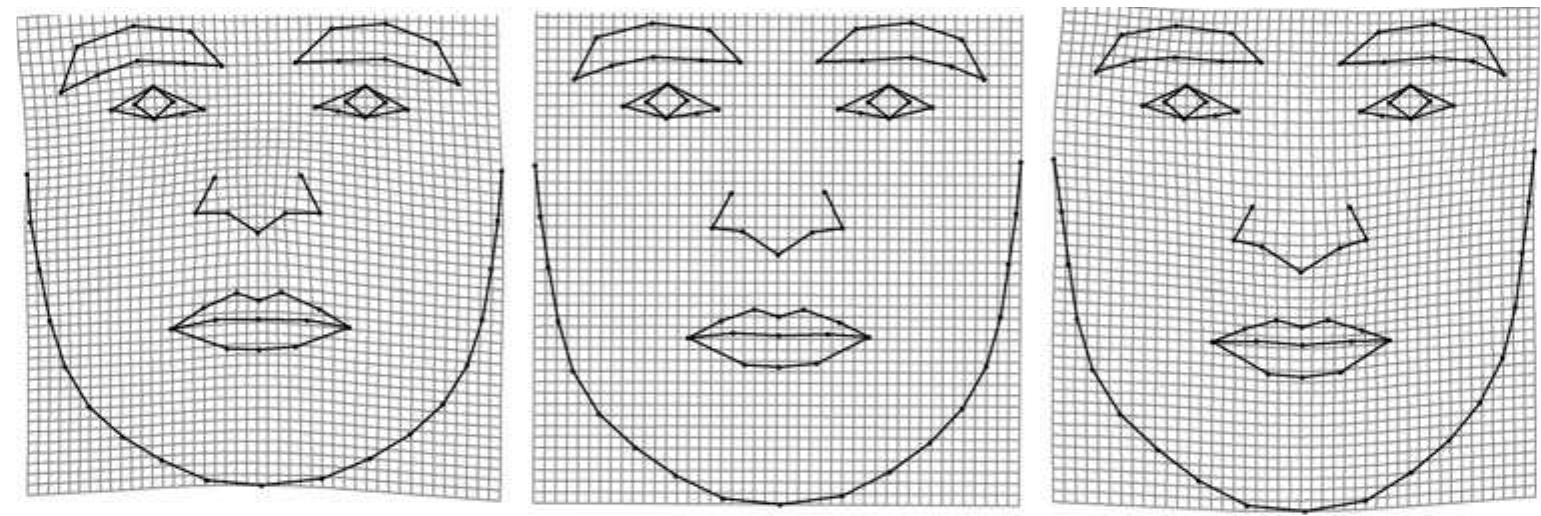
between eyes and mouth along the bilateral axis (Fig. 1). In Forty female (M age = 21.3 years, SD = 2.9) and 40 male (M
contrast to the homosexual sample, the estimated figure for the age = 23.2 years, SD = 4.7) students from Charles University
heterosexual sample showed a larger nose and a shorter dis- in Prague took part in the rating session. All raters were
tance between the nose and mouth (i.e., shorter philtrum, the recruited at the foyer of the main building of the Faculty of
medial depression between the nose and upper lip bordered by Humanities among students passing by. They were asked to
ridges). We also observed a longer distance between eyes and participate anonymously in a study on male appearance, to
mouth (i.e., distance between pupils and the medial center of rate male facial photos for masculinity and sexual orientation.
the mouth). Further differences were observed in the shape of the The raters were not paid for their participation. All ratings took
mouth.Intheheterosexualsample,thecornersofthemouthorient part in a quiet seminar room. Each participant was informed
upwards and the shape of the oral cleft was concave while in the that all facial images were male, and they were instructed to
homosexual sample the corners of the mouth oriented downwards ratesexual orientationonascalefrom1to7,with1indicatingthat
and the shape of the oral cleft was convex. Finally, there was a the individual looked very heterosexual and 7 indicating a very
notable difference in the shape of the chin. The heterosexual homosexual appearance. For ratings of masculinity–femininity,
sample was characterized by an oval shape of the chin contrary raters were instructed to rate the faces on a 7-point scale with 1
to the rounded and wider chin of the homosexual sample. indicating amasculineormale-like appearance and7indicatinga
The PCA of the combined original and reflected/relabeled feminine or female-like appearance. To avoid carry-over effects,
landmark configurations of individual groups yielded 16.3 % each rater assessed only one parameter. In particular, 20 female
of relative asymmetric variation for heterosexual and 13.7 % and 20 male raters assessed masculinity–femininity while anot-
for homosexual male datasets. However, this difference of her 20 female and 20 male raters assessed sexual orientation.
2.6 %, which illustrated a slightly higher proportion of bilateral Image ratings were carried out on a 15-in. laptop screen with
asymmetry in shape variation of heterosexual men, was not sig- 1,280 9 800 pixel resolution using software Rater developed
nificant in a randomization test with 10,000 permutations. by L. DeBruine (www.facelab.org/debruine/Programs/rater).
Fig. 1 Visualization of
estimated landmark
configuration on faces of
homosexual (left) and
heterosexual (right) men. The
differences between a
heterosexual and homosexual
face is demonstrated by
contractions and dilations of TPS
deformation grids from average
configuration (in the middle)
123
358 Arch Sex Behav (2014) 43:353–361
Data Analyses reported sexual orientation, with homosexual men being rated as
more masculine, but there was no significant effect of sexual
To assess inter-rater agreement, we first computed Cron- orientation ratings (B = .87, p = .13). The correlation between
bach’s alpha for ratings of sexual orientation (female raters: judged sexual orientation and masculinity–femininity revealed
a = .94; male raters: a = .89) and ratings of masculinity– a significant positive link, r(66) = .46, p\.01, indicating that
femininity (female raters: a = .95; male raters: a = .95). faces rated as rather homosexual were also rated as more fem-
Further, we computed the average ratings for each target inine. The shape regression showed a significant effect of judged
individual as rated by both groups of raters (see Table 1). masculinity–femininity on facial shape space (p = .001, for
Since ratings of male and female raters correlated signifi- 1,000 permutation). The high perception of masculinity was
cantly in both masculinity–femininity and sexual orientation characterized by wider faces with massive jaw and rounded
ratings (r = .90, p\.001; r = .76, p\.001, respectively), fur- chin (Fig. 2). Compared to feminine faces, the masculine facial
ther analyses were conducted using mean scores from both configuration further showed thinner lips, thicker eyebrows, and
male and female raters. It is worth to note that, in this study, smaller eyes. However, there was no significant effect of judged
similarly as in our previous study (Valentova et al., 2011), we sexual orientation on facial morphospace (p = .21, for 1,000
did not use dichotomized judgments (strict judgments of permutations).
either heterosexuality or homosexuality) but rather a con-
tinuous approach (i.e., rating individuals as closer to one or
the other pole on the heterosexual–homosexual continuum). Discussion
Thus, rather than studying the‘‘accuracy’’of attribution or per-
centages of ‘‘correctly’’ classified individuals, we aimed to test Our results suggest significant differences in facial morpho-
statistical associations between the observer’s ratings of the tar- logy between homosexual and heterosexual men. To our
get’ssexualorientation(andmasculinity–femininity)andtarget’s knowledge, this is the first study investigating facial traits in
self-ratings,bothon7-pointscales.However,thetarget’sresponses relation to sexual orientation using geometric morphomet-
about their sexual orientation grouped on both extremes of the rics. These two groups of men showed differences in the
scale. Therefore, for statistical testing of the link between self- shape of the nose, mouth, chin, and overall facial form. In
reported sexual orientation and judged sexual orientation and general, observed differences in facial form showed a ten-
judged masculinity–femininity, we used binary logistic regres- dency to a dolichocephalic head form in the heterosexual
sion where self-reported sexual orientation entered as a binary sample compared to a rather brachycephalic head form in the
criterion and rated variables simultaneously as predictors. homosexual sample. Theoretically, there are two extreme
We used two-tailed Pearson correlation to determine the head shapes in the Caucasian population. The long, narrow,
relationship between judged sexual orientation and judged dolichocephalic head form is characterized by the specific
masculinity–femininity. Finally, in order to find whether topography of the face that includes a long narrow face with a
the ratings of sexual orientation and masculinity–femininity longer and more protrusive nose. The brachycephalic head
were associated with the morphological characteristics of the form is wide, short, and globular and associates with a wider,
face investigated in Study 1, we conducted a multivariate regres- shorter, globular face with a vertically and protrusively sho-
sion of shape coordinates on ratings of masculinity–femininity rter nose, which has a more rounded tip (Enlow & Hans,
and sexual orientation. 1996). Nevertheless, it is worth pointing out that our data
were limited to frontal facial pictures, and dolichocephalic
Results and brachycephalic heads also have their profile dimension.
Differences in facial form of homosexual and heterosexual
The binary logistic regression revealed a significant effect of men reported in this study further correspond, in part, to sex
judged masculinity–femininity (B = 1.39, p = .012) on self- differences: (1) the long nose is considered a sexually dimor-
Table 1 Mean values and SDs for sexual orientation and masculinity–femininity judgments as a function of self-reported sexual orientation
Judgments of sexual orientation Judgments of masculinity–femininity (SD)
Heterosexual targets Homosexual targets Heterosexual targets Homosexual targets
M (SD) M (SD) M (SD) M (SD)
Male raters 3.48 (.44) 3.46 (.53) 3.52 (.49) 3.12 (.73)
Female raters 3.25 (.59) 3.37 (.81) 3.43 (.58) 3.10 (.71)
Male and female raters 3.37 (.48) 3.42 (.63) 3.47 (.52) 3.11 (.70)
Averaged ratings of sexual orientation and masculinity–femininity as judged by female and male raters and the combined sample
Lower values mean higher judged masculinity and higher judged heterosexuality, while higher values mean higher judged femininity and higher judged homosexuality
123
Arch Sex Behav (2014) 43:353–361 359
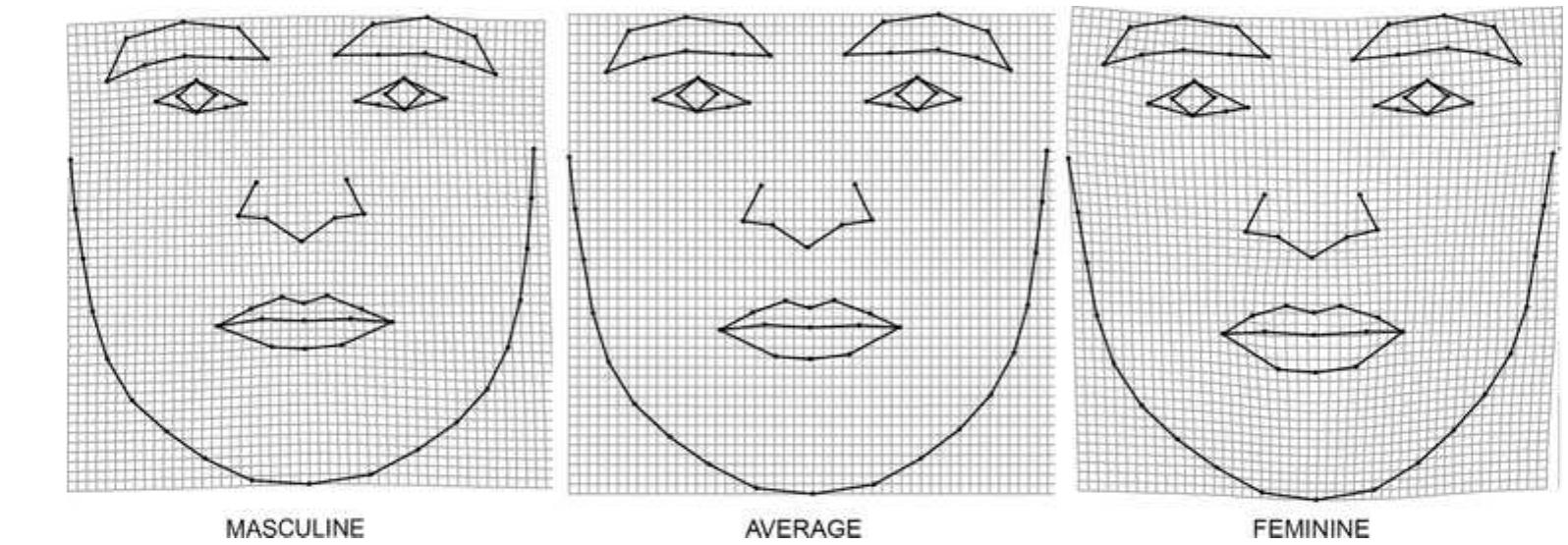
Fig. 2 Thin plate spline
visualization of the shape
regression upon judged
masculinity–femininity. The left
grid shows deformation from the
average (middle panel) towards
higher judged masculinity, while
the right grid corresponds to
shape changes associated with
higher judged femininity
phic trait typical for men; (2) the wider basicranium is typical esize that differences in facial shape between homosexual and
for men; hence, men, on average, have wider faces (Ferrario, heterosexual men,as well as otherstudied traits,ariseearlyduring
Sforzi, Miani, & Tartaglia, 1993). On the other hand, some development. Nevertheless, we are aware that more research
other sexually dimorphic facial traits were rather more mas- is needed to decide whether the reported differences are also
culine in our homosexual sample (e.g., wider jaw or thicker present in cohorts of different ages or in other populations.
eyebrows), resulting in a mosaic of both feminine and mas- We also found no significant difference in facial asym-
culine features. It is worth noting that the described differ- metry between the two studied groups of men, which is in
ences of the two groups of individuals were appraised qual- agreement with previous studies showing no relation of fluc-
itatively and subsequent studies should focus on testing for tuating asymmetry and sexual orientation (Rahman, 2005).
the influence of these particular facial parts in sexual orien- These results contrast a theory stating that homosexual ori-
tation attributions. entation is a result of developmental instability, which refers
Thus, our results were partly in agreement with the pre- to an organism’s inability to cope with developmental stres-
vious body of research showing some female-typical traits in ses (Lalumiere, Blanchard, & Zucker, 2000).
homosexual men compared to heterosexuals (for review, see Nevertheless, the homosexual men in our sample also had
LeVay, 2010). Some studies, for example, have shown that some typical masculine facial traits, which might have caused
homosexual men tend to be shorter, lighter, and they have the negative result in Study 2, where the raters did not attri-
shorter long-bones than heterosexual men, which are traits bute sexual orientation from facial pictures in concordance
which differ between males and females (Martin & Nguyen, with self-reported sexual orientation of the rated targets. This
2004). One explanation of these differences between homo- might be explained by the fact that homosexual targets were
sexual and heterosexual individuals consists in putative vary- rated as more masculine than heterosexual targets. Sexual
ing environmental factors, such as hormonal levels or pre- orientation attributions discordant with the self-reported sex-
natal maternal stress, acting on the development of physical ual orientation contrasts previous investigations on this topic
and behavioral traits during early stages of individual devel- that consistently show that lay people can infer sexual orien-
opment. This suggestion was supported by research report- tation from still photos even from a very short exposure to the
ing differences in brain anatomy, such as the hypothalamus picture (e.g., Rule & Ambady, 2008).
(Byne et al., 2001; LeVay, 1991) and neurofunctional pro- There were, however, several differences between the pre-
cesses, such as spatial or verbal abilities (Gladue & Bailey, vious studies and the current one. First, unlike this study, all
1995), which are characteristics that develop very early during previous studies on sexual orientation attribution as based on
individual ontogeny. Thus, both sexual orientation and some of facial pictures were conducted in the U.S. It is possible that
its somatic or personality correlates are thought to be caused Czech raters attribute sexual orientation to men according to a
by specific prenatal or early postnatal environmental factors. more stereotypical fashion, assuming more feminine appear-
Similarly, variation in facial morphology reported in this study ance in male homosexuals. Nevertheless, in a previous study,
mightrefertodevelopmentaldifferencesbetweenthesetwogroups it was found that Czech raters were able to judge male sexual
of individuals. Although our research was based on an adult orientation accurately according to video recordings (Valentova
population and previous studies reported substantial changes et al., 2011). Further and more importantly, in contrast to pre-
in facial morphology during individual ontogeny, especially vious studies, we used highly standardized facial images where
during puberty (Farkas, 1981), a recent study aimed at mor- targets were instructed to adopt neutral facial expressions.
phological changes during ontogeny based on GMM methods In contrast, photos of targets in several previous studies (e.g.,
reported that facial morphology is established within the first Rule et al., 2008; Rule & Ambady, 2008) were sampled from the
few years of life and correlates strongly with the adult face form Internet, which may constitute a major methodological dissim-
(Bulygina, Mitteroecker, & Aiello, 2006). We may thus hypoth- ilarity.
123
360 Arch Sex Behav (2014) 43:353–361
Both methods have advantages and disadvantages and one implications for future research in sexual orientation and social
of the main advantages of the previously used method is that perception.
even people unwilling to participate in such a study entered
the research. This seems to be the main disadvantage of our Acknowledgments JV was supported by the Grant Agency of the
Czech Republic (13-16959P), KK was supported by the Grant Agency of
method, where the representativeness of the sample was the Czech Republic (GACR P407/11/1464), JV, KK, and JH were sup-
rather limited. At least, we tried to match the groups we were ported by Charles University research center UNCE 204004. The fun-
comparing on basic demographic traits, but, of course, our ders had no role in study design, data collection and analysis, decision
homosexual and heterosexual samples might have differed on to publish, or preparation of the article. We owe our thanks to Veˇra
Pivonˇkova´ for helpful comments on the anthropometrical description of
other variables, which may have confounded the obtained faces, to Adam Safron and Gerald Ostdiek for English corrections, and
results. Thus, further study using different sampling methods all the research participants for their willingness to cooperate in the
should be carried out in different cultural settings to clarify project. We are also thankful to anonymous reviewers and the Editor for
the reported differences. Furthermore, in several previous stu- substantial improvement of the article.
dies, facial pictures contained social cues, such as facial exp-
ressions, which might have contributed to the attribution of References
sexual orientation. It is thus not clear whether sexual orienta-
tion attributions are due to social or morphological factors, Allen, L. S., & Gorski, R. A. (1992). Sexual orientation and the size of the
which seems to be an issue in more general research aimed at anterior commissure in the human brain. Proceedings of the National
gender nonconforming individuals (e.g., Zucker, Wild, Brad- Academy of Sciences of the United States of America, 89, 7199–7202.
Ambady, N., Hallahan, M., & Conner, B. (1999). Accuracy of judgments of
ley, & Lowry, 1993; McDermid, Zucker, Bradley, & Maing, sexual orientation from thin slices of behavior. Journal of Personality
1998). and Social Psychology, 77, 538–547.
Finally, it is worth stressing that since we have found an Bogaert, A. F., & Blanchard, R. (1996). Physical development and sexual
effect of masculinity–femininity ratings but not of sexual orientation in men: Height, weight and age of puberty differences.
Personality and Individual Differences, 21, 77–84.
orientation ratings, and at the same time these two rating types Bookstein, F. L. (1991). Morphometric tools for landmark data: Geometry
were positively correlated, it is questionable if gender non- and biology. New York: Cambridge University Press.
conformity is the actual trait that cues sexual orientation. Bruce, V., & Young, A. W. (1998). In the eye of the beholder: The science of
Thus, our argumentation is in line with a previous study by face perception. Oxford: Oxford University Press.
Bulygina, E., Mitteroecker, P., & Aiello, L. (2006). Ontogeny of facial dim-
Rule et al. (2011), which showed that when selecting homo- orphism and patterns of individual development within one human
sexual and heterosexual men who were rated as most mas- population. American Journal of Physical Anthropology, 131, 432–
culine and most feminine, the accuracy of ‘‘gaydar’’falls be- 443.
low the level of chance. This shows that sexual orientation Byne, W., Tobet, S., Mattiace, L. A., Lasco, M. S., Kemether, E., Edgar, M.
A., et al. (2001). The interstitial nuclei of the human anterior hypothal-
judgment based on stereotyped gender specific traits leads to amus: An investigation of variation with sex, sexual orientation, and
frequent misjudgment. We thus argue that, in further research HIV status. Hormones and Behavior, 40, 86–92.
focusing on average differences between homosexual and Dryden, I. L., & Mardia, K. V. (1998). Statistical shape analysis. Chich-
heterosexual men, masculinity–femininity should be control- ester: Wiley.
Dunkle, J. H., & Francis, P. L. (1990). The role of facial masculinity/fem-
led. In other words, we suggest that some specific differences ininity in the attribution of homosexuality. Sex Roles, 23, 157–167.
between these groups might apply only to feminine homo- Enlow, D. H., & Hans, M. G. (1996). Essentials of facial growth. Phil-
sexual men, but not masculine ones. Furthermore, it is possi- adelphia: Saunders.
ble that our sample coincidentally consisted of rather counter- Farkas, L. G. (1981). Anthropometry of the head and face in medicine. New
York: Elsevier.
stereotypic homosexual or heterosexual men and we thus Ferrario, V. F., Sforza, C., Miani, A., & Tartaglia, G. (1993). Craniofa-
could not report similar results of successful gaydar as found cial morphometry by photographic evaluations. American Journal of
in previous studies. Orthodontics and Dentofacial Orthopedics, 103, 327–337.
To conclude, we found significant differences in facial Fink, B., Grammer, K., Mitteroecker, P., Gunz, P., Schaefer, K., Bookstein,
F. L., et al. (2005). Second to fourth digit ratio and face shape. Pro-
morphology between men who identified as homosexual and ceedings of the Royal Society B: Biological Sciences, 272, 1995–2001.
heterosexual; however, these differences cannot be simply Freeman, J. B., Johnson, K. L., Ambady, N., & Rule, N. O. (2010). Sexual
described as gender-related traits, but the distinction between orientation perception involves gendered facial cues. Personality and
homosexual and heterosexual men is rather characterized by Social Psychology Bulletin, 36, 1318–1331.
Gaudio, R. P. (1994). Sounding gay: Pitch properties in the speech of gay
a mosaic of masculine and feminine traits. Further, our raters and straight men. American Speech, 69, 30–57.
were not able to ascribe sexual orientation accurately from Gladue, B. A., & Bailey, J. M. (1995). Spatial ability, handedness, and
facial images. From our observations, it would seem that sex- human sexual orientation. Psychoneuroendocrinology, 20, 487–497.
ual orientation is not as straightforward a trait as previous Grimbos, T., Dawood, K., Burriss, R. P., Zucker, K. J., & Puts, D. A. (2010).
Sexual orientation and the second to fourth finger length ratio: A meta-
studies have suggested, at least not based onstandardized facial analysis in men and women. Behavioral Neuroscience, 124, 278–287.
pictures. Nevertheless, the morphological differences among Hammer,O.,Harper,D. A. T.,& Ryan,P.D.(2001). PAST: Paleontological
homosexual and heterosexual men reported here have important statistics software package for education and data analysis. Pala-
123
Arch Sex Behav (2014) 43:353–361 361
eontologia Electronica, 4. http://palaeo-electronica.org/2001_1/past/ Rieger, G., Linsenmeier, J., Gygax, L., & Bailey, J. M. (2008). Sexual
issue1_01.htm. orientation and childhood gender nonconformity: Evidence from
Johnson, K. L., Gill, S., Reichman, V., & Tassinary, L. G. (2007). Swagger, home videos. Developmental Psychology, 44, 46–58.
sway, and sexuality: Judging sexual orientation from body motion and Rieger, G., Linsenmeier, J., Gygax, L., Garcia, S., & Bailey, J. M. (2010).
morphology.JournalofPersonalityandSocialPsychology,93,321–334. Dissecting ‘‘gaydar’’: Accuracy and the role of masculinity–feminin-
Klar, J. S. (2004). Excess of counterclockwise scalp hair-whorl rotation in ity. Archives of Sexual Behavior, 39, 124–140.
homosexual men. Journal of Genetics, 83, 251–255. Rohlf, J. F. (2008). tpsRelw (version 1.46). Department of Ecology and
Kleisner, K., Kocˇnar, T., Rubesˇova´, A., & Flegr, J. (2010). Eye color Evolution, State University of New York at Stony Brook, Stony
predicts but does not directly influence perceived dominance in men. Brook.
Personality and Individual Differences, 49, 59–64. Rohlf, J. F. (2009a). TpsDig2 (version 2.14). Department of Ecology and
Kleisner, K., Prˇ´ıplatova´, J., Frost, P., & Flegr, J. (2013). Trustworthy- Evolution, State University of New York at Stony Brook.
looking face meets brown eyes. PLoS One, 8(1), e53285. doi:10.1371/ Rohlf, J. F. (2009b). TpsRegr (version 1.36). Department of Ecology and
journal.pone.0053285. Evolution, State University of New York at Stony Brook.
Klingenberg, C. P., Barluenga, M., & Meyer, A. (2002). Shape analysis of Rule, N. O., & Ambady,N.(2008).Brief exposures: Male sexual orientation
symmetric structures: Quantifying variation among individuals and is accurately perceived at 50 ms. Journal of Experimental Social
asymmetry. Evolution, 56, 1909–1920. Psychology, 44, 1100–1105.
Kolamunnage, R., & Kent, J. T. (2003). PCA for shape variation about an Rule, N. O., Ambady, N., Adams, J., & Macrae, C. N. (2008). Accuracy and
underlying symmetric shape. In R. G. Aykroyd, K. V. Mardia, & M. awareness in the perception and categorization of male sexual orien-
J. Langdon (Eds.), Stochastic geometry, biological structure and tation. Journal of Personality and Social Psychology, 95, 1019–1028.
images (pp. 137–139). Leeds: University of Leeds. Rule, N. O., Ishii, K., Ambady, N., Rosen, K. S., & Hallett, K. C. (2011).
Lalumiere, M. L., Blanchard, R., & Zucker, K. J. (2000). Sexual orientation Found in translation. Personality and Social Psychology, 37, 1499–
and handedness in men and women: A meta-analysis. Psychological 1507.
Bulletin, 126, 575–592. Savriama, Y., & Klingenberg, C. P. (2011). Beyond bilateral symmetry:
LeVay, S. (1991). A difference in hypothalamic structure between hetero- Geometric morphometric methods for any type of symmetry. BMC
sexual and homosexual men. Science, 253, 1034–1037. Evolutionary Biology, 11, 280.
LeVay, S. (2010). Gay, straight, and the reason why: The science of sexual Savriama, Y., Neustupa, J., & Klingenberg, C. (2010). Geometric
orientation. New York: Oxford University Press. morphometrics of symmetry and allometry in Micrasterias rotata
Linville, S. E. (1998). Acoustic correlates of perceived versus actual sexual (Zygnemophyceae, Viridiplantae). Nova Hedwigia, 136, 43–54.
orientation in men’s speech. Folia Phoniatrica et Logopaedica, 50, Schaefer, K., Fink, B., Grammer, K., Mitteroecker, P., Gunz, P., & Book-
35–48. stein, F. L. (2006). Female appearance: Facial and bodily attractive-
Lyons, M., Lynch, A., Brewer, G., & Bruno, D. (2013). Detection of sexual ness as shape. Psychology Science, 48, 187–204.
orientation(‘‘gaydar’’)byhomosexualandheterosexualwomen.Archives Shelp, S. G. (2002). Gaydar: Visual detection of sexual orientation among
of Sexual Behavior, doi:10.1007/s10508-013-0144-7. gay and straight men. Journal of Homosexuality, 44, 1–14.
Mardia, K. V., Bookstein, F. L., & Moreton, I. J. (2000). Statistical assess- Sylva, D., Rieger, G., Linsenmeier, J., & Bailey, J. (2010). Concealment of
ment of bilateral symmetry of shapes. Biometrika, 87, 285–300. sexual orientation. Archives of Sexual Behavior, 39, 141–152.
Martin, J. T., & Nguyen, D. H. (2004). Anthropometric analysis of homo- Trˇebicky´, V., Havlı´cˇek, J. Roberts, S. C., Little, A. C., & Kleisner, K.
sexuals and heterosexuals: Implications for early hormone exposure. (2013). Perceived aggressiveness predicts fighting performance in
Hormones and Behavior, 45, 31–39. mixed martial arts fighters. Psychological Science, 24, 1664–1672.
McDermid, S. A., Zucker, K. J., Bradley, S. J., & Maing, D. M. (1998). Tskhay, K. O., & Rule, N. O. (2013). Accurate identification of a preference
Effects of physical appearance on masculine trait ratings of boys and for insertive versus receptive anal intercourse from static facial cues
girls with gender identity disorder. Archives of Sexual Behavior, 27, of gay men. Archives of Sexual Behavior, doi:10.1007/s10508-013-
253–267. 0092-2.
McFadden, D., Loehlin, J. C., Breedlove, S. M., Lippa, R. A., Manning, J. Valentova, J., Rieger, G., Havlicek, J., Linsenmeier, J. A. W., & Bailey, J.
T., & Rahman, Q. (2005). A reanalysis of five studies on sexual ori- M. (2011). Judgments of sexual orientation and masculinity–femi-
entation and the relative digit length of the 2nd and 4th fingers (the ninity based on thin slices of behavior: A cross-cultural compari-
2D:4D ratio). Archives of Sexual Behavior, 34, 341–356. son. Archives of Sexual Behavior, 40, 1145–1152.
Nicholas, C. L. (2004). Gaydar: Eye-gaze as identity recognition among gay Witelson, S. F., Kigar, D. L., Scamvougeras, A., Kideckel, D. M., Buck, B.,
men and lesbians. Sexuality and Culture, 8, 60–86. Stanchev, P. L., et al. (2008). Corpus callosum anatomy in right-
Pierrehumbert, J. B., Bent, T., Munson, B., Bradlow, A. R., & Bailey, J. M. handed homosexual and heterosexual men. Archives of Sexual Behav-
(2004). The influence of sexual orientation on vowel production (L). ior, 37, 857–863.
Journal of the Acoustical Society of America, 116, 1905–1908. Zebrowitz, L. A. (1997). Reading faces: Window to the soul?. Boulder, CO:
R Core Development Team. (2009). R: A language and environment for Westview Press.
statistical computing. Vienna: R Foundation for Statistical Com- Zelditch, M. L., Swiderski, D. L., Sheets, H. D., & Fink, W. L. (2004).
puting. Geometric morphometrics for biologists: A primer. London: Elsevier
Rahman, Q. (2005). Fluctuating asymmetry, second to fourth finger length Academic Press.
ratios and human sexual orientation. Psychoneuroendocrinology, 30, Zucker, K. J., Wild, J., Bradley, S. J., & Lowry, C. B. (1993). Physical
382–391. attractiveness of boys with gender identity disorder. Archives of Sex-
Rendall, D., Vasey, P. L., & McKenzie, J. (2008). The Queen’s English: An ual Behavior, 22, 23–36.
alternative, biosocial hypothesis for the distinctive features of ‘‘gay
speech’’. Archives of Sexual Behavior, 37, 188–204.
123