

 František Kratochvíl

580 California St., Suite 400
San Francisco, CA, 94104
…
275 pages


AI
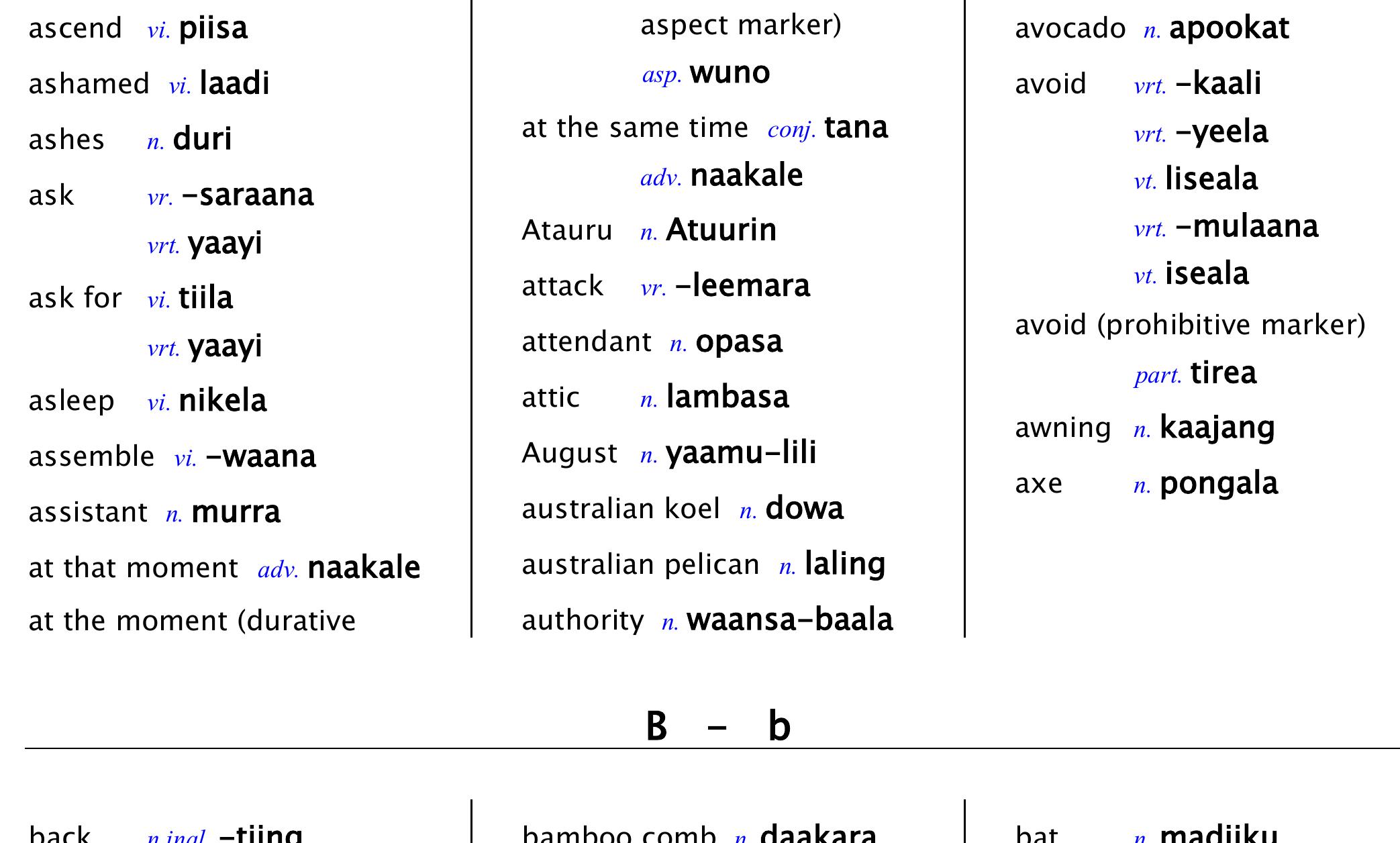
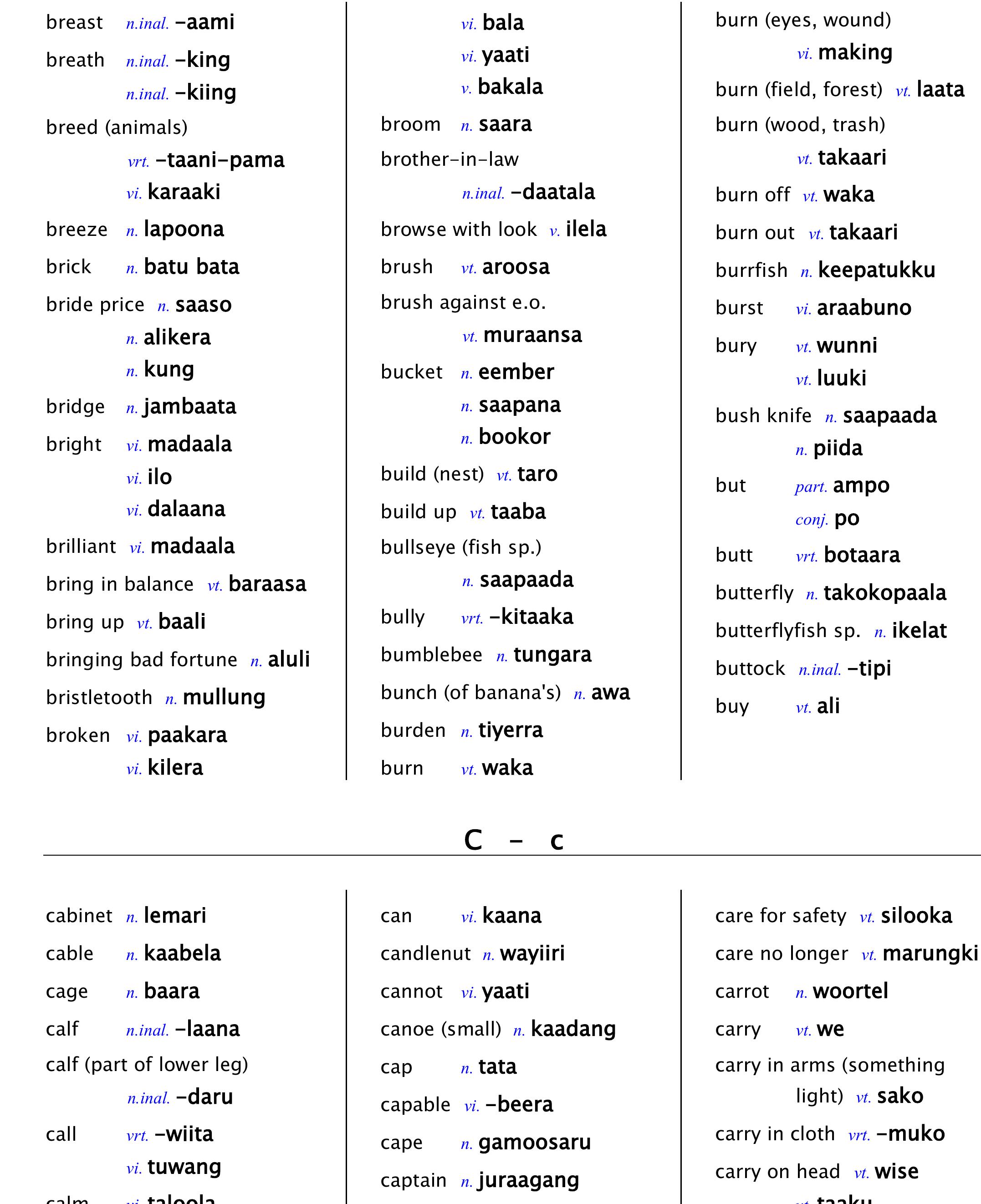
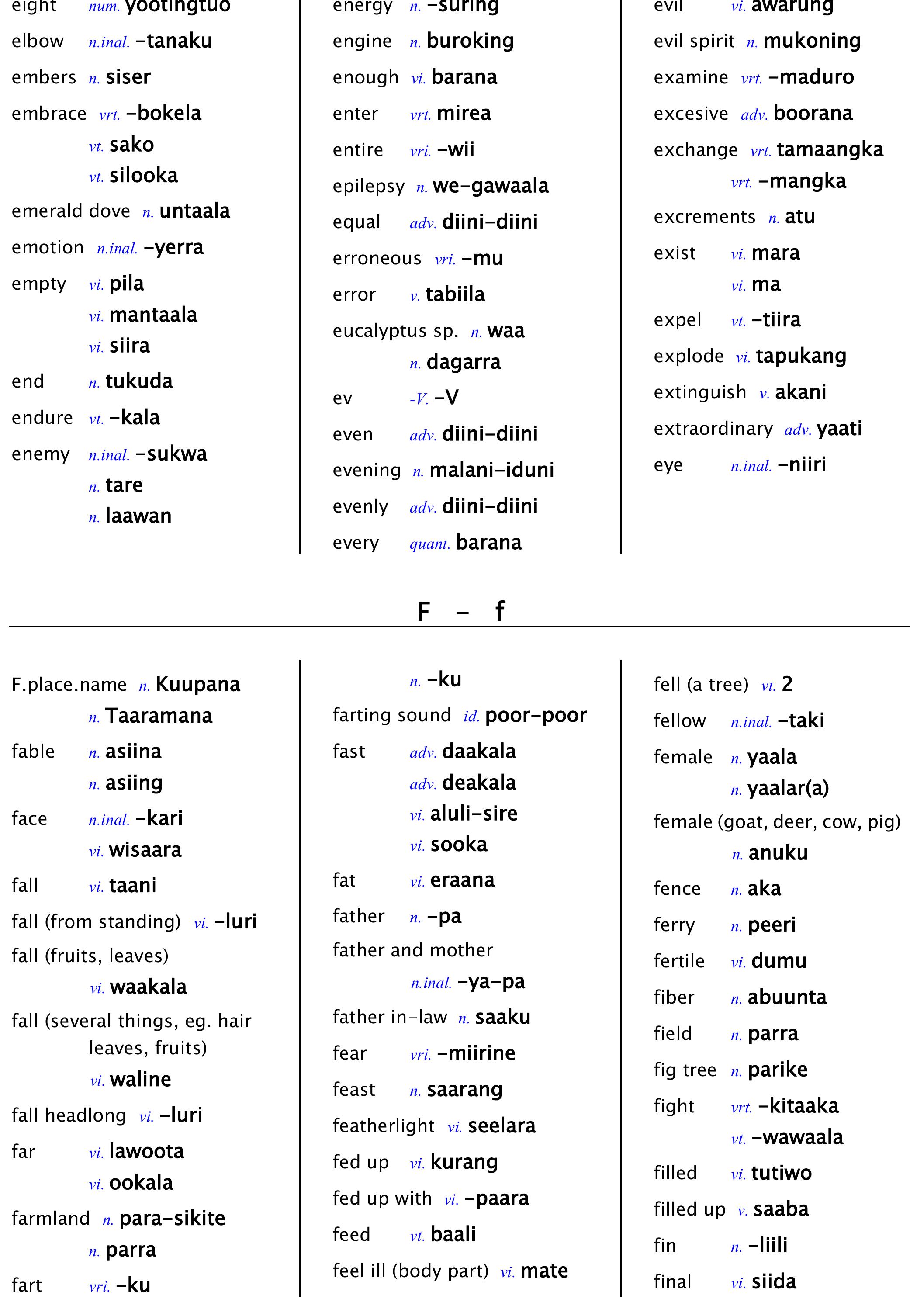
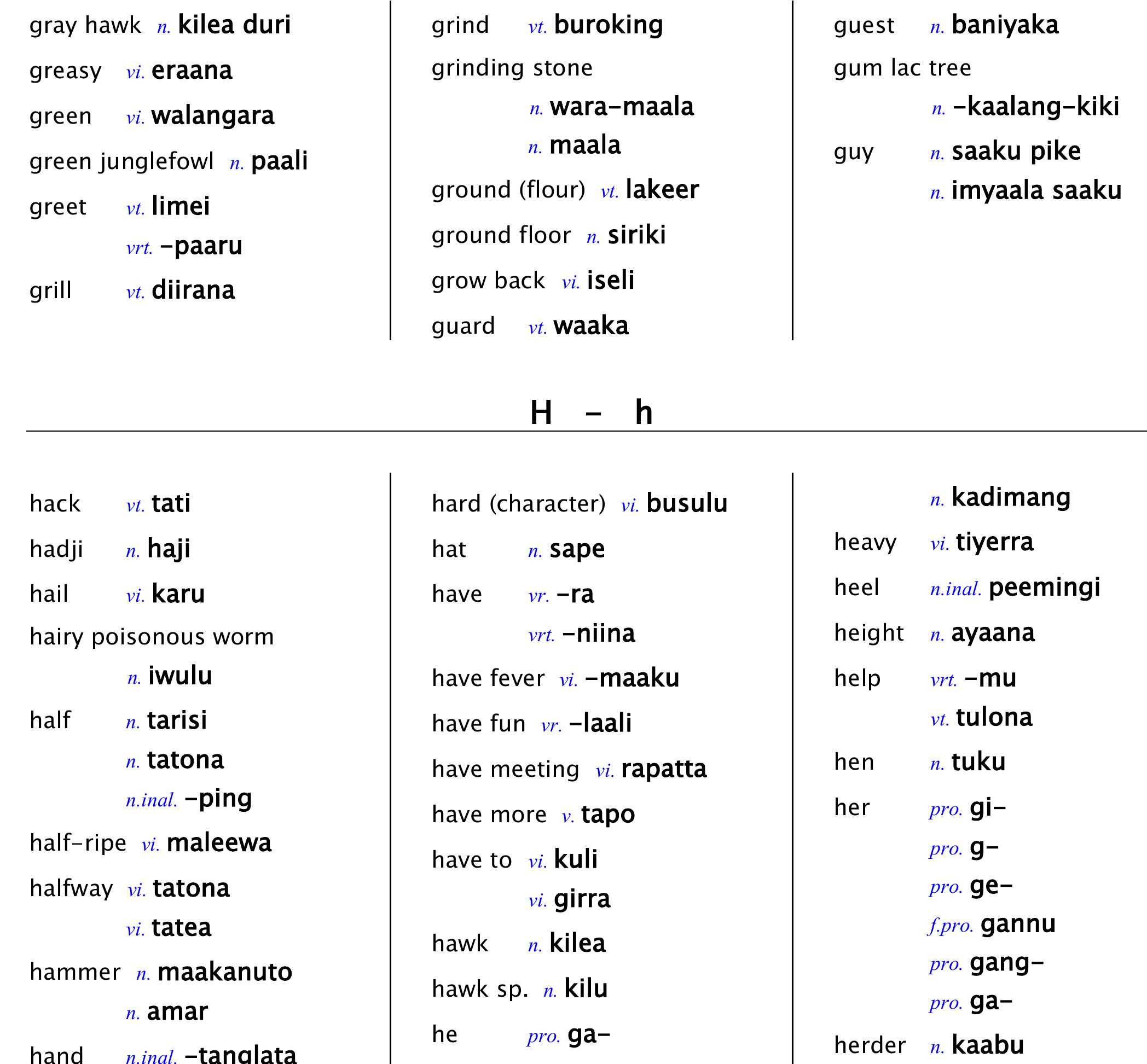
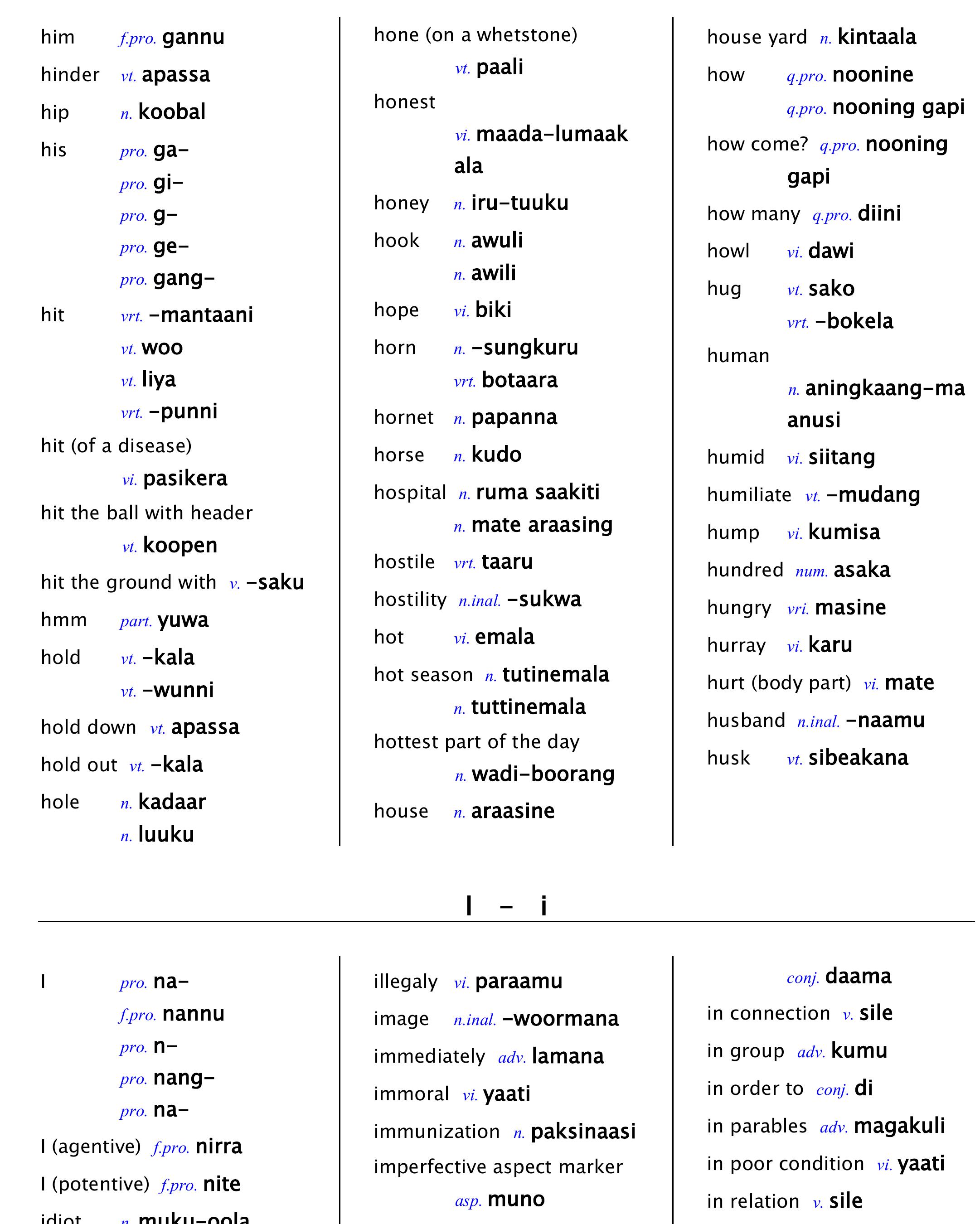
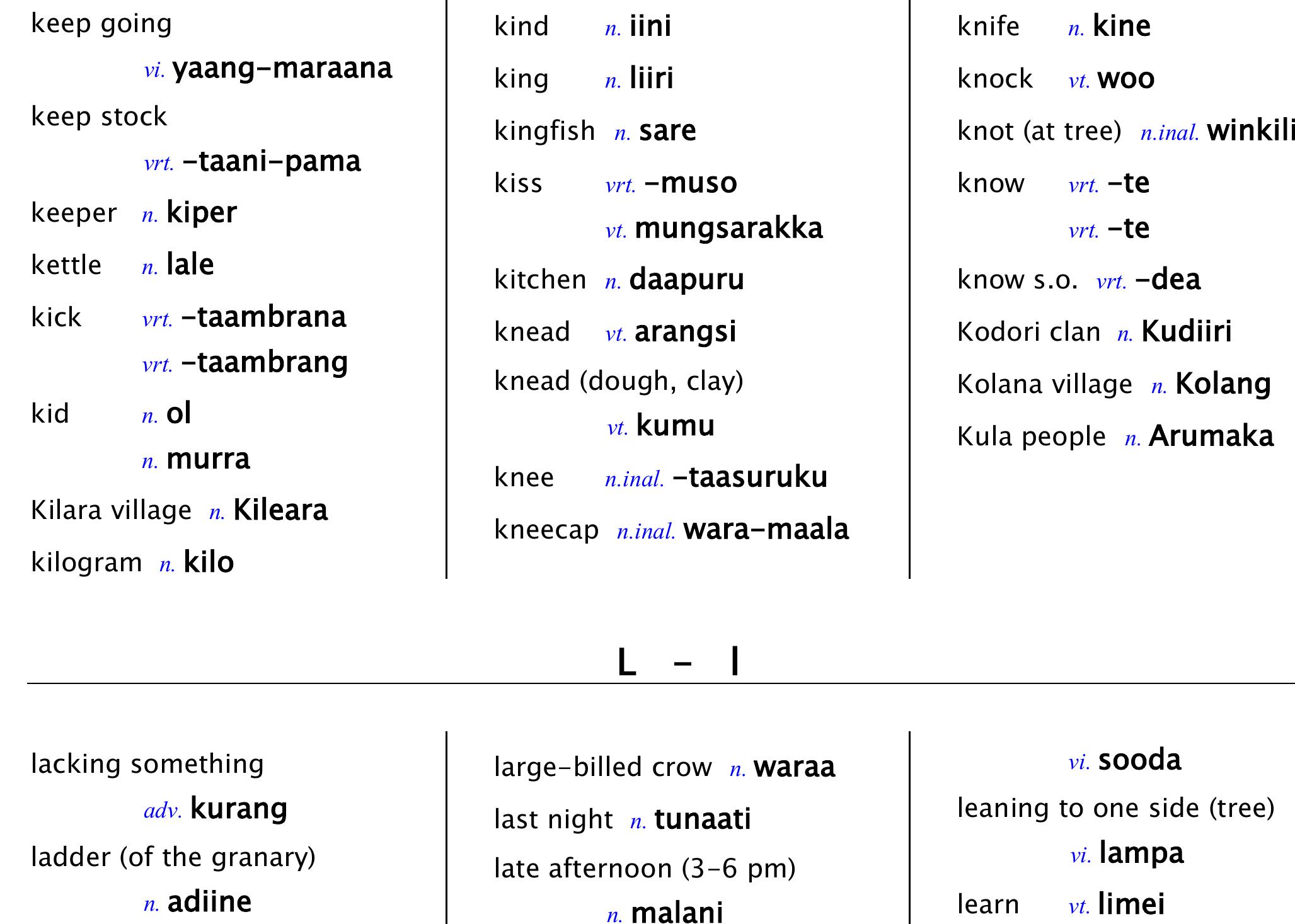
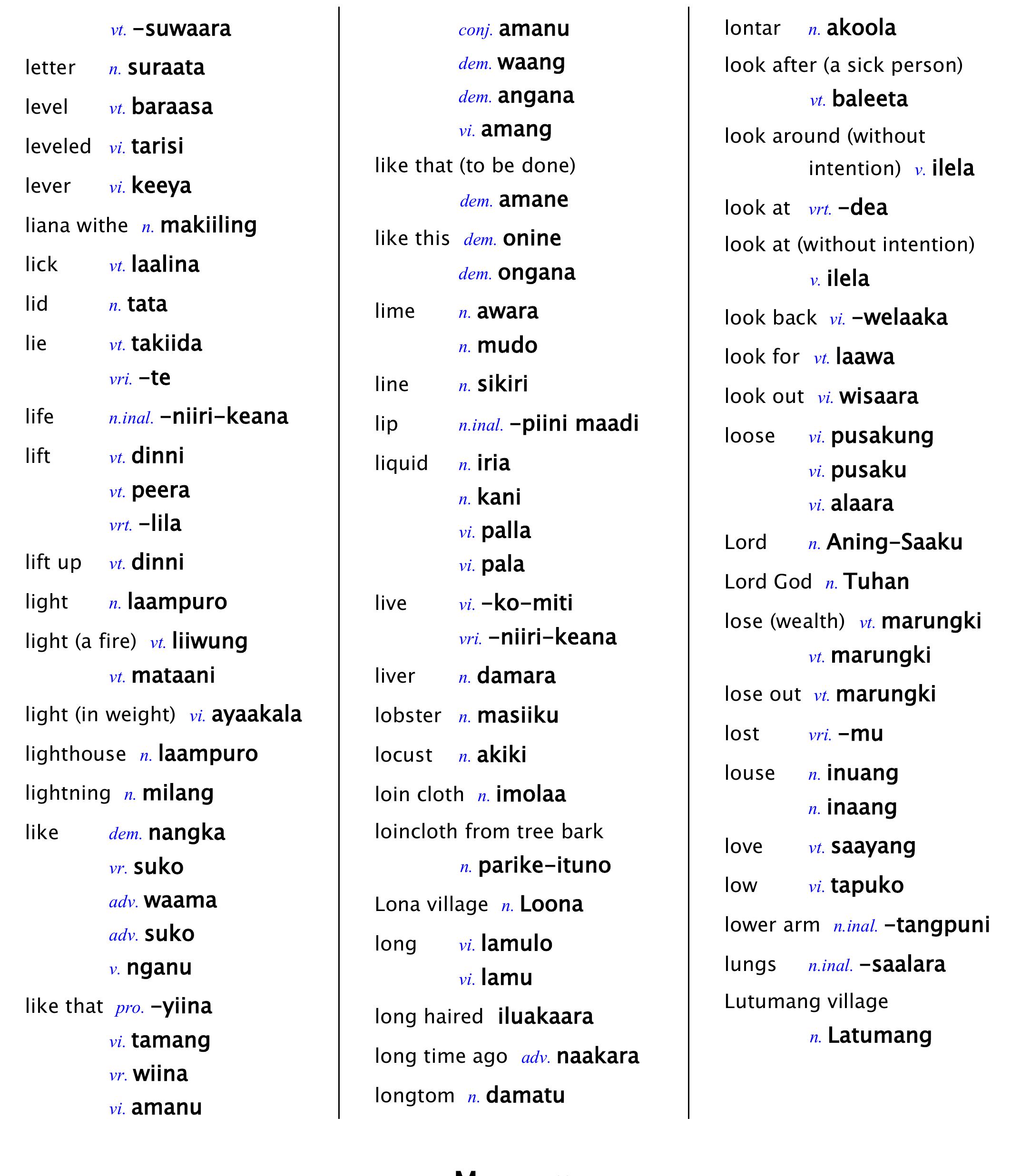
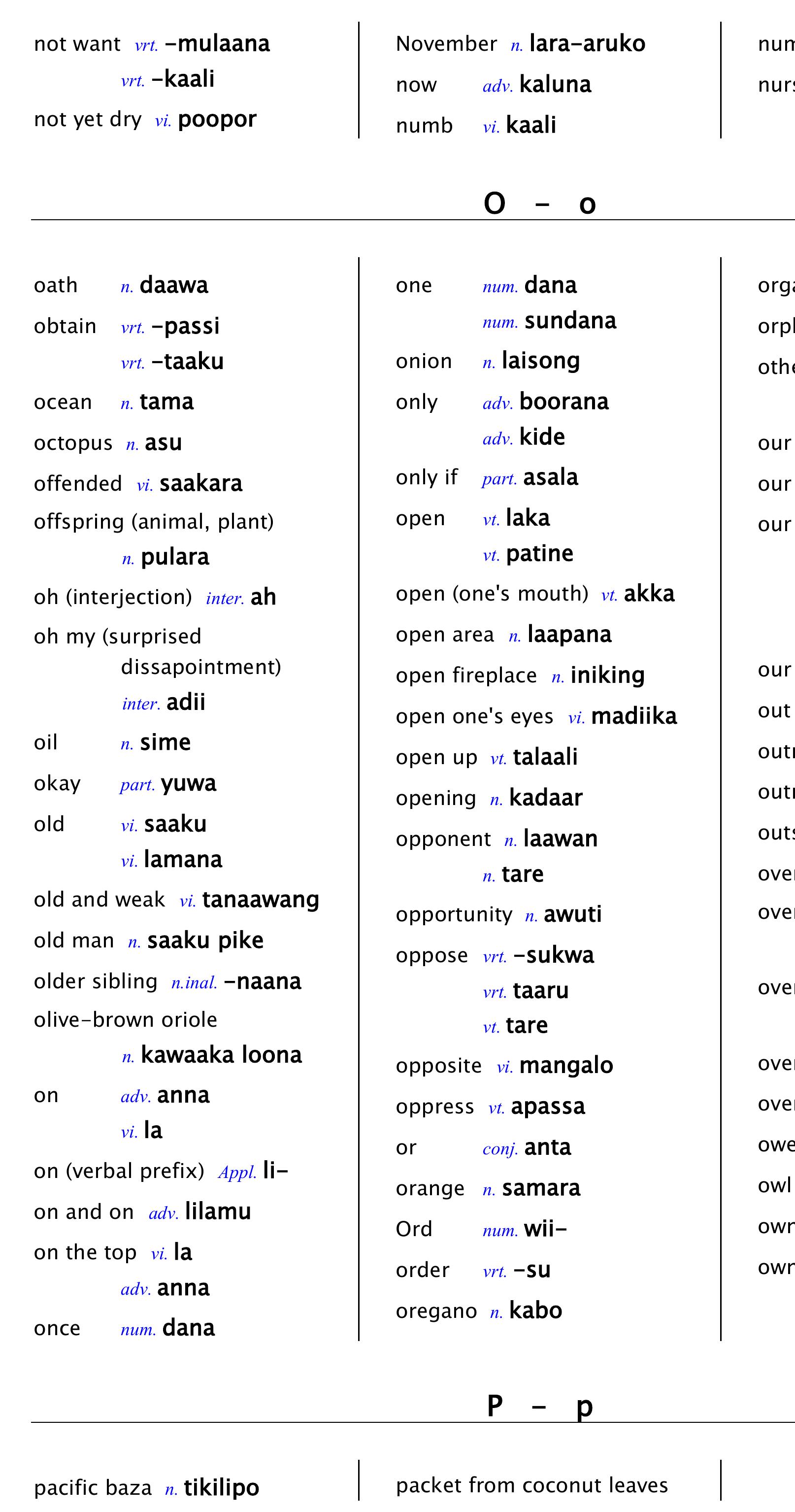
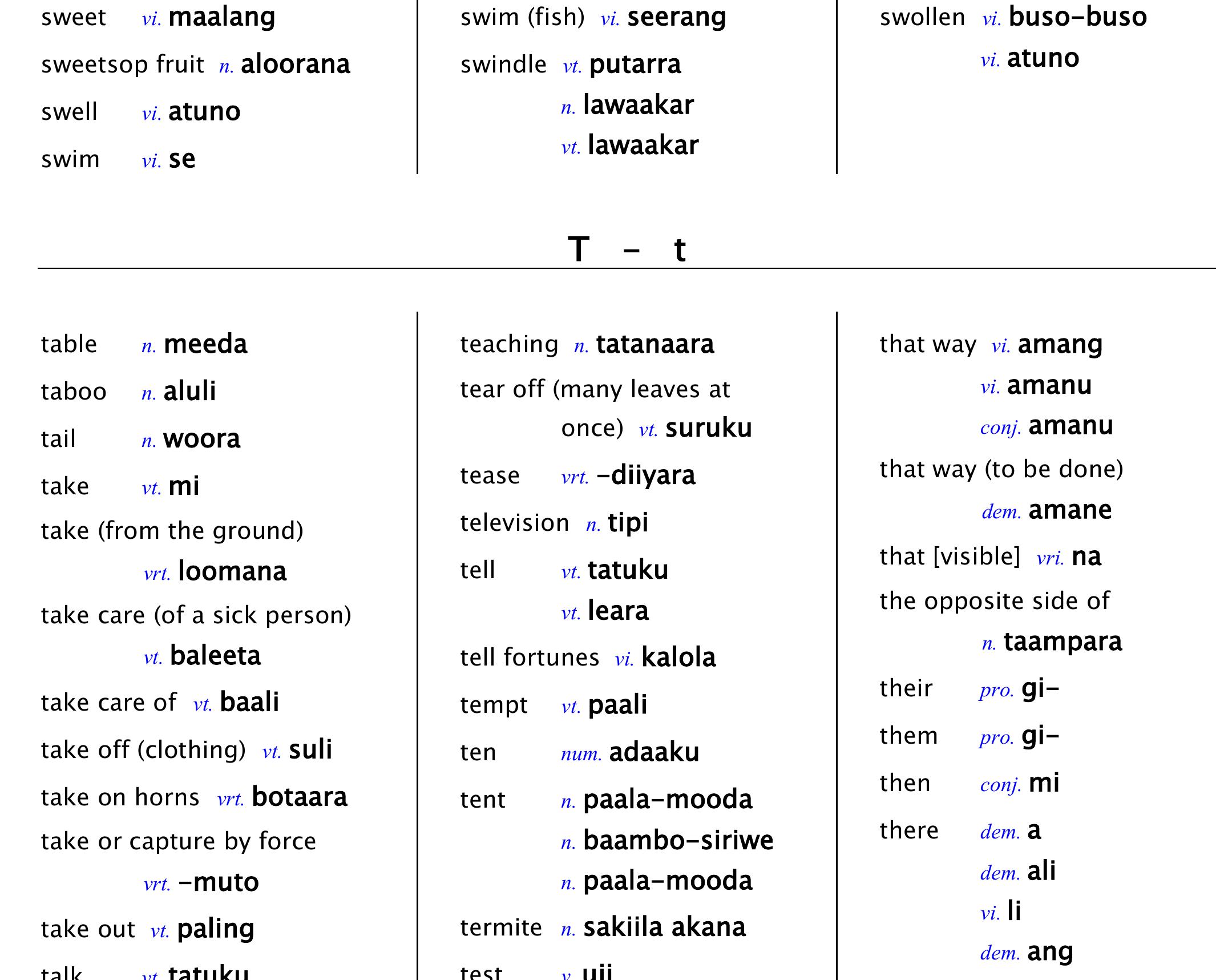
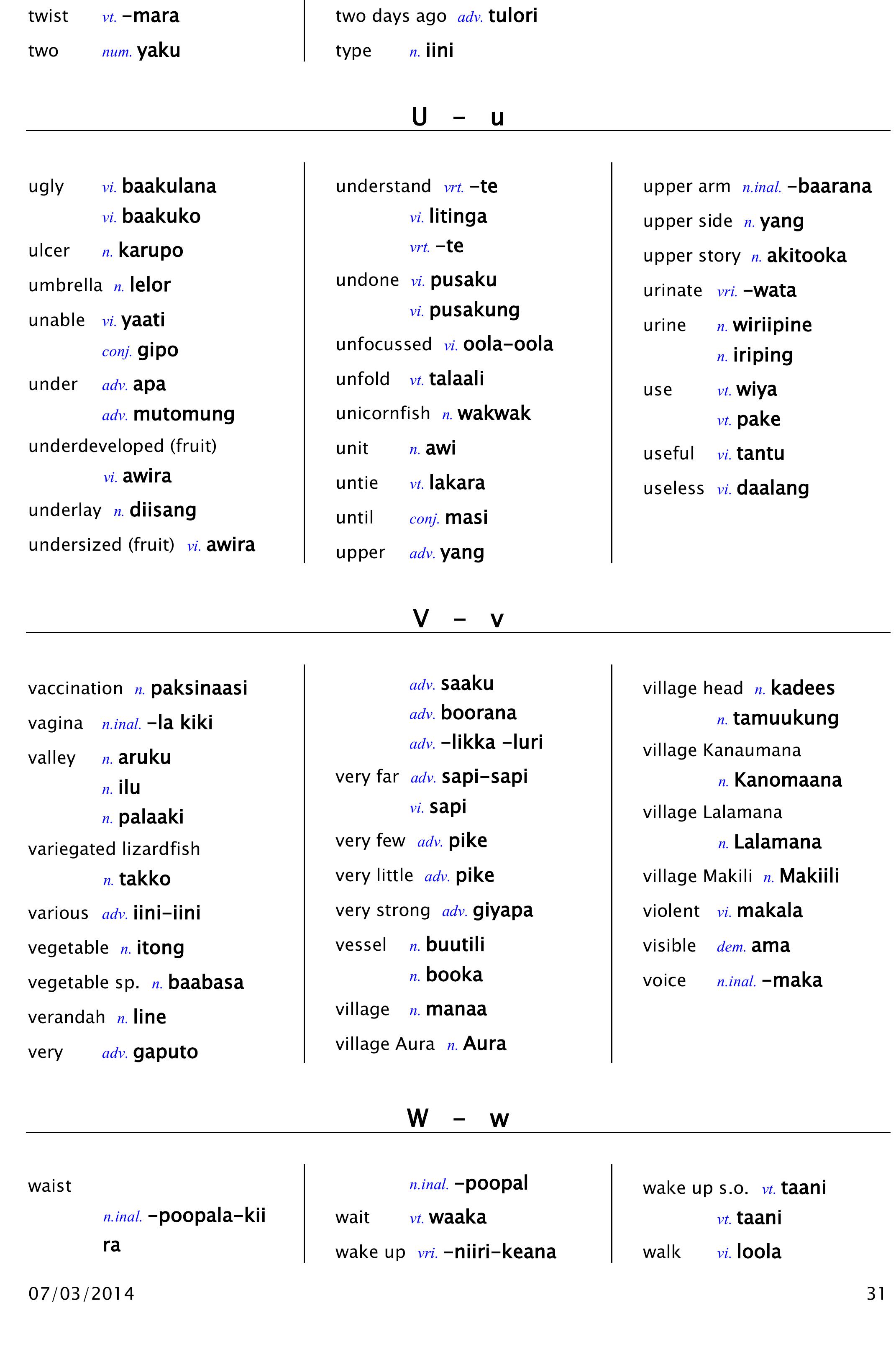
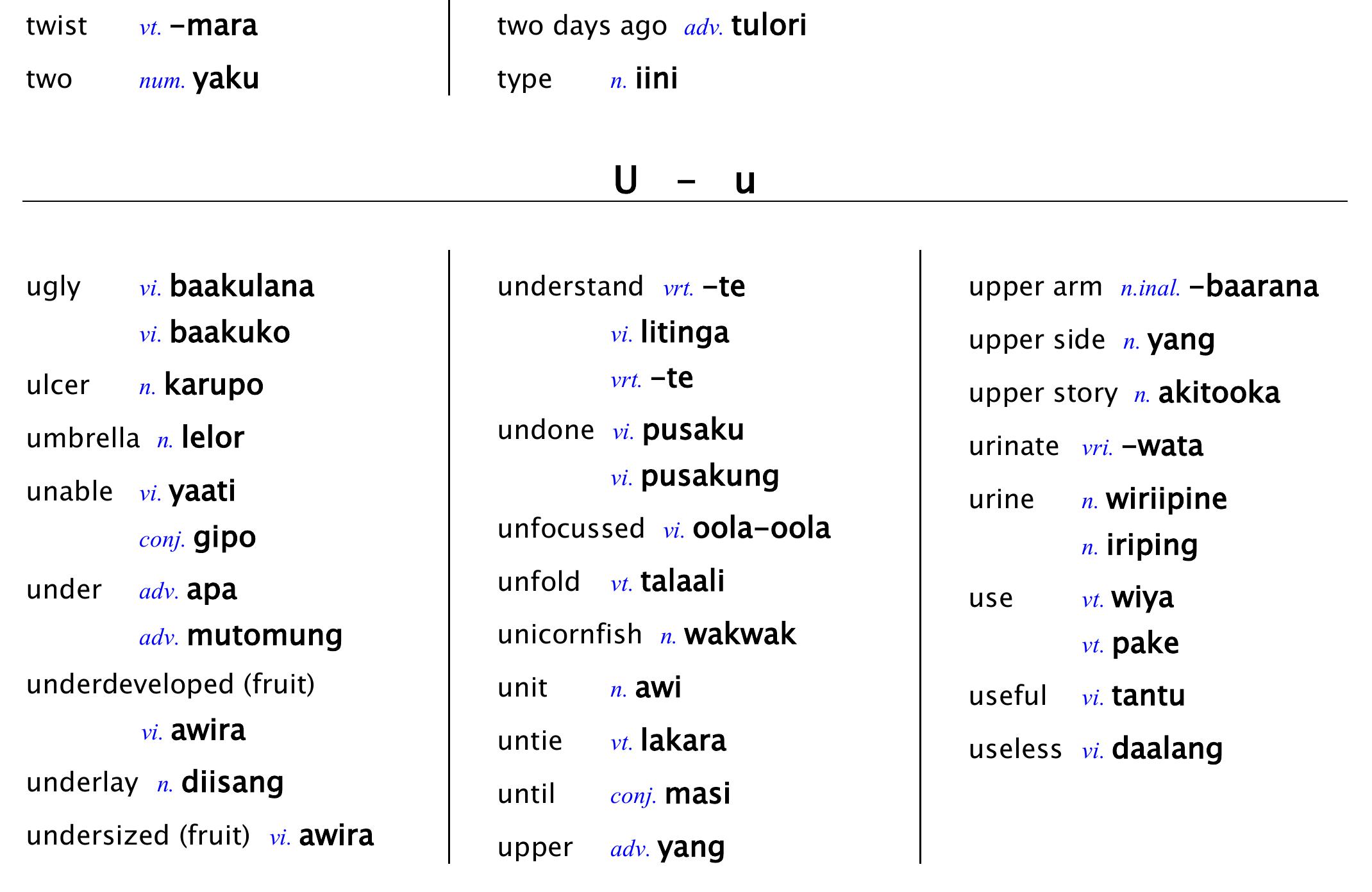
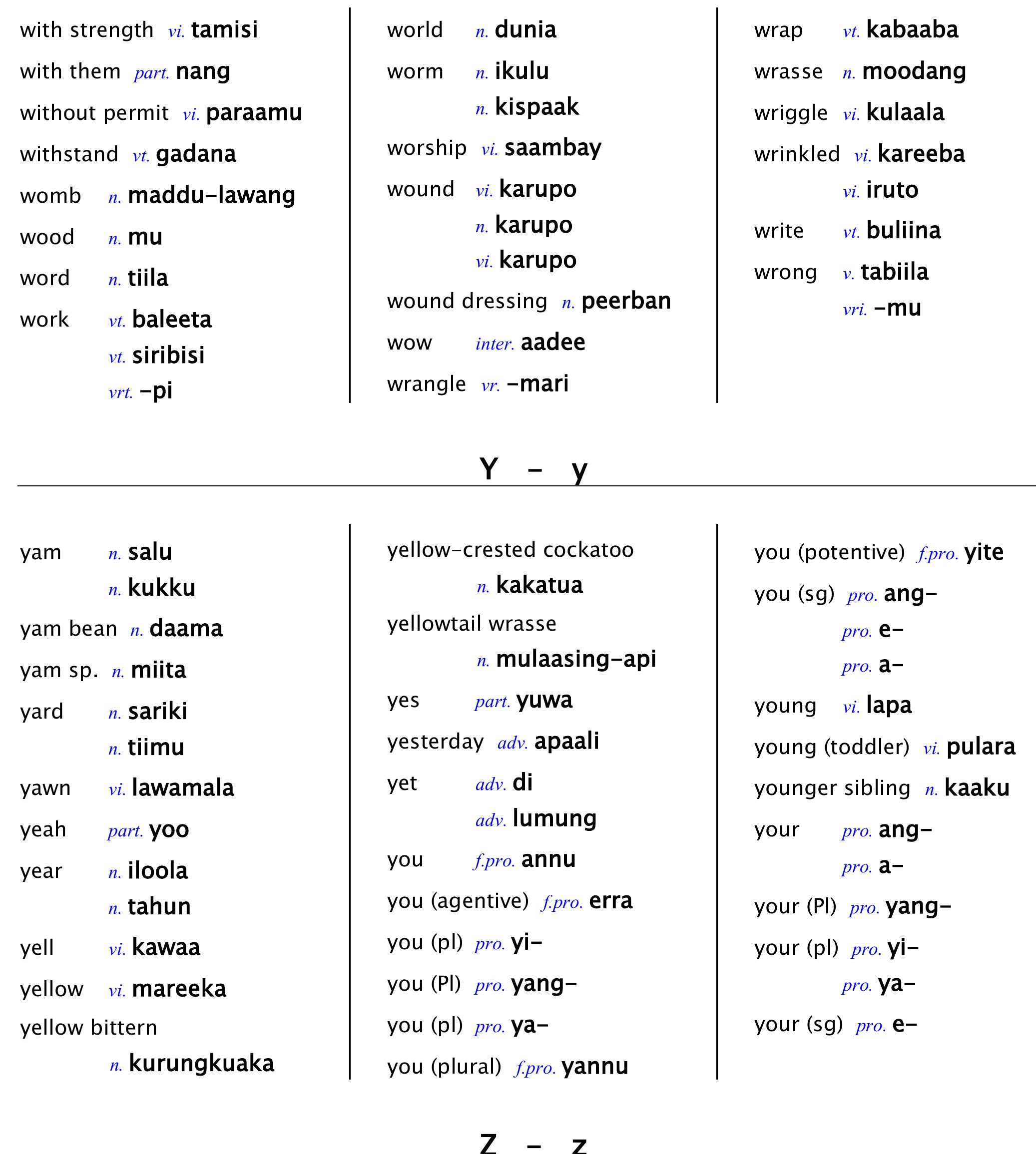
This paper presents a comprehensive dictionary of the Sawila-English language, detailing various aspects of lexical entries, including phonetics, categories, usage examples, and idiomatic expressions. The work aims to serve as a vital resource for linguists, students, and speakers, preserving the intricacies of Sawila language structure and promoting better understanding and communication. Additionally, it contributes to the documentation and revitalization efforts of endangered languages.
In some languages, notably Kikuyu, the association of tones and syllables is completely predictable. In this paper, we show that a derivational version of Optimality Theory, Harmonic Serialism, cannot account for Kikuyu if underlying representations include preassociated tones. If Richness of the Base is to be maintained, then underlying representations can contain associated tones in no language, even a language with contrastive tone association. This leads to a discussion of alternative ways of lexically encoding these contrasts, such as sequences of identical tones and diacritic accents. [An earlier 2010 version of this paper is available as ROA-1096.]
Kraków 1993
Futaky, I.: Tungusische l*hnwiirter des Ostjakischen (: Ver<iffentlichungen der Societas Uralo-Altaica l0), Wiesbaden 1975, 96 S. = Ubrjatova, E. I. (Ed.): Grammatika sovremennogo jakutskoSo literaturnogo jazyka, Moskva 1982, 496 S. : Ivanov, S. A.: Akan' e i okan' e v govorach jakutskogo jazyka, Jakutsk 1980' 184 S.
1988
The present paper describes the patterns of Hungarian sentence intonation using the model developed by Goldsmith (19821. In Part 1, we attempt to motivate this particular choice of framework, and to outline the interaction of our rule system with the rest of the grammar. Here certain basic principles of lexical phonology will be assumed, rather than argued. The rule system itself will be given in Part 2, and in Part 3 we offer our conclusions.
ELF Annual Research Journal, 2015
The present research paper is based on the investigation of pitch role between stress and intonation in Sindhi. The analysis demonstrates an initial ground for a major intonation study in Sindhi. The research was carried out in the Phonetic Laboratory UIUC, USA, to determine the relationship between stress and intonation. The speakers recorded 69 words in contrastive focus for pitch accent analysis. The stimuli included every possible syllable template involving short and long vowels preceding and following consonants. The stimuli consists of 17 disyllabic, 22 tri-syllabic, 20 four-syllable, and 10 five-syllable words. Participants were two male adult Sindhi native speakers, one graduate PhD candidate (R) from UIUC, USA, and the author who was also a PhD candidate, visiting research scholar at UIUC, USA. Fundamental frequency (F0) of vowel pitch contours were analyzed for evidence that the location of the beginning of the pitch rise, or the pitch peak varies in relation to the location of the stressed syllable in the word. Specifically, it investigates the role of stress in alignment of the pitch rise that marks pitch accent. This experiment demonstrates that stress is completely orthogonal to F0 contours unlike in most stress languages in which pitch accents dock on stressed syllables.
2008
This paper describes the contents of the Korean prosody corpus (Korean MULTEXT), which is a Korean version of the speech database Eurom1. The corpus consists of about 2 hours of read speech, transcribed primarily in orthography (in Korean alphabet and in a Romanized transcription), in IPA and in SAMPA. Furthermore, it includes the original F0 values, stylized F0 values extracted using Momel, and hand-corrected F0 values. The prosodic events are annotated in two ways. They are annotated with the automatic annotation algorithm, INTSINT, and also labeled manually into prosodic units with two tones on the hand-corrected pitch targets. It is found that the resulting tone patterns from the proposed Momel-based two tone labeling correspond to those defined in K-ToBI.
This paper describes the contents of the Korean prosody corpus (Korean MULTEXT), which is a Korean version of the speech database Eurom1. The corpus consists of about 2 hours of read speech, transcribed primarily in orthography (in Korean alphabet and in a Romanized transcription), in IPA and in SAMPA. Furthermore, it includes the original F0 values, stylized F0 values extracted using Momel, and hand-corrected F0 values. The prosodic events are annotated in two ways. They are annotated with the automatic annotation algorithm, INTSINT, and also labeled manually into prosodic units with two tones on the hand-corrected pitch targets. It is found that the resulting tone patterns from the proposed Momel-based two tone labeling correspond to those defined in K-ToBI.
Kraków 1998, 282 p.
Berta, A. (ed.): Historical and linguistic interaction between Inner-Asia and Europe (PIAC 39), Szeged 1997: 255-267. = Rozycki, W.: Mongol kil7asun 'horse hair'-proto-Tungus *k'inga 'animal hair'.-Stary, G. (ed.
A study on Clear-Air Turbulence (abbreviated by CAT) forecast in a Numerical Weather Model is presented in this paper. The main objective of this study is to evaluate ARPEGE Meteofrance-NWP model's ability to reproduce CAT, by calculating various CAT indices at the regional scale (over Europe) in this model. The list of indices used here is inspired from that proposed by R. Sharman & Wolff (2006). Calculated indices are then compared with AMDARs (Aircraft Meteorological DAta Relay) turbulence measurements during winter, early in 2010. This work was performed within DELICAT european project (* DEmonstration of LIdar based Clear-Air Turbulence detection), in the Seventh Research Framework program of the European Union [FP7], in Meteofrance national weather agency.
Annual Meeting of the Berkeley Linguistics Society, 2006
n/a

Unpublished manuscript. Ohio State University & UCLA, 1996
Sixth International Conference …, 2000
This paper reports labeler agreement in the transcription of Korean prosody using Korean ToBI (K-ToBI). Twenty utterances representing five different types of speech were produced by 18 speakers and transcribed by 21 labelers differing in their levels of experience with K ...
