Kristina GLICKSMAN
Internal and external trade in the Roman province
of Dalmatia1
Izvorni znanstveni članak / Original scientific paper Kristina Glicksman
UDK: 904(497.5-3 Dalmacija):339”652” Exeter College
339(497.5-3 Dalmacija)(091) Oxford
Primljeno / Received: 14. 08. 2005. OX1 3DP
Prihvaćeno / Accepted: 11. 04. 2006. UK
[email protected]
This work considers some of the archaeological, epigraph- 1. Introduction
ic, and literary evidence for trade in the Roman province
of Dalmatia during the first four centuries AD. It focuses Trade, both at the local level and on an empire-wide
mainly on external trade, especially imports for which
scale contributed significantly to the economy of the
there is much clear archaeological evidence. The section
on imports is an analysis of trade relations between Dal-
Roman world, and advances in archaeology, partic-
matia and the rest of the Mediterranean over time, while ularly in pottery studies and underwater research,
the sections on exports and internal trade, due to the na- over the last few decades have vastly improved our
ture of the evidence, are more general, making a case for understanding of trade in the ancient world and the
the nature of these activities in the province during this pe- contribution of various parts of the Mediterranean
riod. The work not only assesses the currently available in- to the Roman economy. One area, however, has
formation but also suggests future areas of research which
could add to our understanding of Dalmatian trade, both
within the province and with the wider Mediterranean
world. 1
I am grateful to everyone who contributed to the completion of
Keywords: Roman period, Dalmatia, trade, tegulae, am- this article which is a development of my M.Phil. thesis for the
University of Oxford. The Craven Committee, the School of Ar-
phorae, pottery, sarcophagi
chaeology, and Exeter College funded a research trip to Croatia.
During my stay, Branko Kirigin and the kind staff of the Split
Archaeological Museum and library were very helpful. John
Wilkes and John Peter Wild commented on earlier versions of
this article, and Keith Swift greatly improved my understanding
of amphora studies, especially as related to the possibility of
production in Dalmatia. My greatest debt is to Andrew Wilson
who supervised my work; his comments and criticism have ad-
ded inestimably to the final product. All errors are, of course,
my own.
189 Opvscula Archaeologica Vol. 29 (2005)
Opvscvla 29.indb 1 21.8.2006 12:01:28
Kristina GLICKSMAN Internal and external trade in the Roman province of Dalmatia
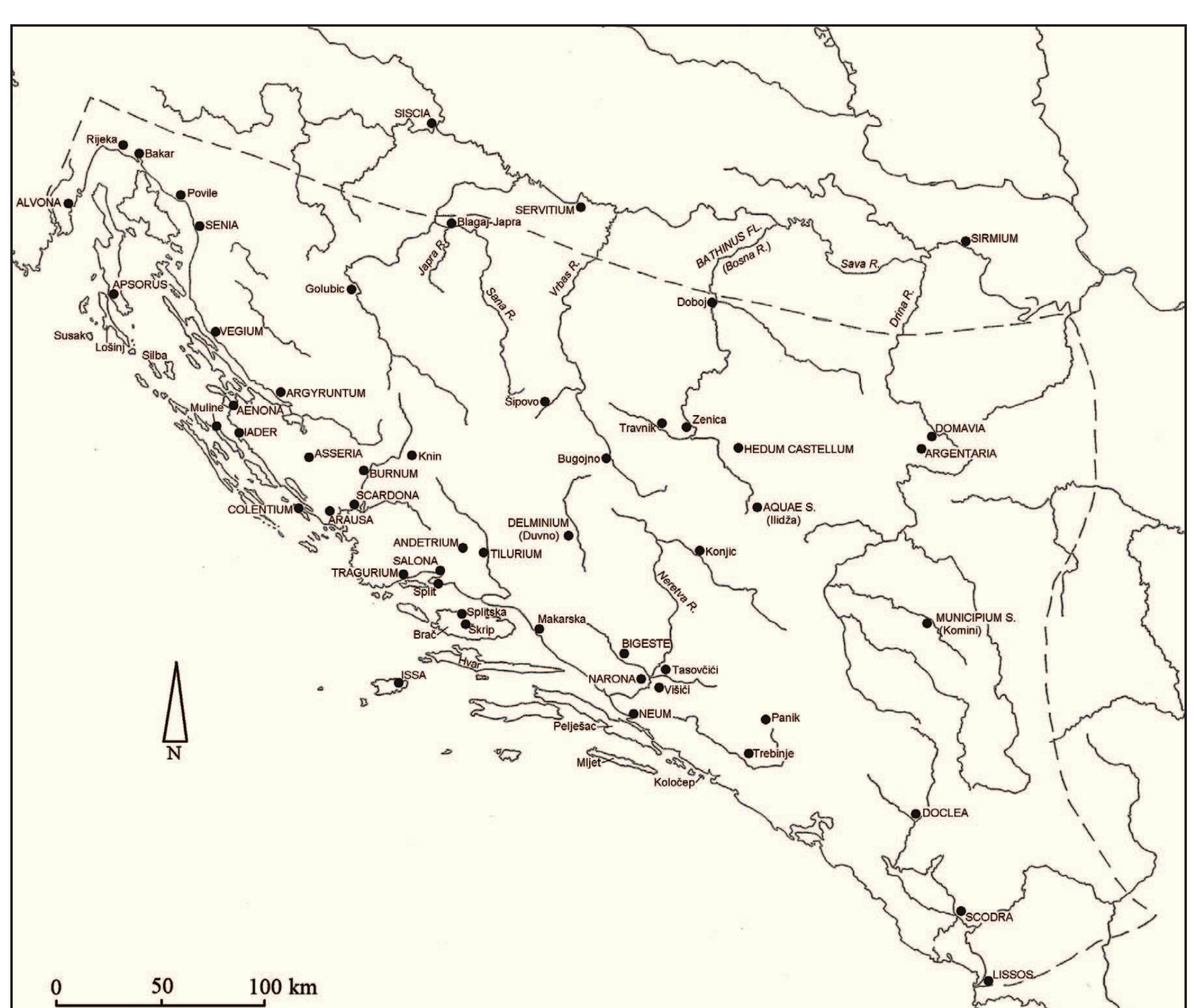
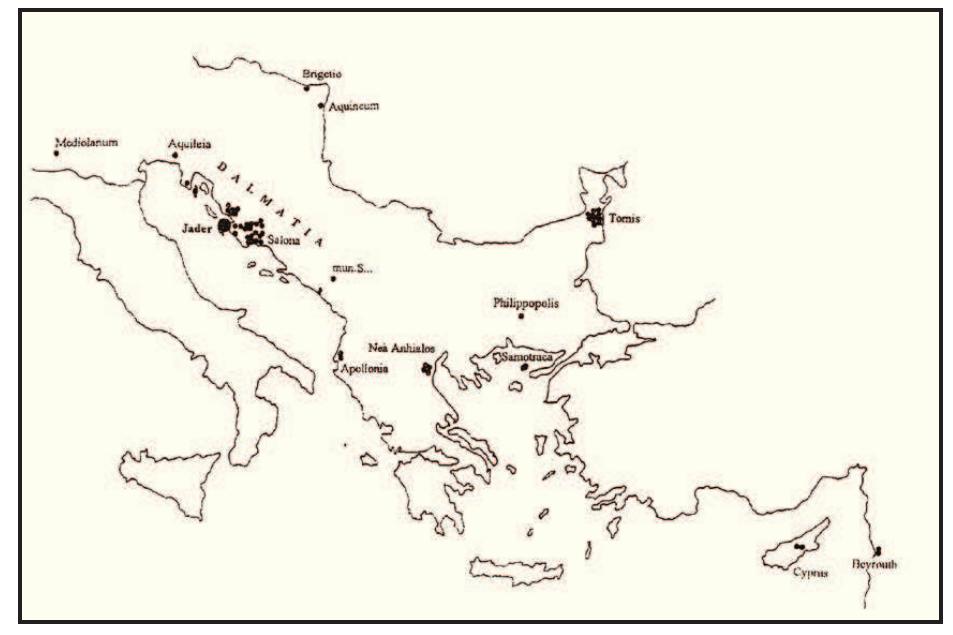
Figure 1. The Roman province of Dalmatia with locations mentio-
ned in the text (K. Glicksman).
been largely ignored: the Roman province of Dal- is largely restricted to imports delivered by sea to
matia (Fig. 1). Ancient authors say curiously little coastal areas; the interior of the province is largely
about this area rich in important natural resources, ignored because of the mountainous terrain and
like metals and timber. References to economic ac- the great expense of land transport. He does make
tivities in the province tend to be rather brief, like some observations on general patterns of trade,
the short note on exports in Expositio totius mundi like the link between increased trade and the Ital-
et gentium (53.5–9) or Pliny’s remark on gold min- ian settlements founded along the coast during the
ing (NH 33.67); such sources give very little real in- late Republican period, but in general, he gives few
formation on the nature of Dalmatian trade except details of the archaeological evidence, except for
for an indication that certain materials were pro- a separate study of ceramics in his Appendix XV
duced and exported. The archaeological evidence, (Ibid.: 499–504).
on the other hand, is much more revealing, showing Zaninović’s article (1977) on Dalmatian economy
a thriving trade with much of the Roman world. treats trade in even less detail and is affected by the
Previous literature on the subject is rather sparse. same limitations evident in Wilkes’ study. He gives
In his comprehensive study of the province, Wilkes a very short account of maritime trade with little
(1969: 407–415) considers the nature of trade, but consideration of archaeological evidence with the
his scope is rather narrow, probably limited both by exception of a handful of inscriptions indicating
the extent of archaeological research in the area and connections with the Italian peninsula and the nu-
also by contemporary ideas about trade in the an- merous shipwrecks found scattered along the east-
cient world. His brief overview of Dalmatian trade ern Adriatic coast, whose significance toward Dal-
Opvscula Archaeologica Vol. 29 (2005) 190
Opvscvla 29.indb 2 21.8.2006 12:01:34
Kristina GLICKSMAN Internal and external trade in the Roman province of Dalmatia
matian trade can be rather problematic, as I shall show general trends in this respect as well where
discuss below. the evidence permits such interpretation. However,
Much more recently, Škegro has written a book the simple presentation of information is only the
on the economy of Roman Dalmatia, including a beginning of the effort to understand the nature of
chapter devoted to trade in the province in which trade in this part of the empire. I will also attempt
he presents a collection of related archaeological, to show the significance of patterns in Dalmatia and
epigraphic, and literary sources, but he adds very their relation to trends seen throughout the empire
little in the way of analysis to the study of trade in and also to determine the causes for the changing
the Roman province of Dalmatia (1999: 275–302). patterns of trade and their effect on the province.
For a study of the Roman province, Škegro spends Material goods can travel under any number of in-
an inordinate amount of time discussing pre-Ro- fluences: trade, military supply, movement of in-
man commercial links without relating them in any dividuals; but it is often difficult to distinguish be-
way to later evidence. He simply states that certain tween the various influences in the resulting archae-
imported materials were found in Dalmatia, some- ology (cf. Peacock & Williams 1986: 54–66; Harris
times offering the names of sites, without any at- 1993; Paterson 1998). As the purpose of this study is
tempt to quantify material or to analyse distribution to observe commercial relations between Dalmatia
of the artefacts. There is no comparison of trade in and the rest of the Roman world, and also within
Dalmatia with trade in other parts of the Mediter- the province itself, I have focussed on categories
ranean nor any conclusion concerning the place of of evidence which I believe best demonstrate these
trade within the context of the provincial economy. connections. For example, Egyptian shabti figures,
Some other recent works have also dealt with trade while intriguing, represent personal religious devo-
in Roman Dalmatia, but they are much more re- tion, and are thus not clearly representative of trade,
stricted in terms of evidence examined and geo- but are rather more likely linked to movement of
graphical area studied. Jurišić’s work (2000) is a individuals. And even though coins are instruments
well-organised compendium of existing informa- of commercial exchange, patterns of coin circula-
tion on shipwreck sites along the Croatian coast. He tion cannot necessarily be directly associated with
provides some useful thoughts concerning the role the scale and direction of trade (Howgego 1994: 7–
of the Adriatic in the context of empire-wide trading 8), and are therefore not considered in this study. In
routes and also makes an attempt to trace the most order to minimise confusion between commercial
likely sailing routes along the coast and between movement of goods and transport for military sup-
the islands. But his insights into trade are limited ply, I have focussed on material from civilian sites.
by his evidence, since he only considers shipwreck Military sites are mentioned only when I think that
evidence from the eastern Adriatic coast within the the evidence points clearly to trade and that a con-
first two centuries AD. sideration of the material can give a greater insight
Another work which considers trade is Zotović’s into trade in Roman Dalmatia. I will also point out
book on population and economy in the eastern part certain problematic areas and discuss the issue at
of the province; trade only accounts for a very small appropriate points in the text.
part of the work and is necessarily limited to a spe- I will trace the movement of various types of im-
cific section of Dalmatia, but it is significant in rela- ported commodities and locally-produced goods,
tion to previous study of Dalmatian trade because it where these have been identified. The results will be
focusses on the interior rather than the coast, sug- affected to some extent by biases in current research;
gesting the significance of land routes and interac- for example, extensive study of Italian and African
tion with Pannonia and Moesia (2002: 64–67). finewares in comparison with other pottery types
In this paper I will take a much broader approach may overemphasise the importance of connections
to the study of trade in Roman Dalmatia, examin- with these areas. These biases cannot be avoided,
ing the evidence for both external and internal trade but recognition of their possible influence can help
over the whole province and will attempt to estab- to alleviate some of the problems they cause.
lish patterns both for trade with other regions of Pottery is probably the single most important com-
the Roman empire and for the movement of goods modity for the study of trade in the Roman world.
within the province. First and foremost, I will look at It is important to archaeological research in general
the types of commodities being transported and the because it is nearly indestructible, and it is even
locations to and from which they were being trans- more significant to archaeology of the Classical
ferred, and I will attempt to form a general chronol- world, since it was used by all classes for a variety of
ogy of trade relations based on this evidence. The activities, but especially for eating, drinking, and the
scale of trade is difficult to determine through ar- preparation of food. Changing fashions in the an-
chaeological evidence with any specificity, but I will cient world resulted in many varying styles over the
191 Opvscula Archaeologica Vol. 29 (2005)
Opvscvla 29.indb 3 21.8.2006 12:01:34
Kristina GLICKSMAN Internal and external trade in the Roman province of Dalmatia
centuries which are rather distinct and can often be logically invisible, commodity like grain. Despite its
dated quite closely, making pottery ideal for dating deficiencies, pottery is an extremely useful tool in the
sites. Analysis of pottery distribution is also crucial study of trade, and I will use it extensively to help es-
to the study of trade in the Roman period. Because tablish major trading connections between Dalmatia
it is easily made in most areas of the Mediterranean and the rest of the empire, and also to indicate trade
and a relatively cheap commodity, pottery was rare- within the province itself.
ly traded across long distances for its own sake, as Amphora forms are also generally well-studied, and
seems to be indicated by shipwreck evidence which although the forms tend not to vary so much over
shows pottery generally as secondary cargo, rarely time, many have reliably established origins and
accounting for more than twenty percent of the recov- general dates. And unlike most other pottery, am-
erable cargo (Fulford 1987: 60), although there are ex- phorae, as containers of agricultural products, are
ceptions, some of which are located along the eastern direct indicators of trade, and since various forms
Adriatic coast (Parker 1992: 16). However, the cheap- are associated with specific contents, they also
ness of pottery and its wide use throughout the Medi- show the commodities being transported. There
terranean meant that it was also easy to sell, and it are, however, a number of problems with using am-
seems likely that Roman merchants filled any leftover phorae, two of which are particularly relevant to the
cargo space with pottery which was bought and sold study of Dalmatian trade. The first is that Dalmatian
opportunistically, the results of which can be seen in amphora forms are unknown; although some pre-
the large proportions (not less than twenty percent) of liminary work has been done, our ignorance of Dal-
foreign material in the pottery assemblages of major matian amphorae significantly affects our ability to
port towns (Fulford 1987: 64). trace export or even internal trade of Dalmatian ag-
These characteristics of pottery make it extremely ricultural products. Another problem is the longev-
useful for tracing trade within the Roman world, but ity of amphorae, which are very durable vessels able
it cannot always be taken as direct evidence of trade to endure repeated use; this causes a problem be-
connections, only as a general indicator of trade. cause only the original source and date are known,
Imported ceramic material is sometimes a result of but not the date and location of reuse.
goods traded opportunistically along a route or col- Pottery and amphorae make up the largest groups
lected at an emporium rather than a direct connec- of evidence I will be using because they were traded
tion between two locations. The use of pottery in the widely throughout the Mediterranean, and those
study of trade is also limited because although it can found in Dalmatia represent nearly every area of
indicate trade and certain patterns, it tells us nothing the Mediterranean which had any archaeologically
of the other types of goods that were carried on the visible connections with the province. But I will also
same shipment; the pottery may be all that remains consider a number of other materials, including
of a shipment of some perishable, and thus archaeo- tiles, glass, architectural stone, and sarcophagi.
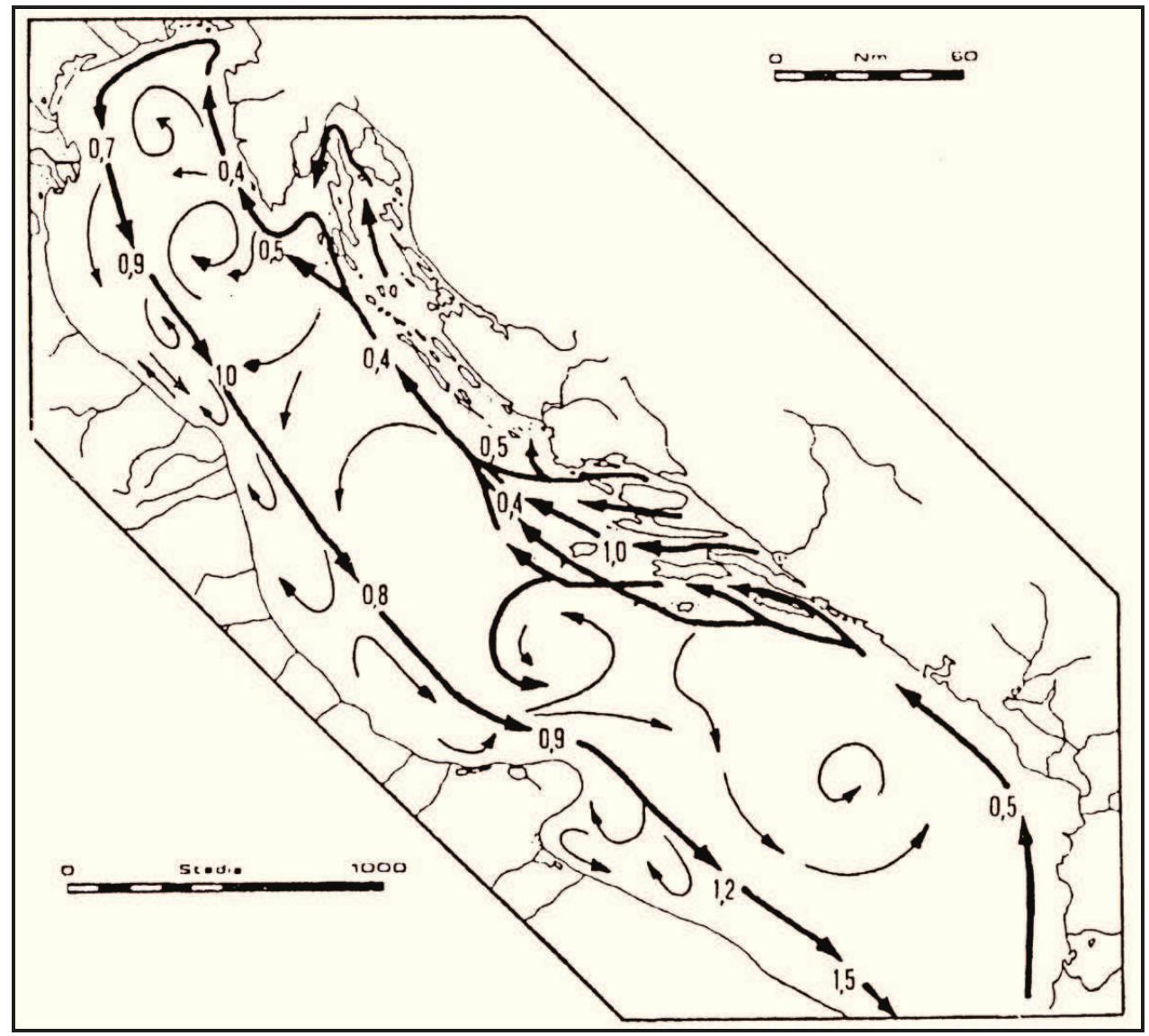
Figure 2. Direction of main sea currents in
the Adriatic (from Škegro 1999: 276 fig. 69;
reproduced by permission of Hrvatski studiji
– Studia Croatica).
Opvscula Archaeologica Vol. 29 (2005) 192
Opvscvla 29.indb 4 21.8.2006 12:01:42
Kristina GLICKSMAN Internal and external trade in the Roman province of Dalmatia
Shipwrecks are an invaluable source of informa- imports over time. In the next section, I will look at
tion on trade in the ancient world, but the inter- exports, but since Dalmatian exports have not gen-
pretation of their evidence can also be problematic. erally been identified archaeologically, I will also
Shipwrecks show us the types of cargo that could consider literary and epigraphic evidence. The last
be shipped together and the relative proportions section will deal with the evidence for the move-
of these cargoes, as already seen in the case of pot- ment of goods within the province, focussing espe-
tery; but while a cargo may tell us the ship’s point cially on relations between the coastal regions and
of origin, the physical remains can tell us nothing the interior of the province.
of where the ship was headed, or whether it would
make any trading stops before it reached its final
destination. For this reason, we should be wary of 2. Imports
hasty judgements relating a shipwreck to the area
of its discovery. In the case of Dalmatia specifical-
ly, the nature of sailing in the Adriatic provides a
warning for the easy association of eastern Adriatic 2.1. Introduction
shipwrecks with Dalmatian trade. Modern sailing
vessels simply passing through the Adriatic prefer Analysis of evidence for imports can show not only
to travel along the eastern coast; storms tend to what sorts of materials were being brought into a
pick up very quickly and with little warning on the region, but also where they were being transported
Adriatic, and the many islands and harbours along from and when. Thus, the level of imports to a cer-
the Dalmatian coast provide better shelter in an tain region can reveal predominant commercial re-
emergency than the sandy coast of Italy with its few lationships between regions of the Roman empire
harbours (Thompson & Thompson 2004: 2). This and also market trends within certain regions, and
fact, combined with the counterclockwise running this is what I will attempt through an analysis of im-
of the regular inshore surface currents (Ibid.: 7; Fig. ports to Dalmatia between the first and fourth cen-
2), provides us with reason to suspect that ancient turies AD.
ships may have preferred the eastern coast, at least Ceramic evidence (pottery, amphorae, and bricks/
when travelling north. The major trading centre tiles) provides the bulk of datable and reliably prov-
of Aquileia at the head of the Adriatic would most enanced material. Personal items, such as jewellery
likely have been both the destination and the ori-
and religious objects, for example, pose a difficulty
gin of innumerable cargoes; thus, shipwrecks dis-
in distinguishing those objects which were brought
covered among the islands of the Dalmatian coast
to the region through trade from those which were
cannot necessarily be taken as irrefutable evidence
brought already in the possession of individuals.
of Dalmatian trade.
Also, some artifacts like jewellery are difficult both
This study of internal and external trade in the Ro- to provenance and to date, and valuable commodi-
man province of Dalmatia will focus on, but will not
ties tend to have long lifespans.
be completely restricted to, evidence from the first
four centuries AD. This time limit is based on two Two materials I will consider, however, are glass and
significant dates: the partitioning of the province stone imports. Glass forms are often unable to be
of Illyria around AD 9 into Dalmatia and Panno- securely dated and provenanced, as many provin-
nia, and the final division of the Roman empire into cial forms are imitations of earlier Italian or Eastern
eastern and western halves with the death of the em- products, and even some of the Italian forms resem-
peror Theodosius in AD 395. While I have chosen ble Eastern types, but there are enough well-identi-
these particular political events for their possible ef- fied forms to make consideration of their import
fects on the economy of the region, I also recognise worthwhile. The main difficulty offered by stone is
that archaeological evidence does not always fit so its inability to be dated except by style, with respect
comfortably within the parameters we create. Thus, to sculptures and sarcophagi, and by association, as
although the focus of this paper is on evidence for is the case with architectural stone. Also, in the case
trade between the first and fourth centuries AD, full of certain architectural pieces like pillars, it can be dif-
appreciation of the evidence may require, in some ficult to prove that a specific location represents the
cases, a consideration of material which may date primary use of the stone and therefore reflects the
outside the proposed time range. approximate date of import. Another, less obvious
The majority of this study will deal with external difficulty lies in establishing trade connections; al-
trade, especially imports for which we have much though many types of stone can be sourced to their
clear archaeological evidence. In the first section, I quarries, the appearance of a certain type of stone
will consider the evidence for imports from various in a region may not represent trade with the area
regions of the empire and for fluctuations in these where the quarry is found but rather with a work-
193 Opvscula Archaeologica Vol. 29 (2005)
Opvscvla 29.indb 5 21.8.2006 12:01:42
Kristina GLICKSMAN Internal and external trade in the Roman province of Dalmatia
shop in another part of the empire. For example, a
sarcophagus carved in a workshop at Rome most
likely reflects trade with Rome no matter the type of
marble and its original source. However, as marbles,
granites, and other stone can often be clearly identi-
fied, and their import represents large-scale move-
ment of goods, I will consider cases where dating is
relatively secure.
2.2. First century AD
2.2.1. Italy
Brick and tile make up a significant portion of the
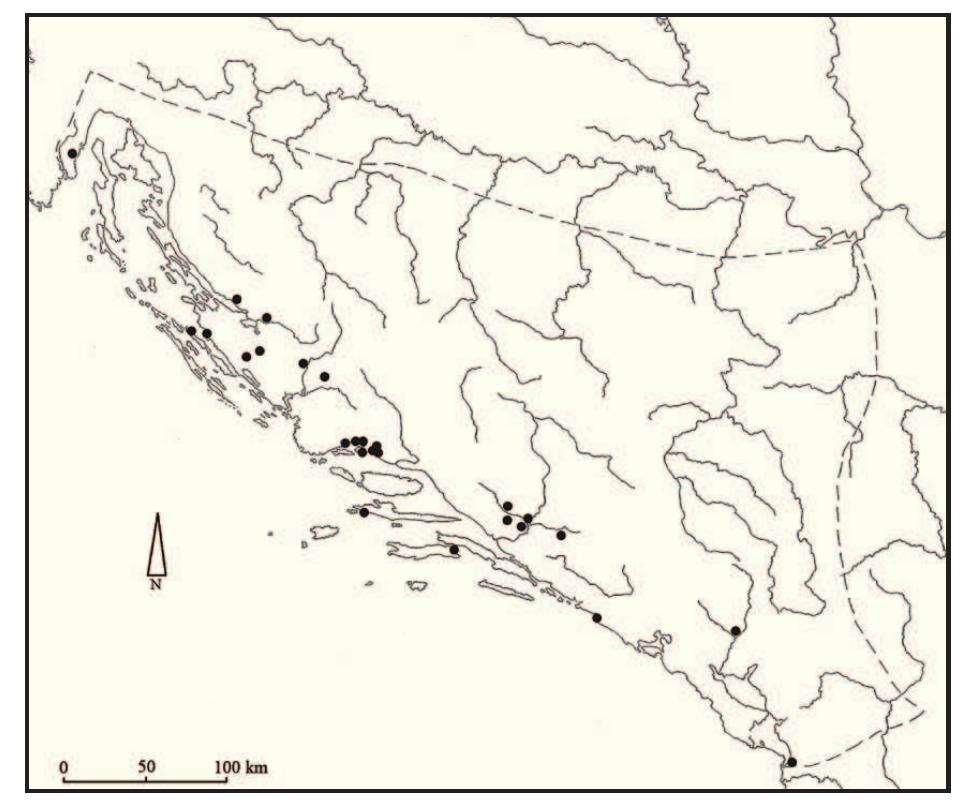
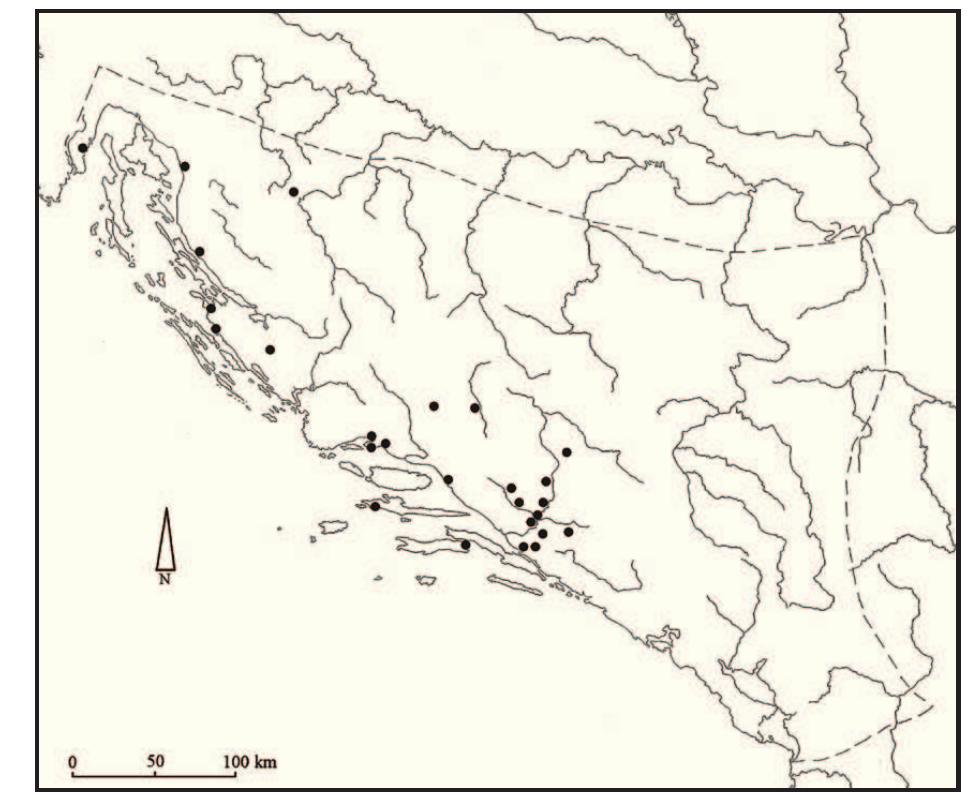
Figure 3. Findspots of tegulae from the Q. Clodius Ambrosius
imports from northern Italy to Dalmatia where workshop (by K. Glicksman, based on Slapšak 1974; Škegro 1991).
we find products both of imperially owned facto-
ries, especially Pansiana, Solonas, and Q. Clodius
Ambrosius, and of a large number of private brick-
works. In fact, more than a third of all bricks and
tiles found in Dalmatia and stamped with the mark
of a private manufacturer come from northern Italy
(Wilkes 1979: 69). While most of these workshops
were in Aquileia or the immediate vicinity, there are
a couple of significant exceptions, namely the Pan-
siana and Solonas works. Although these were once
thought to have been located near Aquileia, the dif-
ferent quality of clay and the poor representation at
Aquileia show that this was not so; they were most
likely located somewhere along the western Adri-
atic coast between Rimini and Pescara (Matijašić
1983: 987; Wilkes 1979: 67–68).
Based on similarities of style and lettering, the
Figure 4. Findspots of tegulae from the Pansiana workshop (by K.
stamps are assumed to have been used mostly dur-
Glicksman, based on Matijašić 1983; Bojanovski 1980; Škegro 1991;
ing the first century AD (Wilkes 1979: 69), so the Zabehlicky-Scheffenegger & Kandler 1979).
import of bricks is dated between the end of the first
century BC and the beginning of the second centu-
ry AD, but with the exception of the Pansiana types
they cannot be dated more closely. At some point
during the reign of Augustus, the Pansiana factory
came under imperial ownership, and between the
reigns of Tiberius and Vespasian, all stamps bear
the name of the reigning emperor, greatly facili-
tating dating of production and export (Matijašić
1983). While there was some pre-Augustan import,
as demonstrated by finds from Alvona, Iader, and
Bigeste (Ibid.: 963–964; Atanacković-Salčić 1978:
76), there is a dramatic increase in the number of
finds and the width of distribution starting in the
Augustan period, and with some allowance for dif-
ferences based on length of reign, the import seems
to have remained relatively constant at least until the
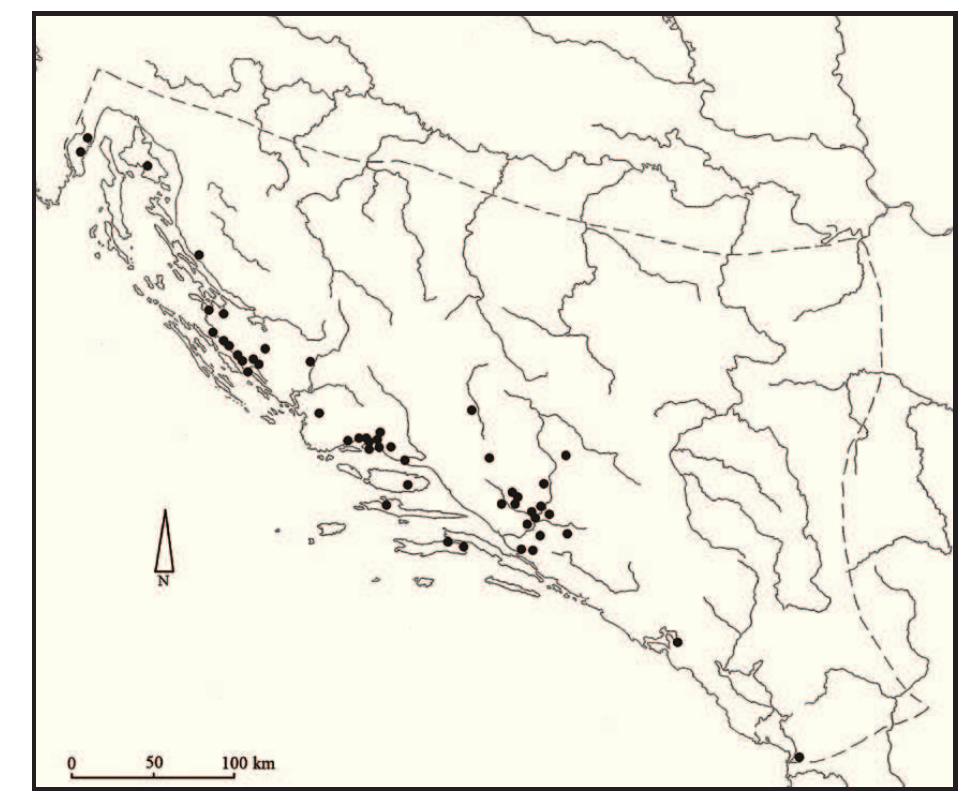
reign of Vespasian, after which production stopped Figure 5. Findspots of tegulae from private north Italian figlinae (by K.
altogether (Matijašić 1983). Glicksman, based on Matijašić 1987; Bojanovski 1980; Škegro 1991).
Opvscula Archaeologica Vol. 29 (2005) 194
Opvscvla 29.indb 6 21.8.2006 12:01:54
Kristina GLICKSMAN Internal and external trade in the Roman province of Dalmatia
Reports involving brick and tile finds in Dalmatia and they were probably transported as cargoes of
are not always clear, often only mentioning the re- saleable ballast with the expectation of returning to
covery of the find without any detailed description Italy with a much more profitable cargo of oil and
of location within the site or even quantities of ma- fish products (Wilson 2001: 27; Tomber 1987: 169).
terial (e.g. Gunjača 1985), and many examples were I would propose a similar case for the import of
not recovered through controlled excavation, as is brick and tile in Dalmatia during the first century
the case with a group of bricks donated to the Split AD, but whereas Wilson sees imports in Africa as
Archaeological Museum, which reportedly came destined for specific projects (2001: 27), Dalmatian
from Narona and for whose provenance we must import seems to have been related to a general need
rely on the good knowledge of the donor (Abramić for roofing material. According to Matijašić (1987:
1926–27). But despite these problems, some obser- 531), the first century AD was the most intense
vations can be made on the distribution and use of building period in Dalmatia. The wide distribution
imported brick and tile in Dalmatia. and the variety of sites using these imported materi-
Northern Italian brick and tile was almost exclu- als point to a general trade in Italian tegulae rather
sively used in the coastal regions; there are few than transport for specific projects, and the pres-
reports of finds further than fifty kilometres from ence of products from a large number of figlinae,
the coast. Although they can be found anywhere both imperial and private, with more than one often
between Alvona on the Istrian Peninsula and Lissos represented at the same site, excludes the possibility
near the southern border of the province and also of any one workshop having a monopoly over the
on a number of islands, the majority of finds oc- export to Dalmatia, further supporting the hypoth-
cur between Iader and Narona with a good number esis of transport as saleable ballast rather than trade
found within Iader and Salona and clusters in the for profit. It is likely that there was regular transport
areas immediately surrounding Iader, Salona, and of goods between Aquileia, where products of a va-
Narona (Fig. 3–5). riety of workshops could be acquired depending on
They are also found at a variety of sites: military, availability, and Dalmatia, using the major ports of
municipal, and private. Although some municipal Iader, Salona, and Neum (the port of Narona). The
use can clearly be demonstrated as secondary use, workshops of Pansiana and Solonas were not located
as in the fourth-century basilica at Salona, there is near Aquileia, however, and are poorly represented
some evidence of contemporary use, for example there (Matijašić 1987: 511–512). Although their
the temple to Jupiter at Vegium (Wilkes 1979: 68). products may have been acquired through regular
The evidence for use in military establishments is trade with another city, like Rimini, it is also pos-
surprising considering the demonstrated local mili- sible that they were transported directly from the
tary production; along with sixty-five bricks stamped workshops; however, it is impossible to tell from the
with the names of three different legions stationed present evidence. Even if transported directly, these
there during the first century AD, the excavations products were also intended for the general market,
at Burnum also discovered three examples from since their distribution and use differ from other
the workshop of Q. Clodius Ambrosius and eleven workshops only in quantity. The theory is also sup-
from the Pansiana factory (Zabehlicky-Scheffeneg- ported by three shipwrecks off the islands of Silba,
ger & Kandler 1979: 40–42). There is also consider- Susak, and Lošinj (Jurišić 2000: 39; Matejčić & Orlić
able evidence for the private use of imported mate- 1982: 165); although unexcavated, they seem to be
rial with Italian brick and tile of known provenance single-cargo wrecks of tegulae, a phenomenon seen
coming predominantly from private buildings, seen elsewhere in the Mediterranean (Tomber 1987: 169)
especially in the large quantity found at villa sites in suggesting the bricks were not a coincidental, sec-
the area around Narona (Škegro 1991; Bojanovski ondary cargo, but a primary one. Future excavation
1980). Reports often do not distinguish between of these sites could potentially provide us with valu-
bricks and tiles, and indeed it is impossible to tell able information regarding the number of work-
from fragments, but nearly all clearly identified, shops represented in a single shipment and possible
stamped material from northern Italy are tegulae proportions of stamped and unstamped tiles. This
(Wilkes 1979: 69), which were tiles used architec- provision of brick and tile from Italy seems to have
turally both for roofs and drains. stopped sometime during the second century AD
The long-distance transport of brick and tile is not when it was superseded by local, private production
particular to the Adriatic, where material from which had started sometime around the end of the
northern Italy has been found along both coasts first century AD. The archaeological evidence sug-
(Matijašić 1983; 1987; Slapšak 1974); products gests that tiles were transported from Italy as car-
from Campania have been found in North Africa, goes of saleable ballast, implying that trade between
195 Opvscula Archaeologica Vol. 29 (2005)
Opvscvla 29.indb 7 21.8.2006 12:01:55
Kristina GLICKSMAN Internal and external trade in the Roman province of Dalmatia
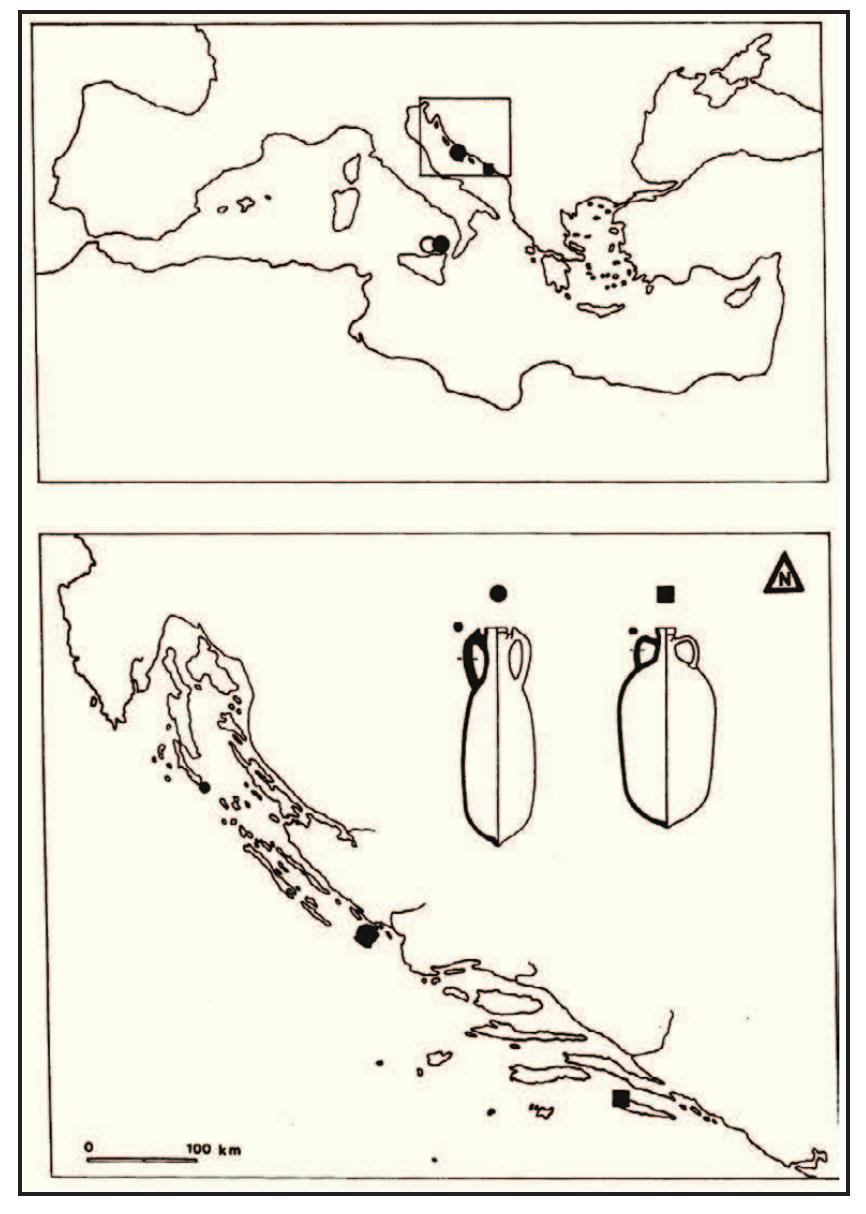
Dalmatia and northern Italy in the first century AD Because of similarities in form and fabric, it is often
was focussed on Dalmatian exports which would difficult to determine the type of any one potsherd;
have produced a high enough profit to justify the in some cases (e.g. Mardešić & Šalov 2000) no dis-
lack of one on the return trip. tinction is made, and the fragments are classified as
Amphorae considered to be of Italian manufacture La.2/Dr.6. Further confusion is caused by the appar-
are also commonly found in Dalmatia during this ent gradual development from the La.2 to the Dr.6
time; the most popular forms from the late Repub- form, resulting in a number of transitional forms
lican/early imperial period are the forms Lamboglia used contemporaneously, as seen by the presence of
2 and Dressel 6A and B. Based on the evidence of various forms within the same shipwrecks (Jurišić
transitional forms, Dressel 6 (first century BC–first 2000: 12). The evidence from shipwrecks, accord-
century AD) appears to have been a development ing to Jurišić (Ibid.: 105, 107) shows a much greater
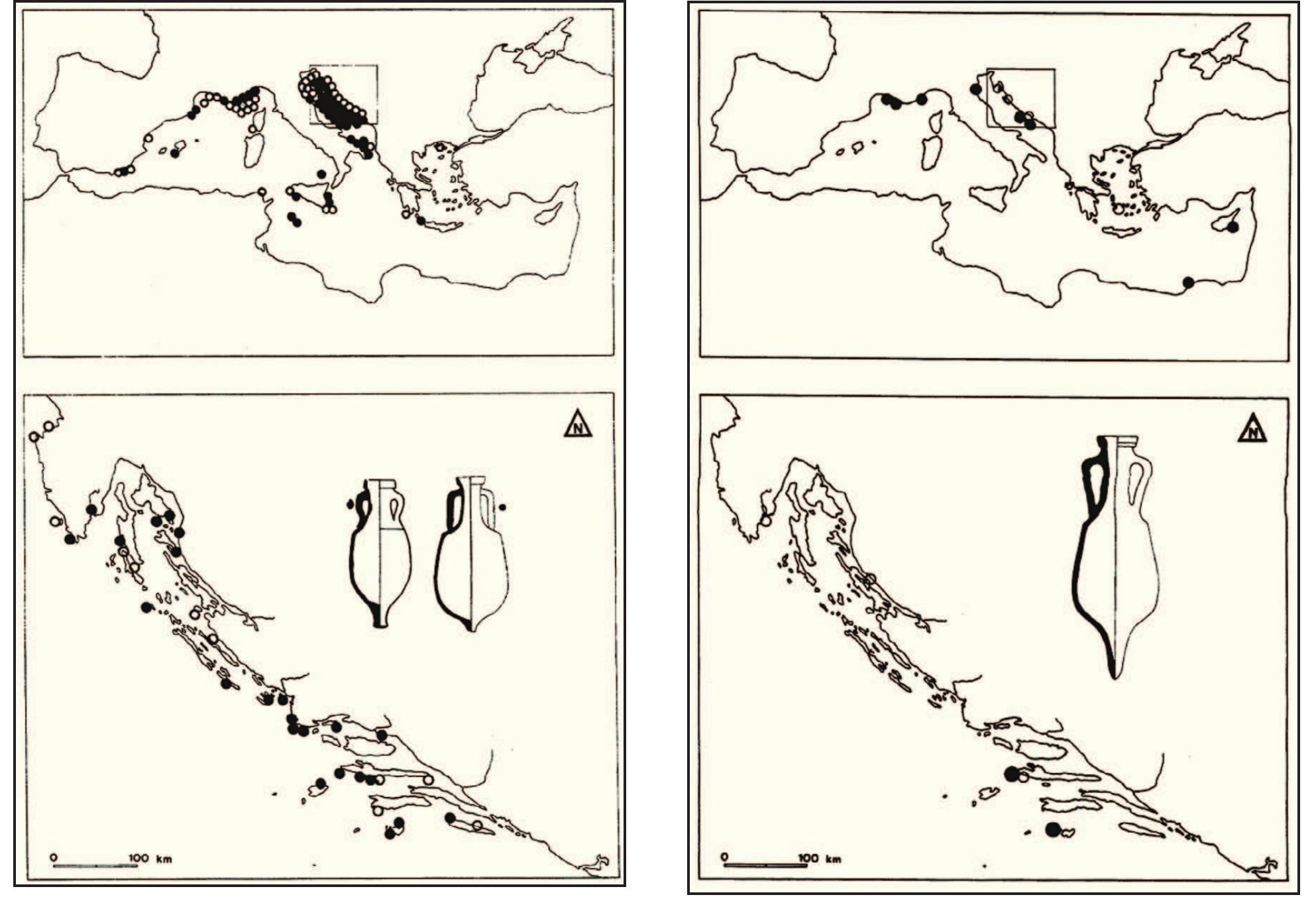
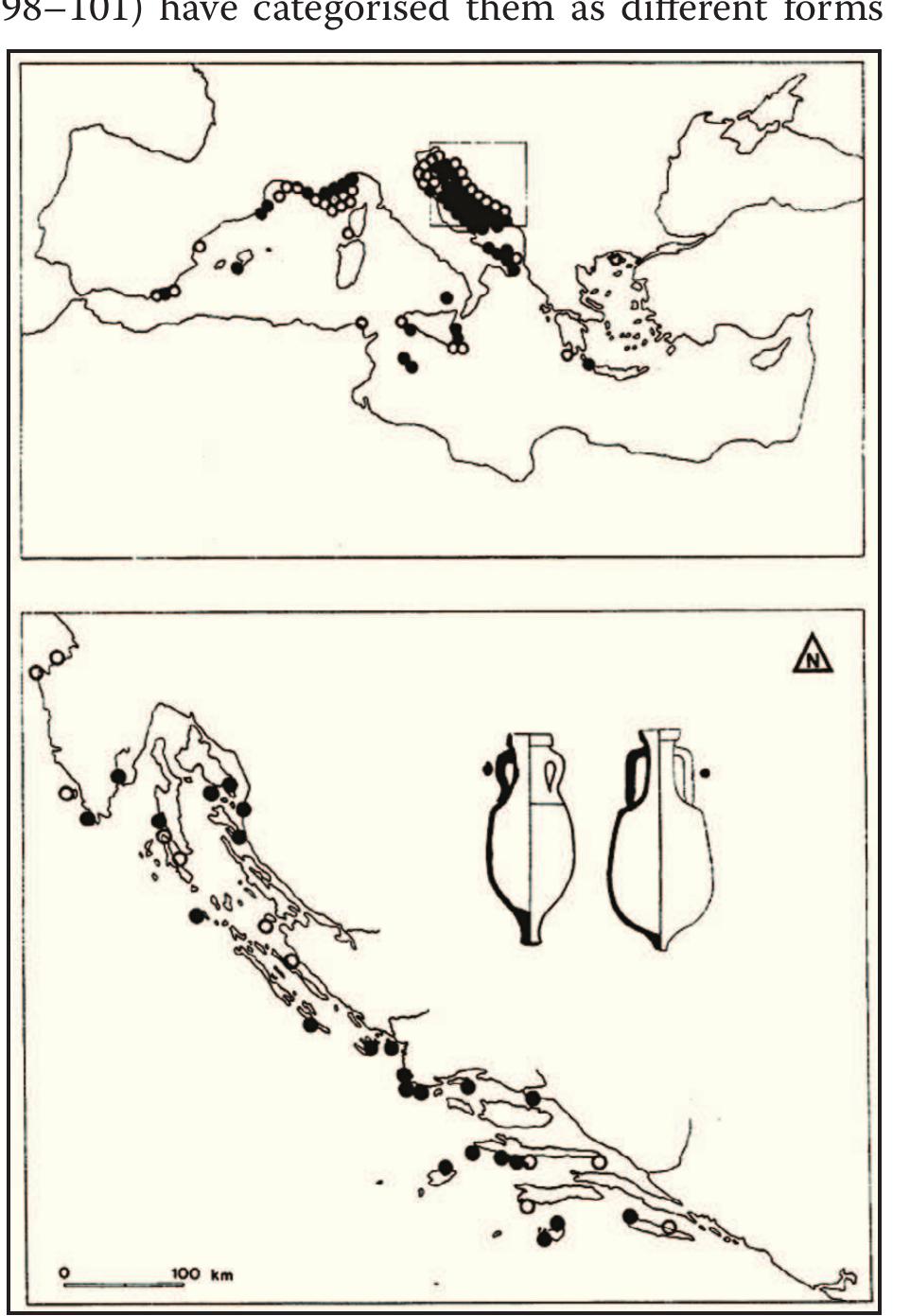
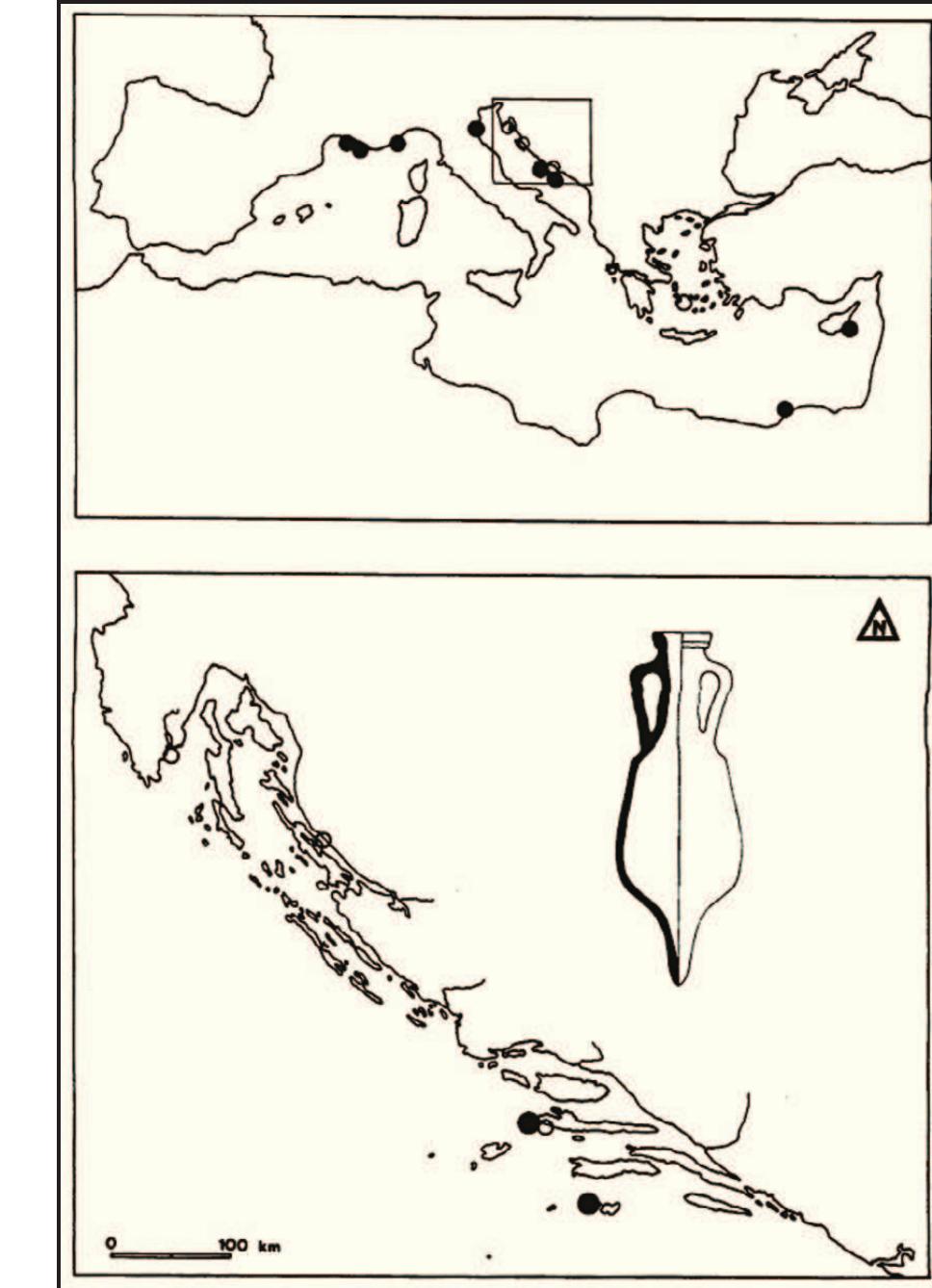
from the Lamboglia 2 (second to mid–first century representation of La.2 than Dr.6A, with twenty-two
BC). In fact, they are so similar and the relationship and two definitely identified wrecks, respectively
seems so evident that Peacock and Williams (1986: (Fig. 6–7). (There are no known Dr.6B wrecks.) All
98–101) have categorised them as different forms three forms have been identified at sites excavated
Figure 6. Distribution of Lamboglia 2 cargoes (from Jurišić 2000: Figure 7. Distribution of Dressel 6A cargoes (from Jurišić 2000:
105, map 17; reproduced by permission of the author). 107, map 21; reproduced by permission of the author).
of the same type (their class 8). While Lamboglia on land, namely Salona and Narona (Cambi 1989:
2 amphorae seem to have been used only for wine, 318, 323); a number of La.2 amphorae were used
the Dressel 6 were more multi-purpose; they are as construction material in the northern city wall
known to have carried olive oil, wine, and garum. of Narona, probably for drainage purposes, along
Although they represent two distinct forms and the with what appears to be a fragment from a Dr.1, an
Lamboglia 2 falls clearly outside the time range of amphora rarely found on the eastern Adriatic coast
this study, I consider both forms together here be- (Ibid.: 318; Cambi 1980: 75).
cause they are so closely related and share a number Another major problem with these forms is relat-
of common problems. ed to their areas of production. La.2 are thought
Opvscula Archaeologica Vol. 29 (2005) 196
Opvscvla 29.indb 8 21.8.2006 12:01:57
Kristina GLICKSMAN Internal and external trade in the Roman province of Dalmatia
to have been produced along the western Adriatic been identified at four shipwreck sites in the east-
coast, especially in Apulia, while the production ern Adriatic (Jurišić 2000: 14). Finds have also been
of Dr.6 forms was restricted to northern Italy and recorded from excavations on land; two fragments
Istria (Peacock & Williams 1986: 100; Jurišić 2000: were found at the site of Diocletian’s Palace (Will
6, 11–12). However, similarities in form and fabric 1989: 62), two at Salona (von Gozenbach 1975: 192),
prevent closer identification of locations of produc- and another at Aquae S. (Cambi 1989: 326). The
tion even in the case of known kiln sites (Cipriano form is also represented at the Narona Augusteum
& Carre 1989: 82). This difficulty in identification where five of the ten Dr.2–4 fragments have been
suggests at least the possibility of production in identified as Campanian (Topić 2004: 311).
coastal Dalmatia, whose pockets of clay are domi- Forlimpopoli amphorae were produced in northern
nated by Eocene flysch similar in composition to Italy starting in the first century AD until at least
that of Apulia (Sondi & Slovenec 2003: 257–258), the end of the third century, and were used for the
but at the same time makes it extremely difficult to transport of wine (Jurišić 2000: 20–22). Although
recognise amphora production in Dalmatia without they have been found at a number of underwater
the identification of kiln sites.2 sites, on land they have only been identified at the
In his article on Roman amphorae found in Dalma- Narona Augusteum (eight fragments) along with
tia, Cambi (1989: 321) suggests the possibility that eight fragments of another first-century Italian form
Greco-Italic and La.2 amphorae were imitated by Haltern 68, and one Haltern 69, a first-century Ital-
Dalmatian workshops. He supports this view by ian amphora used for the transport of fish products
suggesting a possible connection between the M. (Topić 2004: 311–312). North Italian Portorecanato
PAPIVS KANVS mentioned on an inscription from (used for wine between the first and third centuries),
Tasovčići near Narona commemorating Octavian’s Campanian Dr.21–22 (usually containing preserved
victory over Sextus Pompey in 36 BC and the man fruit), and Richborough 527 (produced at Lipari for
referred to by the stamp KANI found on La.2 am- the transport of alum) are also known from under-
phorae from a wreck near Stanići-Ćelina, on the water sites in the eastern Adriatic (Jurišić 2000: 17,
coast between Salona and Narona (Ibid.: 321–322). 22), but I have not found any references to them
He also attempts to connect the M.POT and L.POT from land sites.
stamps from the La.2 wreck at Vela Svitnja, Vis Italian pottery seems to have been quite common in
with a Greek and Latin inscription (CIL III, 3076) Dalmatia during the first century AD; while some of
from Vis recording a dedication to Mercury from the forms found at Dalmatian sites were produced
(L).PONTIUS.CN.F (Cambi 1991: 61–62). He also during the second century and sometimes even lat-
argues for the possibility of Dr.6 production in this er, the majority of Italian forms securely date before
region based on the frequency of this form in Dal- the beginning of the second century AD. Although
matia, although unfortunately he does not give any different areas of Italy are represented in the pot-
specific details (Cambi 1989: 323). Cambi’s theories tery assemblages of Dalmatian sites, the largest part
are at best tentative and difficult to prove, but as of these wares seems to come from northern Italy,
yet no more solid evidence exists for the possibility especially the Po Valley.
of amphora production in Dalmatia.3 However, the Despite the popularity of Arretine ware, relatively
possibility does exist; therefore we cannot, at the few products from the workshops of Arretium it-
moment, use La.2 and Dr.6 amphorae to make any self have been found in Dalmatia; most Italian terra
conclusions regarding the nature of trade between sigillata (ITS) came to Dalmatia from the Po Val-
Italy and Dalmatia during the last two centuries BC ley workshops. According to the revised Corpus
and the first century AD. Vasorum Arretinorum (Oxé et al. 2000), at the time
Other Italian amphora types are less well-repre- of publication about 66 percent of all published
sented at Dalmatian sites. Dr.2–4 amphorae, pro- stamped vessels found in Dalmatia (47 out of 71)
duced in Campania between the first century BC were the work of Po Valley potters. This trend is un-
and the first century AD and used for wine, have surprising; we have already seen evidence of regu-
lar trade between northern Italy and the Dalmatian
coast during the first century AD through the wide
2
I am grateful to Keith Swift for his help in understanding some distribution of Italian tiles. Except for the major
of the difficulties related to Lamboglia 2 and Dressel 6 produ- coastal cities Salona and Narona, and one outlier a
ction. short way inland at Golubic, finds of ITS seem to
3
Four of the six La.2/Dr.6 sherds discovered in the recent excavation
of a villa underlying the basilica at Narona have been identified
be restricted to the region of Liburnia, especially
as locally-produced (Mardešić & Šalov 2000: 4), but no explana- around the port of Iader, but also fairly well-repre-
tion is offered for this distinction. sented in the northern part of the region (Kvarner)
197 Opvscula Archaeologica Vol. 29 (2005)
Opvscvla 29.indb 9 21.8.2006 12:01:57
Kristina GLICKSMAN Internal and external trade in the Roman province of Dalmatia
where northern Italian tiles are rarely found. In fact, leia, other regions of Italy are also represented; how-
Italian wares apparently make up the largest group ever, these finds tend to be much scarcer. Both Pom-
of imported ceramic material in Liburnia (Brusić peian red plates (southern and central Italy, 1st–late
1993: 83). 2nd century AD) and ‘orlo bifido’ bowls (Campania,
The largest quantity of stamped ITS found in Dal- 1st century BC–2nd century AD) have been found
matia comes from the early Roman cemetery (in in limited quantities (eight and ten pieces, respec-
use between the time of Augustus and the mid-sec- tively) at Narona, mostly at the Augusteum but also
ond century) at Apsorus on the island of Cres. ITS from a nearby villa (one of each type) (Topić 2004:
is clearly the dominant pottery type: 50 out of 61 305–306; Mardešić & Šalov 2000: 106). Rare finds
recorded vessels, of which 38 bore legible stamps; on land, these coarsewares are known from two
of these 38, six were Arretine or probable Arretine rather unique shipwrecks at Gušteranski Islet and
products, while thirty came from workshops in the Cape Glavat. The former has been heavily looted,
Po Valley. On the basis of the stamps, it is also evi- and only about fifty vessels have been recovered:
dent that the great majority of the vessels were pro- approximately fifteen percent Pompeian plates, the
duced and mostly likely imported by the middle of the rest ‘orlo bifido’ bowls. The wreck (late 1st–early
first century AD (Makjanić 1985; Oxé et al. 2000). 2nd century AD) also contained Hispanic ampho-
rae (Keay XVI and, possibly, Beltrán 2B) as well as
ITS, however, was not the only type of imported north Italian Forlimpopoli, although the poor pres-
Italian ceramics. The most common northern Ital- ervation of the site meant that only six amphorae in
ian import seems to have been the so-called ‘Sar- total were recovered (Jurišić 2000: 64).
ius’ cup. Of all the types of imported Roman relief
pottery in Liburnia recorded by Brusić, these cups The ship which sank near Cape Glavat at the end
vastly outnumber any other type, even if one leaves of the first century AD was carrying a varied cargo,
out the over one hundred vessels represented in the including Cretan 1 amphorae, Campanian Dr.21–
22, and Richborough 527 from Lipari, rough glass,
graves of Arausa (Brusić 1999: 23). Excluding the
lamps, Eastern pottery, and ITS, as well as ovoid,
Arausa examples, ‘Sarius’ cups make up thirty-five
three-handled vessels containing the minerals min-
percent (49/140) of all known relief pottery import-
ium (red lead dye), galenite and cerusite. The most
ed to Liburnia between the first and fifth centuries
numerous items recovered, however, were over five
AD, and account for more than fifty percent (49/95)
hundred Italian coarsewares: ‘orlo bifido’ bowls
of those types which were being produced between
(97.3%) and Pompeian plates. Seven different plate
the last decade of the first century BC and the end
and six bowl sizes have been found in this wreck;
of Tiberius’ reign, which are the dates Brusić gives
the bowls were accompanied by matching lids, and
for the production of the ‘Sarius’ cups (Ibid.: 22).
all were stacked together with others of the same
They have also been found at Narona: one exam-
dimensions (Jurišić 1988; 2000: 30, 61).
ple comes from the Augusteum and another (one of
two pieces of Italian ceramic import) from the ex- Glass was also a commonly imported Italian prod-
cavation beneath the church of Sv. Vid (Topić 2003: uct during the first century AD, although this fact
189; Mardešić 1998: 108, 144). is probably a combination of two factors: commer-
cial ties between Dalmatia and northern Italy, and
Lamps are another common Italian import; they
the flourishing of Italian glass production in the
are well-represented at the Augusteum at Narona
first and second centuries. Enough glass has been
where 162 lamps found beneath the temenos have identified as the product of Italian workshops to
been identified as Italian products. Except for one demonstrate that a variety of forms (bottles, cups,
from the first century BC and four dated within balsamaria, olla cineraria) was imported to the Dal-
the second century or perhaps slightly later, all ex- matian coast throughout the first century AD from
amples date between the first century AD and the Italy, and especially from northern Italy, in the cases
beginning of the second, and the great majority where centres of production have been more spe-
of those with more specifically identifiable origins cifically identified. Glass seems to have been espe-
come from Cisalpine and Aquileian workshops. cially popular as grave goods as much is found in
Only twenty-one other lamps were found (sixteen necropoleis in Dalmatia, for example at Bakar, Iad-
Corinthian and four probably local), and except er, Argyruntum, and Doclea (Damevski 1974; Fadić
for one of unidentified origin dated to the late first 1982; 1984; 1993).
century BC, they all date between the second and
third centuries AD, showing a predominance, if not
exclusivity, of Italian forms at this site in the first 2.2.2. Western provinces
century AD (Topić 2003: 193–195).
Although most Italian pottery found in Dalmatia Western amphora types are not well-represented
comes from the Po Valley and the area around Aqui- in Dalmatia; besides a possible fragment from Na-
Opvscula Archaeologica Vol. 29 (2005) 198
Opvscvla 29.indb 10 21.8.2006 12:01:58
Kristina GLICKSMAN Internal and external trade in the Roman province of Dalmatia
rona (Mardešić & Šalov 2000: 106), the Hispanic 2.2.3. Pannonia
Dr.2–4 is known in the eastern Adriatic only at two
wreck sites: Paržanj near Hvar and Pupak reef near The only direct evidence of possible trade relations
Palagruža. Two other types of Spanish amphorae, between Dalmatia and Pannonia are bricks bear-
both used in the first century AD, were also found at ing the stamp SISC, interpreted as a reference to
Pupak reef: Haltern 70 for wine and Beltrán 2A for the city Siscia in Pannonia, and found in the Japra
fish products; these amphorae have not been found Valley in northwestern Bosnia. Škegro (1991: 228)
on land in this region, although Beltrán 2A has been dates these bricks to the first and second centuries
found as individual examples from the sea (Jurišić AD and claims they are numerous throughout the
2000: 14–15). The wreck at Paržanj also carried His- settlements of the area, but unfortunately, the only
panic spindle-shaped amphorae (late first century direct evidence he offers comes from a single site:
BC–late first century AD?) and Dr.7–11, used in the Blagaj-Japra. The stamp comes from an unidentified
late first century BC and the first century AD for fish number of bricks in a floor predating the sixth-cen-
sauces. This last form is one of only two definitely tury basilica over it (Basler 1972: 68). Whatever the
identified Hispanic amphora forms found to date quantity of bricks imported to this area, there can be
at Dalmatian sites on land, although it is limited to little doubt that they were transported from Siscia
two fragments: one from the basilica excavation at along the river, although the dating is less clear; as
Narona (Mardešić & Šalov 2000: 106) and the other with the Italian tiles, these bricks most likely signify
from the site of Diocletian’s Palace (Will 1989: 62). a greater pattern of exchange focussed on export,
The only first-century evidence of the long-lived probably of the metals mined in this area. However,
(1st–3rd/4th century) Dressel 20 Baetican oil am- the significance of this evidence is unclear since the
phora is a single rim sherd dated to the first half of exact location of the boundary between Dalmatia
the century, which also comes from the early layers and Pannonia is unknown; Siscian bricks in Japra
predating Diocletian’s Palace in Split (Ibid.: 63). Valley mining settlements may represent trade be-
In terms of ceramic tablewares the western provinc- tween the two provinces or merely transport of ma-
es of the Roman empire are only superficially rep- terials within Pannonia.
resented in Dalmatia. A single, painted fragment,
probably from a late Republican/Augustan Spanish
kálathos vase, found at Salona is the only piece of
Hispanic pottery known in this province (Del Chiaro 2.2.4. Eastern Mediterranean
1973). Brusić has also recorded fourteen examples
of late first-century southern Gaulish relief sigillata
The imperial Rhodian amphora type, probably used
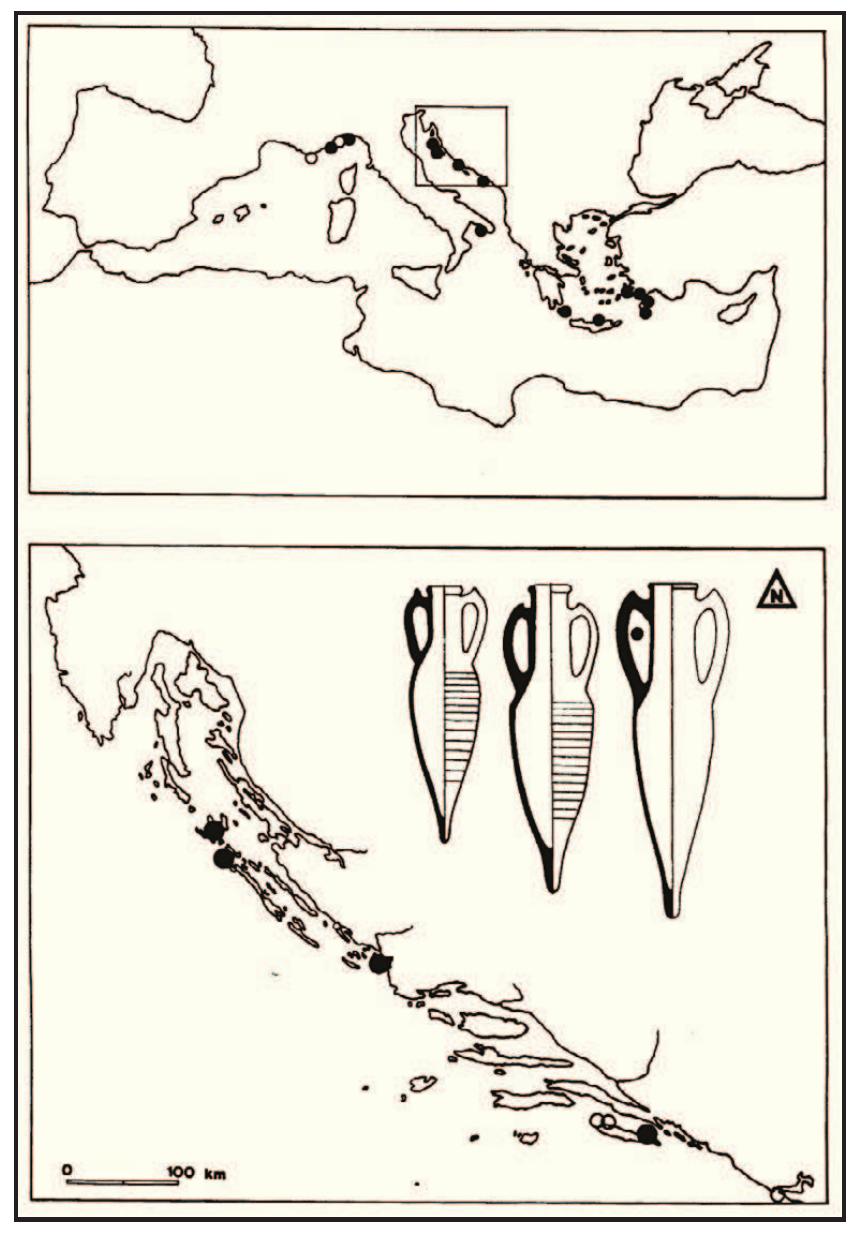
in the area around Iader (at Iader, Aenona, Asseria,
for wine between the late first century BC and the
Burnum, and Colentium), which is a fair represen-
early second century AD, is rather well-represented
tation in comparison to other forms of imported
by shipwrecks along the eastern Adriatic coast, al-
relief pottery (not including the extremely popular
though the Aegean is also represented in underwa-
‘Sarius’ cup) (Brusić 1999: 32). This Gaulish pottery
ter finds from the same period by Cretan amphora
may not reflect direct trade with Gaul but may have
come to the Dalmatian coast through trade with types 1 and 4 from the first two centuries AD (Fig.
Aquileia. However, it is curious that while having a 8–9; Jurišić 2000: 14, 24); they do not seem to be
fair representation among the imported pottery in represented among published finds on land, howev-
the region around Iader, Gaulish pottery does not er, except for a single fragment of the Rhodian type
appear to have been found elsewhere in the prov- from the Narona Augusteum (Topić 2004: 311).
ince, except for two examples of south Gaulish terra Eastern pottery was extremely popular in Dalma-
sigillata from Salona dating to about the middle of tia and is found in a variety of forms in the interior
the century (von Gozenbach 1975: 95). as well as at numerous sites along the coast. Some
Gaulish glass was imported during the first century examples of Eastern Sigillata A (ESA), produced
and maybe even into the second century during its between the second century BC and the first cen-
early phase of production, but it cannot match the tury AD, and Eastern Sigillata B I (ESB I), produced
Italian or the Eastern workshops for the variety of roughly between AD 10 and 75, have been recorded
forms and the quantity found in Dalmatia. There at Dalmatian sites, mostly imported by the middle
are few forms that have been confidently identified of the first century AD, but they are much less com-
as early Gaulish products, and these are not very mon than their later counterpart: ESB II (ca. AD
well represented and then only at a few coastal sites: 75–ca. 150). Of all Eastern sigillata imported to
Iader, Apsorus, Bakar, and Senia (Fadić 1984: 120; Kvarner, ESA constitutes a mere three percent, and
Damevski 1974: 64). Makjanić (1983: 51) believes that this early form is
199 Opvscula Archaeologica Vol. 29 (2005)
Opvscvla 29.indb 11 21.8.2006 12:01:59
Kristina GLICKSMAN Internal and external trade in the Roman province of Dalmatia
found so infrequently on the Dalmatian coast be-
cause it was produced mainly at the beginning of
the first century AD, precisely when Italian ceramic
imports were the most common.
The pottery from the temenos of the Augusteum in
Narona shows an interesting relationship. The Ital-
ian imports (mostly produced between the first cen-
tury AD and the beginning of the second) number
approximately twice as many as the Eastern imports;
although Eastern pottery appears here even during
the Augustan period, import really seems to have
picked up with the production of ESB II later in the
same century, and the vast majority (83.5%) of East-
ern tablewares at the site do indeed belong to the
ESB II types, especially Hayes 60, 76, and 80 (Topić
2003), and although a number of ESB II types have
been found in the province, the most popular types,
found in relatively large quantities at most sites are
the forms: Hayes 60 and 80 (Jurišić 2000: 30–34).
Brusić (1999: 38–41) records a type of mould-made
relief pottery produced in Cnidian workshops be-
tween the first and third centuries AD and found
at a number of Liburnian sites, but while one from
Iader can be dated to the late first century, the other
fifteen examples cannot be precisely dated due to
Figure 8. Distribution of Rhodian imperial amphora cargoes (from lack of information, often because they come from
Jurišić 2000: 109, map 23; reproduced by permission of the author). old excavations and their contexts were not prop-
erly recorded.
As mentioned above, glass forms are often dif-
ficult to properly identify, especially in terms of
provenance, so the evidence for imported glass in
Dalmatia is more likely to reflect the state of knowl-
edge of glass forms rather than the true nature of
glass imports to Dalmatia. It is clear that significant
quantities of glass were being imported to the prov-
ince from the eastern Mediterranean, as signified
by the variety of forms and findspots, mainly along
the coast. In the cases where production centres
have been more narrowly defined, the forms seem
to come predominantly from workshops in Cyprus
and Syria; Egypt is notably absent as a supplier, but
it may be that the forms have not yet been recog-
nised (Damevski 1974; Fadić 1982; 1984; Kirigin
1984; Gluščević 1986).
Various types of stone were imported to the east-
ern Adriatic coast during the first century, both in
the form of statues and also of building material. A
group of sculptures, mostly life-size, were discov-
ered at the recently excavated Augusteum at Naro-
na; nine of the forms have been identified as impe-
rial portraits dating between the reigns of Augustus
and Vespasian, and X-ray analysis of these sculp-
tures has shown that seven were carved from Pen-
telic marble, one full statue and one head from Par-
ian, while the latest sculpture in the group, that of
Figure 9. Distribution of Cretan amphora cargoes (from Jurišić 2000: Vespasian, was made from Thasian marble (Marin
110, map 24; reproduced by permission of the author).
et al. 2004).
Opvscula Archaeologica Vol. 29 (2005) 200
Opvscvla 29.indb 12 21.8.2006 12:02:03
Kristina GLICKSMAN Internal and external trade in the Roman province of Dalmatia
Another set of imperial portraits comes from the unsurprising considering the decline of the northern
forum of Aenona; two have been identified as Au- Italian pottery workshops in the middle of the pre-
gustus and Claudius, while a further two headless vious century; however, there seem to be no further
statues are thought perhaps to be Julius Caesar and identifiable imports from northern Italy, except glass.
Vespasian (Suić 1981: 282–284). (Seven statues are Italian glass continued to be imported to Dalmatia
mentioned in past literature, but only four have through much of the second century, although the
been preserved to the present day.) This sculptural forms seem to be the same as those imported in the
group has been associated with the completion of a first century, and as in the case of ceramics, the de-
second, larger temple and has thus been dated, as a cline in Italian glass imports was probably mostly
group, to the second half of the first century. They the result of a decline in the Italian workshops in
have all been identified as being carved from Pentel- the face of increasing provincial production, includ-
ic marble, but it is also thought that they may have ing in Dalmatia itself (Damevski 1974; Fadić 1982;
been carved in Aquileian workshops (Ibid.: 284), in 1984; 1993).
which case they would represent a connection with
northern Italy rather than the eastern Mediterra- This century saw a general increase of trade in sar-
nean. Saletti (2004: 11–13), however, has recently cophagi, as inhumation replaced cremation as the
argued that although these statues bear a striking more fashionable method of burial, and wealthier
resemblance to certain sculptures from Aquileia, people sought tombs with which to reflect their
they represent a style different from that of works status. Sarcophagi made of expensive stone were
normally identified as products of Aquileian work- fashioned in workshops in the city of Rome begin-
shops, and he has proposed that they show instead ning in the early second century and are first seen
a style particular to Dalmatia, perhaps to Aenona in Dalmatia before AD 170. The earliest identified
itself, and that the Aquileian examples were influ- example of a Roman sarcophagus on the Dalmatian
enced by Dalmatian work or perhaps even carved by coast, and the only one dating within the second
Dalmatian sculptors in Aquileia. If Saletti is correct century, is a fragment from Salona bearing the head
in his analysis, these statues would indeed represent of Oceanus and two sphinxes; based on the absence
trade in stone for sculpting with the East. of drill-work, this fragment has been dated to some-
time before c. AD 170 and the beginning of drill use
Imported marble was also used in the portico of
in sculpture (Cambi 1977: 449, 455–456).
the forum at Iader, which was thought to have been
constructed during the reign of Vespasian or of Ti-
tus. Both green cipollino from Euboea and some
2.3.2. Western provinces
greyish-blue marble were used in the columns of
the portico; most of the evidence comes as frag-
Almost the only evidence of trade in Baetican oil
ments found in the excavation of the forum, but
to the Dalmatian coast is the rather remarkable dis-
two of the greyish-blue type were fully preserved by
covery of Dressel 20 amphorae in the sea at Split’s
secondary use in Sv. Donat, a medieval church con-
Špinut Bay. When the amphorae were discovered in
structed partly from remnants of the Roman forum
1958, the site was quickly plundered, and an esti-
(Suić 1981: 208).
mated forty or fifty amphorae were either destroyed
or stolen, most ending up in private collections, al-
though three complete examples, plus a few frag-
2.3. Second century AD
ments, all belonging to the Dr.20 type, were later ac-
quired by the Split Archaeological Museum (Cambi
1975: 115). Excavation was finally conducted on a
2.3.1. Italy limited scale in 1974, revealing not a shipwreck as
had been expected, but a deliberate deposition of
Although most Italian pottery found in Dalmatia amphorae filled with rubbish, possibly as part of a
definitely dates before the second century, some land reclamation scheme in this rather marshy area.
of the forms do continue into this period and may Fourteen amphorae were recovered from the exca-
well have been imported to the province at this vation: eight African amphorae placed as one layer
time. Concrete evidence of northern Italian pottery and six Dr.20 as another, upper layer (Cambi 1983:
imported in the second century is rather scarce, al- 366-367). A number of stamps were discovered, but
though some commercial link must still have exist- some are unique while others are as yet undated.
ed into this century, as four lamps (out of 162) from Two stamp types (SAXO FERR, of which there are
the Augusteum at Narona have been dated to the three from Špinut, and perhaps FSF A QVA) have
second century. This decrease in pottery imports is been interpreted as coming from the same figlina
201 Opvscula Archaeologica Vol. 29 (2005)
Opvscvla 29.indb 13 21.8.2006 12:02:03
Kristina GLICKSMAN Internal and external trade in the Roman province of Dalmatia
which produced the amphorae found at Monte found in shipwrecks, and the one underwater find
Testaccio with the stamp FIG SAXO (CIL V, 2, 4171) of Mauretanian Dr. 30 wine amphorae comes from
dated to AD 149 (Cambi 1983: 369–370). Two other a wreck dated to the third or fourth century (Jurišić
stamp types have also been given dates; LPMS has 2000: 21).
been dated to the second century, while the stamp A fragment of a Tripolitanian II oil amphora was
SCOROBRES, of which five examples come from found at Narona in a second/early third-century
Špinut, has been dated to either the second or third context (Mardešić & Šalov 2000: 106), but a much
century (Ibid.: 372, 380–381). more convincing example comes from Špinut at
Although all the Špinut amphorae are not necessar- Split, where a layer of Tripolitanian I oil ampho-
ily contemporaneous, their forms are quite similar rae was deposited in the marshy area surrounding
despite having been produced in different figlinae the bay and covered by a layer of Spanish Dressel
(Ibid.: 367), and it is reasonable to see them as com- 20 amphorae dated to the second century (Cambi
ing from roughly the same period. This would indi- 1989: 327). Of course, we cannot know how long
cate, then, a high level of import of Spanish olive oil after primary use the amphorae were deposited in
in the area of Salona sometime during the second Špinut Bay, but the presence of an upper layer of
century AD, while the early fragment from Diocle- second-century amphorae argues for a relatively
tian’s Palace suggests at least some contact in the early (i.e. second-century) date for the African am-
first century. There does not seem to be any con- phorae found in the same context.
clusive evidence for later import; Oreb and Marin North African pottery may have reached Dalmatia
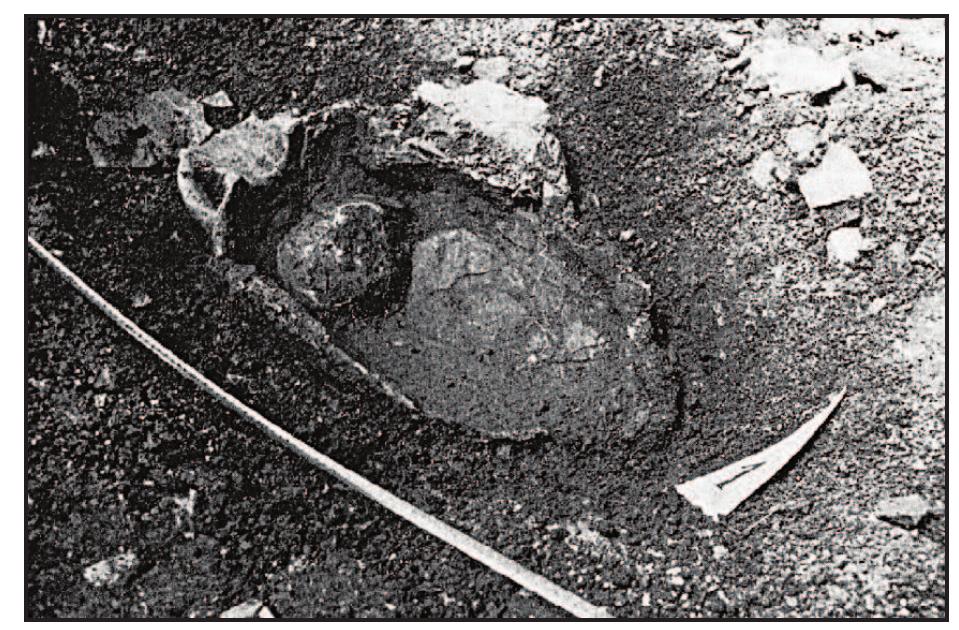
(1980: 58) identify an amphora from one grave at before the second century, but except for a single
Sućidar in Split as Dr.23 (used for Spanish olive oil coarseware example from the Augusteum at Naro-
during the third and fourth centuries), but I hesitate na dated to the first century AD, no examples from
to accept their identification since the photograph Dalmatia can clearly be placed in a first-century
(Fig. 10) seems to show an amphora with much context. It is undeniable, however, that North Af-
straighter sides than one would expect with a Dr.23, rican pottery, both coarsewares and the finer Afri-
possibly an African type which found popularity in can red slip wares (ARS), was a very popular import
secondary use as tombs. in Dalmatia after the first century; they are found
both at urban and rural sites in a number of forms.
This import reflects a general pattern of increased
North African export, but not until the third centu-
ry is ARS seen to dominate Dalmatian ceramic as-
semblages. Finds from the Narona Augusteum, for
example, show the appearance of early (late first to
second-century) forms in Dalmatia through twenty-
one fragments found in the temenos, but fragments
of ESB II forms produced during the same period
number 70 (Topić 2003: 224–243). Evidently, the
import of African pottery in the second century was
eclipsed in the Dalmatian market by the continued
popularity of Eastern wares.
Figure 10. Amphora grave no. 1 from Sućidar, Split, identified by
Oreb and Marin as Dr. 23, but probably an African type (from 2.3.4. Eastern Mediterranean
Oreb & Marin 1980: pl. 21; reproduced by permission of the Split
Archaeological Museum). ESB II forms continued to be produced and im-
ported to Dalmatia during the first half of the sec-
ond century; some finds have been discovered in
later contexts: from the third century at the villas
2.3.3. North Africa
in Višići and Panik, for example (Dvoržak-Schrunk
Amphorae from North Africa seem to appear in 1989: 106), but as the end of production has been
Dalmatia sometime during the second century AD, set in the mid-second century, these examples most
but it is difficult to tell since these types (forms from likely represent long use rather than later import.
the Tripolitanian and from the Mauretania Cae- A number of coarsewares were also imported dur-
sariensis series) continue to be produced into the ing this period, mostly dating between the first and
third century as well. These earlier forms are rarely third centuries, and unfortunately, many have not
Opvscula Archaeologica Vol. 29 (2005) 202
Opvscvla 29.indb 14 21.8.2006 12:02:04
Kristina GLICKSMAN Internal and external trade in the Roman province of Dalmatia
been more closely dated. Round-bottomed pots and of the century; three have unknown provenances,
casseroles were used at the Augusteum at Narona, while the others were found at Tragurium, Asseria,
as were a variety of jugs, apparently of eastern Med- Salona, on the island of Koločep and somewhere in
iterranean origin (Topić 2004: 307–309). the vicinity of Knin. It is interesting to note that the
Eastern pottery types are often found at shipwreck high level of import seen at Aquileia at the end of
sites but not often as recognisable cargo, although the second century is not mirrored on the Dalma-
there are two notable exceptions, both from the sec- tian coast where only 10 examples out of a total 112
ond century. One at Cape Sv. Ivan on Pelješac has can be dated before the beginning of the third cen-
been badly looted, but rescue excavations recovered tury (Cambi 1988).
over two hundred pieces of Eastern coarsewares of
various types: bowls, platters, jugs, pots, etc. (Jurišić
2000: 74). Another cargo of eastern Mediterrane- 2.4. Third and fourth centuries AD
an pottery was found at the early second-century
wreck near Cape Izmetište on the island of Sv. Kli-
ment, one of the Pakleni islands off the western tip
2.4.1. Italy
of Hvar. A few Greek Dr.2–4 amphorae were recov-
ered from the wreck; also part of the cargo were
The import of Italian glass to Dalmatia seems to
ten partially-dressed stone blocks: all limestone ex-
have stopped sometime during the second century,
cept for the largest, which was a dark green granite.
but there is one identifiable exception. Cermanović-
About 2500 pieces of pottery were also recovered
Kuzmanović (1968: 37) has identified at the ne-
during excavation; about half of these were ESB II
cropolis of Doclea a type of glass bottle which she
plates and platters (Hayes 60, 62/63, 76, and 80),
believes to be the fourth-century product of an Ital-
while the other half was made up of about ten dif-
ian workshop. If so, it would be remarkable in the
ferent forms of Eastern coarsewares (Jurišić 2000:
sense that it is the only direct evidence of continued
65). Of course, we have no way of knowing where
trade with Italy, except for the luxury import of Ro-
the ship was bound, but if it was headed for a Dal-
man sarcophagi, which continued throughout this
matian port, it would form an interesting connec-
period.
tion with the tile-cargo wrecks and possibly the
above-mentioned wreck at Cape Glavat, because Although Roman sarcophagi were imported over a
the partially-dressed stone and the pottery could be longer period than those from Athens, they are sig-
seen as a cargo of saleable ballast rather than a cargo nificantly fewer in number. A total of thirteen sar-
that would provide a good profit in return for the cophagi found in Dalmatia have been identified as
risk of sea trade. having been produced in Roman workshops in the
third and fourth centuries; of these, nine come from
As well as pottery, many of the glass forms identifi-
Salona or nearby, and the only other provenanced
able as eastern Mediterranean products continued
fragment was found built into the wall of a house
to be produced during the second century and were
on the island of Koločep. Roman sarcophagi seem
probably also imported at this time. Three forms,
to have been imported until the end of the fourth
however, have been identified as having begun pro-
century, shortly before the end of their production
duction in the second century and continuing into
(Cambi 1977). The concentration of Roman sar-
the third; one of these is considered to be of Syrian
cophagi in the Salona area reflects a similar situa-
origin, while the other two have been suggested as
tion with the Attic sarcophagi (discussed below),
Egyptian products (Damevski 1974: 65; Cermanović-
and the presence of Attic and Proconnesian sar-
Kuzmanović 1968: 31; Fadić 1982: 117).
cophagi along the Dalmatian coast indicates the
Even more common in Dalmatia than Roman sar- popularity of expensive, imported sarcophagi. The
cophagi were those made from the marble of Mount comparatively small number of Roman types, there-
Pentelikon near Athens, and then carved in At- fore, probably reflects a lower level of trade with
tic workshops, leaving only the finest detail to be Rome than with the East, rather than the lack of a
completed at the final destination. Production and market for imported marble sarcophagi.
export started around AD 140, and the earliest evi-
dence from Dalmatia comes as two fragments of a
single sarcophagus depicting centaurs hunting li- 2.4.2. Western provinces
ons, found on the island of Koločep, and dated to
AD 160–170 (Cambi 1987: 132). The rest of the Glass produced in Gaul and also especially that from
second-century Attic sarcophagi found in Dalma- the Rhineland was imported to Dalmatia during the
tia cannot be securely dated before the last quarter third and fourth centuries in much greater quanti-
203 Opvscula Archaeologica Vol. 29 (2005)
Opvscvla 29.indb 15 21.8.2006 12:02:05
Kristina GLICKSMAN Internal and external trade in the Roman province of Dalmatia
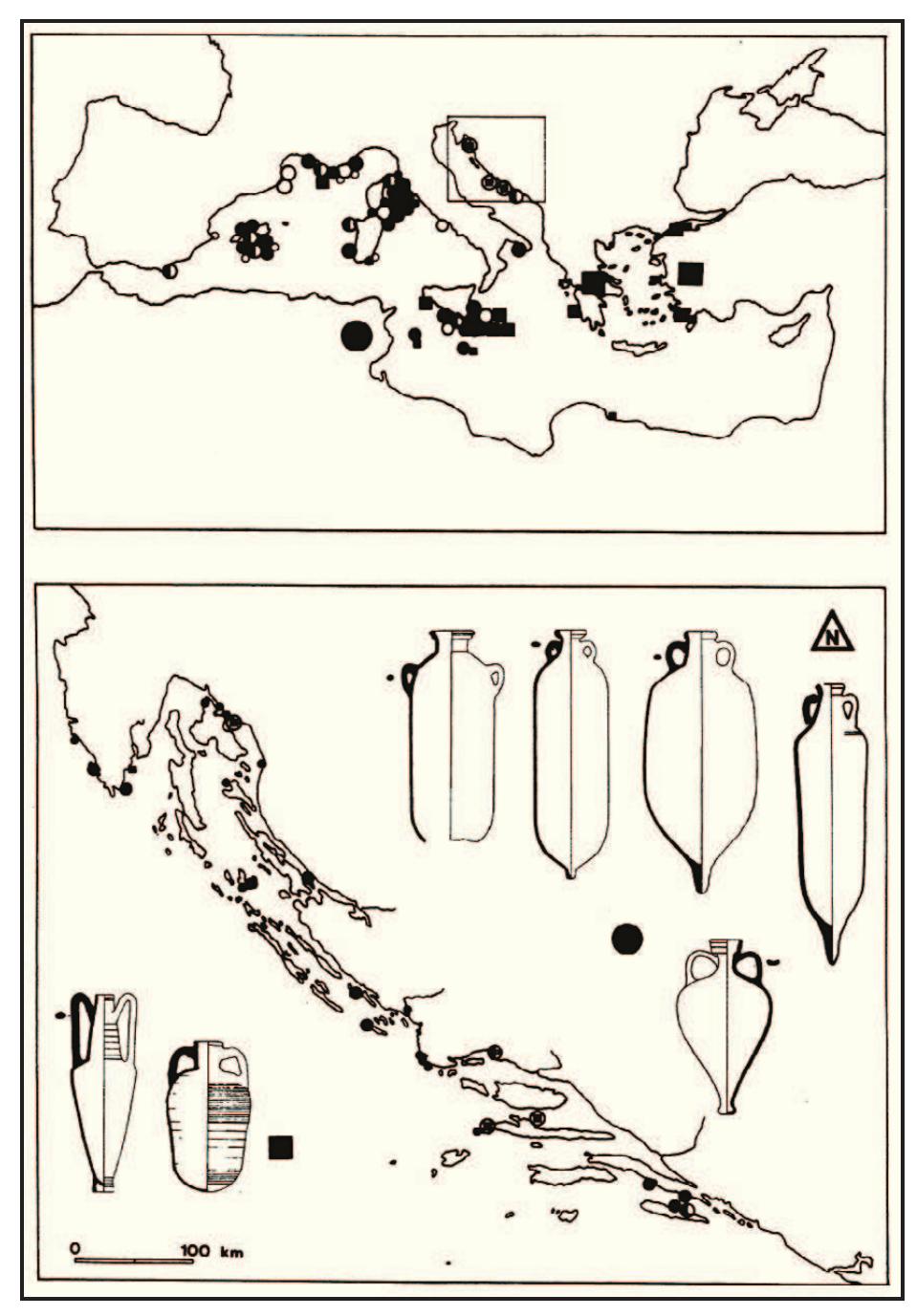
ties than it had been previously. Western glass seems the types Africana I and II, Keay XXV and XXX-
to have been especially well-represented at the late XLV (Fig. 11; Brusić 1976; Kisić 1988; Jurišić 2000:
Roman necropolis at Doclea, but while forty-two 56–57).
types are suspected as being Western forms, only Finds on land have been numerous, compared to
seven can actually be confidently identified as such finds from other periods and other regions. Most
(Cermanović-Kuzmanović 1968: 41). Given the sig- of the amphora sherds from the excavations of Dio-
nificant lack of information regarding late Roman, cletian’s Palace are North African in origin; many
Western glass forms in Dalmatia, I can conclude are forms of Africana I or II (third century), but
very little, except that the import existed, and while most examples belong to the fourth- and fifth-cen-
some of the glass was undoubtedly transported via tury types: either late imperial ‘cylindrical’ or the
maritime routes, some imports could have arrived ‘spatheion’ type (Will 1989: 63–64; McNally 1989:
by means of overland or riverine communications. 118). While oil seems to have been the dominant
produce packaged in Africana I amphorae, the oth-
er types were probably used for a variety of prod-
2.4.3. North Africa
ucts including fish sauces and wine (Bonifay 2004:
471–473).
These types are also quite common in the later oc-
cupation of the villa, the remains of which were dis-
covered under the basilica at Narona (Mardešić &
Šalov 2000: 106–107) and also seem to have been
found much further north in the Kvarner region at
Povile and Rijeka (Will 1989: 63). Amphorae were
also discovered in the southern part of Salona,
probably used to drain this flood-prone area near
the mouth of the Salon River, and although no spe-
cific type has been identified, they have been recog-
nised as late antique amphorae from Tunisia (Cam-
bi 1980: 76; 1989: 330).
North African amphorae were also commonly used
in Dalmatia, as in other parts of the Roman world,
as graves for the poorer classes; this method of buri-
al seems to have been in fashion between the fourth
and sixth centuries AD. The body could either be
covered with large amphora sherds or actually
placed inside an amphora which had been cut just
below the shoulder (Dyggve 1928: 146, 153). These
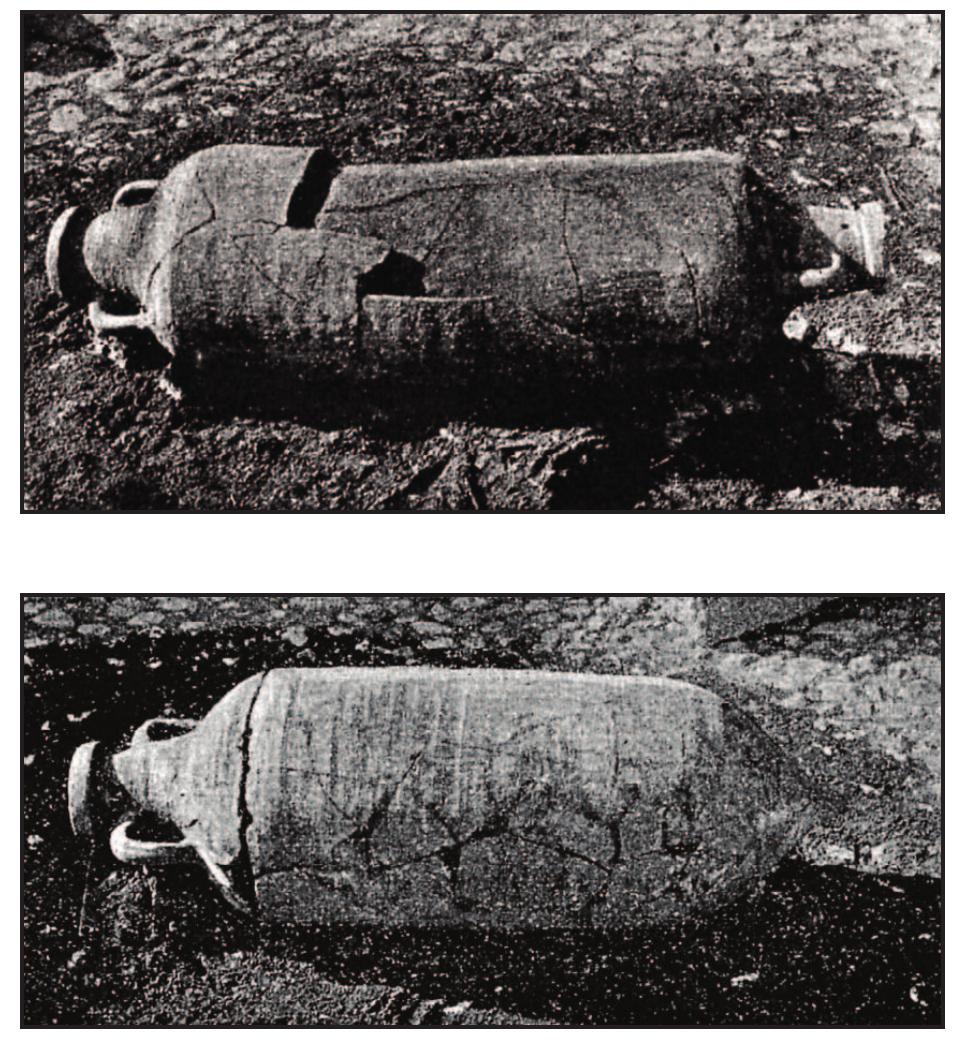
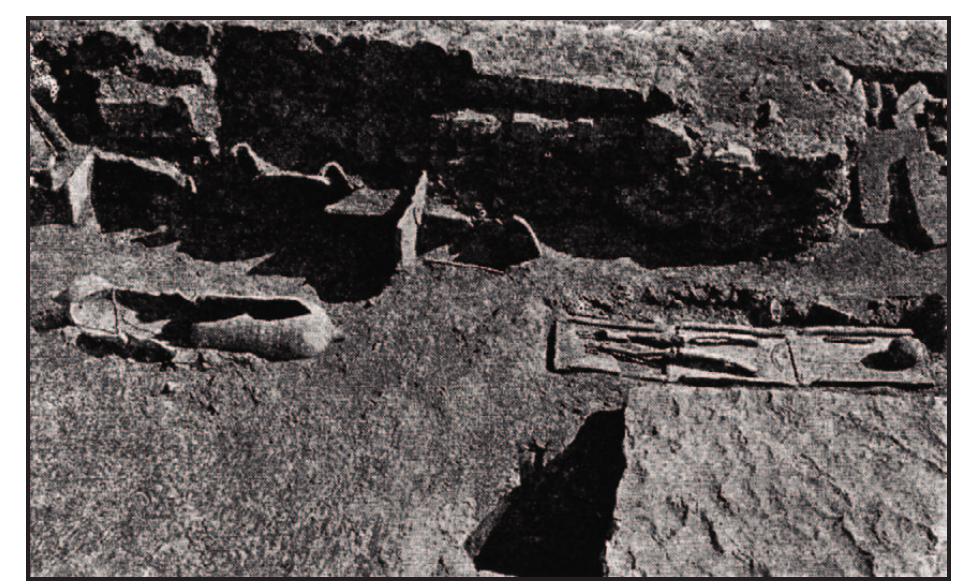
burials have been found at Salona (one Africana pic-
colo) and at three sites in Split: Dobri (four, probably
Africana piccolo), Partizanska ulica (one Tripolita-
nian II; one Africana Grande), and at Sućidar (four
Tripolitanian II) (Cambi 1989: 328–330). Eighty-six
amphora graves were discovered beneath the ba-
silica at Kapljuč in Salona; most of the graves, be-
ing positioned beneath walls and pavements, pre-
Figure 11. Distribution of late Roman amphora cargoes. Eastern date the fourth-century construction of the church
types are represented by squares and North African by circles (from
(Dyggve 1928: 146, 153, 177). The forms are not
Jurišić 2000: 132, map 47; reproduced by permission of the author).
identified, probably due in part to the early date of
the excavation, long before the recent study of Af-
The evidence for the third- and fourth-century rican amphora types, but they do seem to show an
import of African amphorae to Dalmatia is much elongated cylindrical form typical of North African
stronger than from the previous period. A number amphorae from this period (Fig. 12). Also unidenti-
of shipwrecks from these centuries has been re- fied but sharing these characteristics of North Af-
corded as carrying large quantities of North African rican amphorae are two child graves from Narona
amphorae; unfortunately, these reports tend not to (Fig. 13; Patsch 1907: 18–19). Although these graves
be very explicit, but these wrecks seem to include have been dated to the fourth century, the date does
Opvscula Archaeologica Vol. 29 (2005) 204
Opvscvla 29.indb 16 21.8.2006 12:02:08
Kristina GLICKSMAN Internal and external trade in the Roman province of Dalmatia
not necessarily apply for the arrival of the amphorae Also, a large number of African amphorae have been
in Dalmatia, although it is likely that they were used found at graves, but these burials may skew our re-
for burial soon after their primary function ended. sults because earlier amphorae cannot be represented
in this way as this fashion only began in the fourth
century. It is interesting to note, however, that the
graves all seem to have used African types, although
the size and shape of the long, cylindrical amphorae
may have influenced this decision as much as their
apparently wide availability. African amphorae were
popular as graves in late Roman Tarragona in Spain,
for example, where these types are over-represented
in necropoleis and under-represented in rubbish tips
(Remolà 2000: 119). Thus, although there is good evi-
dence for African agricultural imports to Dalmatia,
the exact significance of the import is indeterminable
without further investigation.
Figure 12. Amphora grave from Salona (from Dyggve 1928: 144, The import of North African pottery, especially ARS,
fig. 146). remained strong throughout this period and even
continued past the end of the fourth century, coincid-
ing with the relatively high level of export from North
Africa during this period. ARS is not only found on
the coast of Dalmatia but has also been discovered in
significant quantities at sites further inland as well,
especially at the villas of Višići and Panik, but also at
Duvno, Bugojno, Doboj, and Ilidža in modern Bosnia
and Herzegovina. The amount of variation in forms
differs from site to site with a much greater variety of
ARS forms found at coastal sites, especially at the site
of Diocletian’s Palace (Dvoržak-Schrunk 1989), than
at sites further inland which tend to show a much
more limited range with particular forms dominating
the assemblages, namely the types Hayes 45, 50, and
57 (Čremošnik 1970: 76).
ARS seems to dominate the third- and fourth-century
assemblages of imported pottery at Dalmatian sites.
Except for some Eastern types, which mostly date to
the end of the fourth century and later, ARS seems to
have been virtually the only imported tableware dur-
ing this period. It may very well be that other types,
perhaps from the eastern Mediterranean, have not yet
been identified. A better identification of imported
Figure 13. Two child amphora graves from Narona (from Patsch
pottery from this period and a reassessment of evi-
1907: 18–19, figs. 9–10).
dence from Dalmatian sites could very well alter the
present picture of North African dominance, but it
would not change the fact that the archaeological evi-
The evidence seems to show that while there may dence shows North African imports to have contin-
have been some import of North African products ued steadily throughout this period and to have been
during the second century AD, it increased greatly popular on a variety of Dalmatian sites in the third
over the subsequent two centuries. Both at the Na- and fourth centuries.
rona villa and at Diocletian’s Palace, the results of ex-
cavation show not only an increase in African ampho-
rae but an overall increase in amphora fragments. At 2.4.4. Eastern Mediterranean
Diocletian’s Palace, at least, we know that there was a
general increase in activity (namely, the construction The literature on later shipwrecks is not very help-
of the imperial residence) at this site, so the increase ful in identifying Eastern amphora types, although
may reflect patterns in occupation rather than import. Jurišić (2000: 132) shows the eastern Adriatic distri-
205 Opvscula Archaeologica Vol. 29 (2005)
Opvscvla 29.indb 17 21.8.2006 12:02:10
Kristina GLICKSMAN Internal and external trade in the Roman province of Dalmatia
bution of what appear to be Kapitän II forms, used covered sherds from Riley’s LR4 from Gaza, an early
in the third and fourth centuries AD possibly for version of the LR2, and LR3 from Asia Minor. Also
wine from the Aegean, and British Bii/LR1 forms, represented was at least one amphora from Egypt,
produced between the fifth and seventh centuries although no form is given (Ibid.: 118). Although
in Syria and Cyprus mostly for oil and wine (Decker these forms all start in the fourth century, we unfor-
2001: 76–77, 80); the latter form is outside the time tunately know nothing about their contents, except
range considered by this study, but Jurišić plots both that the LR4 may have contained wine.
eastern types together (Fig. 11). Quite a few amphorae of eastern Mediterranean or-
Will (1989: 65) identifies fourteen fragments of the igin have been found in the late antique levels of the
British Bi/LR2 form (4th–7th century) from the ex- villa found beneath the basilica at Narona (Mardešić
cavations at Diocletian’s Palace, and also remarks & Šalov 2000: 106–107), but many of these are not
on the discovery of this form further north at Povile identified with specific forms. Among the identified
and Rijeka. This type of amphora, produced in the Eastern forms possibly dating from the fourth cen-
Aegean, seems to have been used primarily for the tury from this site are the LR4, the Agora V with
transport of olive oil (Karagiorgou 2001: 146–147). contents and specific origin unknown, and the LR10
In his article on Roman amphorae in Dalmatia, from Asia Minor.
Cambi (1989: 331–335) reports the recovery of Unfortunately, the lack of knowledge concerning these
about fifty ‘Byzantine’ amphorae used in the late an- late Roman amphora forms from the eastern Mediter-
tique reconstruction of the northern city wall of Sa- ranean makes analysis of trade relations between the
lona. He dates their use to between the fourth and region and Dalmatia difficult. However, it is interest-
sixth centuries, while he seems certain that the wall ing to note that although shipwreck evidence seems to
was reconstructed at the end of the fifth or the be- show a continuous flow of amphorae from the eastern
ginning of the sixth century (Cambi 1961–62); one Mediterranean to the Adriatic, only the later forms
of the amphorae in his photograph (Fig. 14) seems seem to be represented on land, although this may be
to resemble the Late Roman (LR) 1 form, and an- due more to site occupation, or modern biases of ex-
other the form Keay LII (probably used for wine cavation and publication, than to trade relations.
between the fourth and sixth centuries), but unfor-
tunately, no more definite information is provided Some evidence also exists of Eastern pottery imports,
for this find. although it is not nearly as strong as the evidence
from the first two centuries. A type of Corinthian re-
lief-decorated bowl, which was produced during the
second half of the second century until the end of the
third century, was found not only in southern Libur-
nia (at Asseria, Aenona, and Iader) but also at other
Dalmatian sites: Salona, Doclea, Bugojno, and Trebin-
je. Also from Corinth were sixteen lamps used at the
Augusteum at Narona between the second and early
third centuries (Topić 2003: 196), as were the late sec-
ond/third-century beakers from the villa at Panik and
also from Bugojno and nearby Čipuljići (Čremošnik
1974: 103).
From Attica came a few fragments of Athenian ware
found in fourth- to seventh-century contexts at
Diocletian’s Palace, as well as four lamp fragments;
Figure 14. ‘Byzantine’ amphorae found in the north city wall of these lamps were imported to the Dalmatian coast
Salona. The one on the far left seems to be a British Bii/LR1 am- and along the major Pannonian rivers (Danube,
phora, while the one on the far right seems to belong to the type Sava, Drava) during the late third and fourth centu-
Keay LII (from Cambi 1989: 335, fig. 37; reproduced by permissi-
ries (Dvoržak-Schrunk 1989: 107–108; 1979: 91).
on of the École Française de Rome).
Also found in Dalmatia at this time are the Phocae-
an red slip wares produced at Phocaea on the west
A number of amphora sherds were also discovered coast of Asia Minor. Of ten forms found at Diocle-
in a drain in Diocletian’s Palace; the majority of the tian’s Palace, only the first two fall within the given
sherds point to a deposition date between AD 350 time range for this study, and then only barely, dating
and 420 (McNally 1989: 117). Along with a good roughly between the late fourth and mid-fifth centu-
number of African amphora fragments were dis- ries (Dvoržak-Schrunk 1989: 97). Other evidence, for
Opvscula Archaeologica Vol. 29 (2005) 206
Opvscvla 29.indb 18 21.8.2006 12:02:15
Kristina GLICKSMAN Internal and external trade in the Roman province of Dalmatia
example from Narona, also indicates the popularity
of this type at later sites, but as it is largely imported
after the fourth century, I wish merely to indicate the
continuation, and perhaps the resurgence, of the im-
port of Eastern pottery types in Dalmatia.
Eastern glass seems to become much scarcer in
Dalmatia during this period, but as mentioned be-
fore, we must keep in mind our inability to source
glass forms properly. Although some Eastern forms
have been identified, none has been identified with
a definite region of origin, although Syria and Egypt
are the predominant suggestions (Fadić 1984: 138;
Cermanović-Kuzmanović 1968: 41–42; Damevski
1974: 65).
The import of Attic sarcophagi flourished in the
first half of the third century, finding a strong foot- Figure 15. Distribution of Attic sarcophagi in Dalmatia (from
Cambi 1988: 70; reproduced by permission of the author).
hold in the Dalmatian market about a quarter of a
century later than in that of Aquileia. Cambi (1988;
1993) records 102 sarcophagi (both whole and
fragmentary) dating between AD 200 and the end Proconnesian sarcophagi also seem to have been
of production in 260/270, but about 40% of these popular imports, apparently appearing on the Dal-
cannot be more closely dated making it difficult to matian coast between the second and sixth cen-
determine trends within the period. About half of turies; like all Proconnesian sarcophagi they were
shipped as roughed-out forms and either used as
these were found either at Salona or in the imme-
they were or finished in local workshops. Cambi
diate vicinity, while a further thirty-two examples
(1998: 169) has identified fifty sarcophagi as coming
kept in the Split Archaeological Museum have no
from Proconnesos, although dates are only available
recorded provenance but are thought to come from
for twenty-four of these which belong to the archi-
Salona. The others were found at various sites on
tectural type, mostly dating to the late third or early
some of the islands but mostly along the coast be-
fourth century (Cambi 1994). Only four examples
tween Salona and Iader (Fig. 15). The main distri- date to the early third century, including the only
bution between Salona and Iader echoes a pattern three not found at Salona; these come from Scar-
seen in the first-century distribution of Italian tiles, dona, Issa, and the vicinity of Knin. The concentra-
but the concentration of Attic sarcophagi around tion of these sarcophagi around Salona indicates the
Salona is an interesting development. Although it presence of a workshop in the city, although Cambi
is reasonable to interpret the coastal distribution as suggests, based on certain stylistic differences in the
a reflection of the great expense involved in mov- example from that city, that there may have been
ing such heavy, and already costly, objects by land, another workshop at Scardona (Ibid.: 87).
such an interpretation would not explain the low The import of architectural stone from the eastern
number of sarcophagi in the area around Iader in provinces continued during this period; one exam-
comparison to the Salonitan hinterland. Although ple comes from Iader where red granite columns,
the pattern may be attributable to a coincidence of probably from Egypt, were used in the early third-
excavation, it could also possibly be related to the century construction of a basilica on the forum (Suić
social composition of the areas; it could also indi- 1976: 162). A more impressive example comes from
cate a concentration of wealth in the area around Diocletian’s Palace at Split built in the late third
the provincial capital. I realise, however, that veri- and early fourth centuries; Ward-Perkins (Dodge
fication of these hypotheses would require a close & Ward-Perkins 1992) remarks on the dominance
study of the composition of societies in these re- of Egyptian stone among the columns of the impe-
gions and their burial methods, which is beyond rial residence, identifying both red and grey granites,
the scope of this paper, but it is important to realise and purple porphyry; two other Eastern types also ap-
that society, and the distribution of wealth within pear: white Proconnesian marble and the Bithynian
it, could potentially have had a significant effect not grey-and-brown breccia corallina. Mirnik (1989: 35)
only on trade but on the economy of Dalmatia as a also notes the discovery during excavation of revet-
whole, and these aspects of the province’s economy ments made from Phrygian pavonazetto. However,
deserve attention. since Diocletian’s Palace was an imperial residence,
207 Opvscula Archaeologica Vol. 29 (2005)
Opvscvla 29.indb 19 21.8.2006 12:02:16
Kristina GLICKSMAN Internal and external trade in the Roman province of Dalmatia
the marbles used there may have been special imports exported on a large scale seems merely to be a reflec-
for a specific purpose rather than representing em- tion of the pattern seen throughout the Mediterrane-
ployment of an already existing trade connection. The an. But the reason for the shift away from Italian trade
types used do seem to correlate with stone imports is less obvious, and as yet I can offer no satisfactory
seen at Iader and at Salona (Dodge & Ward-Perkins explanation, but I do caution that there may perhaps
1992: 116; Clairmont 1975: 209); that is, a predomi- be some import that is either archaeologically invis-
nant, almost exclusive, use of stone from the eastern ible or not yet identified. There is also the interesting
provinces, including Egypt, although some of the case of the seemingly brief trade in Baetican olive oil,
stone, like Egyptian purple porphyry, is not record- but whether it arrived in Dalmatia as a result of di-
ed elsewhere in Dalmatia and relates to the imperial rect trade with Spain or indirectly through trade with
character of the site. Further study on the use of im- Italy, for example, is difficult to say. The developments
ported marbles in Dalmatian architecture over time of the second century seem to remain throughout the
would be very useful not only in determining patterns third and fourth centuries with North Africa and the
of trade but also in identifying the nature of marble East retaining a strong hold on the Dalmatian market,
imports for Diocletian’s Palace and their relation to and Italy and the western provinces being represented
the existing stone trade. only fitfully.
The types of material imported to Dalmatia also reveal
an interesting trend; they tend to be relatively cheap
2.5. Conclusion materials like tiles (although only in the first century),
pottery, and glass. Despite this apparent trend, how-
Despite the difficulties imposed by both the nature of ever, it is important to be aware that there may be
the archaeological evidence and also the level of our other imports that are invisible or not sufficiently dat-
knowledge of the archaeology of this region, some able. Certain luxury objects, for example, like Baltic
conclusions can be proposed regarding the pattern amber and various gemstones, must be imports, but
of imports to Dalmatia during the first four centu- the significance of their import is unclear, since it is
ries AD. First, I would like to summarise the general not always possible to tell whether they were import-
diachronic trends related to commercial connections ed directly from their region of origin or from some
with various parts of the empire. Already in the first workshop located elsewhere. Also, the generally long
century, the archaeology seems to indicate a well-de- use of valuable objects makes dating difficult; even if
veloped system of trade along the Dalmatian coast; they come from dated contexts, they cannot necessar-
the two main contacts were Italy, predominantly the ily be assumed to have arrived in the region during the
northeastern part, and the eastern Mediterranean. same period.
Neither of these connections is surprising; trade with We do have evidence of luxury imports, however, in
northern Italy is to be expected considering the im- the trade in Attic, Proconnesian, and Roman sarcoph-
portance of Aquileia as an emporium and the geo- agi. Dalmatia also saw the import of stone for sculp-
graphical closeness of the regions. Commercial con- ture and for architectural use; the extent to which
tact with the eastern Mediterranean had developed these were worked before transport is debatable, but
over the past few centuries with the colonisation of the the case of the first-century imperial statues from
islands and some of the coastal regions by a number of Aenona argues for raw stone imported for local use,
Greek states, and it is perhaps unsurprising that trade as does the partially-dressed block of green granite
should have continued into the imperial period. There found in the second-century Cape Izmetište wreck.
is some connection with the western provinces, but The import of raw stone would also correspond well
these imports seem to be more sporadic and much with some of the evidence for bulk import of pot-
less common than the Italian and Eastern products; tery and tiles seen in the shipwreck evidence. The tile
although there is no direct evidence for the hypoth- wrecks can almost certainly be regarded as destined
esis, it is not unreasonable to suspect that such bits of for Dalmatian ports, since northern Italian tiles
northwestern pottery and glass that reached Dalmatia are not known to have been exported beyond the
during the first century came via Aquileia. Adriatic. While the destination of the large pottery
Eastern imports seem to remain constant throughout cargoes is less certain, they seem to fit into a possible
the second century, but otherwise, this century seems pattern of the import to Dalmatia of large amounts
to have been one of transition in which the influence of material which probably functioned as saleable bal-
of Italy diminished and imports from North Africa last, although again, the analysis we can make of Dal-
were introduced. That North African pottery and am- matian imports is limited to these types of materials
phorae should be found in Dalmatia precisely at the which are able to be securely dated and provenanced.
time when they were beginning to be produced and However, the shipwreck evidence does indicate the
Opvscula Archaeologica Vol. 29 (2005) 208
Opvscvla 29.indb 20 21.8.2006 12:02:16
Kristina GLICKSMAN Internal and external trade in the Roman province of Dalmatia
possibility that merchants trading with the Dalmatian is related to the nature of materials traditionally seen
coast relied more on Dalmatian exports for profit than as Dalmatian exports; Dalmatia is rich in valuable nat-
on imports. ural resources, like timber, salt, and metals, but these
Most trade to Dalmatia seems to have occurred along products are either archaeologically invisible or un-
the coast, and except for bricks from Siscia, there is no able to be traced to their origins.
viable archaeological evidence for exchange during the Literary and epigraphic sources do provide us with a
Roman period across the boundaries of provinces to few clues as to what materials were being produced in
the north and east. The extreme northeastern part of Dalmatia and what products were known beyond the
the province, for example, shows virtually no evidence borders of the province. The Expositio totius mundi et
of imports but rather systems of local production and gentium, for example, an anonymous fourth-century
exchange (Zotović 2002: 64–67), and the few imports work, states: Caseum itaque dalmatenum et tigna tec-
that do exist cannot be convincingly linked to trade tis utilia, similiter et ferrum, tres species cum sint utilia
with other provinces rather than with the Dalmatian abundans emittet (53.7–9). However, such references
coast. Local pottery in this area shows similarities to are rather scarce and only hint at the nature of exports
that of Pannonia (Ibid.: 62), and perhaps closer study rather than giving any sort of quantifiable evidence
could reveal whether it is indeed exclusively of local for their importance to the Dalmatian economy or for
manufacture or whether some may represent Panno- their contribution to the Mediterranean market.
nian imports to the interior of Dalmatia. Given the limits of the evidence regarding Dalmatian
The question of transport for non-commercial pur- exports, I will not attempt, as I did with the imports,
poses, such as military supply, applies especially to the to present a diachronic analysis of the evidence, but
first century AD when military presence was strongest rather, I will present a case for the significance of cer-
in the province. However, both legions leave Dalmatia tain products as exports and the nature of Dalmatian
before the end of the century – one under Claudius, export in general during this period.
the other in 86 (Wilkes 1969: 96–97), so the issue is
not particularly relevant to later periods. Any signifi-
cant difference must be sought with the presence and, 3.2. Evidence from imports
more importantly, the departure of the legions, and not
with the small administrative force left behind. There That there was regular export of goods from Dalmatia
are two significant points to be made with respect to can scarcely be doubted; the import evidence alone
argues for continuous trade along the Dalmatian coast
this matter. The first is that the archaeological data, as
during this period, and if we suppose that imports
they stand, show no significant shift in imports that can
from a certain region might mean exports to that same
be attributed to the departure of the Roman army. The
region, then we could hypothesise that in the first cen-
second point is that the case of the brick-and-tile im-
tury AD, Dalmatian goods were exported mainly to
port demonstrates quite forcefully that trade between
Italy and to the East. By the end of the second century
Dalmatia and Italy was well-established in the first cen-
or the beginning of the third, these exports became
tury AD. This import is clearly the result of commercial
more common in North Africa, but decreased in Italy
activity, and further implications are discussed below.
and the West, while supply to the East seems to have
remained relatively constant throughout the first four
centuries AD.
If one also accepts the hypothesis that merchants trav-
3. Exports
elling to Dalmatia seemed to be regularly transporting
cheap, easily marketed goods as saleable ballast and
were not, as a rule, particularly concerned with mak-
3.1. Introduction ing a profit on the inbound trip, it must follow that
they were quite confident in making a profit on the
Material being exported from Dalmatia is much more outward journey, and enough of one to justify not
difficult to identify archaeologically than imports, and only the risk of maritime trade but also the lack of
this problem is the result mainly of two situations. The much profit on the return trip. This indicates the
first is that Dalmatian production has not been stud- export of not only some valuable commodity (or
ied very closely, in comparison with other parts of the commodities) that would provide a good return but
empire, and with the exception of recent discoveries also a reliably available one. Although this extrapo-
involving glass and amphora production, very little lation can suggest the nature of Dalmatian exports
is known regarding exportable goods which are ar- in terms of value and reliability, it cannot give any
chaeologically identifiable. The other major problem more than a vague image. It cannot tell, for example,
209 Opvscula Archaeologica Vol. 29 (2005)
Opvscvla 29.indb 21 21.8.2006 12:02:16
Kristina GLICKSMAN Internal and external trade in the Roman province of Dalmatia
what these exports were or whether they involved in the province. In most cases, it seems, local pot-
one valuable product or a number. tery has been identified on the basis of the inferior
quality of certain finds, and the only hard evidence
comes from a petrological study performed on ce-
3.3. Glass and pottery ramic specimens from Salona showing some of
them to have been made of clay from a deposit near
Glass production is known at Salona, where a glass the city (Crnković et al. 1990). To my knowledge, no
workshop in use between the first and mid-third typology has yet been attempted on any of the pot-
centuries AD has been excavated (Clairmont & Von tery proven or presumed to have been produced in
Gozenbach 1975: 56–63), and has been suggested at Dalmatia, eliminating this type of material from the
Iader based on the concentration of particular forms evidence currently available for determining export
(square jugs, square flasks with four depressions, and
patterns.
bell-shaped flasks) in the city and the surrounding
area (Gluščević 2000). No forms, however, have been
positively identified as local products and traced in 3.4. Agricultural products
other parts of the empire. Although Gluščević makes
a good case for the production of bell-shaped flasks at Concerning the export of agricultural products,
or near Iader (due mainly to the relative scarcity of the there are two references to be found in the litera-
form elsewhere in the Mediterranean), he also dem- ture. As mentioned above, the fourth-century Ex-
onstrates difficulties in positively identifying vessels positio totius mundi et gentium (53.7) names cheese
of this shape found outside Dalmatia as products of as a Dalmatian export, but both the cheese-making
Iader workshops. Preliminary analysis of distribution process and its product are archaeologically invisi-
(Fig. 16) indicates a possibility of export to northern ble. The other source concerns fish sauce and comes
Italy, Pannonia, and the East, although a similar work- from Pliny (NH 31.94) who, writing in the mid-first
shop at Tomis on the Black Sea makes certainty dif- century AD, lists Dalmatia as one of three locations
ficult without further study. A closer study of glass famous for the production of muria, the liquid left
forms thought to have been produced in Dalmatia,
over from fish-salting (Curtis 1991: 14). It is possible
especially of Gluščević’s bell-shaped flasks, and the
that some evidence of this activity has remained in
establishment of typologies would greatly aid in the
the archaeological record, perhaps through ampho-
more reliable identification of Dalmatian glass outside
rae or the remnants of fish-salting establishments;
the province.
but no material has yet been identified as evidence
of fish-sauce production.
The evidence for olive oil production, however, is
quite evident with presses associated with olive
mills at a number of sites and even preserved olive
stones at the villa sites of Kupinovik on the island
of Hvar (Zaninović 1996: 170) and Muline on the
island of Ugljan (Suić 1976: 214). However, there
is no direct evidence for the export of oil and no
indication that it was being produced on a scale
beyond the demand of the local market. Presses in
Dalmatia are found singly or, more rarely, in pairs,
but nothing on the scale of the oil factories of Africa
and Istria, although these sites tend not to be very
Figure 16. Distribution of bell-shaped flasks of the so-called Zadar well-studied or published (Brun 2004: 61; Matijašić
type (from Gluščević 2000: 187, fig. 3; reproduced by permission 1993: 255). Matijašić (1993: 257) and Brun (2004:
of the Association Internationale pour l’Histoire du Verre). 61) describe Muline as a site with five presses, but
this figure does not appear in any earlier report, and
as Matijašić admits to never having visited the site,
Pottery, one of the most useful indicators of trade in they seem to have worked under the false assump-
the Roman world, is not very helpful in identifying tion that five rectangular features on the site plan
Dalmatian export patterns. Pottery was undoubt- represent presses. These features are not presses,
edly made in this region; some areas appear to have however; two are stone structures, and the other
retained their pre-Roman traditions, although more three are narrow, shallow markings in the floor
Romanised forms also seem to have been produced (personal observation 2004; Fig. 17–18).
Opvscula Archaeologica Vol. 29 (2005) 210
Opvscvla 29.indb 22 21.8.2006 12:02:20
Kristina GLICKSMAN Internal and external trade in the Roman province of Dalmatia
we run the risk of simplifying Roman religious prac-
tice rather than trying to understand its complexi-
ties. The current state of archaeological research
indicates relatively small-scale oil and wine pro-
duction in Dalmatia probably focussed on personal
consumption and some local trade.
Two funerary inscriptions from Dalmatia attest to
trade in wine and olive oil. The first comes from Sa-
lona and is dedicated to a negotiator vinarius (CIL
III, 2131), while the other from Iader names a nego-
tiator olearius (CIL III, 2936). The presence of these
negotiatores might be expected in the context of a
Roman city, as both oil and wine were necessities
in Roman society, and the urban social and com-
mercial structure of craft specialisation meant that
agricultural products, like oil and wine, would have
Figure 17. Plan of the villa site at Muline (after Matijašić 1993: 256, found a reliable market in these cities. We cannot
fig. 14; reproduced by permission of the author). The rectangular know for certain, however, whether these men were
features in area A are stone structures, and those in area B are involved in the import of these products either from
markings in the floor.
within the province or from abroad, or whether
they dealt in exports, as both cities are located on
the coast and possess good harbours.
Although the production of oil and wine does not
seem to have been focussed on export, it does not
follow that these products were never exported
from the province, but evidence for this activity is
currently non-existent, largely due to the state of
amphora studies in Dalmatia. If it can be shown
conclusively that amphorae were being produced in
Dalmatia, it would give us a better idea of the pos-
sibilities for export of agricultural products. How-
ever, considering the extensive coastline, amphorae
Figure 18. Detail of the floor of area B in previous figure. Markings re- would be just as useful for internal movement of
corded in the site plan are indicated by arrows (photo: K. Glicksman). goods as for export.
It is interesting to note that, with the exception of
a strong presence of La.2 along the coast of Gaul
For wine production the evidence is even less clear. and Spain, the known distributions of La.2 (Fig. 19)
Some see the ubiquity of dedications to Liber Pa- and Dr.6 (Fig. 20) amphorae are quite similar show-
ter as evidence of the importance of viticulture in ing heavy representation in northern Italy and on
Dalmatian society (Brun 2004: 61; Škegro 1999: either side of the Adriatic with some representation
154–173), but I hesitate to link worship of a particu- in the eastern Mediterranean, on the North African
lar deity with production of a certain crop without coast, and also in Gaul and Spain. They seem to fol-
further evidence. Škegro himself (Ibid.: 171) admits low similar patterns of use and export, and it may be
that the presence of a temple to Liber Pater at Senia that within these patterns lies the evidence for Dal-
cannot be due to intensive viticulture as the local matian export in the late Republic and early Empire.
climate does not favour the growth of grapevines; However, it is impossible to know without proof
instead, he attempts to connect worship of the de- that they were produced in Dalmatia, and even then
ity to trade in wine. I have two doubts about this it would be difficult to distinguish between Italian
rather superficial correlation between religion and and Dalmatian products.
agriculture. The first is that concentrating on deities
represented can then give a false impression of the
state of agricultural production; my second objec-
tion is that by making such simplistic connections,
211 Opvscula Archaeologica Vol. 29 (2005)
Opvscvla 29.indb 23 21.8.2006 12:02:27
Kristina GLICKSMAN Internal and external trade in the Roman province of Dalmatia
abundant resources exported from Dalmatia, there
is almost no other evidence for this, unsurprisingly
as wood is rarely preserved archaeologically. One
funerary inscription from Salona (CIL III, 12924)
was set up by a negotians materiarius, a timber
merchant. Considering Dalmatia’s tremendous sup-
ply of timber, I doubt this man was importing mate-
rial to Dalmatia, but whether he was involved in the
transport of timber to Salona from its hinterland or
even from the heavily forested interior of the prov-
ince, or whether he was involved in the export of
timber from Dalmatia is unclear. Certainly, Dalma-
Figure 19. Known distribution of Lamboglia 2 amphorae (from tia has an abundant natural supply of timber, which
Cipriano & Carre 1989: 84, fig. 14; reproduced by permission of the was apparently exported in the fourth century, but
École Française de Rome). where it was being traded to or to what extent Dal-
matia was filling the general demand for timber is
unknown and ultimately unquantifiable.
Dalmatia is also well-supplied with good limestone,
as can be seen by the extensive use of local stone
for building not only in antiquity but right through
to modern times. The output of the quarries varied
in quality with some producing a very fine lime-
stone. Although limestone, even of high quality,
does not seem an obvious export, two sources in-
dicate this possibility. Pliny (NH 3.141) in his list of
Dalmatian cities and the distances between them
names Tragurium, civium Romanorum, marmore
notum, indicating that stone from the quarries near
Tragurium was known outside Dalmatia in the first
century AD. The island of Brač also possesses an
Figure 20. Known distribution of Dressel 6 amphorae (from Peacock & abundance of fine limestone, which was used in
Williams 1986: 99 fig. 35, after Riley 1979: 155, fig. 18; reproduced by
construction projects at Salona and in Diocletian’s
permission of Pearson Education EMA and J. Riley).
Palace; however, one inscription from the quarry of
Plate near the harbour of Splitska on Brač (CIL III,
10107) suggests use of the stone outside Dalmatia.
It is a dedication to Hercules by a man who appar-
It is also possible that amphorae were not produced ently brought capitals to Sirmium in Pannonia for
in Dalmatia throughout the Roman period. Cer- the columns of the baths being built there by the
tainly, some sort of containers must have been em- emperor Licinius (ad te/rmas Licin(i)an/(a)s...S/
ployed, at least for domestic use, but there is a range irmi), probably sometime between AD 308 and 314
of possibilities, including barrels, animal skins, or (Mirković 1971: 37).
even used amphorae imported from elsewhere. A
These two pieces of evidence point to at least some
better knowledge of Dalmatian amphorae would
export of limestone, but the scale of this export and
greatly benefit the study of trade in Dalmatia, show-
its contribution to Dalmatian trade is unknown. It
ing both exports and, possibly, internal movement
will be difficult to assess this trade, as well, because
of goods; but it would also give us a greater insight
into agricultural and ceramic production in the stone can be difficult to source, but the stones of
province as well as cultural connections with the certain quarries, like that of Rasohe on Brač, do
rest of the Roman world. have distinctive characteristics, while microscop-
ic analysis can also help to identify the origins of
stones. A better knowledge of the petrological char-
3.5. Timber and stone acteristics of the better Dalmatian quarries and a
greater awareness of the possibility of export may
Although the Expositio totius mundi et gentium in the future lead to further discoveries and a better
(53.7–9) cites timber as one of three useful and understanding of Dalmatian stone export.
Opvscula Archaeologica Vol. 29 (2005) 212
Opvscvla 29.indb 24 21.8.2006 12:02:30
Kristina GLICKSMAN Internal and external trade in the Roman province of Dalmatia
3.6. Metals is unknown. One estimate puts the quantity of iron
slag found in the Japra Valley at almost 2 million
Gold, silver, and iron were all mined in Dalmatia tons (Ibid.: 44), but as the area seems to have been
during the Roman period (Fig. 21), but the chronol- occupied both before and after the Roman period,
ogy and output of the mines is uncertain. A number the relation of slag to Roman extraction is difficult
of first-century sources allude to the gold in Dal- to determine (Bojanovski 1982: 106, 116).
matia. In an epigram to Macer, about to depart for Evidence from Pannonia and Moesia Superior indi-
Salona, Martial (10.78.5) addresses the Dalmatian cates that the operation of some mines was farmed
farmer: felix auriferae colone terrae, and Statius out to conductores (Hirt 2004: 45, 106). Consider-
(Silv. 4.7.14–16), longing for the return of Vibius ing the similarity of administration of the mines
Maximus, speaks of the mountains of Dalmatia as a of the Danubian provinces and the presence of a
place ubi Dite viso pallidus fossor redit erutoque con- procurator metallorum Pannonicorum et Dalmati-
color auro. Pliny (NH 33.67) also talks about Dalma- corum (or alternatively, procurator argentariarum
tian gold, but only briefly, stating that in Nero’s time, Pannoniarum et Dalmatiarum), it is not unreason-
fifty librae could be retrieved in a single day, but the able to suggest that certain Dalmatian mines may
accuracy of Pliny’s information is unknown, and we
have operated in a similar fashion. There is in fact
should be wary of attaching too much significance
no direct evidence for such an occurrence, although
to this amount. The only other literary reference to
the presence of toll stations does speak strongly in
mining in Dalmatia comes from the fourth-century
favour of regular traffic of non-military and non-of-
Expositio totius mundi et gentium, which records
ficial personnel.
the abundance of iron in Dalmatia and its export.
By what routes the materials were exported is also
unclear. Silver from the mines in the northeastern
part of the province could be transported along
tributaries toward the Danube probably more eas-
ily than it could be hauled along roads to the coast;
the presence of Siscian bricks at Blagaj-Japra also
suggests the use of rivers in the export of iron from
this area. However, a funerary inscription from Sa-
lona (CIL III, 1997), tentatively dated to the late first
century records the title of conmentariensis aurar-
iarum Delmatarum, and it has been suggested that
his presence in Salona may indicate administration
at Salona of the gold mines in the Vrbas Valley (Hirt
2004: 56), so we should not eliminate the possibility
that some of the metals may have been exported,
at some time during the Roman period, from the
coast.
It is logical to assume that the output of the mines
was being transported beyond the province, but we
Figure 21. Locations of major Roman mining regions in Dalmatia still have no way of determining the size of this out-
for iron (single line), silver (dotted line), and gold (double line) (by put; also, the use of private merchants in the trans-
K. Glicksman). port of metals cannot be absolutely proven. Even if
this hypothesis is accepted, the impact of this ex-
port on Dalmatian trade in general is difficult to
The metal mining of the Danubian provinces, in- determine, although it could not have been slight.
cluding Dalmatia, seems to have been regulated, The mines, then, would also have been a fairly regu-
at least by the late second or early third century, lar and reliable source of tradeable goods. Further
through the establishment of mining districts which study of mining sites may provide us with better in-
had their own toll stations and bronze coinage formation regarding their output and may help es-
minted at Rome and apparently for use within the tablish a chronology for occupation of the sites.
districts, although the exact purpose of the coinage Despite the lack of stratigraphic evidence, dates for
is unknown; this system is unknown elsewhere in the Roman occupation of the mines and intensifica-
the Roman world and points to the special status of tion of activity may be seen in part through numis-
the mines of the Danubian provinces (Hirt 2004: 43, matic and epigraphic evidence. Both the iron mines
47–48), although the scale of activity at these mines of the Japra Valley and the silver mines of Domavia
213 Opvscula Archaeologica Vol. 29 (2005)
Opvscvla 29.indb 25 21.8.2006 12:02:35
Kristina GLICKSMAN Internal and external trade in the Roman province of Dalmatia
are thought to have been active before Roman occu- (NH 8.191) remarks on the coarseness of Istrian and
pation (Bojanovski 1982: 94). The earliest numismatic Liburnian wool in his assessment of various types of
evidence from the iron mines dates to the reign of wool from across the empire, showing that wool from
Nerva, while the latest Roman coins, discovered in the the area was known outside Dalmatia. Considering
slag near Blagaj-Japra, date to the reigns of Justinian the reported low quality of the material, it is not likely
(527–565) and Phocas (602–610) (Ibid.: 107, 116). Bo- to have been considered a valuable commodity, but
janovski (Ibid.: 108) considers the third- and fourth- if it were being produced in large quantities, then it
century increase in known inscriptions an indication may have been a desirable export which provided a
of increased production. We cannot rule out the in- profit when transported and traded in bulk. Export of
fluence the introduction of an epigraphic habit would Liburnian textiles is also implied by Martial’s epigram
have on the number of inscriptions found in the area, 14.140 entitled Cuculli Liburnici, which mocks a man
but the increase would seem to show a greater Roman whose dyed cucullus has ruined his formerly white
presence in the area. tunic. Evidently Martial, writing in the late first cen-
The earliest numismatic evidence from Domavia is tury AD, was familiar with Liburnian textile export
Trajanic. The city is thought to have achieved the sta- as well. Though extremely limited, these sources do
tus of a municipium by the reign of Septimius Severus, show nonetheless that Liburnian woollen textiles and
if not already under Marcus Aurelius, and became a garments were known in Italy as early as the mid-first
colonia around the mid-third century AD (CIL III, century AD.
12728–9). Domavia’s relatively quick rise in status, Another product which seems to have reached beyond
combined with the early third-century appearance of the borders of Dalmatia is the so-called dalmatic, a
toll stations, seems to indicate a stronger Roman pres- long tunic which was quite popular in the third and
ence in the area and greater attention to the mines, fourth centuries. The name of the tunic itself is taken
which would make sense in view of the abandonment to be a reference to its origin (Isidore, Etym. 19.22.9),
of the Spanish mines in the late second century (Wil- but this connection between the name and the place
son 2002: 29). Numismatic evidence shows occupa- cannot be taken for granted, and there is no way to
tion of the Domavia mining district at least until the prove or disprove this etymological relationship. Even
mid-fourth century (Bojanovski 1982: 106). if we accept the assumption that these garments origi-
nated in Dalmatia and acknowledge the popularity of
dalmatics in the late Roman world, the importance of
3.7. Textiles4 the textile industry in Dalmatia to external trade is not
at all clear.
Raw materials were not the only possible Dalma- One problem is our ignorance of how these tunics
tian export; textiles may also have played a signif- came to be the standard mode of dress throughout the
icant role, although much of the evidence comes Roman world. Obviously, it must have involved some
indirectly through literary sources, and the analysis sort of contact with Dalmatia, but the precise nature
must necessarily be largely hypothetical. of this contact is a mystery. Vicari (2001: 62) attributes
For textile production in Dalmatia, there is limited the third-century popularity of the dalmatic, in part
evidence, and even less for large scale production at least, to the growing political power of this region
and export. One piece of evidence interpreted in which produced a number of emperors, including
relation to wool/textile production and distribution Diocletian. Although this hypothesis is plausible, it
comes from Salona, where the letters NEG.LA ap- is difficult to prove, but whether this phenomenon
pear on a fragmentary inscription and have been stemmed from imitation of the emperor, or resulted
interpreted as a reference to a negotiator lanarius directly from trade, or followed population move-
(L’Année épigraphique 1925: 60). If this reading is ment and cultural exchange is impossible to deter-
correct, it would indicate the production of wool for mine without further evidence.
more than domestic use, unsurprising among the Although these tunics were obviously quite popular
urban communities of the Dalmatian coast, espe- in the late antique period, they were by the begin-
cially at the large provincial centre Salona; however, ning of the fourth century already being produced
as with the negotiatores discussed above, there is no in a number of places, especially in the East. Diocle-
way of knowing where he was trading wool to and tian’s Edict on Maximum Prices (26), given in AD 301,
from. lists the price differences for linen dalmatics not only
Some literary sources refer to wool and textiles pro- by quality but also by place of manufacture naming,
duced in Liburnia, but these are very limited. Pliny among others, Tarsus, Byblus and Laodiceia as pro-
ducers of dalmatics as well as other types of clothing.
4
I am grateful to John Peter Wild for his comments on this section. Late Roman mosaics, like the fourth-century Great
Opvscula Archaeologica Vol. 29 (2005) 214
Opvscvla 29.indb 26 21.8.2006 12:02:35
Kristina GLICKSMAN Internal and external trade in the Roman province of Dalmatia
Hunt Mosaic from Piazza Armerina in Sicily, show delaying this process by introducing alkaline materi-
the common use of this style of tunic, and evidence als like wood ashes and fermented urine, the solution
from papyri also shows their use as part of the mili- could only be maintained for a number of days before
tary uniform (Sheridan 1990), but all evidence both the dye precipitated (Doumet 1980: 47, 50). Thus, ma-
literary and archaeological seems to be silent regard- terial, whether wool, linen, or silk, needed to be dyed
ing the contribution of Dalmatia to the supply of this in the same place where this dye was being made. This
highly popular garment which bore its name. material could then be exported as it was, or it could
Another bit of evidence comes from the Notitia Dig- be woven into any number of products.5
nitatum, a listing of offices probably originally from According to Diocletian’s Edict the maximum price
the late fourth or early fifth century, which places a that could be charged for a pound of purple-dyed
procurator gynaecii at Aspalato (Oc. 11, 48), modern
wool was 50,000 denarii (24.2), although prices were
Split and the site of Diocletian’s Palace. The gynaecea
much lower for lower quality products. By contrast,
were imperially-administered weaving establishments
the most expensive type of undyed wool listed cost a
possibly founded by Diocletian; while most seem to
mere 200 denarii a pound (25.9). But an item did not
have existed for the purpose of military supply, two
are listed as private and were probably related to pri- have to be fully dyed purple in order to command a
vate imperial supply (Wild 1976: 54). Although the great price. The Edict gives a maximum price of 4,000
gynaeceum of Aspalato is under the list of the former, denarii for a striped dalmatic containing six ounces of
its location at the imperial residence rather than the archil purple (29.31), an imitation purple made from
nearby provincial capital of Salona suggests the pos- vegetable sources, while one having an equal amount
sibility that it may also have been involved, at least ini- of true purple is listed at a price eight times higher
tially, in personal production for the emperor. As an (29.32). Keeping in mind that the maximum daily
imperial establishment it is unlikely to have been in- wage for a farm labourer was 25 denarii and 50 for
volved in regular trade, but its existence suggests the the majority of skilled workers like stone masons and
possibility of a large capacity for textile production in carpenters (Edict 7), these materials were not easily
this area and an industry predating the founding of affordable or even necessary for the general public, as
the gynaeceum. were pottery and olive oil, for example. The purple-
Although limited, there is also convincing evidence dye industry was one which required for its success
for the production of purple dye at Salona, which a large group of individuals able and willing to spend
would imply also the manufacture, and possible ex- copious amounts of money for the sake of conspicu-
port, of expensive dyed wool or textiles. The Notitia ous consumption. That there was such a market in the
Dignitatum records nine procuratores bafiorum in the Roman world is uncontested, but what role Dalmatia
western empire, and one of these is placed in Dalmatia played in satisfying this demand is much less clear.
at Salona (Oc. 11.66). Although there is no evidence Although there is no direct evidence for export, the
for when this post was founded, its very existence im- value of purple, combined with the scale of produc-
plies a large enough and steady enough production to
tion implied by the establishment of a procurator of
warrant imperial attention and regulation. The only
dye-works at Salona, suggests probable export. Some
other evidence for this activity is an undated funerary
of the material was probably destined for the home
inscription from Salona for a magister conquiliarius
market, and although we cannot know how much was
(CIL III, 2115); the exact nature of this profession is
uncertain, but it was clearly related to the murex (con- needed within the province and at Salona itself, it is
chylium) and purple-dye production. The title implies unlikely that such a large industry was required for lo-
the existence of a collegium conquiliarii at Salona (Vi- cal supply. Due to the value purple added to wool and
cari 2001: 64), which in turn implies a fairly well-es- textiles, the export of purple-dyed materials would
tablished industry, as indicated by the presence of a have been a significant, if not the most significant,
procurator bafii. part of the export of wool/textiles from Dalmatia.
Both Murex brandaris and Murex trunculus are na-
tive to the eastern Adriatic coast; today they can both
be found especially in the area around Makarska, not
5
New research (Macheboeuf 2005) has shown that it is also possible
100 kilometres down the coast from the site of Salona
to extract the necessary gland whole from the shellfish and to
(Doumenge 1995: 17), and I have myself seen speci- preserve it for a number of months in order to make the dye
mens of Murex trunculus in the bay between Split and at a later date. Although this means that the gland itself could
Salona. Once precipitated, it was impossible to revive have been exported, I believe that purple-dyed wool and textiles
would have accounted for a much larger proportion of expor-
the dye into a solution that could be used again for ted materials and would, therefore, have been more significant
dyeing, and although the Romans had methods of economically.
215 Opvscula Archaeologica Vol. 29 (2005)
Opvscvla 29.indb 27 21.8.2006 12:02:36
Kristina GLICKSMAN Internal and external trade in the Roman province of Dalmatia
3.8. Conclusion vided in the distribution of glass possibly produced at
Iader and the more limited distribution of sarcophagi
As one might expect, Dalmatian exports were depend- produced at Salona. In this section, I will consider the
ent largely on the natural resources of the area encom- distribution of these two products, as well as some evi-
passed by the province, including timber, limestone, dence for transport of stone, and I will also consider the
metals, and wool. The archaeological evidence is lim- distribution of imports and what that may say about
ited, however, and the relevant literature offers little coastal-continental connections during this period, as
help in determining the scale of these exports. Nor is well as the extent to which we can use this type of mate-
there much indication of the form in which these ma- rial as evidence for trade or the absence of trade.
terials were exported. Stone, for example, may have Dalmatia has regions with two distinct types of topog-
been transported as blocks of different shapes and siz- raphy: the mostly flat coastal areas and the rugged,
es or in varying stages of the sculpting process, which mountainous interior. Strabo says of Dalmatia that
would indicate a more sophisticated trade than just the mountains divided it into two parts with one fac-
the bulk transport of rough stone. The possibility of ing the sea and the other looking inland (Geography
trade in textiles, especially of purple-dyed materials, 7.7.5). Considering the topographically divided nature
also indicates a certain level of sophistication, and al- of the region, good roads must have been vital to any
though some material may have been exported as raw interaction between coast and interior. For this rea-
wool or even as cloth, the knowledge in the wider Ro- son, I will also discuss the evidence for construction
man world of Liburnian hoods and Dalmatian tunics and maintenance of roads in Dalmatia.
suggests the export also of certain types of clothing.
With the exception, perhaps, of wool and textiles, and
especially of those dyed purple, these materials would 4.2. Road network
have been fairly reliable products, not depending on a
good growing season as agricultural products would. As with most newly conquered Roman territories,
They are also products which probably would have Dalmatia benefited from Roman domination by an
brought a good profit to merchants transporting them, expansion of the communication network. The roads
with the possible exception of the limestone depend- around some of the major coastal settlements like
ing on the form in which it was transported. These Narona, Salona, and Iader were thought to have been
types of exports, as fairly reliable and rather valuable built before the consolidation of Roman power and
resources, would match the type of export implied by the establishment of Dalmatia as a province in AD 9
the cargoes of saleable ballast imported to Dalmatia, (Bojanovski 1974: 15). Considering the earlier occu-
especially in the first two centuries AD. pation of these sites, such a hypothesis makes sense,
Unfortunately, the exports proposed above, including although there is no proof for their dates of construc-
the textiles, cheese, muria, timber, stone and metals tion. One road linking Narona with the area around
mentioned in contemporary literature, leave very lit- Aquae S. is thought to have been completed some-
tle trace archaeologically, except for stone. Although time around the death of Augustus, based on a mile-
other materials like olive oil, wine, pottery, and glass stone from the vicinity of Konjic with the inscription:
may not have been exported on their own merits, divo Aug(usto) (CIL III, 10164), which is considered
they probably did find their way to some extent onto to be the oldest epigraphic evidence of Roman road
merchant ships leaving Dalmatian ports; as eminently construction in the province (Bojanovski 1974: 15). If
more visible commodities archaeologically, increased this theory is correct, it would mean that rather than
study of Dalmatian amphora, pottery, and glass forms connecting the continental part of the province with
should help give a greater insight into both the scale the capital city Salona, as one might expect, the old-
and destinations of Dalmatian exports over time. est known Roman road between the interior and the
coast led to Narona.
The best evidence for dating the construction of roads
during this period comes from two inscriptions built
into the tower of Split cathedral. Both record the con-
4. Internal trade struction of roads under the governorship of Publius
Cornelius Dolabella (AD 14–20) from Salona to vari-
ous locations within the province; these roads have
4.1. Introduction been traced with varying degrees of certainty using
a combination of archaeological evidence (preserved
The movement of goods within Dalmatia is rather sections of road and milestones) and literary sources
difficult to determine with any degree of certainty. like the Itinerarium Antonini, the Ravennati Anonymi
This difficulty lies mostly in our ignorance of craft Cosmographia, and the Tabula Peutingeriana.
production in Dalmatia, although some clues are pro- The first of the inscriptions (CIL III, 3198a=10156a+3200)
Opvscula Archaeologica Vol. 29 (2005) 216
Opvscvla 29.indb 28 21.8.2006 12:02:36
Kristina GLICKSMAN Internal and external trade in the Roman province of Dalmatia
dates to AD 16/17 and mentions two routes: [viam] a co- The second of these inscriptions (CIL III,
lonia Salonitan(a)/ [ad f ]in[e]s provinciae Illyrici and 3201=10159+3198b=10156b) dates three years after
viam Gabinianam/ ab Salonis Andetrium. The term the previous one and records the construction of
ad fines provinciae Illyrici is thought to refer to the three roads leading into the interior of the province:
settlement of Servitium on the Sava River which was viam a Salonis ad He....[c]astel(lum)/ Daesitiatium;
considered the boundary between the Illyrian and viam ad Ba....[flu]men/ ... /a Salonis; and ad imum
Pannonian tribes and that the inscription refers to this montem Ditionum/Ulcirum ... /a Salonis. The loca-
ethnic/geographic boundary rather than an adminis- tion of Hedum castellum Daesitiatium is unknown
trative one (Fig. 22; Bojanovski 1974: 43). This road, but is thought to be located near the Bosna, upriver
recorded as being 167 Roman miles long and built from Aquae S. The first road mentioned is the major
by the seventh and eleventh legions, cuts across the route running roughly east-west across the province
mountainous region, effectively connecting Salona (Fig. 23); not only does it pass through the mining
with the Sava which led to Siscia in one direction and areas around the Bosna River, but it also seems to
Sirmium in the other; by using this road, legions and have been extended at some later date to Argentaria
supplies could be quickly transported from the port in the silver-mining district around Domavia, as
of Salona to the northern border of the province and seen in the Tabula Peutingeriana (Bojanovski 1974:
towards the limes, if necessary. The second road men- 133). The course for the second road mentioned in
tioned on the same inscription was a much shorter this inscription is much less certain; Ba....flumen
construction built by the seventh legion between Sa- is thought to mean the Bosna, apparently called
lona and Andetrium, seemingly the first leg of a much Bathinus in Latin, but the exact route by which it
longer route completed at a later date. reached the river is unknown (Ibid.: 199). The third
reference also causes a problem since the location
of the mentioned mountain is also unknown, al-
though Bojanovski places it about twenty kilome-
tres northwest of Burnum. This road seems to be
an extension of the one leading to Andetrium, run-
ning north away from Salona and roughly parallel,
although further west, to the one leading towards
Servitium (Fig. 24); eventually, this road seems to
have run along the Sana, possibly as far as the Sava,
but this section may have been completed under
Claudius as indicated by a number of milestones
on the northern stretch of the route dating to AD
47/48 (Ibid.: 203; Pašalić 1960: 10).
Only one other road can confidently be said to have
been constructed in the first century AD; a mile-
stone found near Narona bears the name of the em-
peror Titus and records the existence of a road be-
tween Tilurium and Scodra (Bojanovski 1974: 246).
Other major roads may have been built by the end
of the first century, but without further evidence it
is impossible to know.
There is no evidence for the construction or main-
tenance of roads between the late first century and
the middle of the third. A large quantity of mile-
stones from various routes date to the third and
fourth centuries (Pašalić 1960: 107), but the signif-
icance of this evidence is unclear. The virtual ab-
sence of milestones dating before the third century
does not mean that roads were not maintained in
previous periods, and it is difficult as well to know
Figure 22. Roman road from Salona to Servitium, indicated by the
whether roads were actually constructed or merely
bold line. Wide double lines rep resent other Roman roads. (from repaired at the time recorded by the milestones.
Bojanovski 1974: map 1; reproduced by permission of the Academy Many of these later markers have been found along
of Sciences and Arts of Bosnia and Herzegovina). the roads built under Dolabella. Along the routes
217 Opvscula Archaeologica Vol. 29 (2005)
Opvscvla 29.indb 29 21.8.2006 12:02:47
Kristina GLICKSMAN Internal and external trade in the Roman province of Dalmatia
ad fines provinciae Illyrici and ad Hedum castellum hind Salona before branching off in separate direc-
Daesitiatium, 26 of the 61 recorded milestones bear tions; this pass is the only direct access from this
the names of emperors. area to the region behind the mountains and must
be used to reach the interior of the province from
Salona. Along this approximately fifteen-kilometre
stretch of road, six emperors besides Tiberius are
represented. Although discovery of these mile-
stones has probably been aided by the constant use
of this pass into modern times, this concentration
may perhaps be taken as an indication of the impor-
tance of these roads for travel between Salona and
the interior of the province.
Figure 23. Roman road from Salona to Hedum castellum Daesi-
tiatium, indicated by the bold line. Broken lines indicate uncerta-
inty. Wide double lines represent other Roman roads. (from Boja-
novski 1974: map 2; reproduced by permission of the Academy of
Sciences and Arts of Bosnia and Herzegovina).
Only two of these record the name of the emperor
Tiberius; the rest all name third- and fourth-centu-
ry emperors (Bojanovski 1974: 128–129, 190–191).
Whether they represent construction or mainte-
nance, the numerous late Roman milestones along
Dalmatian roads do indicate an interest in the roads
during this time. Propaganda only works when Figure 24. Roman road from Salona ad imum montem Ditionum
publicly visible to large numbers of people, so mile- Ulcirum and beyond, indicated by the bold line. Broken lines indi-
stones would only be effective as propaganda if they cate uncertainty. Wide double lines represent other Roman roads.
were placed along well-travelled routes. That these (from Bojanovski 1974: map 4; reproduced by permission of the
Academy of Sciences and Arts of Bosnia and Herzegovina).
stones were not merely practical replacements of
damaged ones is evident from the milestone found
near Konjic on the road from Narona (CIL III,
10164-6) upon which are inscribed the names of Although the network of roads in Dalmatia is not
the emperors Maximinus Thrax and Philip as well nearly as dense as in some of the flatter areas of the
as Augustus. The two Salonitan routes mentioned empire, like Britain and Gaul, the province is rela-
above share a common road through the pass be- tively well-equipped in comparison with other areas
Opvscula Archaeologica Vol. 29 (2005) 218
Opvscvla 29.indb 30 21.8.2006 12:03:05
Kristina GLICKSMAN Internal and external trade in the Roman province of Dalmatia
with similar terrain, for example the mountainous connection is not explicitly stated and remains an
areas of Spain, Africa, and even Italy (Barrington assumption, albeit a well-accepted one. Certainly,
Atlas 20). Although the primary purpose for the they do not refer to construction on Brač, since
major roads constructed by the army must have there is no evidence, literary or archaeological, for
been the efficient movement of men and supplies, any urban centre on the island; the inscriptions
these well-constructed thoroughfares along the must refer to activities elsewhere without any clear
coast and through the mountains would have been identification of the place to which the stone is be-
open to private traffic as well and had the poten- ing transported. However, Salona is the only city in
tial to contribute greatly to the movement of goods Dalmatia known to have had both a theatre and an
within the province, if merchants had been enter- amphitheatre, and the fact that neither inscription
prising enough to take advantage of them. explicitly states the location of these structures sug-
gests that the stone was used by the city which held
Brač in its territorium, for which Salona is the most
4.3. Trade in stone and sarcophagi
likely candidate. Petrological analysis of the stone
It is generally accepted that limestone from the quar- at both the theatre and the amphitheatre at Salona
ries at Seget near Tragurium and on Brač were used would provide much more conclusive evidence re-
for constructions at Salona and in the building of Dio- garding this assumed transport of stone from Brač
cletian’s Palace, but the evidence is not so straightfor- to Salona.
ward. Wilkes (1969: 388) identifies the two types at Cambi (1998: 169) calculates that about 2,000 sar-
the imperial residence on the basis of colour; stone cophagi, whole and fragmentary, have been found
from Seget is ‘honey-coloured’, while that from Brač in Salona and the immediate vicinity, and that only
has a black patina. Mirnik (1989: 12) remarks that the about 200 of these represent imports from outside
limestone capitals also came from these sources and Dalmatia; the rest were made from local stone and
identifies a number of decorative architectural frag- carved at a workshop located in the city. The stone
ments found during excavation of the site as Brač used is thought to have come mostly from Brač but
limestone. But, of course, use of the stone in this case also from Seget; however, Cambi says that the stone
is not necessarily an indicator of normal trade since it is impossible to identify by appearance and must be
was used by the emperor. studied through petrological analysis, a daunting
Stone from these sites is also thought to have been task considering the vast quantity of material. As-
used in building projects at Salona. Two inscriptions suming that the identification of the sources is cor-
from Škrip on the island of Brač have been interpreted rect, these sarcophagi represent large-scale trans-
as evidence of the use of the island’s stone for the thea- port of stone for commercial purposes from these
tre and amphitheatre of Salona. One of these (CIL III, two sites to Salona. Identification through petro-
3096) is a dedication to the nymphs set up by a centu- logical analysis of the quarries used would give us a
rion of the cohors I Belgarum, which was stationed in better idea of the respective contributions of these
Dalmatia between AD 100 and sometime in the third
quarries and also any others not yet identified. De-
century (Wilkes 1969: 477). The inscription also calls
pending on how closely the sarcophagi can be dat-
him curagens theatri, which has been interpreted as a
ed, such analysis might also give an idea of shifts in
reference to the theatre at Salona, and he is thought
the source of stone over time.
to have overseen the acquisition of stone either for
the construction of the theatre or for later repairs or Sarcophagi can also be used to trace trade from Sa-
renovations (Rendić-Miočević 1991: 262). The other lona to other areas of the province. Cambi (1994:
inscription is a dedication to Jupiter by a centurion 87) has identified two early third-century sarcopha-
of the cohors III Alpinorum Antoniniana also curam gi (one from Issa, the other found near Knin) which,
agens fabricae amphitheatri, who is thought to have made of Proconnesian marble, had been imported
been responsible for the procurement of stone for the as roughed-out sarcophagi and finished in a Salo-
amphitheatre at Salona (Ibid.: 263). The inscription nitan workshop. Another fragment from the same
must represent a secondary stage of construction, as period has been found at Scardona, but Cambi
the first phase is dated to AD 170, and the inscription hesitates to identify it with the workshop at Salona
seems to date to the reign of Caracalla, based on epi- rather than a more local one. The further study of
graphic style and the title Antoniniana (Kirigin 1979: Salonitan sarcophagus types and their distribution
131–134). in Dalmatia could provide useful information on
Although the identification of these inscriptions with trade networks between the capital city and the rest
buildings in Salona is a logical assumption, this of the province.
219 Opvscula Archaeologica Vol. 29 (2005)
Opvscvla 29.indb 31 21.8.2006 12:03:05
Kristina GLICKSMAN Internal and external trade in the Roman province of Dalmatia
4.4. Iader glass ian tegulae around Narona is the most widespread
of the three centres of distribution in the province,
Gluščević (2000: 185–188) has argued for the pro- and is clearly influenced by the course of the river
duction of a certain type of bell-shaped flask be- (Fig. 3–5). Some of these tiles also made their way
tween the mid-second and third century in the area to Duvno, possibly the site of ancient Delminium,
around Iader; a complete typology of the finds, ena- which is most accessible from the coast via the
bling us to determine any differences between those roads leading from Salona, and it is likely that they
which are thought to have been produced at Iader reached the city this way.
and at Tomis on the Black Sea, would also aid in In their analysis of trade in the southeastern part of
the identification of the Dalmatian finds as Eastern the province, Cermanović-Kuzmanović and Srejović
imports or locally produced objects. If there were (1967: 24), on the basis of finds from necropoleis,
indeed a workshop producing these forms at Iader, separate the area into three zones: coastal, middle,
the majority of finds will probably prove to be of and continental. In the northern continental part of
Dalmatian origin. the area under their consideration, the only objects
The known finds outside Iader are concentrated identified as imports in the first century AD were
mostly between Salona and Iader, indicating a com- jewellery, predominantly silver and bronze Aucissa-
mercial relationship between Iader and the capital type fibulae similar to those favoured in the area
city (Fig. 16). The known distribution in this area is around Salona and assumed to have been brought
rather similar to the known distributions of north from this area.
Italian tegulae (Fig. 3–5) and Attic sarcophagi (Fig. In comparing the grave goods at Doclea in the mid-
15), indicating that such objects were not transport- dle zone with those at the continental site Muni-
ed very far from the coast, possibly suggesting the cipium S., they found that while glass from north
limited nature of contact between the coast and the Italy and Syria was quite common at Doclea in the
interior of the province. However, if the find from first century AD, the other necropolis produced no
Municipium S. can be shown to have been produced glass finds in the same time period (Cermanović-
at Iader, it would be evidence of some commercial Kuzmanović & Srejović 1967: 24). Later graves at
link between the coast and the interior. One last ex- Municipium S., however, do show evidence of trade
ample comes from the island of Cres, which shows as they contain a quantity of third- and fourth-cen-
a connection between Iader and the islands, and not tury Western glassware (Zotović 2002: 65–66). It is
only the islands in its immediate vicinity. difficult to know why these materials do not appear
at this location until the third century, but the dif-
ference between glass imports at the two sites sug-
4.5. Evidence from imports gests an earlier and stronger connection to the out-
side world at coastal sites than at continental ones.
The distribution of imports at coastal sites cannot It is also difficult to determine whether they were
tell us anything about trade of goods along the coast brought from the coast or from Pannonia, but if the
and among the many islands because it is impossible third-century bell-shaped flask from Municipium S.
to distinguish between goods imported directly and can be shown to be of the same type as those found
those acquired through trade with one of the larg- concentrated near Iader, it would be proof of com-
er port cities, like Salona or Iader. Non-Dalmatian mercial links between the city and the coast.
goods found in the interior of the province, how- Imported ceramics are generally seen as a rarity
ever, must unquestionably have been transported in the area encompassed by modern Bosnia and
across the province, although identifying the direc- Herzegovina with only the villa sites at Višići and
tion of trade can be a problem, since goods could Panik, and the military camp near Doboj producing
be brought south from Pannonia or east from the any significant quantities (Čremošnik 1970). While
littoral region. Despite this problem, it is important the first site is located on the Neretva and rather
to consider the evidence for the amount of long-dis- close to the coast, the other villa site, which does
tance trade which occurred in the eastern part of the not have as great a variety of forms, is not as eas-
province, since it could show a different experience ily accessible yet still rather near the coast. Doboj,
of life under Roman rule for those living in the inte- however, is situated on the navigable Bosna River
rior than that known by those inhabiting the coast. and near the border between Pannonia and Dal-
Imports seem not to have been scarce in the zone matia; it is entirely possible, although by no means
immediately east of the coast. The extensive finds at proven, that imported ceramics reached the camp
sites along the Neretva are unsurprising considering from Pannonia rather than the Dalmatian coast.
the river’s navigability; the distribution of north Ital- Apparently, the only imported ceramics are a large
Opvscula Archaeologica Vol. 29 (2005) 220
Opvscvla 29.indb 32 21.8.2006 12:03:05
Kristina GLICKSMAN Internal and external trade in the Roman province of Dalmatia
quantity of ARS, predominantly Hayes 45 and 50, The apparently small number of imports reaching
which were popular forms in Dalmatia and date to continental sites should not necessarily be taken
the third and fourth centuries; this is an interest- as an indication of the low level of trade between
ing discovery considering that the construction of the coast and the interior, however. The majority of
the castrum seems to date to the Flavian period identifiable imports reaching the Dalmatian coast,
(Čremošnik 1984: 47, 69). like bricks, ceramics, and perhaps stone and glass,
It is interesting to note that while ITS has only been seem to have functioned largely as saleable ballast.
identified at one spot away from the coast (Golu- A ship cannot sail empty, and it is more economical
bic), ARS has apparently been found inland at the to fill the hold with marketable goods rather than
sites of modern Duvno, Bugojno, Ilidža, Travnik, sand or rocks, and this necessity is probably largely
Konjic, Zenica, and Šipovo (Paškvalin 1990: 54; responsible for the wide distribution of various ce-
Dvoržak-Schrunk 1989; Čremošnik 1962: 116), all ramics, like ARS, across the Mediterranean. Trans-
of which, except for Duvno are situated both along port of goods by land cannot be expected to leave
rivers and Roman roads. Late second- and third- the same archaeologically visible traces as maritime
century Corinthian wares have also been found at trade; as relatively inexpensive and easily made
Bugojno and nearby Čipuljići (Čremošnik 1974: commodities, tiles and pottery are unlikely to have
103). A north Italian lamp dating between the late provided a return to compensate for the transport,
first and the second century has been found at and they would have added unnecessary weight to
Ograja, so imports do arrive in this central part of the load.
the province by the end of the second century. It More valuable goods, like jewellery and expensive
is unwise to make assumptions e silentio regarding textiles, which may have been transported to the in-
the beginning of trade into the interior of the prov- terior of the province would either be archaeologi-
ince, especially since evidence for imports in this cally invisible, or impossible to trace to their ori-
area is fragmentary, but the earliest evidence I have gins. If foodstuffs were transported, these might be
found cannot date before the end of the first cen- largely invisible as well. The only known evidence
tury, which seems to indicate that the continental for transport using amphorae is the neck of a Dres-
regions of the province experienced a connection sel 2–4 with the stamp COSSII found at Ilidža; as
with the Mediterranean significantly later than the the stamp is also known at Rome and Milan, the
coastal areas, which had experienced long-distance amphora probably carried Italian wine, although it
commercial interaction long before Roman domi- could have been reused, and unfortunately, no good
nation of the Mediterranean. date has been provided for the find (Cambi 1989:
The site at Ograja near Zenica is interesting in that 326). Although this find indicates some transport
excavation produced only four identifiable imports of amphorae, it is unlikely that oil, wine, and other
(three ceramic fragments and one glass), each with products would have been transported in ampho-
a different location of origin and all dating to the rae if they were brought via land routes. Although
same period (late first-second century). As well as amphorae are an extremely robust and efficient
the Italian lamp fragment, excavators found a piece method of transporting foodstuffs, especially liq-
of a bowl probably produced in Westerndorf (in uids, by sea, they are less efficient in the case of land
modern Germany), an early ARS sherd, and a frag- transport as they are rather heavy. Transport using
ment of glass, most likely of Gallic origin (Paškvalin skins and barrels, while more efficient, is archaeo-
1990: 54–58). Although imports seem to have been logically invisible; the distribution of amphorae in
limited , the variety of material is intriguing. Dalmatia rather than showing us the distribution
The main problem with identifying imports in the of the consumption of imported olive oil and wine
interior of the province is the nature of the publica- may really only show us the discrepancy between
tion of the evidence. Quite a lot of exploration seems the use of amphorae and archaeologically invisible
to have been undertaken in the mid-twentieth cen- containers.
tury, but rather frustratingly, the reports tend to fo- The close supervision of the Dalmatian mining dis-
cus on architectural aspects and more spectacular tricts including the imposition of tolls on the roads
finds, quickly passing over ceramics and other small leading from these districts suggests that a signifi-
finds. The existence of ceramics is often noted with- cant quantity of metal, probably mostly iron, gold,
out further identification, except that in the case of and silver, was being exported from Dalmatia, and
multi-period sites, some may be labelled as Roman. since these mines are located within the heart of the
Thus, it is very difficult to make any precise judge- province, the metals must have been transported
ments about trade from the borders of the province long distances across the province, either north
reaching into the interior. to Pannonia or west to the coast. Such transport
221 Opvscula Archaeologica Vol. 29 (2005)
Opvscvla 29.indb 33 21.8.2006 12:03:06
Kristina GLICKSMAN Internal and external trade in the Roman province of Dalmatia
would probably have provided those in charge with coastal inhabitants. On the other hand, those living
a healthy profit, which could conceivably cover the further inland, with their more locally-centred mar-
cost of both legs of the journey. In this case, as seen kets would have had a different experience proba-
with the ships loaded with tegulae and pottery, the bly related more to occasional import of relatively
inbound trip would have been insignificant, and if valuable materials, which would have affected fewer
land routes were used, considering the mountain- people and to a lesser degree than the constant trade
ous terrain, a lightly loaded cart would have been of cheap goods seen on the coast.
more desirable than a heavy load of cheap goods. Closer attention to the identification of pottery
But even if a profit were required for the inbound and glass types in future excavations would greatly
trip, lighter, more valuable materials would defi- help our understanding of imports in this area. If
nitely have been preferable to heavy, cheap pottery; the products of Dalmatian workshops can be de-
thus it is unsurprising to find such a small amount termined and perhaps even identified with specific
of imported pottery in the interior of the province, locations, we could also have more precise evidence
a reflection not so much of the state of commercial of trade within the province. The existence of trade
contacts between the littoral and continental re- along the coast and between coastal communities
gions of the province but of the practical decisions and island settlements is difficult to determine with-
related to such trade and the absence of river net- out the identification of locally produced materials
works. It is significant that Zotović observes a scar- but can be seen to some extent by the distribution
city of imports, with the possible exception of some of the bell-shaped flasks of the so-called Zadar type
luxury objects like jewellery, in the eastern part of and to a lesser degree of the sarcophagi carved in
the province, which includes the silver-mining dis- Salonitan workshops. Perhaps the future identifica-
trict of Domavia (2002: 65). As the presence of toll tion of local products will shed more light on these
stations implies frequent private traffic travelling commercial connections.
to and from Domavia, the scarcity of imports can- A closer study of the better types of Dalmatian lime-
not be taken as a direct indication of the scarcity of stone, especially from the quarries near Tragurium
trade in this region. More likely, it is a reflection of and on Brač, would also be very useful in illuminat-
the types of goods more suitable for land transport ing coastal trade in Dalmatia. It would be important
and the difficulty of tracing them archaeologically. not only to the study of stone supply to Salona, but
it may also help to identify the use of these and oth-
er stones on the islands and along the coast.
4.6. Conclusion
Although trade within the Roman province of Dal-
Although the mountainous terrain limits interaction matia is difficult to determine with any real preci-
between the coast and the interior, with the help of sion, the case is not hopeless; although the archae-
roads constructed by the Roman army early in the ology itself presents some problems, the main dif-
history of the province, merchants would have been ficulty lies in the present state of research and pub-
able to overcome some of the difficulties imposed lication. A greater attention to the quantification of
by the terrain. It is difficult to say whether imports small finds, both imports and local products, would
which reached the interior of the province came add greatly to our knowledge of trade in Dalmatia
from the coast or from Pannonia, but their presence and how it varied across the province. The identifi-
in the heart of the province indicates long-distance cation of local products, especially if their manufac-
trade between these mountainous areas and the ture can be linked to specific locations, has the po-
borders of Dalmatia. As the materials best suited tential to contribute volumes to our understanding
to land transport are those which are least archaeo- of the movement of goods within the province.
logically visible, the scarcity of identifiable imports
in this area should not necessarily be taken as an in-
dication of infrequent trade, but the evidence does
show that imports were reaching the interior areas 5. Conclusion
of Dalmatia at least by sometime during the second
century, if not before. However, there evidently was In the conclusion to his chapter on trade, Škegro
a great difference between the types and variety of (1999: 302) states that Roman Dalmatia was an
imported materials regularly seen on the coast and importer of manufactured goods and an exporter
those which made their way further inland. Coastal of raw materials. This statement is misleading and
markets seem to have been inundated with cheap, fails at an understanding of the nature of trade in
everyday products, which must have brought an the province. This view suggests the backward na-
awareness of the empire into the everyday lives of ture of Dalmatian life in comparison to life in other
Opvscula Archaeologica Vol. 29 (2005) 222
Opvscvla 29.indb 34 21.8.2006 12:03:06
Kristina GLICKSMAN Internal and external trade in the Roman province of Dalmatia
provinces; it implies the absence of sophisticated granites, and, to a seemingly more limited extent,
craft manufacture, since the majority of identifiable olive oil and wine in the fourth century and later.
imports are cheap commodities like pottery, tiles, Connections with the western provinces are less
and glass. However, the predominance of these ma- clear, but archaeological evidence does show lim-
terials in the archaeological record may partly be a ited contact, perhaps through emporia like Aqui-
result of their suitability for preservation. Not only leia, indicated by sporadic finds of Western pottery
is there evidence for ceramic and glass production and glass and the exceptional find of Baetican Dr.20
in Dalmatia, but there was also sophisticated pro- oil amphorae at Špinut. Trade with Italy and North
duction of sarcophagi at Salona, which implies a Africa seems largely to follow the general patterns
general level of sophistication in craft production in of production and export in these areas, seen espe-
the area around Salona, at least. cially in the absence of Italian pottery and glass after
The task, then, is to determine why such materials the second century AD, and the appearance of pot-
were being imported to Dalmatia. Certainly, im- tery and agricultural imports from North Africa in
ported material is not uncommon among coastal the second century and continuing at least until the
cities of the Roman Mediterranean; imports gen- end of the fourth century.
erally comprise a minimum of twenty percent of Direct and indirect trade is difficult to determine
the pottery assemblages of major Roman port cit- without shipwreck evidence, which although not
ies (Fulford 1987: 64). We should not see imported undeniably related to Dalmatian trade, at least shows
pottery at Dalmatian sites as an indication of a low the types of cargoes passing through the area. The
level of craft production and dependence on outside two southern Italian pottery wrecks are good ex-
sources for such objects, but rather as a reflection amples of cargoes of mixed origin. The Gušteranski
of the scale of external trade in which the province Islet ship which also carried northern Italian and
participated. Unfortunately, local forms of pottery Hispanic amphorae, could have assembled its cargo
are not well-studied enough to enable any reliable at an emporium or gradually through trade at vari-
calculation of the ratio of imported ceramics to lo- ous points through the Mediterranean. The case of
cal products at Dalmatian sites. the Cape Glavat wreck is slightly clearer. A cargo
The bulk import of cheap goods is best shown by the of mostly south Italian goods combined with some
first-century import of north Italian tiles. While the Eastern commodities was quite likely assembled at
long-distance transport of pottery is well-known some Campanian port before being transported to
throughout the Mediterranean, the transport of the Adriatic.
brick and tile is a more rarely observed phenom- Exports are more difficult to identify archaeologi-
enon. The import of the products of a variety of cally, both because of their perishable nature and
workshops, their use in an assortment of building because of our poor knowledge of Dalmatian ce-
projects, and their apparent transport as primary ramic production. Metals, timber, and textiles are
cargo all point to the use of tiles as saleable ballast exports for which we have literary evidence, and
and to the value of Dalmatian exports. This hypoth- these exports also match the type implied by im-
esis is further supported by wrecks with cargoes ports of cheap, bulk goods: relatively reliable and
composed mainly of pottery; although these ships valuable materials. Although trade in metals and
may not have been headed towards Dalmatia, the timber shows an export of raw materials as Škegro
similarity of the cargoes of saleable ballast to the argues, the production and export of wool and tex-
tile cargoes and the rarity of such cargoes suggests a tiles, possibly dyed purple, shows a more sophisti-
similar goal, that is the procurement of a consider- cated commercial relationship between Dalmatia
able profit through the export of Dalmatian goods. and the rest of the Roman empire than merely the
This is not to say that all imports to Dalmatia were exploitation of an area’s natural resources by a dom-
cheap goods. The regular import of Attic, Procon- inant power.
nesian, and Roman sarcophagi between the sec- Distribution of material, both imports and local
ond and fourth centuries AD shows the capacity products, points toward Salona, Iader, and Narona
for a trade in luxury goods, and indicates a certain as the major commercial centres of the Dalmatian
amount of wealth in the province, especially at Sa- coast through which a wide variety of goods were
lona where the majority of these artefacts have been imported and exported, not only within the prov-
found. ince but also across the Mediterranean. Distribution
Dalmatia seems to have retained a steady commer- of imports within the province shows a much great-
cial relationship with the eastern Mediterranean er variety of imported materials found in the coastal
throughout the first four centuries AD, importing region than further inland. While inhabitants of the
pottery, glass, sarcophagi, architectural marbles and coast would have benefited greatly by the general
223 Opvscula Archaeologica Vol. 29 (2005)
Opvscvla 29.indb 35 21.8.2006 12:03:06
Kristina GLICKSMAN Internal and external trade in the Roman province of Dalmatia
increase in long-distance trade during the Roman study of Dalmatian trade. A better knowledge of the
period and would have had constant reminders of characteristics of Dalmatian quarries would per-
the empire through articles of everyday use, the glo- haps enable the identification of the export of lime-
bal market of the Roman empire would have had less stone, and it would also illuminate the stone trade
effect on those living in the interior of the province, within Dalmatia, especially as regards the transport
who depended more on local manufacture for their of limestone to Salona for the manufacture of sar-
everyday needs. However, the presence of imports cophagi. A more complete study of Salonitan sar-
in the continental region of the province shows a cophagi, such as Cambi (1998) has begun, would
participation in long-distance trade, although on a also show the extent to which the Salona workshop
much smaller scale than that seen on the coast, and was producing for an immediately local market and
this commercial interaction was doubtless aided by the extent to which these sarcophagi were traded
the construction of military roads across the moun- within the province.
tainous terrain of the province. Continued excavation and careful analysis and re-
Further study of the nature of Dalmatian trade re- cording of small finds including quantification of
quires identification of local products and their dis- assemblages are, of course, necessary to the study of
tribution both within the province and in the wider trade, but the reevaluation of finds, where they are
Mediterranean, a study which would add greatly to still in existence, from past excavations could also
our knowledge of both external and internal trade. potentially add much to our current store of knowl-
Pottery is a common proxy indicator of trade, and edge. As well as the study of terrestrial sites, contin-
for this reason, the recognition of local forms and ued discovery and excavation of shipwreck sites is
the establishment of typologies is vital to the study also important to our understanding of trade along
of Dalmatian trade. Not only would knowledge of the eastern Adriatic coast. They can tell us more
Dalmatian pottery indicate patterns of external and about the types of cargoes and the combinations of
internal trade, but combined with the quantification materials being transported through this area. The
of ceramic assemblages at various Dalmatian sites, excavation, especially, of the tile wrecks would aid
it would also help us to see better the contribution our understanding of the import of tegulae and of
of imports to the Dalmatian ceramics market over the commercial relationship between Dalmatia and
time, which could be used as an indicator of the northern Italy in the first century AD.
scale of external trade. The evidence for trade in Dalmatia during the first
A similar study of Dalmatian amphorae would also four centuries AD shows a participation in the
be extremely useful; although La.2 and Dr.6 are thriving commercial network which spread across
important forms to consider, we must also keep the Mediterranean during the Roman period. While
in mind that other forms may also have been pro- trade seems to have been focussed on export, espe-
duced in the region. Whether we can be certain of cially in the first two centuries AD, the expensive
amphora production in Dalmatia or of the absence tastes of the Dalmatian elite provided a market for
of such activity, this knowledge would help us better the import of luxury goods as well. Although most
to understand Dalmatian agricultural production of the trade seems to have been oriented towards
and export, and it would also clarify the commercial the coast, the interior regions of the province, to a
relationship between Dalmatia and Italy between lesser extent and at a later date, also benefited from
the second century BC and the first century AD. commercial contacts with the wider Mediterranean
Knowledge of glass forms being produced in Dal- world, probably due in part to their valuable natural
matia would also help us to see trade relations both resources, especially metals. Our insights into Dal-
within the province and with other parts of the em- matian trade are limited, however, by the nature of
pire. Gluščević (2000) has already demonstrated the the evidence and the present state of archaeologi-
possibility and the usefulness of this study. Howev- cal research in the area. Future advancements in
er, the study needs to be taken much further; a more Dalmatian archaeology, especially the study of lo-
systematic analysis of the forms and their difference cal manufacture, should give us at the same time a
from similar types produced elsewhere would aid in wider and more precise knowledge of the nature of
the establishment of more reliable distributions. trade in this Roman province.
Although most natural resources like timber, wool,
and metals are either unable to be provenanced or
even invisible archaeologically, stone can often be
traced to its quarry. Analysis of finer local stone
used for sarcophagi and for architecture and com-
parison to known quarries would be useful for the
Opvscula Archaeologica Vol. 29 (2005) 224
Opvscvla 29.indb 36 21.8.2006 12:03:06
Kristina GLICKSMAN Internal and external trade in the Roman province of Dalmatia
ABBREVIATIONS
Barrington atlas R. J. A. Talbert (ed.): Barrington atlas of the Greek and Roman world,
Princeton, 2000.
AV Arheološki vestnik, Ljubljana.
CIL Corpus Inscriptionum Latinarum, Brandenburgische Akademie der
Wissenschaften, Berlin.
GZM Glasnik Zemaljskog muzeja, Sarajevo.
VAHD Vjesnik za arheologiju i historiju dalmatinsku, Split.
BIBLIOGRAPHY
Abramić 1926–27 M. Abramić: “Žigovi na opekama i amforama iz Narone”, VAHD 49, Split,
1926–27, 130–138.
Atanacković-Salčić 1978 V. Atanacković-Salčić: “Gračine, Humac, Ljubuški – antički vojni logor s
naseljem”, Arheološki pregled 20, Beograd, 1978, 73–77.
Basler 1972 Đ. Basler: Arhitektura kasnoantičkog doba u Bosni i Hercegovini, Sarajevo,
1972.
Bojanovski 1974. I. Bojanovski: Dolabelin sistem cesta u rimskoj provinciji Dalmaciji, Sarajevo,
1974.
Bojanovski 1980 I. Bojanovski: “Materijali, tehnike i strukture antičkog graditeljstva u
unutrašnjosti provincije Dalmacije”, in M. Suić & M. Zaninović (eds.),
Materijali, tehnike i strukture predantičkog i Antičkog graditeljstva na
istočnom jadranskom prostoru, Zagreb, 1980, 41–72.
Bojanovski 1982 I. Bojanovski: “Antičko rudarstvo u unutrašnjosti provincije Dalmacije u
svjetlu epigrafskih i numizmatičkih izvora”, Arheološki radovi i rasprave
8–9, Zagreb, 1982, 89–120.
Bonifay 2004 M. Bonifay: Etudes sur la céramique romaine tardive d’Afrique, Oxford,
2004.
Brun 2004 J.-P. Brun: Archéologie du vin et de l’huile dans l’Empire romain, Paris,
2004.
Brusić 1976 Z. Brusić: “Late Antique and Byzantine underwater finds along the eastern
coast of the Adriatic”, Balcanoslavica 5, Beograd, 1976, 31–39.
Brusić 1993 Z. Brusić: “Vrste importa helenističke i rimske keramike u Liburniju”, in N.
Kudić & M. Vicelja (eds.), Umjetnost na istočnoj obali Jadrana u kontekstu
Europske tradicije, 1993, Rijeka, 81–90.
Brusić 1999 Z. Brusić: Hellenistic and Roman relief pottery in Liburnia (north-east
Adriatic, Croatia), Oxford, 1999.
Cambi 1961–62 N. Cambi: “Amfore kao građevinski materijal u bedemima Salone”, VAHD
63–64, Split, 1961– 62, 145–150.
Cambi 1975 N. Cambi: “Spanish amphorae found near Split”, AV 26, Ljubljana, 1975,
115–124.
Cambi 1977 N. Cambi: “Die stadtrömischen Sarkophage in Dalmatien”, Archäologischer
Anzeiger 1977, Berlin, 444–459.
Cambi 1980 N. Cambi: “Amfore kao građevinski i izolacijski materijal u antičkom
graditeljstvu Dalmacije,” in M. Suić & M. Zaninović (eds.), Materijali, tehnike
i strukture predantičkog i antičkog graditeljstva na istočnom jadranskom
prostoru, Zagreb, 1980, 73–80.
225 Opvscula Archaeologica Vol. 29 (2005)
Opvscvla 29.indb 37 21.8.2006 12:03:07
Kristina GLICKSMAN Internal and external trade in the Roman province of Dalmatia
Cambi 1983 N. Cambi: “Le anfore Dressel 20 nella Jugoslavia”, in J. M. Blázquez Martínez
& J. Remesal Rodríguez (eds.), Produccion y comercio del aceite en la
antiguedad. Secundo Congreso Internacional (Sevilla, 24.28 Febrero 1982),
Madrid, 1983, 363–389.
Cambi 1987 N. Cambi: “Fragmenti antičkih sarkofaga na otoku Koločepu”, in Arheološka
istraživanja u Dubrovniku i dubrovačkom području (Izdanja Hrvatskog
arheološkog društva 12), Zagreb, 1987, 129–137.
Cambi 1988 N. Cambi: Atički sarkofazi u Dalmaciji, Split, 1988.
Cambi 1989 N. Cambi: “Anfore romane in Dalmazia”, in Amphores romaines et histoires
économique: dix ans de recherché (Actes colloque Sienne, 22-24 mai 1986),
Roma, 1989, 312–337.
Cambi 1991 N. Cambi: “Amfore kasnorepublikanskog doba i njihova produkcija u
Dalmaciji”, in B. Čović (ed.), Zbornik radova posvećenih akademiku Alojzu
Bencu, Sarajevo, 1991, 55–65.
Cambi 1993 N. Cambi: “New Attic sarcophagi from Dalmatia,” in G. Koch (ed.),
Grabeskunst der römischen Kaiserzeit, Mainz am Rhein, 1993, 77–90.
Cambi 1994 N. Cambi: The Good Shepherd sarcophagus and its group, Split, 1994.
Cambi 1998 N. Cambi: “Sarkophage aus salonitanischen Werkstätten”, in G. Koch (ed.),
Akten des Symposiums ‘125 Jahre Sarkophag-corpus’, Mainz am Rhein, 1998,
169–181.
Cermanović-Kuzmanović 1968 A. Cermanović-Kuzmanović: “Late Roman glass from Doclea”, Archaeologia
Iugoslavica 9, Beograd, 1968, 31–47.
Cermanović-Kuzmanović A. Cermanović-Kuzmanović & D. Srejović: “Rezultati novih arheoloških
& Srejović 1967 istraživanja u jugoistočnom delu rimske provincije Dalmacije,” Materijali 4,
Beograd, 1967, 21–28.
Cipriano & Carre 1989 M. T. Cipriano & M.-B. Carre: “Production et typologie des amphores sur
la côte adriatique del’Italie”, in Amphores romaines et histoires économique:
dix ans de recherché (Actes colloque Sienne, 22-24 mai 1986), Roma, 1989,
67–104.
Clairmont 1975 C. W. Clairmont: “Stone monuments”, in C. W. Clairmont, Excavations at
Salona, Yugoslavia (1969–1972), New Jersey, 1975, 209–212.
Clairmont
& von Gozenbach 1975 C. W. Clairmont & V. von Gozenbach: “The excavations”, in Excavations at
Salona, Yugoslavia (1969–1972), New Jersey, 1975, 38–82.
Crnković et al. 1990 B. Crnković, D. Slovenec & A. Sokač: “Ceramics from the Roman city of
Salona near Split”, Vjesnik Arheološkog muzeja Zagreba 23, Zagreb, 1990,
75–96.
Curtis 1991 R. I. Curtis: Garum and salsamenta: production and commerce in materia
medica, Leiden, 1991.
Čremošnik 1962 I. Čremošnik: “Nalaz terre sigillate chiare iz Višića (Čapljina)”, GZM 17,
Sarajevo, 1962, 115–140.
Čremošnik 1970 I. Čremošnik: “Nalazi Mediteranskih radionica u BiH i njihova hronologija”,
Materijali 8, Beograd, 1970, 73–89.
Čremošnik 1974 I. Čremošnik: “Rimsko naselje na Paniku kod Bileća”, GZM 29, Sarajevo,
1974, 41–164.
Čremošnik 1984 I. Čremošnik: “Rimski castrum kod Doboja”, GZM 39, Sarajevo, 1984, 23–
84.
Damaevski 1974 V. Damevski: “Pregled tipova staklenog posuđa iz italskih, galskih,
mediteranskih i poranjskih radionica na području Hrvatske u doba Rimskog
Carstva”, AV 25, Ljubljana, 1974, 62–87.
Decker 2001 M. Decker: “Food for an empire: wine and oil production in North Syria”,
in S. Kingsley & M. Decker (eds.), Economy and exchange in the East
Mediterranean during Late Antiquity, Oxford, 69–86.
Del Chiaro 1973 M. A. Del Chiaro: “An Iberian sherd in Yugoslavia”, American Journal of
Archaeology 77, Boston, 1973, 65–66.
Opvscula Archaeologica Vol. 29 (2005) 226
Opvscvla 29.indb 38 21.8.2006 12:03:07
Kristina GLICKSMAN Internal and external trade in the Roman province of Dalmatia
Dodge & Ward-Perkins 1992 H. Dodge & J. B. Ward-Perkins (eds.): Marble in Antiquity. Collected papers
of J. B. Ward-Perkins (British School at Rome Archaeological Monograph 6),
London, 1992.
Doumenge 1995 F. Doumenge: “The natural environment of the Adriatic Sea and its coastline”,
in Protection of coastal areas of the Adriatic Sea (Council of Europe Press),
Strasbourg, 1995, 15–44.
Doumet 1980 J. Doumet: Étude sur la couleur pourpre ancienne: et tentative de reproduction
du procédé de teinture de la ville de Tyr décrit par Pline l’Ancien, Beirut,
1980.
Dvoržak-Schrunk 1979 I. Dvoržak-Schrunk: “Terracotta lamps”, in S. McNally, J. Marasović & T.
Marasović (eds.), Diocletian’s Palace. American-Yugoslav joint excavations.
Split, 1979, 83–105.
Dvoržak-Schrunk 1989 I. Dvoržak-Schrunk: “The red slip wares”, in S. McNally, J. Marasović & T.
Marasović (eds.), Diocletian’s Palace. American-Yugoslav joint excavations.
Vol. V, Minneapolis, 1989, 47–206.
Dyggve 1928 E. Dyggve: Recherches à Salone I, Copenhagen, 1928.
Fadić 1982 I. Fadić: “Tipologija i kronologija rimskog stakla iz arheološke zbirke u
Osoru”, in B. Čečuk, I. Marović & Ž. Rapanić (eds.), Arheološka istraživanja
na otocima Cresu i Lošinju (Izdanja Hrvatskog arheološkog društva 7),
Zagreb, 1982, 111–135.
Fadić 1984 I. Fadić: “Antičko staklo u arheološkoj zbirci franjevačkog samostana u
Sinju,” in B. Čečuk, I. Marović & Ž. Rapanić (eds.), Cetinska krajina od
prethistorije do dolaska Turaka (Izdanja Hrvatskog arheološkog društva 8),
Zagreb, 127–148.
Fadić 1993 I. Fadić: “Antičko staklo istočne jadranske obale u kontekstu rimske
civilizacije”, in N. Kudić & M. Vicelja (eds.), Umjetnost na istočnoj obali
Jadrana u kontekstu Europske tradicije, Rijeka, 1993, 71–79.
Fulford 1987 M. G. Fulford: “Economic Interdependence Among Urban Communities of
the Roman Mediterranean”, World Archaeology 19/1, London, 1987, 58–75.
Gluščević 1986 S. Gluščević: “Neki oblici staklenog materijala iz antičke luke u Zatonu kod
Zadra”, AV 37, Ljubljana, 1986, 255–278.
Gluščević 2000 S. Gluščević: “Roman glass in Zadar. Certain characteristic forms”, in
Annales du 14e congrès de l’association internationale pour l’histoire du
verre, Lochem, 2000, 182–189.
Gunjača 1985 Z. Gunjača: “Bribir/Glavica: antičko i srednjovjekovno naselje”, Arheološki
pregled 26, Beograd, 1985, 86–87.
Harris 1993 W. V. Harris: “Between archaic and modern: some current problems in
the history of the Roman economy”, in W. V. Harris (ed), The inscribed
economy: production and distribution in the Roman empire in the light of
instrumentum domesticum, Ann Arbor, 1993, 11–29.
Hirt 2004 A. Hirt: Mines and quarries in the Roman empire. Organisational aspects.
27 BC-AD 235. (Unpublished D. Phil. Thesis, Oxford, 2004).
Howgego 1994 C. Howgego: “Coin circulation and integration of the Roman economy”,
Journal of Roman Archaeology 7, London, 1994, 5–21.
Jurišić 1988 M. Jurišić: “O. Mljet/rt Glavat: Potonuli antički brod s teretom”, Arheološki
pregled 29, Beograd, 1988, 135–136.
Jurišić 2000 M. Jurišić: Ancient shipwrecks of the Adriatic: maritime transport during the
first and second centuries AD, Oxford, 2000.
Karagiorgou 2001 O. Karagiorgou: “LR2: a container for the military annona on the Danubian
border”, in S. Kingsley & M. Decker (eds.), Economy and exchange in the
East Mediterranean during Late Antiquity, Oxford, 2001, 129–166.
Krigin 1979 B. Kirigin: “Nalazi rimskih natpisa i reljefa kod Škripa na Otoku Braču”,
VAHD 72–73, Split, 1979, 129 –142.
Kirigin 1984 B. Kirigin: “Roman glass bowls from the Archaeological Museum at Split”,
VAHD 77, Split, 1984, 121–131.
227 Opvscula Archaeologica Vol. 29 (2005)
Opvscvla 29.indb 39 21.8.2006 12:03:08
Kristina GLICKSMAN Internal and external trade in the Roman province of Dalmatia
Kisić 1988 A. Kisić: “Rezultati podmorskih rekognisciranja i istraživanja na dubrovačkom
području”, in Arheološka istraživanja u Dubrovniku i dubrovačkom području
(Izdanja Hrvatskog arheološkog društva 12), Zagreb, 1988, 153–168.
Macheboeuf 2005 C. Macheboeuf: Exploitation et commercialisation de la poupre dans
l’Empire romain (Thèse de Doctorat. Université du Littoral Côte d’Opale,
2005).
Makjanić 1983 R. Makjanić: “Istočna sigilata na Kvarneru”, Prinosi Odjela za arheologiju 1,
Zagreb, 1983, 51–64.
Makjanić 1985 R. Makjanić: “Terra sigillata iz rimskih nekropola u Osoru i Bakru”, Prilozi
2, Zagreb, 1985, 39–50.
Mardešić 1998 J. Mardešić: “Keramički nalazi s lokaliteta Sv. Vid u Vidu kod Metkovića”,
VAHD 87–89, Split, 1998, 95–121.
Mardešić & Šalov 2000 J. Mardešić & T. Šalov: “Keramički nalazi s istraživanja bazilike u Erešovim
Barama – Vid kod Metkovića”, VAHD 94, Split, 2000, 105–163.
Marin et al. 2004 E. Marin, M. Kolega, A. Claridge & I. Roda: “The statues from the Augusteum”,
in E. Marin & M. Vickers (eds.), The rise and fall of an imperial shrine:
Roman sculpture from the Augusteum at Narona, Split, 2004, 70–174.
Matejčić & Orlić 1982 R. Matejčić & M. Orlić: “Rezultati prve faze hidroarheoloških istraživanja
u Cresko-Lošinjskim vodama,” in Izdanja Hrvatskog arheološkog društva 7,
Zagreb, 1982, 161–169.
Matijašić 1983 R. Matijašić: “Cronografia dei bolli laterizi della figulina Pansiana nelle
regioni adriatiche”, Mélanges d’archéologie et d’histoire de l’Ecole Française
de Rome 95/2, Roma, 1983, 961–995.
Matijašić 1987 R. Matijašić: “La produzione ed il commercio di tegole ad Aquileia”, Antichità
Altoadriatiche 29/2, Udine, 1987, 495–531.
Matijašić 1993 R. Matijašić: “Oil and wine production in Istria and Dalmatia in Classical
Antiquity and the early Middle Ages”, in La production de vin et de l’huile en
Méditerranée (Bulletin de correspondance hellénique, Supplement XXVI),
Paris, 1993, 247–261.
McNally 1989 S. McNally: “Pottery from the Roman drain”, in S. McNally, I. Dvoržak-
Schrunk, J. Marasović & T. Marasović (eds.), Diocletian’s Palace. American-
Yugoslav joint excavations. Vol. VI, Minneapolis, 1989, 115–119.
Mirković 1971 M. Mirković: “Sirmium – its history from the I century AD to 582 AD”,
in Đ. Bošković (ed.), Sirmium I: Archaeological investigations in Syrmian
Pannonia, Beograd, 1971, 5–90.
Mirnik 1989 I. Mirnik: “Roman architectural fragments”, in S. McNally, I. Dvoržak-
Schrunk, J. Marasović & T. Marasović (eds.), Diocletian’s Palace. American-
Yugoslav joint excavations. Vol. VI, Minneapolis, 1989, 1–56.
Oreb & Marin 1980 F. Oreb & E. Marin: “Kasnoantičko groblje na Sućidru u Splitu”, VAHD 74,
Split, 55–59.
Oxé et al. 2000 A. Oxé, H. Comfort & P. Kenrick: Corpus Vasorum Arretinorum, Bonn,
2000.
Parker 1992 A. J. Parker: Ancient shipwrecks of the Mediterranean and the Roman
provinces, Oxford, 1992.
Pašalić 1960 E. Pašalić: Antička naselja i komunikacije u Bosni i Hercegovini, Sarajevo,
1960.
Paškvalin 1990 V. Paškvalin: “Arheološko nalazište Ograja u Putovićima kod Zenice”, GZM
45, Sarajevo, 35–92.
Paterson 1998 J. Paterson: “Trade and traders in the Roman world: scale, structure, and
organisation”, in H. Parkins & C. Smith (eds.), Trade, traders and the
anciecity, London - New York, 1998, 149–167.
Patsch 1907 C. Patsch: Zur Geschichte und Topographie von Narona, Vienna, 1907.
Peacock & Williams 1986 D. P. S. Peacock & D. F. Williams: Amphorae and the Roman Economy. An
Introductory Guide, London - New York, 1986.
Opvscula Archaeologica Vol. 29 (2005) 228
Opvscvla 29.indb 40 21.8.2006 12:03:10
Kristina GLICKSMAN Internal and external trade in the Roman province of Dalmatia
Remolà 2000 J.-A. Remolà: “Sobre la interpretación arqueológica de los vertederos”, in X.
D. Raventós & J.-A. Remolà (eds.), Sordes urbis: la eliminación de residuos
en la ciudad romana, Roma, 2000, 107–121.
Rendić-Miočević 1991 D. Rendić-Miočević: “Theatar u Saloni s osobitim obzirom na neke njegove
kompozicijske i tehničke karakteristike”, in N. Cambi (ed.), Antička Salona,
Split, 1991, 255–267.
Riley 1979 J. A. Riley: “The coarse pottery from Benghazi”, in J. A. Lloyd (ed.), Sidi
Khrebish Excavations, Benghazi (Berenice), Vol. II, Tripoli, 1979, 91–497.
Saletty 2004 C. Saletti: “Aquileia e la Dalmatia: spunti da una statua femminile aquileiese”,
Athenaeum 92, Pavia, 2004, 5–13.
Sheridan 1990 J. A. Sheridan: Roman military clothing requisitions in Egypt, New York,
1990.
Slapšak 1974 B. Slapšak: “Tegula Q. Clodi Ambrosi”, Situla 14–15, Ljubljana, 1974, 173–
181.
Sondi & Slovenec 2003 I. Sondi & D. Slovenec: “The mineralogical characteristics of the Lamboglia
2 Roman-age amphorae from the central Adriatic (Croatia)”, Archaeometry
45/2, 2003, 251–262.
Suić 1976 M. Suić: Antički grad na istočnom Jadranu, Zagreb, 1976.
Suić 1981 M. Suić: Zadar u starom vijeku, Zadar, 1981.
Škegro 1991 A. Škegro: “Rimska žigosna opeka na području Bosne i Hercegovine”, in B.
Čović (ed.), Zbornik radova posvećenih akademiku Alojzu Bencu, Sarajevo,
1991, 221–237.
Škegro 1999 A. Škegro: Gospodarstvo rimske provincije Dalmacije, Zagreb, 1999.
Thompson & Thompson 2004 T. Thompson & D. Thompson 2004: Adriatic pilot: Albania, Montenegro,
Croatia, Slovenia and the Italian Adriatic coast, 4th ed, Cambridgeshire,
2004.
Tomber 1987 R. Tomber: “Evidence for long-distance commerce: imported bricks and
tiles at Carthage”, Rei Cretariae Romanae Fautorum 25–26, Bern, 1987,
161–174.
Topić 2003 M. Topić: “Stolne posuđe i glinene svjetiljke iz Augusteum Narone”, VAHD
95, Split, 2003, 183–344.
Topić 2004 M. Topić: “Posuđe za svakodnevnu uporabu grublje izradbe, amfore, terakote
i kultne posude iz Augusteum Narone”, VAHD 96, Split, 2004, 303–515.
Vicari 2001 F. Vicari: Produzione e commercio dei tessuti nell’Occidente romano, Oxford,
2001.
von Gozenbach 1975 V. von Gozenbach: “Pottery from closed deposits”, in C. W. Clairmont (ed.),
Excavations at Salona, Yugoslavia (1969–1972), New Jersey, 1975, 181–
208.
Wild 1976 J. P. Wild: “The gynaecea”, in R. Goodburn & P. Bartholomew (eds.), Aspects of
the Notitia Dignitatum (BAR International Series 15), Oxford, 1976, 51–58.
Wilkes 1969 J. J. Wilkes: Dalmatia, London, 1969.
Wilkes 1979 J. J. Wilkes: “Importation and manufacture of stamped bricks and tiles in
the Roman province of Dalmatia”, in A. McWhirr (ed.), Roman brick and
tile: studies in the manufacture, distribution and use in the western empire,
Oxford, 1979, 65–72.
Will 1989 E. L. Will: “Roman amphoras”, in S. McNally, I. Dvoržak-Schrunk, J.
Marasović & T. Marasović (eds.), Diocletian’s Palace. American-Yugoslav
joint excavations. Vol. VI, Minneapolis, 1989, 57–113.
Wilson 2001 A. I. Wilson: “Ti. Cl. Felix and the date of the second phase of the East Baths”,
in L. M. Stirling, D. Stone & N. Ben Lazreg (eds.). Leptiminus (Lamta): the
east baths, cemeteries, kilns, Venus mosaic, site museum and other studies.
Report no. 2, Portsmouth, 2001, 25–28.
Wilson 2002 A. I. Wilson: “Machines, power and the ancient economy”, Journal of Roman
Studies 92, London, 2002, 1–31.
229 Opvscula Archaeologica Vol. 29 (2005)
Opvscvla 29.indb 41 21.8.2006 12:03:11
Kristina GLICKSMAN Internal and external trade in the Roman province of Dalmatia
Zabehlicky-Scheffenegger
& Kandler 1979 S. Zabehlicky-Scheffenegger & M. Kandler: Burnum Erster: Bericht über die
Kleinfunde der Grabungen 1973 und 1974 auf dem Forum, Wien, 1979.
Zaninović 1977 M. Zaninović: “The economy of Roman Dalmatia”, in H. Temporini & W.
Haase, Aufstieg und Niedergang der Römischen Welt II/6, Berlin-New York,
1977, 767–801.
Zaninović 1996 M. Zaninović: Od Helena do Hrvata, Zagreb, 1996.
Zotović 2002 R. Zotović: Population and economy of the eastern part of the Roman
province of Dalmatia, Oxford, 2002.
Opvscula Archaeologica Vol. 29 (2005) 230
Opvscvla 29.indb 42 21.8.2006 12:03:11