Academia.eduAcademia.edu

Outline

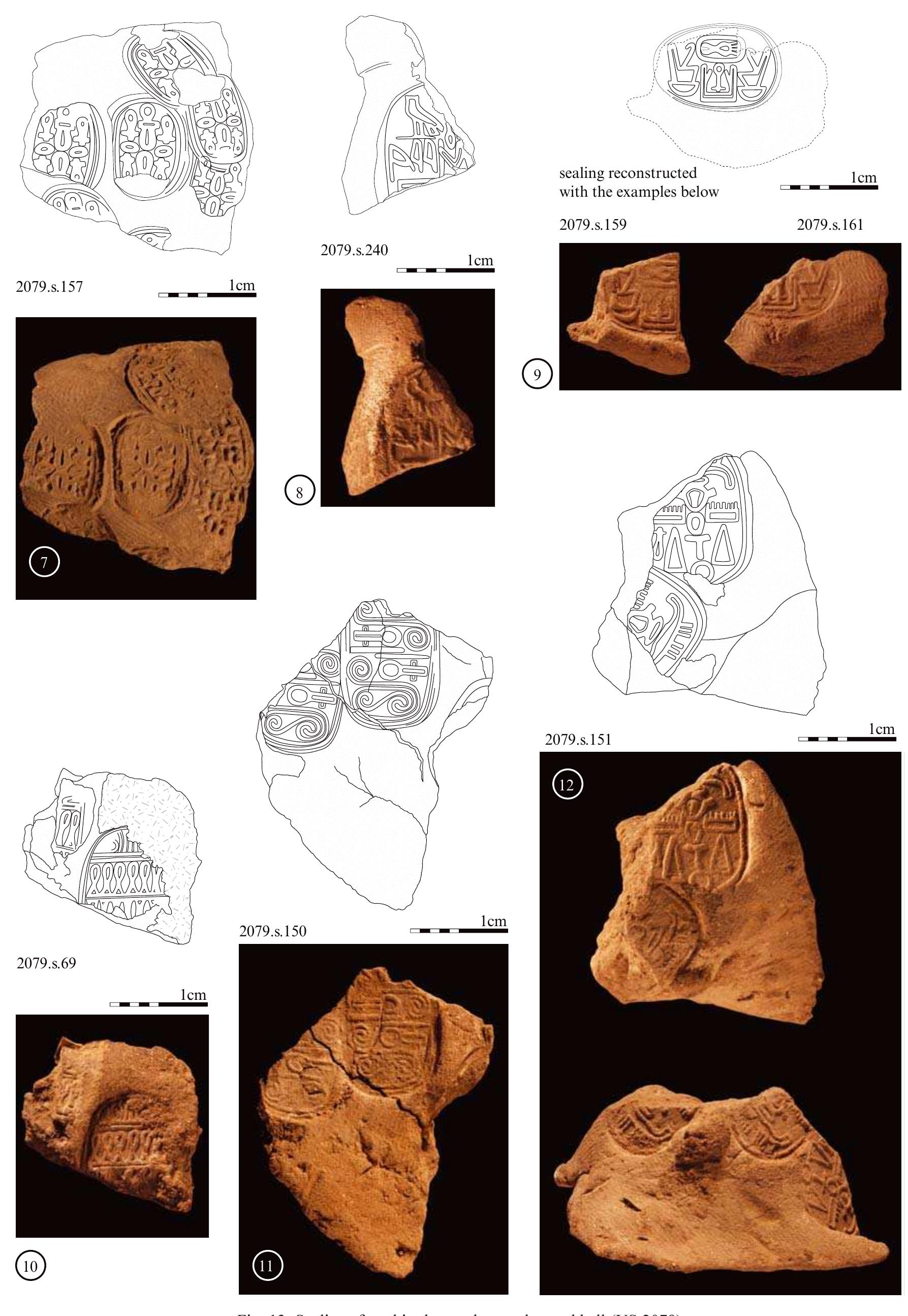
Khayan Sealings from Tell Edfu, in: Ägypten und Levante XXI, 2011, 87-121.

Abstract
sparkles

AI

Archaeological fieldwork at Tell Edfu has uncovered a significant administrative building complex dating from the 12th Dynasty to the early Second Intermediate Period. The discovery includes 41 sealings bearing the cartouche of the Hyksos ruler Khayan, marking the first secure archaeological evidence for this ruler south of Gebelein. This find enhances understanding of the cultural and chronological transitions between the late Middle Kingdom and early Second Intermediate Period in Upper Egypt.

Key takeaways
sparkles

AI

  1. The Khayan sealings provide the first secure evidence of Hyksos-Upper Egypt contact.
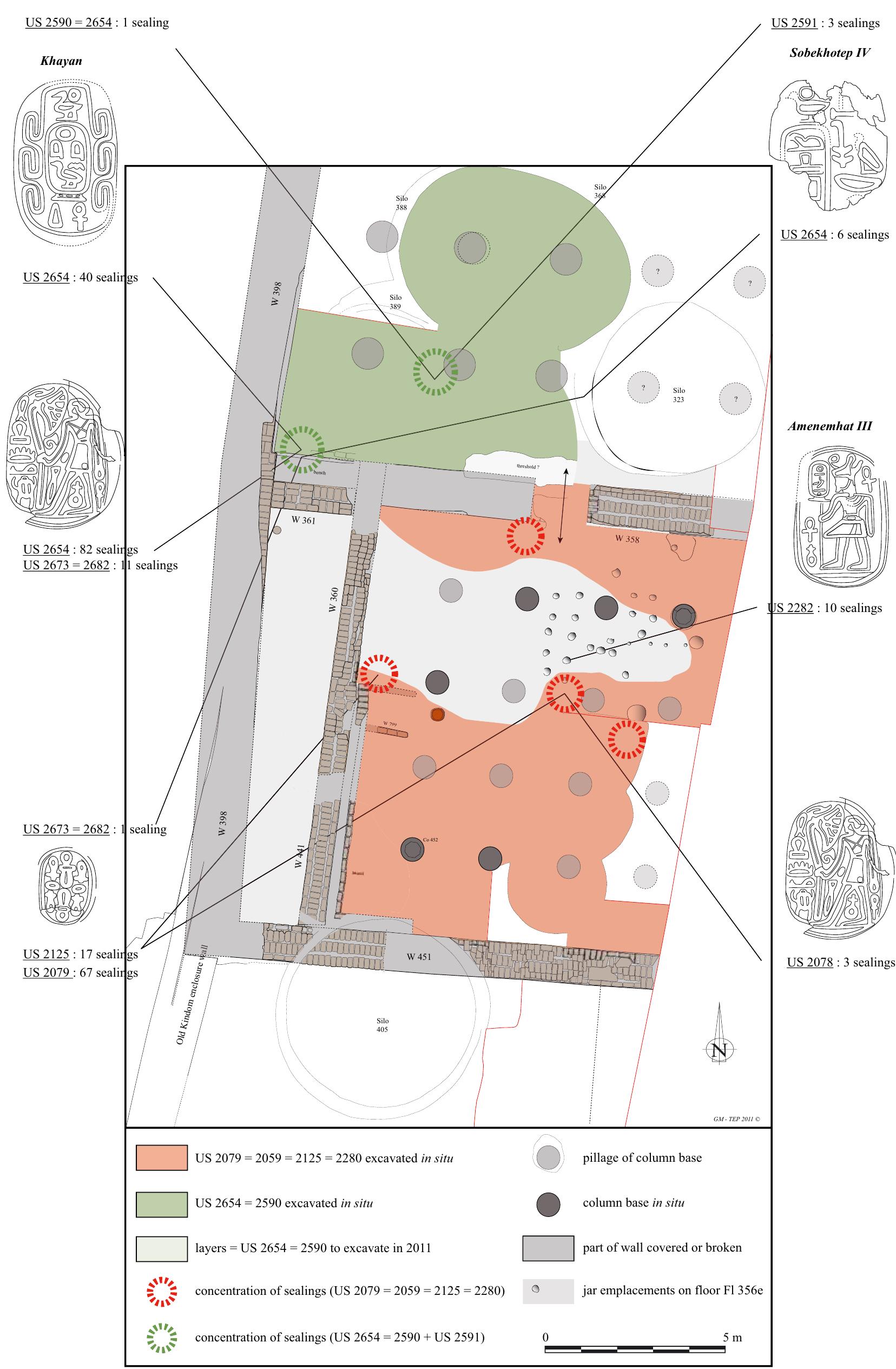
  2. 41 Khayan sealings found in secure archaeological context open questions on Middle Kingdom and Second Intermediate Period.
  3. Khayan and Sobekhotep IV sealings indicate possible contemporaneity, challenging previous chronological assumptions.
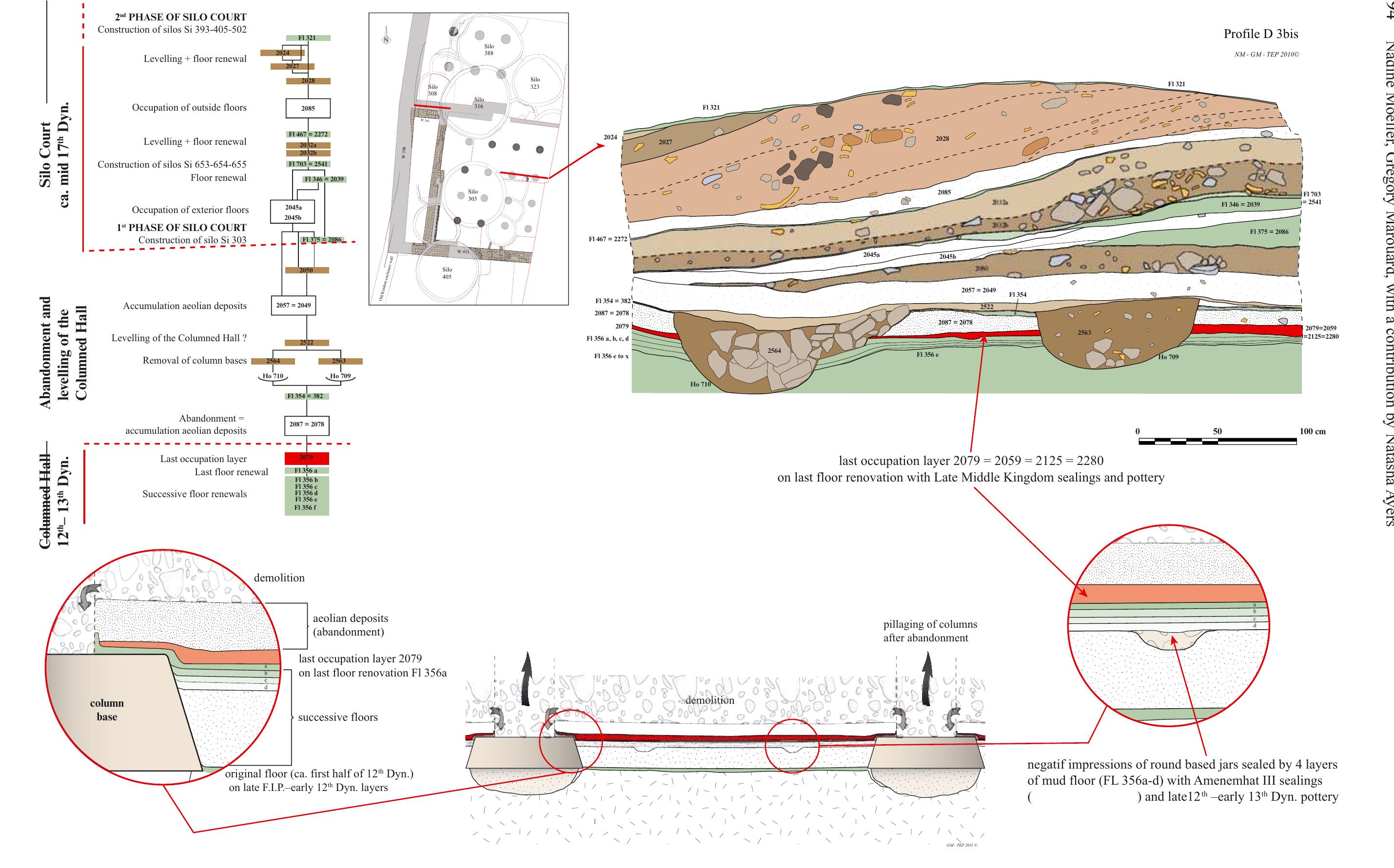
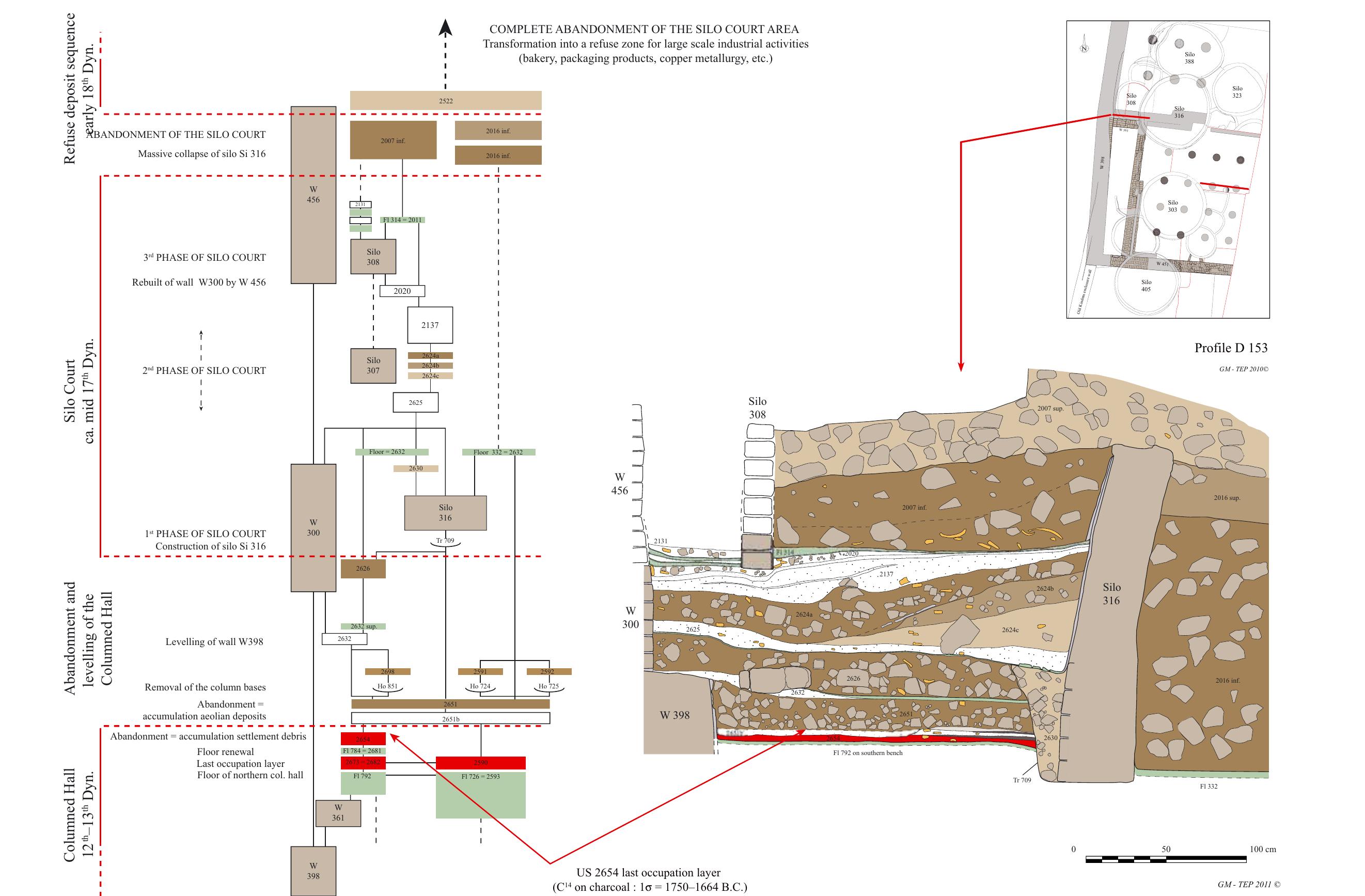
  4. The administrative building at Tell Edfu evolved from the 12th Dynasty to the early Second Intermediate Period.
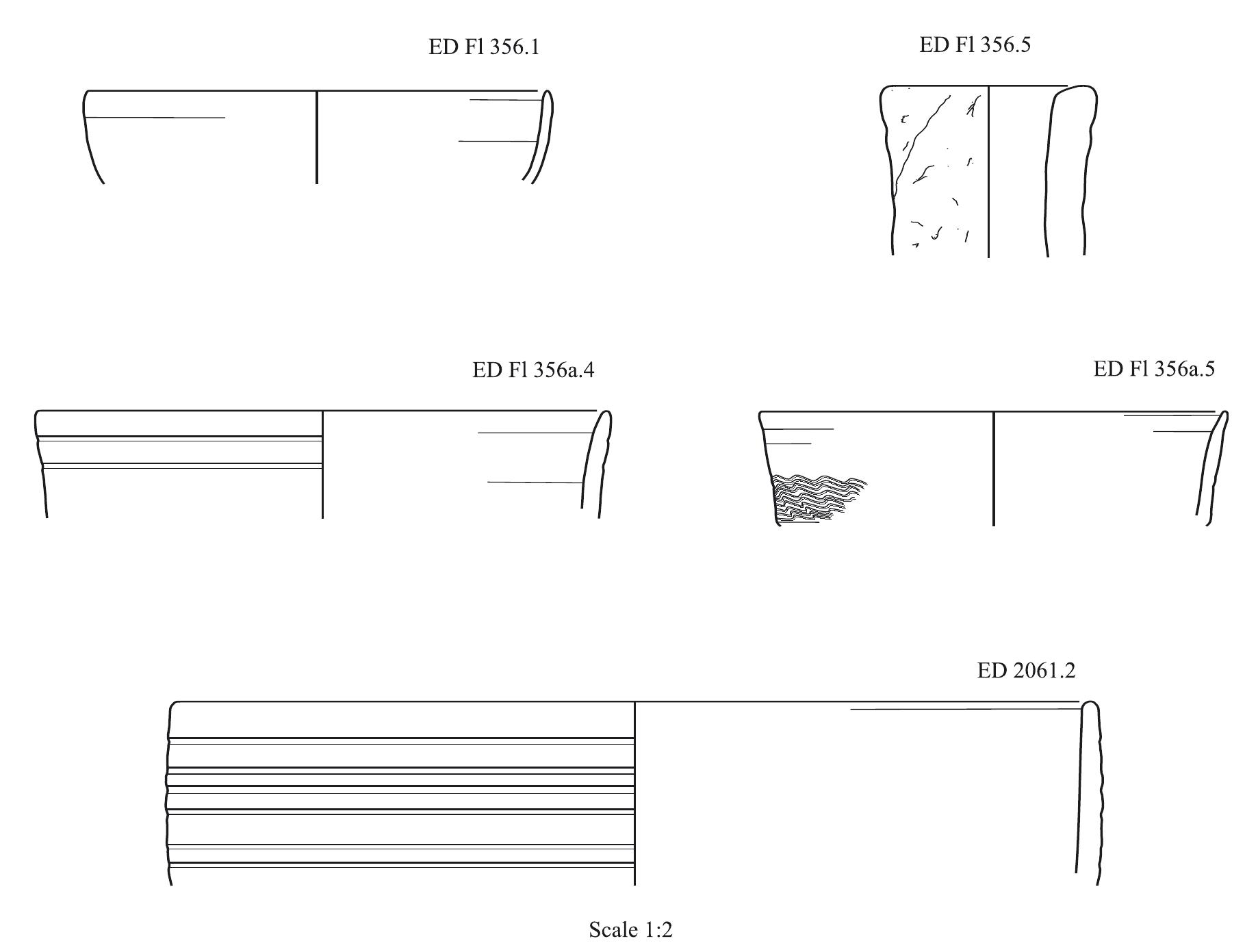
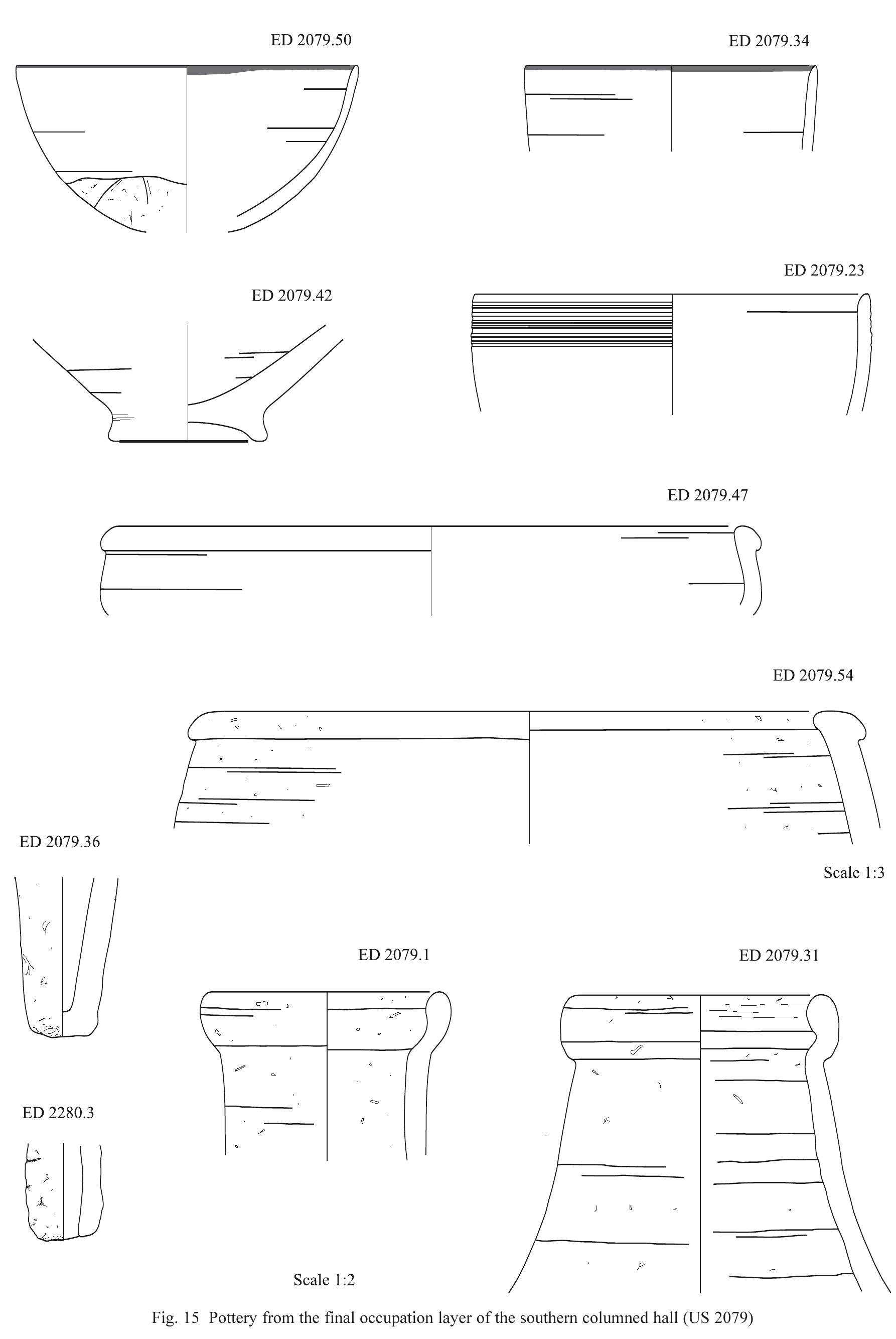
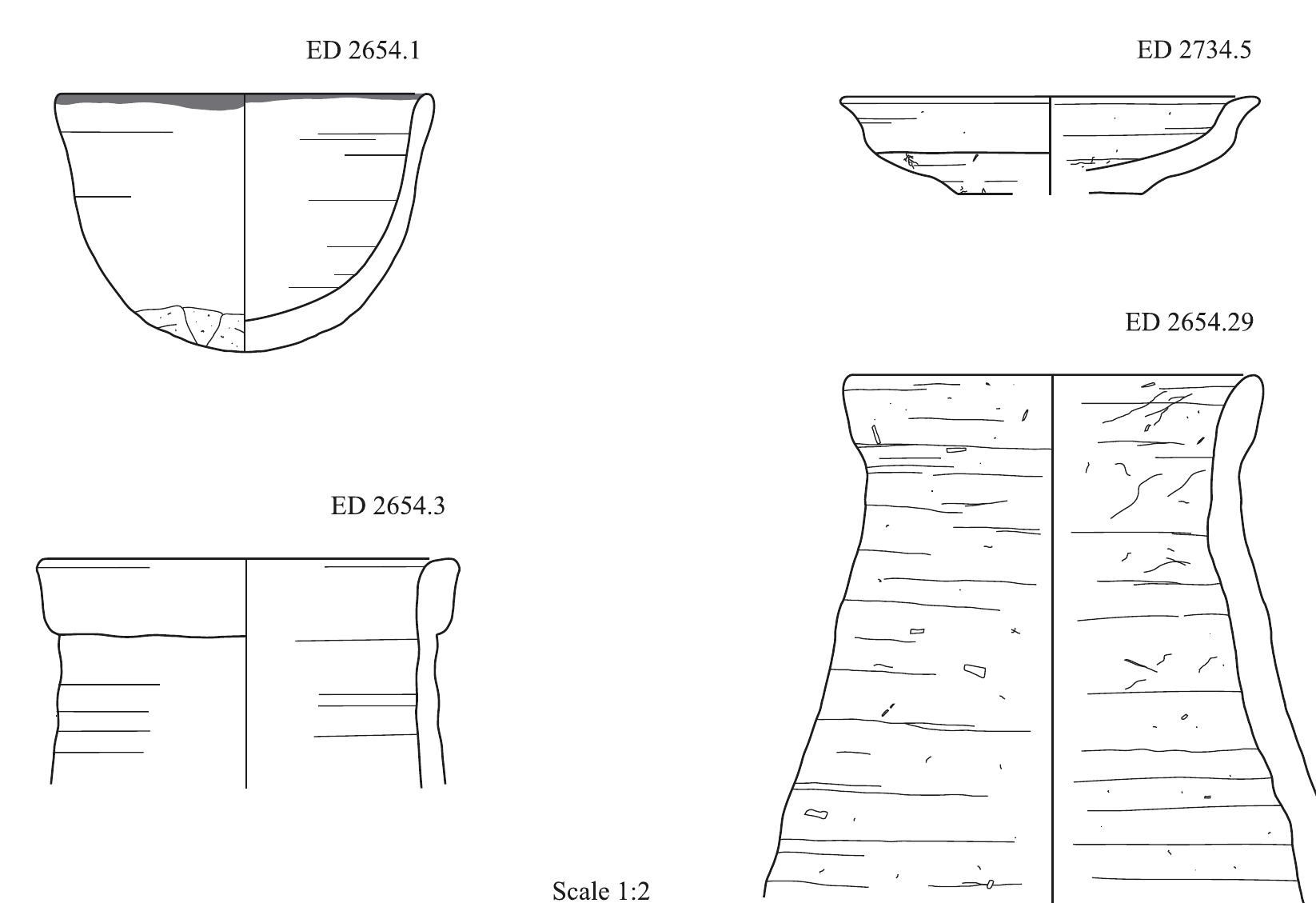
  5. Pottery analysis shows a continuation of late Middle Kingdom styles into the early Second Intermediate Period.
ÄGYPTEN UND LEVANTE EGYPT AND THE LEVANT XXI 2011 Internationale Zeitschrift für ägyptische Archäologie und deren Nachbargebiete ÄGYPTEN UND LEVANTE EGYPT AND THE LEVANT International Journal for Egyptian Archaeology and Related Disciplines XXI 2011 Founder and Editor in Chief: MANFRED BIETAK Editors: BARBARA BECK-BRANDT, ERNST CZERNY, FRANK KAMMERZELL, CHRISTIANA E. KÖHLER, LAWRENCE E. STAGER Kommission für Ägypten und Levante der Österreichischen Akademie der Wissenschaften • Österreichisches Archäologisches Institut Institut für Archäologie der Humboldt-Universität zu Berlin • Institut für Ägyptologie der Universität Wien Semitic Museum – Harvard University Vorgelegt von w. M. MANFRED BIETAK in der Sitzung vom 16. März 2012 Ägypten und Levante wird gemeinsam herausgegeben und finanziert durch Egypt and the Levant is edited and funded by the following institutions Semitic Museum Harvard University Alle Rechte vorbehalten ISBN 978-3-7001-7232-1 ISSN 1015-5104 Copyright © 2011 by Österreichische Akademie der Wissenschaften, Wien Grafik, Satz, Layout: Angela Schwab Druck: Ferdinand Berger & Söhne Ges.m.b.H., A-3580 Horn http://hw.oeaw.ac.at/7232-1 http://verlag.oeaw.ac.at Die Zeitschrift Ägypten und Levante ist Ä&L abzukürzen. The Journal Egypt and the Levant should be abbreviated E&L. Beiträge sind zu senden an/ Contributions shall be sent to Ernst Czerny Kommission für Ägypten und Levante Postgasse 7/10 1010 Wien Austria [email protected] Link: http://verlag.oeaw.ac.at/ Inhaltsverzeichnis/Contents Abkürzungen/Abbreviations . . . . . . . . . . . . . . . . . . . . . . . . . . . . . . . . . . . . . . . . . . . . . . . . . . . . . . . . . 9 Vorwort/Preface von/by Manfred Bietak . . . . . . . . . . . . . . . . . . . . . . . . . . . . . . . . . . . . . . . . . . . . . . . . 11 H. Franzmeier, F. Höflmayer, W. Kutschera and E.M. Wild, Radiocarbon Evidence for New Kingdom Tombs: Sedment 254 and 246 . . . . . . . . . . . . . . . . . . . . . . . . . . . . . . . . . . . . 15 C.E. Köhler and M. Ownby, Levantine Imports and their Imitations from Helwan . . . . . . . . . . . . . . . . 31 M. Lehmann, Vorbericht über die Grabungstätigkeiten der Herbstkampagne 2009 im Areal A/II von Tell el-Dabca . . . . . . . . . . . . . . . . . . . . . . . . . . . . . . . . . . . . . . . . . . . . . . . 47 D. Collon and M. Lehmann, Report on the Sealings Found in the 2009 Excavations at Tell el-Dabca . . . . . . . . . . . . . . . . . . . . . . . . . . . . . . . . . . . . . . . . . . . . . . . . . . . . . . . . . . . 67 Andrea Manzo, Punt in Egypt and Beyond . . . . . . . . . . . . . . . . . . . . . . . . . . . . . . . . . . . . . . . . . . . . . . 71 N. Moeller and G. Marouard with a contribution by N. Ayers, Discussion of Late Middle Kingdom and Early Second Intermediate Period History and Chronology in Relation to the Khayan Sealings from Tell Edfu . . . . . . . . . . . . . . . . . . . . . . . . . . . . . . . . . . . . . . . . . . . . . . . 87 J. Mynářová, Expressions of Dates and Time in the Amarna Letters . . . . . . . . . . . . . . . . . . . . . . . . . . 123 S. Rzepka, A. Wodzińska, C. Malleson, J. Hudec, L. Jarmużek, K. Misiewicz, W. Małkowski, M. Bogacki, New Kingdom and the Third Intermediate Period in Tell el-Retaba . . . . . . . . 129 Y. Yasuoka, Neuerwägungen zu den memphitischen Säulen . . . . . . . . . . . . . . . . . . . . . . . . . . . . . . . . . 185 T. Dothan and D. Regev, An Inscribed Baboon Statuette from Tel Miqne-Ekron . . . . . . . . . . . . . . . . . . . 211 A. Faust and H. Katz, Philistines, Israelites and Canaanites in the Southern Trough Valley during the Iron Age I . . . . . . . . . . . . . . . . . . . . . . . . . . . . . . . . . . . . . . . . . . . . . . . . . . . . . . . 231 I. Finkelstein, E. Zapassky, Y. Gadot, D.M. Master, L.E. Stager and I. Benenson, Phoenician “Torpedo” Amphoras and Egypt: Standardization of Volume Based on Linear Dimensions . . . . . . . . . . . . . . . . . . . . . . . . . . . . . . . . . . . . . . . . . . 249 D.M. Master, L.E. Stager, and A. Yasur-Landau, Chronological Observations at the Dawn of the Iron Age in Ashkelon . . . . . . . . . . . . . . . . . . . . . . . . . . . . . . . . . . . . . . . . . . . . . . . . . . 261 T. Mühlenbruch und H. Mommsen, Neutronenaktivierungsanalysen an mykenischer Keramik aus Ku¢akli-Sarissa und Sirkeli (Türkei), KÁmid el-L½z-Kumidi (Libanon) und dem Fayum (Ägypten) . . . . . . . . . . . . . . . . . . . . . . . . . . . . . . . . . . . . . . . . . . . . . . . . . . 281 T. Mühlenbruch, Kayal¤p¤nar – ein hethitisches Zentrum mit „Palastbezirk“. Die Red Lustrous Wheelmade-Ware aus „Gebäude B“ und ein Ansatz für die „soziale Deutung“ der „Libationsarme“ . . . . . . . . . . . . . . . . . . . . . . . . . . . . . . . . . . . . . . . . . . . . . . . . . . . . . . . 291 D. Vieweger, The Transition from the Bronze to the Iron Age in Northern Palestine. Archaeological and Archaeometric Investigations on Tall ZirÁ‘a . . . . . . . . . . . . . . . . . . . . . . . . . . . . . . . . . . 305 Einladung zur Artikeleinreichung Invitation for submission of articles Die Zeitschrift Ägypten und Levante plant, fallweise In the future, some issues of the journal "Egypt and für einzelne Hefte einen Themenschwerpunkt vorzu- the Levant" shall occasionally be associated with a geben. In diesem Sinne ist vorgesehen, Heft 23 general subject matter. Therefore, for issue 23 (2013) (2013) dem Themenschwerpunkt "Paläste in Ägypten the subject matter "Palaces in Egypt and the Levant" und der Levante" zu widmen. Das Thema ist in is foreseen. The topic is understood in a wide sense umfassendem Sinn gemeint, und kann archäologi- and may encompass archaeological, building-histori- sche, baugeschichtliche, kunsthistorische, struktur- cal, art-historical, structure-analytical as well as epi- analytische sowie auch epigraphische oder literari- graphic or literature studies etc. sche Studien etc. umfassen. Authors interested to contribute are kindly invited Interessierte Autoren sind herzlich eingeladen, to submit articles. The deadline will be end of May Artikel zu dem genannten Themenschwerpunkt ein- 2013. zureichen. Einsendeschluss ist Ende Mai 2013. Die Redaktion von Ägypten und Levante The editors of Egypt and the Levant, z.H. Ernst Czerny [email protected] Abkürzungen/Abbreviations Ä&L (E&L) Ägypten und Levante. Zeitschrift für ägyptische BSEG Bulletin de la Société d’égyptologie de Genève, Archäologie und deren Nachbargebiete (Egypt Genf and the Levant. International Journal for Egyptian BSFE Bulletin de la Société française d’égyptologie, Archaeology and Related Disciplines), Wien Paris AA Archäologischer Anzeiger. Jahrbuch des Deut- Cahiers de Karnak Cahiers de Karnak, Centre franco-egyp- schen Archäologischen Instituts, Berlin tien d’étude des temples de Karnak, Paris AASOR Annual of the American Schools of Oriental cAtiqot cAtiqot. Journal of the Israel Department of Research, Cambridge Mass. Antiquities, Jerusalem ABSA The Annual of the British School at Athens, Lon- CCE Cahiers de la céramique égyptienne, Le Caire don CChEM Contributions to the Chronology of the Eastern ADAJ Annual of the Department of Antiquities of Jor- Mediterranean, Vienna dan, Amman CdE Chronique d’Egypte, Brussels AfO Archiv für Orientforschung, Berlin, Graz CRIPEL Cahiers de recherches de l’institut de Papyrolo- AJA American Journal of Archaeology, New York, gie et d’Egyptologie de Lille; Société Urbaines Baltimore, Norwood en Égypte et au Soudan, Lille AnzWien Anzeiger der [Österreichischen] Akademie der DaM Damaszener Mitteilungen, Mainz Wissenschaften, Wien, Philosophisch-historische DE Discussions in Egyptology, Oxford Klasse, Wien E&L see Ä&L AOAT Alter Orient und Altes Testament, Kevelaer & Neukirchen-Vluyn, Münster EA Egyptian Archaeology. The Bulletin of the Egypt Exploration Society (EES), London AoF Altorientalische Forschungen, Berlin EES Egypt Exploration Society, London Archéo-Nil Archéo-Nil. Bulletin de la société pour l’étude des cultures prépharaoniques de la vallée du Nil EES EM Egypt Exploration Society Excavation Memoirs, (Paris) London (earlier names: MEEF/MEES) Archaeometry Archaeometry. The Bulletin of the Research EES OP Egypt Exploration Society Occasional Publica- Laboratory for Archaeology and the History of tions, London Art, Oxford University, Oxford Eretz Israel Eretz Israel. Studies in Archaeology, History and AS Anatolian Studies. Journal of the British Institute Geography, Jerusalem of Archaeology at Ankara, London FoRa Forschungen in der Ramses-Stadt, Die Grabun- ASAE Annales du service des antiquités de l’Égypte, gen des Pelizäus-Museums Hildesheim in Quan- le Caire tir – Pi-Ramesse, hg. von E.B. Pusch und M. AV Archäologische Veröffentlichungen. Deutsches Bietak, Mainz Archäologisches Institut, Abteilung Kairo, Ber- HÄB Hildesheimer Ägyptologische Beiträge, Hildes- lin/Mainz am Rhein heim BACE The Bulletin of the Australian Centre for Egypto- IEJ Israel Exploration Journal, Jerusalem logy, Sydney IstMitt Istanbuler Mitteilungen, Deutsches Archäologi- BAR Biblical Archaeology Review, Boston sches Institut, Abteilung Istanbul, Tübingen BAR IS British Archaeology Reports, International JAMT Journal of Archaeological Method and Theory, Series, London-Oxford Springer BASOR Bulletin of the American Schools of Oriental JANES Journal of the Ancient Near Eastern Society, Research, Boston-New Haven New York, University of Columbia BCE Bulletin de la céramique égyptienne, le Caire JARCE Journal of the American Research Center in BdE Bibliothèque d’étude, Institut français d’archéo- Egypt, Boston logie Orientale, le Caire JAS Journal of Archaeological Science, London, Belleten Belleten. Türk Tarih Kurumu, Ankara New York BIFAO Bulletin de l’Institut français d’archéologie JEA Journal of Egyptian Archaeology, London Orientale, le Caire JNES Journal of Near Eastern Studies, Chicago BIAA Monograph British Institute of Archaeology at Ankara Iraq Iraq. The The British Institute for the Study of Monograph, Cambridge Iraq Journal, London BMMA Bulletin of the Metropolitan Museum of Art, New JSOT Journal for the Study of the Old Testament, York Sheffield BSAE British School of Archaeology in Egypt, London; Kêmi Kêmi. Revue de philologie et d’archéologie bis Bd. 10 1905: ERA; ab Bd. 64 1952: BSEA égyptienne et coptes, Paris 10 Abkürzungen/Abbreviations KMT KMT. A Modern Journal of Ancient Egypt, San PSBA Proceedings of the Society of Biblical Archaeo- Fransisco logy, London KRI K.A. KITCHEN, Ramesside Inscriptions, Historical Qedem Qedem. Monographs of the Institute of Archaeo- and Biographical. I–VII, 1969–1990, Oxford logy of the Hebrew University of Jerusalem KRIANC K.A. KITCHEN, Ramesside Inscriptions. Trans- QDAP The Quarterly of the Department of Antiquities lated and Annotated Notes and Comments, in Palestine, Jerusalem, Oxford Oxford 1999 Radiocarbon Radiocarbon. An International Journal of Cos- Kush Kush. Journal of the Sudan Antiquities Service, mogenic Isotope Research, Tucson, AZ Khartum RdE Revue d’égyptologie, le Caire; ab Bd 7: Paris LÄ Lexikon der Ägyptologie, ed. by W. HELCK, RecTrav Recueil de travaux relatifs à la philologie et à E. OTTO, W. WESTENDORF, 7 vols. Wiesbaden l’archéologie égyptiennes et assyriennes [Fort- 1972 ff. setzung: Revue de l’Égypte ancienne LD K.R. LEPSIUS, Denkmaeler aus Aegypten und (1925/27ff.], Paris 1870-1923 Aethiopien, 12 vols., Berlin 1849-58, reprinted SAGA Studien zur Archäologie und Geschichte Alt- Osnabrück 1970; Text, 5 vols., ed. by E. NAVIL- ägyptens, Heidelberg LE, Leipzig 1897-1913. SAK Studien zur Altägyptischen Kultur, Hamburg Levant Levant. Journal of the British School of Archae- SAOC Studies in Ancient Oriental Civilisation, The ology in Jerusalem and the British Institute at Oriental Institute of the University of Chicago, Amman for Archaeology and History, London Chicago JSOTSup Journal for the Study of the Old Testament: Sup- SASAE Supplément aux Annales du service des antiqui- plement Series, (now Old Testament Studies), tés de l’Égypte, le Caire Sheffield SDAIK Sonderschriften des Deutschen Archäologischen MDAIK Mitteilungen des Deutschen Archäologischen Instituts, Abteilung Kairo, Mainz Instituts, Abteilung Kairo; bis 1944: Mitteilun- Serapis Serapis. The American Journal of Egyptology, gen des Deutschen Instituts für Ägyptische Alter- Chicago tumskunde in Kairo, Berlin, Wiesbaden, ab 1970: Mainz SHAJ Studies in the History and Archaeology of Jor- dan, London MDOG Mitteilungen der Deutschen Orientgesellschaft, Berlin, Leipzig SIMA Studies in Mediterranean Archaeology. A Hand- book of Archaeology, Göteborg, Jonsered, Säve- Memnonia Memnonia. Bulletin édité par l’association pour dalen la sauvegarde du Ramesseum, Le Caire SJOT Scandinavian Journal of the Old Testament, MIFAO Mémoires publiés par les membres de I’Institut London français d’archéologie orientale du Caire, Kairo JSOTSup Journal for the Study of the Old Testament: Sup- MMJ Metropolitan Museum Journal, New York plement Series OBO Orbis Biblicus et Orientalis, Fribourg-Göttingen StudAeg Studia Aegyptiaca, Rom OIP Oriental Institute Publications, University of Syria Syria. Revue d’art oriental et d’archéologie, Bei- Chicago, Chicago rut, Paris OJA Oxford Journal of Archaeology, Oxford Tel Aviv Tel Aviv. Journal of the Tel Aviv University Insti- ÖJh Jahreshefte des Österreichischen Archäologi- tute of Archaeology, Tel Aviv schen Institutes in Wien, Wien UZK Untersuchungen der Zweigstelle Kairo des OLA Orientalia Lovaniensia Analecta, Leuven Österreichischen Archäologischen Institutes, OpAth Opuscula Atheniensia. Annual of the Swedish Wien Institute at Athens. Acta Instituti Atheniensis WVDOG Wissenschaftliche Veröffentlichungen der Deut- Regni Sueciae, Lund schen Orient-Gesellschaft, Berlin, Leipzig Or Orientalia, Nova Series, Rom ZÄS Zeitschrift für ägyptische Sprache und Alter- PAM Polish Archaeology in the Mediterranean, War- tumskunde, Leipzig, Berlin saw ZDMG Zeitschrift der Deutschen Morgenländischen PdÄ Probleme der Ägyptologie, Leiden, Boston, Geseltschaft, Leipzig, Wiesbaden Köln ZDPV Zeitschrift des Deutschen Palästina-Vereins, PEFA Palestine Exploration Fund Annual, London Stuttgart, Wiesbaden PEQ Palestine Exploration Quarterly, London DISCUSSION OF LATE MIDDLE KINGDOM AND EARLY SECOND INTERMEDIATE PERIOD HISTORY AND CHRONOLOGY IN RELA- TION TO THE KHAYAN SEALINGS FROM TELL EDFU By Nadine Moeller and Gregory Marouard, with a contribution by Natasha Ayers* INTRODUCTION1 The discovery of the Khayan sealings becomes Since 2005, archaeological fieldwork conducted even more significant in view of the fact that this along the eastern part of Tell Edfu has led to the is the first time that evidence for a Hyksos ruler discovery of an important administrative building which comes from a secure archaeological context complex, which includes a large columned hall has been found south of Gebelein.4 This sheds new with many traces of administrative activities, light on the nature of the relationship and contact which took place here. This building was con- between the Hyksos and Upper Egypt. A basic structed during the first half of the 12th Dynasty objective of this article is to present this new and then continuously occupied at least until the archaeological data in great detail because it con- end of the Middle Kingdom into the early Second tributes important elements to the ongoing debate Intermediate Period. The excavation, which devel- about the history of the Second Intermediate Peri- oped gradually due to the complexity and the den- od; included is a review of the chronological issues sity of the preserved stratigraphic record, has now relating to the order of the Hyksos rulers. The data reached the southern and western limits of this presented here are not limited to the analysis of a administrative building, and it has been possible to representative sample of sealings from this context record its complete evolution from its foundation (Appendix I) but also include details of the strati- to the ultimate occupation and abandonment. After graphic evidence (see Figs. 5 and 6) and a discus- it had fallen out of use, its remains were sealed by sion of the ceramic assemblage (Appendix II). the installation of a large silo court dating to the 17th Dynasty (Fig. 3).2 THE ARCHAEOLOGICAL CONTEXT, A CASE STUDY FOR SETTLEMENT ARCHAEOLOGY IN EGYPT During the most recent fieldwork seasons in 2010 and 2011,3 excavations continued northwards As can be seen from the meticulously compiled from the columned hall and led to the discovery of inventory of attestations for Khayan made by K. another large adjoining hall. 41 sealings showing Ryholt, the majority of objects inscribed with his the cartouche of the Hyksos ruler Khayan have been name are scarab seals of unknown provenance.5 found here within a large sealing corpus together Recent excavations at Tell el-Dabca focusing on with 9 sealings naming Sobekhotep IV. These finds the Hyksos palace have uncovered eight mud-seal- come from a secure and sealed archaeological con- ings stamped with the name of Khayan from an text and open up new questions about the cultural interesting archaeological context. They were and chronological evolution of the late Middle found in several offerings pits dug into the court- Kingdom and early Second Intermediate Period. yard of a building that was part of the palace.6 * 4 All: The Oriental Institute, University of Chicago. POLZ 2006, 239–247. 1 5 The authors would like to thank Pierre Tallet for first con- RYHOLT 1997, 383–385. This is very common for the rulers firming the reading of the name of Khayan and also Daph- of the Second Intermediate Period; apart from a very few na Ben-Tor for many extremely stimulating discussions and monumental records and stelae, scarabs are the most fre- comments. quently encountered objects that are inscribed with royal 2 See MOELLER 2010, 81–111 for a detailed report presenting names during this time. 6 the results of five seasons of excavations at Tell Edfu. See BIETAK 2011, 40–41. These pits were filled with faunal 3 The results described here are principally the findings from remains and pottery as part of the feasting ceremonies con- the 2010 season with some additions from 2011. This article ducted there and represent multiple phases of deposition. was submitted before the 2011 season during which it has The presence of seals in these pits is surprising and proba- been possible to confirm almost all of the previous results. bly not their primary context of discard. Hopefully more Ägypten und Levante/Egypt and the Levant 21, 2011, 87–121 © 2011 by Österreichische Akademie der Wissenschaften, Wien 88 Nadine Moeller, Gregory Marouard, with a contribution by Natasha Ayers Modern cemetery F.I.P. enclosure wall 1 Mid Old Kingdom enclosure wall Ptolemaic & roman town 3 Izi Ptol. III mastaba enclosure wall Modern fields 2 4 4 Ptol. VIII enclosure wall F.I.P. enclosure walls 5 6 Modern town Visitor center 4) & 196 n 1961 betwee 6 Modern (filled town al i can amâd El-R 0 50 100 200 m 1 Ptolemaic Temple (ca. Ptolemy III) Tell Edfu Project excavation areas 2 Mammisi (ca. Ptolemy VIII Euergetus II) First Intermediate Period enclosure walls 3 Ramesside Pylon (Seti Ist - Rameses II) Estimated limits of antique town 4 Old and Middle Kingdom cemetery 5 Early Dynastic tombs area Archeological zone 6 Tell: visible remains under modern town Modern urban zone GM - TEP 2010 © Fig. 1 General plan of Tell Edfu Together with the examples from Tell Edfu, these able archaeological data. At Tell Edfu, these seal- new discoveries are one of the rare occasions ings were found together with more than a thou- where the name of Khayan is associated with reli- sand other clay sealings within different zones of details about this discovery and the archaeological context in conjunction with the pottery will become available; this will cer- tainly shed more light on these questions. W 324 = 370 =371 Silo FIP enclosure wall Silo 368 388 Ptolemaic Silo & byzantine Silo Courtyard enclosure wall Old Kingdom 368 enclosure wall Ho 830 17th Dyn. Ho 828 1 N 6 ? Silo 388 3 ? Ptol. III enclosure wall Silo 389 2 4 4 door Silo 316 Silo 323 Silo Old Kingdom Modern 308 W666 enclosure walls 7 5 town (unburnt) Silo 316 Ho 851 Silo W671 Ho 724 W 361 322 W411 Ho 725 Silo ? Silo 323 W 398 W358 Silo ? 313 0 50 200 m 316 W 300 W 360 W 535 threshold ? W 305 bench W 605 Silo 302 Silo of silo Foot 655 Silo 303 W 361 W 593 Silo W 358 654 Stratigraphie en place W 441 Silo 301 Silo W 534 653 W 533 Co 355 W 593 Co 357 W 507 W 509 Co 455 W 451 W 594 W 360 W 589 W 300 W 595 Silo 405 W 398 W 501 W 596 Ptolemaic walls Co 367 Ho 709 W 589 ca. mid. 3rd century B.C W 597 W 528 W 588 door ? Ho 710 W 471 Ho 770 W 440 W 513 W 799 W 616 W 598 Fl 540 W 564 W 514 Silo 393 W 615 Ho 667 W 599 Ho 670 Silo 655 W 512 Ho 711 Old Kingdom Silo 303 enclosure wall W 511a W 562 W 510 W 526 W 564 W 558 silo W 510 W 526 Tr 505 unfinished ? W 506 Late Period houses W 559 W 613 0 ca. 25th–26th Dyn. W 47 Silo 654 Silo 502 Co 452 W 614 W 525 W 441 bench W 619 re wall W 581 W 600 N W 532 W 519 Ho 721 W 601 Silo 653 enclosu W 300 W 524 W 602 W522 W 520 indom W 451 W 603 W 536 W 587 W 604 Old K W 533 Silo Ptolemaic enclosure wall 405 (mammisi section - ca. Ptol. VIII) W 501 0 5 10 m 0 5m Discussion of late Middle Kingdom and early Second Intermediate Period History and Chronology GM - TEP 2011 © GM - TEP 2010 © 89 Fig 2 Detailed plan of the excavation area and the administrative complex 90 Nadine Moeller, Gregory Marouard, with a contribution by Natasha Ayers Fig. 3 South view of excavation area showing silos of the 17th Dynasty and underlying late Middle Kingdom columned halls Fig. 4 West view of southern columned hall floor with column bases in situ Discussion of late Middle Kingdom and early Second Intermediate Period History and Chronology 91 concentrations inside the columned hall complex room to the adjacent columned hall. It was later where they can be firmly linked to the last phase of removed by the construction of silo Si 303. The occupation and abandonment of this administrative presence of a narrow room adjacent to a large hall building, a level sealed by an undisturbed stratig- with columns is a well-known element of official raphy that reaches in parts more than 3 meters in building complexes.9 height dating to later periods. The floor of the columned hall was made of Several preliminary reports have already been compacted mud, and it had been very well main- published in connection with this structure and the tained during its lifetime (Fig. 4). It had been description will be limited here to a synthetic sum- renewed on a regular basis, which can be seen by mary of its evolution.7 The administrative building the impressive built-up of more than thirty sub-lay- is situated to the east and along the inside of a large ers, which are all superimposed (Fig. 5). This is enclosure wall which dates back to the Old King- good evidence for the relatively long time of use dom and follows a north-south course which clear- and continuous up-keep of this structure. The cur- ly influenced the orientation and layout of the Mid- rent excavations, during which the last layers of dle Kingdom building even though the wall had the floor were excavated with great care, have per- fallen out of use by this time (Figs. 1–3).8 The mitted us to study these final occupation phases in administrative complex was founded in the first depth. Over the past seasons several phases of half of the 12th Dynasty and saw a long period of floor renovation were excavated down to the use until its final abandonment some time during fourth floor level (Fl 356e); the latter has been the second half of the 13th Dynasty. It was built exposed over a considerable area and is character- directly on earlier occupation levels that show ized by multiple jar negatives in the form of shal- signs of heavy burning and which can be dated to low round holes between the columns (Figs. 4 and the First Intermediate Period and the early Middle 5). Inside these negatives and sealed by the next Kingdom (see Fig. 3). floor layer (Fl. 356d, see Fig. 5), ten sealings with The best-known element of this large adminis- the name of Amenemhat III have been found trative building investigated since 2005 is a together with pieces of pottery which are typical columned hall measuring at least 12 meters along for the late 12th to early 13th Dynasty, such as small the north-south axis (Fig. 2). Its interior was filled hemispherical drinking cups.10 This discovery con- by a minimum of 16 octagonal columns that were tributes some information about the date of the probably made of wood and which once stood on floor layers that followed providing a terminus round sandstone bases. Five of the latter have been post quem for them. A 14C sample that was found in situ while none of the columns was pre- obtained from these layers confirms the late Mid- served because all of them had been removed dle Kingdom date and is additional proof that the when the building was dismantled (Figs. 3 and 4). sealings are contemporary with the reign of Amen- So far the southern and western limits (see Fig. 2, emhat III.11 W 451 and W 398) of this building have been iden- It is nevertheless the final phase of occupation tified. To the west, the columned hall was flanked of this hall which has attracted attention for this dis- by an elongated room measuring 2.3 by 11.5 cussion. On the surface of the last floor level of the meters. A small doorway was probably situated columned hall (Fl. 356a), a layer that had already halfway along wall W441=W360 which linked this encroached upon the column bases, a rich assem- 7 See MOELLER 2011, 111–120; MOELLER 2010, 81–111; rooms flanking their sides can been seen at the palace of MOELLER 2009b, 117–125 and MOELLER 2008, 118–123. Uronarti; see DUNHAM 1967, map IV. A detailed study of 8 The phenomenon of older walls, especially enclosure walls, this architectural phenomenon is currently being prepared influencing the layout of later buildings and streets is typi- by the N. Moeller. 10 cal for tell sites; see MOELLER 2011, 114. For further details see MOELLER 2009a, 150–154. 9 11 See for example the ‘Command Building’ at the Middle This is important because for both Amenemhat III and Sen- Kingdom fortress of Buhen in Lower Nubia, which also fea- wosret III there are also seals with their names that have tures a central columned hall of similar proportions as the been posthumously produced and used, see BEN-TOR 2007, one at Tell Edfu, EMERY 1979, pl. 16. Another example 37–38. showing multiple columned halls with such elongated 92 Nadine Moeller, Gregory Marouard, with a contribution by Natasha Ayers blage of objects was found (layer US also by pottery found in the exterior floor levels that 2079=2059=2125=2280)12 (Figs. 5 and 9). This were continuously growing in height over time.14 layer was particularly abundant in pottery sherds, By the early 18th Dynasty, several of the silos sealings and other objects (including animal bones, had collapsed, especially their dome-shaped upper ceramic weights, figurines, etc.) and has been exca- part which was most vulnerable, and the whole vated over a total area of more than 125 m2 (Fig. 8). area became a zone for refuse deposit on a large In relation to the gradual demise of this building, scale; this can be seen in the very thick layers of the otherwise attested upkeep and cleaning was not ash and other accumulations of waste.15 These carried out leaving traces of the activities which enormous deposits, none of which date later than had been conducted in this large space. These the mid 18th Dynasty, are probably evidence for the objects found here are good evidence for the multi- presence of a large urban production center nearby purpose function of such spaces. Once the hall was that included a bakery, storage installations and completely abandoned, the entirety of layer US metal working.16 2079 was sealed by an aeolian sand deposit (Fig. 5). During the two last seasons of fieldwork at Tell At that time the structure itself remained relatively Edfu in 2010 and 2011, the excavation was contin- intact with the columns still in situ. The next phase ued along the northern side of the southern is characterized by the almost systematic removal columned hall under the later silos Si 308, Si 388, of the column bases (Fig. 5) and the dismantlement Si 389, Si 323 and Si 316 (Figs. 2 and 3).17 Anoth- of the western wall W 398; this marks the partial er large columned hall was found in this area, disappearance of this building within the settle- which has been confirmed by expanding the exca- ment.13 Thereafter a long stratigraphic sequence vation to the north during the 2011 season. This accumulates which is marked by several phases of northern hall was accessed via a doorway on the inactivity during which thick layers of windblown north side of the southern columned hall and it is sand and fill layers with refuse and leftovers from evident that it belongs to the same administrative leveling operations were deposited (Fig. 5). building complex (Figs. 2 and 3).18 Additionally, In the 17th Dynasty the entire zone was trans- two rows of column base emplacements in the form formed into a vast silo court characterized by three of large round holes have been found (Fig. 2).19 or four consecutive phases of construction and ren- These holes were left when the bases were removed ovation (Fig. 3). These silos of exceptionally large from the floor into which they had been set and size functioned as the principal grain storage facili- inside all of them a layer of clean yellow sand was ty for the town of Edfu during the entire 17th until found in situ.20 The column bases that once stood the early 18th Dynasty. The date for the life-time of here were of a larger size and probably different the silos has been confirmed by the ceramic materi- material than those of the southern columned hall; al found in the layers linked directly to their use and the sand foundation might be an indication of a 12 16 These four context numbers are all equivalent to the same Several crucibles for copper smelting have been found in layer in stratigraphic terms and will be called US 2079 in these fill layers, which suggests that some metal working the following text. From 2005 until now, parts of this layer was carried out somewhere in the vicinity. 17 were excavated in specific areas of the building, which were The excavation of the thick layers of demolition fill inside at the time of excavation not yet connectable. Therefore dif- silo Si 316 were finished during the 2010 season, which ferent stratigraphic unit numbers were assigned to them. then permitted excavating the underlying remains of the 13 It is interesting to note that no traces of the roofing were Middle Kingdom administrative complex. The fieldwork in found anywhere in the aeolian deposit which accumulated this area is not quite finished yet but the first results are due to inactivity in this hall. It is very likely that the roof of already very promising. 18 the columned hall was still relatively intact until the final The doorway including the threshold were thoroughly dis- removal of the columns and the column bases. mantled and leveled by the later silo construction (Silo 316) 14 See MOELLER 2010, 89–100 for further details on the silo above it. A very rough and broken patch of the mud-floor in court. this passage suggests that there might have originally been 15 MOELLER 2010, 87–88, fig. 4. a stone threshold here, see Fig. 3. 19 The walls of silos Si 316 and Si 388 were built above these two holes. 20 MOELLER 2011, figs. 8 and 9. Discussion of late Middle Kingdom and early Second Intermediate Period History and Chronology 93 heavier column while the size of the holes suggests (US 2079=2059=2125=2280) but was also recog- a larger diameter for the bases, too.21 nized in the adjoining northern hall (US 2682) Furthermore, this northern hall shows an almost (Fig. 7). It has been deposited in a synchronous identical stratigraphic sequence to the adjacent way in both areas, which has been confirmed by southern columned hall, from the period of use pottery evidence (see Appendix II) as well as the until its abandonment, indicating that these stratigraphy and the architecture. The two sequences are synchronous (compare Figs. 5 and columned halls functioned at the same time and 6). Here the same kind of final occupation layer they were abandoned in a similar manner. which is about 10 cm thick marking the last phase This layer marking the final occupation is of use has been excavated (see Fig. 6, US remarkably homogenous in the whole area, and its 2682=2673), too. It lies directly on top of a mud- depth of only 5 to 10 cm remains the same brick floor covered by a layer of muna (Fl 792 = throughout both halls. It is composed of a loose silt Fl. 726), which was the main floor level of this matrix with a heavy proportion of organic micro- northern hall. The Khayan sealings were found particles, specifically pieces of fine straw with the together with sealings naming Sobekhotep IV in a occasional addition of ash and small accumula- layer full of pottery and sealings (US 2654), which tions of charcoal similar to what can be found in lies above a second floor phase (Fl. 784). Latter is the remains of several small fireplaces on the sur- only present in the south-western corner of this face of these mud-floors. hall. In archaeological terms US 2654 is linked to A considerable amount of objects of various the final abandonment of this building (Fig. 6). types were excavated within this layer which were Thus the recently excavated areas show very dispersed in particular concentrations on the floor, clearly the continuation of the administrative com- suggesting their discard close to where they had plex further to the north and the final limits have been used; if this is so, they provide a possible not been reached yet. So far it seems that this glimpse of the final activities carried out here northern columned hall with larger columns before the abandonment of the building. Several arranged in two rows of at least five each was cer- hundred mud sealings, important concentrations of tainly the central feature of the entire building pottery sherds, often broken into smaller pieces and complex.22 The architectural features and the size lying flat on the surface, were found together with of the second columned hall suggest that it had cer- other types of objects such as animal bones, small tainly been a major administrative complex of limestone chips, pieces of pigment, small lithic palatial proportions. As mentioned above, the best tools, clay figurines and weights (Figs. 8 and 9). contemporary example for comparison comes This distribution of objects reflects the typical from Buhen where the ‘Command Building’ shows discard practices generated by various activities, similar features and is comparable in size.23 It is and such accumulations of debris were often noticed noteworthy that neither the large villas at Kahun along areas which were least exposed to circulation nor the governor’s building at Wah-Sut at Abydos- patterns within the building, for example along the South have a matching layout. side of the halls, next to the columned bases (Fig. 8) or the bench in a corner (see Fig. 10). Concentra- The final occupation layer of the columned tions of discarded sealings were often found in these halls: Formation and content locations, also.24 The specific accumulation of seal- The last phase of occupation in both halls has been ings that were used for door-bolts identified by their well-preserved in the form of a specific strati- large peg-negatives have been noticed especially graphic layer which has been excavated on a large near two entrance areas, indicating the presence of exposure especially in the southern columned hall doors that were sealed and opened on a regular 21 For example, holes Ho 724 and Ho 725 have a diameter pottery and sealings (see Appendices I and II for context US between 1.25 m and 1.44 m and the inter-column space is 2654). This would make good sense if it had been the cen- 2.4 m (minimum). tral feature of the administrative building. Its northern lim- 22 There are some indications that the newly discovered its lie under several meters of later settlement remains. 23 columned hall might have continued in use slightly longer See for example EMERY 1979, pl. 16. 24 than the southern one, which is suggested by some of the See Fig. 7 for the distribution within the columned halls. 94 2nd PHASE OF SILO COURT Construction of silos Si 393-405-502 Fl 321 N Profile D 3bis Silo 2024 388 NM - GM - TEP 2010© Levelling + floor renewal 2027 2028 Silo Silo 323 Fl 321 308 Silo Occupation of outside floors 2085 316 Fl 321 W 361 Fl 467 = 2272 2024 2027 2028 Levelling + floor renewal 2032a 2032b W 398 Construction of silos Si 653-654-655 Fl 703 = 2541 Floor renewal Fl 346 = 2039 Silo Court Silo 2085 Fl 703 303 2032a = 2541 ca. mid 17th Dyn. 2045a Fl 346 = 2039 Occupation of exterior floors 2045b 2032b 1st PHASE OF SILO COURT Fl 375 = 2086 Construction of silo Si 303 Fl 375 = 2086 Fl 467 = 2272 W 451 2045a ll 2045b ure wa 2050 Silo 2050 405 enclos ndom 2057 = 2049 Fl 354 Old Ki Fl 354 = 382 Accumulation aeolian deposits 2057 = 2049 2522 2087 = 2078 2087 = 2078 2079 2079=2059 2563 Levelling of the Columned Hall ? Fl 356 a, b, c, d =2125=2280 2522 2564 Fl 356 e to x Fl 356 e Ho 709 Removal of column bases 2564 2563 Ho 710 Ho 709 Ho 710 Fl 354 = 382 levelling of the Columned Hall Abandonment and Abandonment = 2087 = 2078 accumulation aeolian deposits 0 50 100 cm Last occupation layer 2079 last occupation layer 2079 = 2059 = 2125 = 2280 Last floor renewal Fl 356 a Fl 356 b on last floor renovation with Late Middle Kingdom sealings and pottery Fl 356 c Successive floor renewals Fl 356 d Fl 356 e Fl 356 f Nadine Moeller, Gregory Marouard, with a contribution by Natasha Ayers 12th– 13th Dyn. Columned Hall demolition a b aeolian deposits c pillaging of columns d (abandonment) after abandonment a last occupation layer 2079 b on last floor renovation Fl 356a c d column demolition base successive floors negatif impressions of round based jars sealed by 4 layers original floor (ca. first half of 12th Dyn.) on late F.I.P.–early 12th Dyn. layers of mud floor (FL 356a-d) with Amenemhat III sealings ( ) and late12 th –early 13th Dyn. pottery GM - TEP 2011 © Fig. 5 South profile in southern columned hall including detailed stratigraphic analysis of the matrix COMPLETE ABANDONMENT OF THE SILO COURT AREA Transformation into a refuse zone for large scale industrial activities N Silo (bakery, packaging products, copper metallurgy, etc.) 388 Silo Silo 323 2522 308 Silo 316 W 361 2016 inf. early 18th Dyn. ABANDONMENT OF THE SILO COURT 2007 inf. Massive collapse of silo Si 316 2016 inf. Refuse deposit sequence W 398 W 456 2131 Silo 303 Fl 314 = 2011 Silo 3rd PHASE OF SILO COURT 308 W 451 ll ure wa Silo Rebuilt of wall W300 by W 456 405 enclos 2020 ndom Old Ki 2137 2624a Profile D 153 Silo 2624b GM - TEP 2010© 2nd PHASE OF SILO COURT 307 2624c 2625 Silo 2007 sup. 308 Silo Court ca. mid 17th Dyn. Floor = 2632 Floor 332 = 2632 2630 W 456 2016 sup. Silo 2007 inf. 316 W 1st PHASE OF SILO COURT 300 Tr 709 2131 Construction of silo Si 316 Fl 314 2020 2626 2137 2624b Silo 316 W 2624a 2632 sup. 300 2625 2624c 2632 Levelling of wall W398 2698 2591 2592 2626 2016 inf. Columned Hall levelling of the Removal of the column bases Ho 851 Ho 724 Ho 725 Abandonment and 2632 Abandonment = 2651 W 398 2651 accumulation aeolian deposits 2651b 2651b Abandonment = accumulation settlement debris 2654 2654 2630 Floor renewal Fl 784 = 2681 Fl 792 on southern bench Last occupation layer 2673 = 2682 2590 Floor of northern col. hall Fl 792 Fl 726 = 2593 Tr 709 Fl 332 W 361 0 50 100 cm 12 th–13th Dyn. Columned Hall W Discussion of late Middle Kingdom and early Second Intermediate Period History and Chronology 398 US 2654 last occupation layer (C14 on charcoal : 1s = 1750–1664 B.C.) GM - TEP 2011 © 95 Fig. 6 Profile of south-west corner of the northern columned hall including detailed stratigraphic analysis of the matrix 96 Nadine Moeller, Gregory Marouard, with a contribution by Natasha Ayers US 2590 = 2654 : 1 sealing US 2591 : 3 sealings Sobekhotep IV Khayan Silo Silo 368 388 US 2654 : 6 sealings ? US 2654 : 40 sealings ? W 398 Silo 389 ? Silo 323 ? Amenemhat III threshold ? bench W 361 W 358 US 2654 : 82 sealings US 2673 = 2682 : 11 sealings W 360 US 2282 : 10 sealings W 799 W 398 US 2673 = 2682 : 1 sealing Co 452 W 441 wall US 2125 : 17 sealings W 451 US 2078 : 3 sealings sure US 2079 : 67 sealings enclo indom Silo Old K 405 N GM - TEP 2011 © US 2079 = 2059 = 2125 = 2280 excavated in situ pillage of column base US 2654 = 2590 excavated in situ column base in situ layers = US 2654 = 2590 to excavate in 2011 part of wall covered or broken concentration of sealings (US 2079 = 2059 = 2125 = 2280) jar emplacements on floor Fl 356e concentration of sealings (US 2654 = 2590 + US 2591) 0 5m Fig. 7 Significant concentrations of sealings in the southern and nothern columned hall of the administrative building complex Discussion of late Middle Kingdom and early Second Intermediate Period History and Chronology 97 basis. Even though the later silo construction led to er in this layer; they are exclusively present in this many of the walls being leveled which makes the context and not in the final occupation layer below. identification of such a doorway between the elon- From the same context several 14C samples have gated room next to the southern columned hall been obtained. One of them consists of a large piece almost impossible, the heavy concentration of seal- of charcoal of the acacia raddiana species and was ings in addition to the thin mud-brick wall (W799, recently analyzed in the laboratory of the Institut see Fig. 4) here suggests strongly that there had français d’archéologie orientale (IFAO) in Cairo.27 been an entrance in the immediate vicinity. The Such evidence for the various phases of use and accumulation of seals near the doorway between the abandonment of an official building complex has two columned halls needs to be interpreted in the been found at other sites with larger columned same manner (Figs. 3 and 7). halls, too. A good example is the Middle Kingdom In purely stratigraphic and taphonomic terms, fortress of Uronarti in Lower Nubia, where the the nature of the objects as well as the composition floor of the main administrative unit was similarly and formation processes of this final occupation characterized by many discarded objects in the layer on the last mud-floor (US 2079 and US 2682) layer lying directly above the last floor level shows that the layers were formed during a rela- including a large amount of broken sealings.28 tively short period of time with a duration of sev- However, such vital contexts are often not eral months up to a couple of years at the most.25 It described in the necessary detail in the publica- needs to be emphasized that this last level of occu- tions, or they have been missed altogether during pation corresponds to the last phase of use of these the excavation, their importance having been over- spaces and is by no means to be confused with the looked even though these are one of the most level that relates to the final abandonment, the aeo- informative contexts for the study of any type of lian deposit (US 2078 = 2058, Fig. 5) which seals buildings within a settlement. the ultimate occupation layer in the southern During the excavations at Tell Edfu, much atten- columned hall. tion has also been paid to the recovery of all the The final abandonment in northern columned pottery sherds from the contexts linked to the vari- hall happened a little bit later. Along the western ous phases of the administrative building complex. side a phase of floor renewal was noted (Fl. 784 = For the detailed presentation and discussion of the US 2681) which lies directly above US 2682. Fur- pottery analysis and its parallels see Appendix II.29 ther towards the east, in the area underneath Silo The sherds from the last four floor layers of the 316, this second floor lies directly on top of the southern columned hall (Fl. 356) belong to the clas- original mud-floor (Fl. 792) of this hall. Above Fl. sic Middle Kingdom repertoire and date mainly to 784 a layer of dense occupation debris (US 2654) the 12th Dynasty with some types that can be accumulated which can be divided into three sub- assigned to the late 12th/early 13th Dynasty pottery phases. This layer has a thickness of about 10 cm phase.30 The pottery that has been found in connec- and becomes thicker in the south-western angle of tion with the final period of occupation of the two the northern columned hall and must be linked to its columned halls (US 2079–2280 and US 2682) is abandonment.26 Out of a total of 333 sealings found slightly later and stands firmly in the tradition of in this layer, 40 can be attributed to Khayan and 6 the late Middle Kingdom (Fig. 15). However, in the to Sobekhotep IV. Both sealings were found togeth- abandonment layer of the northern columned hall, 25 28 For the further discussion of this matter and its important For the primary archaeological reports see DUNHAM 1967, implications, see below. 3–112 and REISNER 1955, 26–69 who calls this building 26 US 2654 reaches a thickness of about 20 cm against wall complex ‘Commandant’s House’. The results of these exca- W398 and the mud-brick bench in this corner. vations have been discussed by KEMP 1986, 120–136; 27 These samples were carefully collected from the same find SMITH 1990, 197–216; RYHOLT 1997, 321–332 and RYHOLT spot as the Khayan sealings. So far one sample has been 2010, 113–115. 29 dated and several further samples (bone and charcoal) are The analysis of the late Middle Kingdom to early 18th currently being processed in the radiocarbon laboratory of Dynasty pottery corpus from Tell Edfu is part of N. Ayers the IFAO. The date range for this sample is relatively large PhD dissertation. 30 (1750–1664 B.C. at 65.9% (1σ range) probability, accord- See Appendix II, ED Fl 356 (= US 2061) and Fl 365a. ing to the report IFAO–0422). 98 Nadine Moeller, Gregory Marouard, with a contribution by Natasha Ayers Fig. 8 West view of the final occupation layer (US 2079) in situ on the floor (Fl. 356a) of the southern columned hall showing the several concentrations of objects US 2079=2125 Fl 356a Co 455 Fl 356b Fl 356c Fl 356d Ho 475 Ho 487 Fl 356e negatif impressions of jars sealed by Fl356d Ho 488 GM - TEP 2011 © Fig. 9 Final phase of occupation (US 2079) lying on top of the last floor level (Fl. 356a); regular phases of floor renovation are also visible (Fl. 356b–e) Discussion of late Middle Kingdom and early Second Intermediate Period History and Chronology 99 which contained the Khayan and Sobekhotep IV The central part of Elephantine has been investigat- sealings the first appearance of new forms can be ed in great depth and the evolution of the various noticed even though the great majority of the domestic buildings has been followed from the late ceramic assemblage continues in the late Middle Middle Kingdom to the early 18th Dynasty. A large Kingdom tradition (Fig. 16). For example, there is mud-brick building situated at the north-western a rim from US 2654 which belongs to a marl clay part of the site has been identified as an administra- bottle has good parallels in the early Second Inter- tive institution (H84) according to its size and lay- mediate Period.31 This would confirm that the out, the presence of many storage facilities and a newly discovered northern column hall was in use large number of discarded mud-sealings that were slightly longer than the southern one. found here.34 The data presented in the final publi- The pottery, which is characteristic for the 17th cation provides much detailed information about Dynasty, appears first in conjunction with the silos the archaeological contexts and associated finds, but not before which means it is impossible to date which belong to the same categories as those from the final occupation followed by the definitive Tell Edfu for the same period. However, the seal- abandonment of the administrative complex to the ings were predominantly from secondary trash late Second Intermediate Period.32 In fact, all the deposits and it has been extremely difficult to link ceramics found in connection with the use and them to any specific building phases and their use.35 abandonment of the silos date exclusively to the Additionally, the work by A. Seiler on the pot- late Second Intermediate Period probably continu- tery corpus from the cemetery at Dra Abu el-Naga ing into the early 18th Dynasty and are very differ- in the Theban region is one of the key publications ent from the pottery associated with the earlier about pottery of the Second Intermediate Period in administrative building complex. Upper Egypt36 and has been particularly important There has been much discussion about the evo- for the Tell Edfu corpus because of the close simi- lution of different ceramic traditions during the larities. In fact, the Edfu assemblage has closer Second Intermediate Period and much centers links to the Theban tradition than to Elephantine, around the question of how long the late Middle which again confirms a certain degree of regional- Kingdom pottery tradition continues in Upper ism in the overall development of ceramic styles. Egypt, as well as what the characteristics of the Certain general lines of development have been early Second Intermediate Period are in terms of established, although some uncertainties still ceramic development. In the past ten years there remain for the identification of the early Second has been a marked increase in the publication and Intermediate Period and the transition between the analysis of pottery from sites all over Egypt; this end of the 17th to the early 18th Dynasty in Upper has contributed to our understanding of the transi- Egypt. So far there is good evidence that in this tional period between the Middle Kingdom and the southern region the Middle Kingdom tradition con- Second Intermediate Period. One of the main obsta- tinues well into the 13th Dynasty and possibly to the cles to answering these questions for the wider end of it, which makes it difficult to isolate the region of Upper Egypt is the lack of pottery from beginning of the Second Intermediate Period reliable stratigraphic sequences. In this regard set- because it is obvious that the political events did tlement sites offer a much tighter control for the not lead to immediate cultural change.37 In the evolution of ceramic shapes and the relative north, reliable sequences have been established for chronology, especially during periods when politi- example at Dahshur and Tell el-Dabca, where a cal changes do not occur simultaneously with the clear break occurs earlier than in Upper Egypt cultural changes.33 The only Upper Egyptian settle- resulting in new pottery styles being already well ment site other than Edfu with continuous occupa- established by the second half of the 13th Dynasty.38 tion for this time frame is the site of Elephantine. However, in the south a drastic change from the late 31 34 See Appendix II, ED 2654.3. VON PILGRIM 1996, 213–284. 32 35 See MOELLER 2010, 87–89 for further details about the silo VON PILGRIM 1996, 254–261; BEN-TOR 2007, 46–47. 36 court of the late Second Intermediate Period. For the latest publications on the topic see SEILER 2010, 33 Contrary to J. Bourriau’s opinion that pottery from funerary 39–54; SEILER 2005, 123–160. 37 contexts is more useful to solve the questions about Second SEILER 2005, 132–134; SEILER 2010, 42. 38 Intermediate Period pottery, see BOURRIAU 2010, 11. BOURRIAU 2010, 11–37; SEILER 2010, 39–54. 100 Nadine Moeller, Gregory Marouard, with a contribution by Natasha Ayers Ho 724 Ho 830 W 358 Fl 726 Si 388 Si 316 W 360 Si 389 Ho 851 Fl 792 bench Fl 727 W 361 W 398 GM - TEP 2011 © Fig. 10 South-west corner of the northern columned hall where the 40 Khayan sealings were found, showing the mud-brick bench leaning against wall W 361 Middle Kingdom tradition happens only later dur- geographically to Egypt and Palestine.40 The largest ing the 16th /17th Dynasties.39 number of them was recovered in concentrated The ceramic evidence from the administrative areas of this building, mostly belonging to the final complex at Tell Edfu indicates that it was aban- phase of occupation (US 2079) (see Fig. 7). doned some time within the second half of the 13th A substantial accumulation of 333 sealings was Dynasty, which coincides with the early Second also found in the abandonment layer US 2654 (see Intermediate Period. The time period between its Fig. 7) in the south-western corner of the northern final abandonment and the installation of the silo columned hall. In this layer 40 sealings with the court during the 17th Dynasty is difficult to estimate name of Khayan have been discovered together but could have lasted several years (see details for with 6 sealings naming Sobekhotep IV. The con- the corresponding stratigraphy in Figs. 5 and 6). siderable concentration and homogeneity of the Khayan sealings (> 10% of all sealings found here) Distribution patterns of sealings at Tell Edfu: in this area indicate an event of opening a group of A typical example for the preservation of an commodities that arrived together in one delivery administrative cycle? at the site. These sealings were all impressed by The sealing corpus of more than 1400 sealings the same seal and were attached to wooden boxes excavated in final occupation and abandonment and bags of goods, which can be seen on the pre- layers within the two columned halls not only served back-types (see Appendix I and Fig. 11, includes some relatively original motifs but also no. 1). These commodities were probably sent shows a striking ‘mix’ of designs that have been from the north (possibly Tell el-Dabca?) to the assigned chronologically to different periods and town of Edfu. 39 SEILER 2010, 51. Edfu database. A special ‘thank you’ goes to K. Bandy for 40 For a detailed analysis of the selected sealings, see Appen- contributing much to the analysis and organization of the dix I. We would like to thank Kathryn Bandy and Lindsey sealing records including many discussions about the read- Miller for meticulously recording the sealings on site and in ings of the personal names; her work made the writing of the magazine of Elkab as well as entering them into the Tell this article considerably easier. Discussion of late Middle Kingdom and early Second Intermediate Period History and Chronology 101 Fig. 11 Royal name sealings found in the northern columned hall (US 2654 and US 2591) 102 Nadine Moeller, Gregory Marouard, with a contribution by Natasha Ayers 1cm 2654.s.138 1cm 2654.s.1 4 3 1cm 2654.s.13 2654.s.34 1cm 5 6 Fig. 12 Palestinian and private name sealings found in the northern columned hall (US 2654) Discussion of late Middle Kingdom and early Second Intermediate Period History and Chronology 103 The Khayan sealings are not the only ones that Figs. 7 and 11, no. 2). Sobekhotep IV is firmly were stamped by a scarab seal made in the north; placed in the mid-13th Dynasty by the entry in several of the others found in the same context also pTurin 7/2744. He is one of the best-attested kings show motifs of northern origin, most notably the of this period and ruled for at least 10 years.45 At one with a human figure holding a lotus flower Tell Edfu, he is also attested on a private stela, (Fig. 12 no. 3). Since this motif belongs to the so- which mentions regnal year 8, and which had been called Palestinian series, the corresponding scarab put up at the tomb of Isi in the nearby cemetery that was used to stamp the mud-seals was clearly (see Fig. 1).46 manufactured in the Palestinian region. It displays Furthermore, a considerable number of private characteristics typical of the late Palestinian series, name sealings, which stand firmly in the late Mid- examples of which were also found at Tell el- dle Kingdom tradition, have been found in US Dabca, where they were assigned by Mlinar to type 2654, too. Among them are nine sealings naming IV and dated to the early 15th Dynasty.41 A large the ‘seal-bearer, high steward and king’s retainer number of sealings (123 in total) stamped by this Redienptah’ (Fig. 12 no. 4).47 An official with pre- seal have been found in multiple contexts related cisely these titles and the same name has been to the columned hall complex. attested at various sites in Upper Egypt.48 The fact Of this type 82 examples in total have been dis- that relatively few sealings with his name have covered in US 2654, three of them were found in been found at Tell Edfu suggests that he is not a the associated layers of US 2078 (aeolian sand local official. deposit) and eleven in US 2682 (last occupation Another private name sealing that fits very well phase of the northern columned hall) (see Fig. 7 to this archaeological context and which was found for their distribution in various areas). The together with the other sealings mentioned above remarkable concentration of this type of sealing in shows the title of ‘overseer of troops’ the personal US 2654 can be interpreted in several ways. It is name of the official is not preserved (Fig. 12 no. possible that an official with a scarab of northern 5). Six examples of this sealing have been found in origin was living in Edfu, maybe he was even of US 2654.49 This private name sealing fits well to northern origin himself. The currently most plau- the late Middle Kingdom tradition of such seals; it sible possibility is that a large amount of goods shows a paired scroll border of three oblong pairs, were traded from the Delta to Edfu.42 The back- which is quite common for this time period. How- types encountered on these sealings show that ever, the use of such scarab seals might have con- they had been attached to wooden boxes, bags and tinued into the early Second Intermediate Period baskets. during which the use of military titles seems to Together with those sealings of clearly northern become increasingly popular.50 origin, another type of royal name sealing was dis- The last example of a private name sealing covered, in this case of Upper Egyptian tradition. from this context which is included in this study It shows the cartouche of a Sobekhotep and next to mentions the ‘door keeper Usernebu’ (Fig. 12, no. it his maternal filiation, which identifies him as 6).51 17 sealings were found in US 2654 and one in Sobekhotep IV.43 In total six sealings have been US 2682. found in US 2654 and three further to the east in All of these private name sealings belong to US 2591, close to a column base emplacement (see officials that are part of the late Middle Kingdom 41 46 MLINAR 2004, 122–129. See also the more detailed analysis ALLIOT 1935, 33 no. 13. A second stela naming a regnal of this motif in Appendix I, 2654.s.1. year 8 but without having the king’s name preserved is like- 42 For a detailed discussion on this issue, see MOELLER 2012. ly to have been Sobekhotep IV, too. It was found in the 43 One sealing with the cartouche of Sobekhotep IV and his same context as the former one. 47 paternal filiation has been found at the opposite side of the See Appendix I, no. 2654.s.138 for additional information. 48 administrative building complex (US 2648). MARTIN 1971, 72 no. 895, pl. 24 nos. 21–24. 44 49 RYHOLT 1997, 37, Table 9. See Appendix I, no. 2654.s.34 for further details. 45 50 The highest attested regnal year for this ruler is year 9, on a QUIRKE 2004, 187. 51 stela from the Wadi Hammamat; see RYHOLT 1997, Appendix I, no. 2654.s.13. 229–231. 104 Nadine Moeller, Gregory Marouard, with a contribution by Natasha Ayers sealing reconstructed 1cm with the examples below 2079.s.159 2079.s.161 2079.s.240 1cm 2079.s.157 1cm 9 8 7 1cm 2079.s.151 12 1cm 2079.s.150 2079.s.69 1cm 10 11 Fig. 13 Sealings found in the southern columned hall (US 2079) Discussion of late Middle Kingdom and early Second Intermediate Period History and Chronology 105 administrative system. The fact that they were these sealings belonged to a local official from found in the same context as those of northern ori- Edfu who remained in his administrative position gin leads to the conclusion that this administrative for a long time. system must have continued to function in the Further sealings from this context include typical south much longer than previously assumed, at late Middle Kingdom private names but also a large least into the early Second Intermediate Period number of design motifs showing decorative pat- when the Delta was already ruled separately from terns (Fig. 13 nos. 8–12).56 The motif of a symmet- Tell el-Dabca.52 From the sealings alone, a definite rically arranged pattern of confronted red crowns date for this layer is not easily established, but in (Fig. 13 no. 9) as well as a design of single line conjunction with the ceramic evidence, the situa- loops (Fig. 13 no. 10) are extremely common for tion becomes much clearer. this period. The former has good parallels from seal- In the southern columned hall most sealings ings found at Uronarti as well as Kahun. The design were found in the layer that constitutes the final of spirals and nefer signs which are also arranged in phase of occupation (US 2079). A particularly a symmetric pattern (Fig. 13 no. 11) has its origins dense deposit was found along the western side in the early Middle Kingdom but evolves into a near wall (W 360/W441), which separates the much more elaborate style during the late Middle columned hall from the elongated room to the west Kingdom, to which this example belongs to. (Fig. 7). In this small area of less than 1 m2 more As can be seen from the analysis presented than 200 sealings were discovered. This accumula- above, the sealings found in association with the tion of discarded sealings is certainly related to the administrative building complex fall into two regular sealing of the door providing access to the groups; those that stand completely in the tradition elongated room.53 of the late Middle Kingdom and the others that were The most common decorative motif shows a made with scarabs from the northern workshop(s), symmetric arrangement of signs (Fig. 13, no. 7).54 probably Tell el-Dabca and Palestine. These two In total 105 examples with this motif have been groups have traditionally been thought of having excavated of which 83 were found in the final succeeded each other when found in the context of layer of occupation (US 2079, US 2125) alone, and administration. However, at Tell Edfu both types of at least one of them was found in the same context sealings were found together in the same archaeo- as the one showing the standing figure holding a logical context that formed over a short period of lotus flower (US 2682, see Fig. 12 no. 3). The time and which is extremely secure in stratigraphic impressions made by this seal show signs of wear, terms; no pollution with later layers is possible as which suggests heavy use. The majority were peg has been outlined above. Furthermore, it is likely sealings but a distinction can be made between that this corpus presents the preservation of one large and small, square and round pegs probably administrative cycle (see below for a discussion of indicating the difference between door and box such evidence from Uronarti). It is also evident that sealings.55 At least seven sealings with this motif this large amount of sealings attests a continuation had been attached to papyrus documents. These for the use of scarab seals for administrative purpos- results show clearly that the seal used for stamping es into the early Second Intermediate Period.57 52 D. Ben-Tor already suggested this in her detailed study of dom scarabs during the early Second Intermediate Period. Late Middle Kingdom and Second Intermediate Period Additionally, no archaeological evidence for any scarab scarabs, see BEN-TOR 2007, 44–45. workshop in Egypt has been discovered for the late Middle 53 For the detailed analysis see Appendix I. A representative Kingdom and it is impossible to know whether scarabs sample of the sealings from 2079=2125 is presented in depth. would have been exclusively produced in the Fayum-Mem- 54 See Appendix I, no. 2079.s.157. phite region or whether further workshops existed else- 55 It has been deemed impossible to distinguish between seal- where, see also QUIRKE 2004, 182. Quirke suggests that it is ings that were used for doors and those used to seal wooden likely that there was a relatively centralized production boxes, see WEGNER 2007, 302, but the diameter of the peg because of the need for specialists to mark the inscriptions could be helpful for attributing them to one or the other use. on the scarabs. Nevertheless, at Tell Edfu it is possible to 56 See Appendix I for further details. identify several characteristics especially on sealings of the 57 So far there is no conclusive evidence, even though it would highest administration that indicate a local workshop mak- be a convenient solution, for the re-use of late Middle King- ing these scarabs. 106 Nadine Moeller, Gregory Marouard, with a contribution by Natasha Ayers All of the data (ceramics, stratigraphy, sealings Furthermore, there also has been much debate and 14C sample58) which have been presented so on the relationship between the Hyksos kings and far for the administrative building complex at Tell the southern part of Egypt prior to the Kamose Edfu would be completely in the norm of what is wars of the 17th Dynasty. In a recent article, D. to be expected for the late Middle Kingdom and Polz has very convincingly argued that there is no the transition to the early Second Intermediate firm evidence for a Hyksos presence in Upper Period if it were not for the presence of the Khayan Egypt.62 A variety of objects that seem to have an sealings. This discovery generates many new ques- Upper Egyptian provenance consist mainly of tions as to the nature of the contact between the weapons, a fragment of an alabaster vessel and the Hyksos and Upper Egypt but also has important mathematical papyrus Rhind, all of which bear the chronological implications. name of the Hyksos ruler Apophis.63 Again none of these items was found in a secure archaeological The significance of the Khayan sealings from context. Additionally two architectural elements Tell Edfu are known from the site of Gebelein, located ca. 75 Khayan is one of the best known Hyksos kings, km north of Edfu. One of them is a small granite which can be seen in the numerous attestations of his column base inscribed with the name of Khayan name on monuments, statuary and especially scarab and the other one a lintel, which names Apophis.64 and cylinder seals but the majority of these objects Both of them were found in a secondary context, were not found in a good archaeological context.59 In especially the lintel, which had been re-used as a terms of his place within the 15th Dynasty, he has threshold.65 These stone elements have in the past usually been assigned the position of the predecessor been interpreted as evidence for a ‘fortress’ or of Apophis, another well-attested Hyksos king who stronghold by the Hyksos at Gebelein but the evi- ruled probably for about 40 years.60 The entry in the dence remains inconclusive for such a hypothe- Turin kinglist which listed the rulers of the 15th sis.66 The stone lintel shows the image of the Dynasty is unfortunately quite fragmentary and most winged sun-disk which suggests that it originally names are missing apart from Khamudi, the last ruler belonged to a sanctuary.67 of the Hyksos. For two of the preceding entries, only Now the new evidence from Tell Edfu sheds the number of regnal years has been preserved, one additional light on this relationship between Upper which gives 10+ years and the following 40+ years. Egypt and the Hyksos. The Khayan sealings Since the best attested rulers are Khayan and together with the other sealings showing motifs of Apophis it has been argued that those two kings were Palestinian origin prove that there was at least a recorded here.61 In the summary line after the entry kind of economic contact between the north and for Khamudi, the Turin kinglist records a total of six south, an exchange of goods between the nome Hyksos rulers who ruled for about 108 years. No capital and temple of Edfu in the south and the other source has so far contributed anything more Nile Delta ruled by the Hyksos. There is also the precise as to the reign order and length for any of possibility that apart from purely economic rela- these kings. tions, goods were sent as diplomatic gifts or as 58 The date obtained for the first 14C sample (see no. 29 above) southward expansion of the Hyksos which ‘is reflected in also excludes clearly any date within the second half of the the large-scale transport of monuments, which were sent 17th century and a possible 17th Dynasty date. Its range fits from defeated towns to adorn the residence at Avaris’. nicely within the mid-13th Dynasty though. Of course one Along the same lines, Redford argues that ‘at one stage in 14C sample is not enough to be conclusive but the results of their occupation the Hyksos could claim sufficient domina- the other samples will shed more light on this matter. tion over the Thebaid to erect a monumental construction at 59 RYHOLT 1997, 383–385. To this list the recent sealings from Gebelein, just south of Thebes;’ see REDFORD 1992, 113. 63 Tell el-Dabca need to be added, see BIETAK 2011, 38–41. POLZ 2006, 245. 60 64 See for example RYHOLT 1997, 118–119. POLZ 2006, 239–242, see Abb. 1 and 2. 61 65 RYHOLT 1997, 119, Table 22. FRASER 1893. 62 66 Several authors in the past have brought forward the For example WINLOCK 1947, 145–149 and BIETAK 1980, 96. 67 hypothesis that the Hyksos once ruled over Upper Egypt; See POLZ 2006, Abb. 2. see for example RYHOLT 1997, 133. Ryholt suggests a Discussion of late Middle Kingdom and early Second Intermediate Period History and Chronology 107 donations to the temple of Horus of Edfu.68 That the 15th Dynasty and there is also no evidence for such trade relations were part of a longer tradition a close connection or succession between Khayan are also indicated by several pieces of Levantine and Apophis! Not a single piece of evidence has Painted Ware pottery that were found in the late the name of both rulers occurring together. On Middle Kingdom contexts (US 2079 and US purely stylistic grounds D. Ben-Tor has already 2280).69 proposed that the Khayan seals belong to the early The other issue that needs to be addressed in 15th Dynasty rulers and she places him close to view of the discovery at Tell Edfu is the internal Yaqubhar.72 chronology of the Second Intermediate Period and The Uronarti context revisited the overlap of various dynasties. The presence of the nine Sobekhotep IV sealings in the same closed The presence of seal-impressions of mixed origins context as the Khayan ones suggests that these two and the occurrence of royal names that belong to rulers reigned probably not too far apart from each the 13th Dynasty together with sealings of rulers other or were even contemporary.70 Following the who have been assigned to the 14th/15th Dynasties traditionally proposed order of reigns, Sobekhotep is not an isolated phenomenon. The closest and IV and Khayan are separated by about 100 years, probably most frequently discussed context in this but this cannot be correct in view of the strati- connection comes from the fortress of Uronarti, graphic evidence from Tell Edfu.71 It is not possi- where the archaeological data is strikingly similar ble that the final occupation and the following to the findings at Tell Edfu. 73 More than one thou- abandonment layer of the columned hall complex sand mud-sealings have been found on the last accumulated during more than several years at the floor level within the main administrative building most! This can be seen also in the regular phases of situated in the eastern corner of the fortress near floor renewal while the building was being used, the granaries.74 great care being taken in its up-keep, which is nec- S.T. Smith correctly interpreted this phenome- essary for any mud-brick building, and the slight non of the discarded seal-impressions as a result of thickness of the occupation layer on top of the last an administrative cycle including the sealing of floor, which was followed by the abandonment. commodities as well as the breaking of seals on The recurring sealing motifs within these layers received items. This waste was allowed to accumu- (see Fig. 7) and the 14C date obtained from US late for a certain amount of time and was then 2654 are strong evidence that falls in line with cleared out of the building followed by the next these observations, too. cycle of administrative work.75 There have been Thus the conclusion is that Khayan must date numerous discussions as to the length of the time earlier than previously thought and there might period in question. Past interpretations have ranged have been an overlap between the late 13th from over a hundred years76 to a short period last- Dynasty and the early 15th Dynasty. As pointed out ing between several months up to a year or two77 above, there is no secure place for Khayan within and probably spanning one administrative cycle.78 68 71 This seems quite plausible in view of the stone blocks from Compare table 36 with table 40 in RYHOLT 1997, 197 and 201. 72 Gebelein, which in the light of these new discoveries should BEN-TOR 2007, 106. See also BIETAK 2004, 49 who points be reconsidered and might be a sign for the Hyksos rulers out further similarities in the iconography of the seals. 73 contributing to a local Egyptian sanctuary. See no. 30 above. 69 74 We would like to thank Tine Bagh who identified these See SMITH 1990, pl. XXVII for the distribution patter of the sherds during her stay with us at Edfu in the 2010 season. In sealings. 75 her forthcoming monograph, she suggests that these vessels SMITH 1990, 205–207. 76 were probably ‘imported via Tell el-Dabca as the main cen- For example TUFNELL 1975, 69. 77 tre receiving the Levantine goods, which were subsequently REISNER 1955, 26 followed by SMITH 1990, 206. 78 re-distributed from one administrative centre to another’. An administrative cycle lasted between 4 and 21months 70 The possibility of a much later re-use of a Sobekhotep IV according to Papyrus E 3226 from the Louvre which dates scarab for these seal-impressions has to be excluded accord- to the reign of Thutmose III; see MEGALLY 1969, 436–437. ing to the ceramic evidence as well as the 14C date (see nos. For the Middle Kingdom no such information is currently 29 and 61 above). available. 108 Nadine Moeller, Gregory Marouard, with a contribution by Natasha Ayers Looking at this context from a purely archaeologi- and K. Ryholt proposed as a solution to move this cal point of view, it can be classified as the final ruler to the 14th Dynasty, which for him consists of occupation layer within this building, identical to the group of so-called ‘lesser Hyksos’, and which the context of the sealings from the administrative would have been contemporary to almost the entire complex at Tell Edfu.79 While administrative build- span of the 13th Dynasty.85 As stated above, Sheshi ings were in use, there seem to have been periodi- (Maaibre) is a less well-known Hyksos ruler, tradi- cal cleaning activities during which the floors were tionally assigned to the 15th Dynasty but because swept and the large amounts of discarded and bro- of the few existing attestations for this king it has ken sealings were deposited in heaps along the out- not been difficult to move his rule to the 14th side of these administrative structures, usually not Dynasty together with other similarly obscure too far from where they came from in the first rulers that have often been assigned to the group of place. This habit has been noticed at several other ‘lesser Hyksos’.86 late Middle Kingdom sites and at Uronarti, too, One of the main arguments against Ryholt’s where about 188 discarded sealings were found interpretation has been the ceramic evidence, along the exterior of the eastern fortress wall.80 which does not support an early 13th Dynasty date Similar observations have been made also at the but a late one.87 Since Khayan is firmly anchored in fortress of Askut situated north of Uronarti. 81 For the 15th Dynasty, contrary to the less secure evi- the Egyptian Nile valley, a good example for this dence for Sheshi, a possible explanation that fits activity comes from the settlement of Wah-Sut the archaeological data is a chronological overlap (South-Abydos), where the majority of sealings between the latter part of the 13th and the early 15th were found in deposits that represent ‘discard Dynasty. zones’.82 Both examples show clearly the close proximity between sealing activity and their final CONCLUSIONS deposit as trash, while those still in the actual As the situation stands now, more data is needed in buildings stem from the final administrative work order to fully solve these chronological issues. carried out here. New data from the ceramic material in relation to Most of the earlier discussions concerning a tight stratigraphic control with additional 14C Uronarti focused on the nature of the sealing dates will be crucial but the debate needs to recon- deposit and the chronological implications in rela- sider the current standing of the research and tion to the presence of sealings stamped by royal remain flexible in view of new discoveries. cylinder seals.83 In total three names of 13th Most problems in the current discussion arise Dynasty rulers occur together with a kind of ‘sam- because of a lack of clarity and definition of what ple sealing’ showing the seal-impression of the Second Intermediate Period really means. The Maaibre / Sheshi, who belongs to the group of for- main issue here is the difference in cultural and eign rulers from Tell el-Dabca/Avaris.84 The pres- political changes. Politically, most scholars agree ence of the Maaibre sealing is however puzzling that the Second Intermediate Period starts when 79 84 B. Kemp already suggested that the concentration of seal- There is also one attestation for Sheshi from Edfu. A scarab ings in Building D at Uronarti was the result of the ‘final with his name had been found by the sebbakhin who were administrative act’; see KEMP 1986, 125. He deduced this digging at Tell Edfu. It had been sold by a dealer; see from the rather sketchy description of the archaeological ENGELBACH 1921, 189. 85 context that has been published. The new evidence from See table 1 in RYHOLT 1997, 6. There has been much debate Tell Edfu fully supports this interpretation now. about Ryholt’s assertion that the early 13th Dynasty was 80 See SMITH 1990, 215, fig. XXXVII. contemporary to the 14th Dynasty, which does not fit well 81 SMITH 1990, 211. the archaeological data; see BEN-TOR, ALLEN and ALLEN 82 WEGNER 2001, 78–80. Of much interest is especially 1999, 47–74 and RYHOLT 2010, 109–126. However, this is Deposit 4 which contains mainly discarded sealings that another topic that would deserve its own article. 86 stem from the administrative structure at the rear of the gov- RYHOLT 1997, 94–117. 87 ernor’s residence. See the detailed discussion of the ceramic evidence by S. 83 See RYHOLT 1997, 321–322; RYHOLT 2010, 113–115 and ALLEN in: BEN-TOR, ALLEN and ALLEN 1999, 55–58. BEN-TOR 2007, 47–48. Discussion of late Middle Kingdom and early Second Intermediate Period History and Chronology 109 the Egyptian kings no longer rule over a unified as the last phase of activity and subsequent country. Although that statement is fairly straight- abandonment of an important administrative forward, the actual evidence is much less clear. J. complex, which can be securely dated by the Bourriau explained in her synopsis of the Second ceramic evidence to the late Middle Kingdom Intermediate Period that this break seems to have (mid 13th Dynasty)–early Second Intermediate happened after Merneferre Ay, the last ruler who is Period. attested to have had monuments in Upper and • The presence of Khayan in the same context Lower Egypt.88 together with the other sealings of the late Mid- However, when looking more closely at the dle Kingdom tradition, especially Sobekhotep currently available source material, the sketchy IV, and those of the Palestinian series combined nature of most evidence becomes fairly obvious; with the ceramic evidence and the 14C date is this is in fact one of the main contributing factors very strong evidence for a chronological overlap for the difficulties one is facing when dealing with of the late 13th and early 15th Dynasties. This dis- this period of history. A lot of evidence is incon- covery has certainly consequences for the over- clusive which leads to constantly changing inter- all length of the Second Intermediate Period. pretations without final answers.89 Archaeological evidence from Edfu as well as • It is not possible that Khayan is the immediate the Delta region, however, does seem to be getting predecessor of Apophis. The latter ruler is firm- somewhat closer to the goal and should be taken as ly linked to the late 15th Dynasty and was con- a starting point for any in-depth discussion of the temporary to the Theban rulers of the 17th Second Intermediate Period. The new results from Dynasty. the Tell Edfu excavations provide a good source for such a revision and re-evaluation. The prelimi- APPENDIX I: SELECTION OF SEALINGS FOUND AT nary conclusions that can be drawn from these dis- TELL EDFU IN ASSOCIATION WITH THE FINAL OCCU- PATION AND ABANDONMENT OF THE COLUMNED coveries can be summarized as follows: HALL (US 2079, US 2280, US 2590, US 2654)90 • The Khayan sealings from Tell Edfu are the first pieces of secure evidence for a (non-vio- 2654.s.18, 19, 35, 45 and 75; 2590.s.1; 2624.s.3 lent ?!) contact between the Hyksos and Upper (Fig. 11, no. 1) Egypt. Sealings inscribed with sA Ra #yAn di anx • These sealings indicate economic, diplomatic ‘son of Ra, Khayan, given life’ or even cultic relations between important Back type:91 10 peg sealings, 15 flat sealings show- urban centers in the south and Tell el-Dabca / ing string and wood grain on back, 4 fabric seal- Avaris in the north, probably even as far as the ings Levant. Date: 15th Dynasty • The sealings of Khayan were found in a secure Parallels: BEN-TOR 2007, design class 7B3, 106, archaeological context that has been identified pl. 43 no. 8. 88 89 BOURRIAU 2003, 172. See RYHOLT 1997, 354–356. Most of See for example the discussion on who is the first ruler of the evidence for his name comes from scarab seals, five of the 13th dynasty in RYHOLT 1997, 315–316, which demon- which have been found at Lisht. More reliable evidence strates this problem nicely. None of the arguments brought comes from architectural elements such as a pyramidion forward by him or others can be taken as solid evidence; that was found in Qantir in the Delta and was probably much remains a matter of conjecture. 90 brought there from Memphis as well as a lintel at Karnak; The numbering system for small finds from the Tell Edfu for a discussion of the pyramidion, see also HABACHI 1952, excavations has been chosen in a way to preserve the con- 69–77, pls. XVI, XVII. However, the very limited nature text number, which corresponds to the first four digits of the for archaeological evidence of the 13th Dynasty in general object number. 91 needs to be considered, and the absence of evidence is Only those backtypes were counted for which it was possi- mainly a reflection of the current state of the available data. ble to identify a precise type. There always remains a num- ber of unidentifiable ones because of bad reservation. 110 Nadine Moeller, Gregory Marouard, with a contribution by Natasha Ayers Comments: So far a total of 44 sealings with the division into an early group and late group. Accord- name of Khayan have been identified in this con- ing to Ben-Tor, the example from Tell Edfu belongs text but there might be more. Ben-Tor points out to the late Palestinian series, which she dates to the close stylistic similarity between Khayan and 1650–1500 B.C. This design class appears first in Yaqubhar, which favors an early 15th Dynasty for the early series but becomes very popular in the late this group, which fits well to the early Second Palestinian series to which most examples have Intermediate Period date of the ceramic evidence.92 been assigned to by Ben-Tor and which are con- temporary to the 15th Dynasty.95 This is further sup- 2591.s.9 and 13 (Fig. 11, no. 2) ported by the fact that scarabs of the early series are Sealings inscribed with sA Ra (%bk-Htp) / (mt).n almost completely absent in Egypt itself while this mw.t-ny-sw.t K(mj) changes considerably for the late series for which ‘Son of Ra, Sobekhotep (IV), whom the royal scarabs have been found at many Egyptian sites.96 mother Kemi bore’ Another observation that needs to be emphasized is Back type: 7 peg sealings and 1 bag sealing have the extremely good quality and excellent condition been identified of the scarab leaving these impressions that show Date: 13th Dynasty much detail. None of the examples represented by Parallels: BEN-TOR 2007, 38–39, pl. 21 nos. 6–7; BEN-TOR is similarly well carved. RYHOLT 1997, 34–36, fig. 1. Comments: A total of 3 sealings have been found 2654.s.138 (Fig. 12, no. 4) so far in this context (see also Fig. 7 for the find Private name sealing inscribed with xtm.ty bj.ty spot), and another 6 were found in US 2654. imy-ra pr wr Smsw-ny-swt Rdi-n-PtH ‘seal-bearer, high steward, king’s retainer, Redi- 2654.s.1 (Fig. 12, no. 3) enptah’ Standing human figure holding a lotus flower Back-Type: 8 peg sealings and 1 basket sealing. Back-Type: 36 peg sealings, 15 flat sealings show- Date: late Middle Kingdom ing string and wood grain on back, 13 basket seal- Parallels: MARTIN 1971, 72 no. 895, pl. 24 nos. ings and 18 fabric sealings have been identified. 21–24. Date: Second Intermediate Period (early 15th Comments: This official seems to be attested at Dynasty after MLINAR 2004). various places throughout Egypt and the Levant. Parallels: BEN-TOR 2007, Design class 10A, Only nine sealings with the impression of his name 178–179, pl. 102; MLINAR 2004, 122–129: Type IV. have been found at Tell Edfu indicating that he is Comments: This seal-impression shows a mix of not a local official. Egyptian and Near Eastern features which indicate that it was made by a scarab that had been manu- 2654.s.34 (Fig. 12, no. 5) factured in Palestine. The human figure holds a Private name sealing inscribed with the title Imy-rA lotus flower in his right hand and wears an Egypt- mSa ‘overseer of troops’ ian style loin cloth but the crossed bands on his Back-Type: 4 peg sealings and 1 basket sealing chest are linked to Near Eastern glyptic.93 The anra Date: late Middle Kingdom -style hieroglyphs in front of the human figure and Parallels: BEN-TOR 2007, design class 7B3 (ii), the degenerated nefer sign are all elements that date 29, pls. 16, 17. this particular motif to the beginning of the Hyksos Comments: 6 sealings have been found in US time.94 Out of a total of 333 sealings in this layer, 82 2654. The paired scroll border of three oblong of them show this seal-impression (almost 25 %!). pairs is typical for the late Middle Kingdom and There is an ongoing debate about the exact date and found mainly on private name scarabs. 92 BEN-TOR 2007, 106–107. beginning of the Second Intermediate Period and the pres- 93 MLINAR 2004, 114. ence of the Asiatic population at Tell el-Dab’a that might 94 MLINAR 2004, 122–129, Type IV. have facilitated the commercial contacts between the rest of 95 See BEN-TOR 2007, 117–120. Ben-Tor provides a convinc- Egypt and southern Palestine. 96 ing outline of the appearance in Egypt of scarabs from BEN-TOR 2007, 155. Canaanite workshops, which seems to coincide with the Discussion of late Middle Kingdom and early Second Intermediate Period History and Chronology 111 2654.s.13 (Fig. 12, no. 6) Date: late Middle Kingdom Private name sealing inscribed with iry-aA Wsr-nbw Parallels: BEN-TOR 2007, design class 3B3, ‘Door keeper Usernebu’ 18–19, pl. 8 type c – ‘confronted’ Back-type: 12 peg sealings, 1 basket and 1 bag Comments: Many of the parallels for this motif sealing have been identified have been found at Uronarti and Kahun where it Date: late Middle Kingdom seems to have been very popular.97 Three sealings Parallels: BEN-TOR 2007, design class 7B4(i), 29, stamped with this seal have been found at Tell pl. 17. Edfu. Comments: 17 examples of this sealing have been 2079.s.69 (Fig. 13, no. 10) found in US 2654 and one in US 2682. Sealing made with a design scarab showing single 2079.s.157 (Fig. 13, no. 7) line loops. Sealing made with a design scarab showing a sym- Back-Type: peg sealing metric arrangement of signs Date: Late Middle Kingdom Back-type: 62 peg sealings, 16 flat sealings show- Parallels: BEN-TOR 2007, design class 6A2, pl. 13 ing string and wood grain on the back, 7 papyrus nos. 25–53. sealings, and 2 fabric and 1 basket sealings. Comments: This is a relatively common motif for Date: late Middle Kingdom the late Middle Kingdom. The sealing was double Parallels: BEN-TOR 2007, design class 3A3, 16, pl. stamped. 7, nos. 1–14. 2079.s.150 (Fig. 13, no. 11) Comments: This sealing was stamped nine times, it is very common at Tell Edfu. 105 sealings in total Sealing made with a design scarab showing spirals have been found of which 83 come from US 2079 and nfr signs in a symmetric arrangement. = US 2125. Some of them were also found in the Back type: 3 peg sealings northern columned hall (one in US 2682 and one in Date: Late Middle Kingdom US 2591). All of the seal-impressions made by this Parallels: BEN-TOR 2007, design class 2A, 13, pl. 2. scarab show signs that it had a quite weathered sur- Comments: In total 3 sealings with this motif have face indicating frequent use over a long period of been found. This design class has its origins in the time and most likely belonged to a local official. early Middle Kingdom where it occurs mainly in combination with floral motifs while in the late 2079.s.240 (Fig. 13, no. 8) Middle Kingdom this design becomes more elabo- Private name sealing (?) inscribed with mry; most rate including signs and symbols. This sealing was of the inscription is missing double stamped. Back type: peg sealing Date: Late Middle Kingdom ? 2079.s.151 (Fig. 13, no. 12) Parallels: – Sealing made with a design scarab showing signs Comments: This sealing is double stamped. arranged in symmetrical pattern Back type: 6 peg sealings 2079.s.159 and 161 (Fig. 13, no. 9) Date: Late Middle Kingdom Sealings made with a design scarab showing a Parallels: REISNER 1955, 50, Fig. 16 no. 411–173; symmetric pattern with confronted red crowns and BEN-TOR 2007, Design class 3A3, pl. 7. other signs and symbols Comments: This sealing was triple stamped. In Back type: 1 papyrus sealing and 1 peg sealing, 1 total 6 examples of this sealing have been found, flat sealing showing wood grain and string all of them in US 2079. 97 BEN-TOR 2007, 18. 112 Nadine Moeller, Gregory Marouard, with a contribution by Natasha Ayers Fig. 14 Pottery from the southern columned hall floor (Fl. 356) APPENDIX II: SELECTION OF POTTERY FOUND IN three contexts representing the main use (Fl 356 = THE ADMINISTRATIVE BUILDING COMPLEX AT TELL US 2061) and final occupation of the southern EDFU columned hall (US 2079 = US 2280), as well as the abandonment of the northern columned hall (US by Natasha Ayers 2654)98 is shown on Figs. 14–16 and described in The recording and study of the pottery excavated in detail after a brief overview of these contexts.99 the area of the columned hall is not complete yet; therefore, the results presented here are preliminary Pottery from the southern columned hall floor: and further study will be necessary before a more Fl 356 = US 2061 (Fig. 14) comprehensive picture of the ceramic corpus at Pottery was found on four successive floor levels Edfu can be attained. However, enough material of the columned hall (Fl. 356a–d, Fig. 14). No dis- has been studied to understand the shapes, fabrics, cernable difference could be identified in the dat- methods of production and surface treatments pres- ing or shapes found within the last phases of reno- ent, in addition to establishing the dating for these vation of floor Fl 356, so these floor levels are dis- archaeological layers. A selection of pottery from cussed here as one corpus. 98 99 US 2654 can be divided into three subphases (US 2732, US All of the drawings are at a scale of 1:2 except ED 2079.54, 2733, US 2734) which contained identical pottery assem- which is presented at 1:3. blages showing that there is no noticeable chronological difference between them. Discussion of late Middle Kingdom and early Second Intermediate Period History and Chronology 113 Small dishes and bowls are the most common Pottery from the final occupation layer of the shapes. The so-called hemispherical cups occur in southern columned hall (Fig. 15) Nile B1 and B2 fine fabrics. Rim diameters of 9 cm, 10 cm, and 13 cm have been found within the The pottery from the final phase of occupation of last phase of renovation of Fl 356. All of the hemi- the southern columned hall (US 2079 = US 2280, spherical cups recorded so far have a red band Fig. 15) has many parallels with the material from painted at the rim. Although the well-known the main use of this structure, but now late method of dating hemispherical cups by their Ves- Dynasty 12–early Dynasty 13 pottery dominates sel Index (VI) works unquestionably well in the the corpus. Memphis-Fayum region, the wide range in diame- Hemispherical cups in Nile B1 and B2 fine, ters and shape contours found within a single fabrics both with and without red rims, are present. closed context make vessel indices of limited use Diameters range from 10 cm to 13 cm and the con- at Edfu.100 These findings at Edfu mirror those for tour of the body can be nearly vertical (ED hemispherical cups in the Theban region.101 2079.34) or curved (ED 2079.50). Another shape Carinated bowls with incised lines in Nile B1 found in Nile B1 is a carinated bowl similar to fabric are common on the columned hall floor (ED those from Fl 356 = US 2061. Fl 356a.4, Fl 356a.5). A large bowl with steep ver- Dishes and bowls in Nile B2 fabric are well tical walls and incised lines below the rim (ED represented. Direct rim dishes and bowls, as well 2061.2) is also made of Nile B1. Parallels to the as carinated bowls (ED 2079.47), were excavated Edfu bowl are often identified as cooking pots due along with rounded bases and ring bases (ED to the soot and burning on the exterior surface.102 2079.42). Most of these vessels exhibit a red slip There is a noticeably higher occurrence of Nile B1 and many are burnished on the interior surface. in the contexts associated with the main use of the Other bowls in the corpus are decorated with fine- columned hall than in the contexts associated with ly incised lines below the rim (ED 2079.23). its final occupation. Incised decoration of wavy lines and straight, par- Small dishes with direct rims and red slip on the allel lines occur on Nile B2 sherds. interior surface are well represented and appear in Another common shape from this layer is a Nile B2 fabric. Many cylindrical bread moulds large Nile C semi-restricted bowl or basin (ED (ED Fl 356.5) with rounded and flat bases in Nile 2079.54) with the distinctive, thick rolled rim C were discovered in association with the floor of found on cooking pots of the late Middle King- the southern columned hall. dom. It is unclear if the Edfu example is indeed a Marl A3 vessels were found on the southern cooking pot. Nevertheless, the rim is characteristic columned hall floor. Two of these are small dishes of the late Middle Kingdom. Cylindrical Nile C (ED Fl 356.1) with very thin walls and diameters bread moulds occur frequently in the final occupa- of 9 cm and 13 cm respectively. Sherds of Marl A3 tion layer. Narrow, flattened bases (ED 2079.36) jars/bottles with incised decoration on the shoulder are far more common than pierced bases (ED came from this context. This type of incised deco- 2280.3). ration on marl vessels is known from the Middle The type of bottle colloquially termed a ‘beer Kingdom and Second Intermediate Period.103 bottle’ is found in abundance. Two main types are The pottery corpus associated with the main use identifiable: those with a vertical neck contour (ED of the southern columned hall dates predominantly 2079.1) and those with a sloping neck contour (ED to Dynasty 12, with some material that extends into 2079.31). They are highly fired and made of coarse the late Dynasty 12–early Dynasty 13 pottery phase. Nile B2 or C fabric with a red slip on the exterior 100 ARNOLD 1988, 128, fig. 65, 140–141. Moreover, a large dom and early Second Intermediate Period.” This includes enough sample is not available within this context from Tell the development of beer bottles and vessel indices for Edfu to test if a mean VI would become apparent. hemispherical cups. 101 102 SEILER 2010, 42 no. 3. She states that “the regional charac- KAISER 1999, 198–199, Abb. 43.6. 103 ter of the pottery development at Drac Abu el-Naga is con- WODZINSKA 2009, pl.11 no.1 shows a selection of incised firmed by the impossibility here of using any of the well- decoration on Marl A3 sherds from the Middle Kingdom at established tools for dating pottery from the Middle King- Elephantine. 114 Nadine Moeller, Gregory Marouard, with a contribution by Natasha Ayers Fig. 15 Pottery from the final occupation layer of the southern columned hall (US 2079) Discussion of late Middle Kingdom and early Second Intermediate Period History and Chronology 115 surface. Although the term ‘kettle neck’ is applied Pottery from the abandonment layer of the to the Edfu beer bottles, the form differs from northern columned hall (Fig. 16) those found in the north of Egypt and even from the variant produced in Thebes.104 It should not be The study of the pottery from this newly excavat- surprising to find regional variation with shapes ed context is still in progress. Many of the shapes produced in large quantities, especially when pro- from the pottery assemblage found in the abandon- duced locally. ment layer of the northern columned hall parallel The marl shapes from US 2079 = US 2280 those found in the final occupation layer (US 2079 include sherds of Marl A3 jars/bottles and a ring = US 2280) and show a clear continuation of this base of a dish or bowl. Additionally, the base of a late Middle Kingdom pottery style. This continuity Marl C zir was recovered from the final phase of includes a variety of small to large dishes and occupation. Marl C is not an Upper Egyptian fab- bowls in Nile B2 and C fabrics, bread moulds, and ric; rather it belongs to the Memphis-Fayum region thin body sherds of Marl A3 jars/bottles displaying and those vessels were imported to the south.105 To finely incised designs of horizontal, diagonal, and date, all of the Marl C sherds from Edfu belong to wavy lines. Kettle neck beer jars are still present, the ubiquitous Middle Kingdom zir. Sherds of yet in a markedly reduced number than in the late Nubian Pan-grave cooking pots are not common Middle Kingdom layers. A small number of but present, as they occur in all late Middle King- Nubian sherds come from the US 2654 context, dom contexts at Edfu. including the base of a coarse cooking pot with Fig. 16 Selection of pottery from the abandonment layer of the northern columned hall (US 2654) 104 105 ASTON 2004, 82–85; SEILER 2005, 70–75, Abb. 24–29, ARNOLD, BOURRIAU and NORDSTRÖM 1993, 180. Falttafel 2. 116 Nadine Moeller, Gregory Marouard, with a contribution by Natasha Ayers incised concentric circles. This design is well Fabric: Marl A3; Surface: 5Y 8/2 pale yellow attested in contexts with pottery of the late Middle Description: Turned, direct rim, very thin walls, Kingdom tradition at Edfu and Elephantine.106 surface well smoothed. However, important developments are notice- Date: Dynasty 12 able among this predominantly late Middle King- Parallels: WEGNER 2007, 245–246, fig. 103 nos. dom style pottery. Hemispherical cups with red 51, 52. rims are still present in Nile B1 and B2 fine fab- Comments: This very fine Marl A3 fabric with few rics; however, the majority of these cups have a visible inclusions is found only in contexts with diameter of 9 cm or 10 cm (ED 2654.1). Small car- Dynasty 12 pottery at Edfu. inated dishes in Nile B2 fabric with string-cut bases and flared rims (ED 2734.5) are numerous ED Fl 356.5 Cylindrical bread mould and do not appear in the earlier occupation layers Rim diam: ~6.0 cm, 26%; H: 4.7 cm of the administrative building complex or in the Fabric: Nile C; Surface: burned contexts of the late Second Intermediate Period – Description: Handmade, greyish-white firing skin early Dynasty 18 silo court. on exterior surface, orange coating on interior sur- Two developments concerning the closed forms face, the top of rim is nearly flat. excavated from this abandonment context are of Date: late Middle Kingdom note. The first is a marl bottle with modeled rim Parallels: VON PILGRIM 1996, 352–353, Abb. 157: (ED 2654.3). This bottle belongs to the early Sec- j (Bauschicht 14); JACQUET-GORDON 1981, 16, fig. ond Intermediate Period and is the antecedent of 4: Type C. the bottle showing a more pronounced indentation Comments: This type of bread mould appears at on the rim that is commonly found in late Second Edfu in contexts with Dynasty 12 and Dynasty 13 Intermediate Period–early Dynasty 18 contexts at pottery. Tell Edfu and other sites in Egypt.107 A Nile C jar with slightly flared neck and externally thickened ED Fl 356a.4 Carinated bowl rim (ED 2654.29) is also common and appears to Rim diam: 16.0 cm, 3.5%; H: 2.8 cm be confined to the early Second Intermediate Peri- Fabric: Nile B1; Surface: burned od at Edfu, too. It is important to note that no pot- Description: Turned, carinated body, direct rim, tery shape or fabric type from this context suggest two incised lines below the rim, reddish- brown slip a late Second Intermediate Period date. on interior and exterior surfaces. When all of the archaeological evidence, Date: Dynasty 12 including the pottery, well-stratified layers, seal- Parallels: CHARLOUX 2007, 250, pl. II: Coupes à ings and other small finds is considered together it carêne. He states that these bowls are the same date becomes clear that the late Middle Kingdom pot- as M. Millet’s Phase 5a, i.e. Dynasty 12 at Karnak; tery tradition continues well into the second half of VON PILGRIM 1996, 362–363, Abb. 162: a–b. the 13th Dynasty(–early Second Intermediate Peri- (Bauschicht 15). od) at Tell Edfu, but not without important addi- tions and changes..108 ED Fl 356a.5 Carinated bowl Rim diam: 12.0 cm, 4.5%; H: 3.1 cm CATALOGUE OF POTTERY VESSELS Fabric: Nile B1; Surface: discolored Fl 356 = US 2061 (Fig. 14) Description: Turned, carinated body, direct rim, combed decoration above carination, surface well ED Fl 356.1 Dish smoothed. Rim diam: 13.0 cm, 12%; H: 2.6 cm Date: Dynasty 12 106 108 MOELLER and AYERS, forthcoming, 5, fig. 7: ED 2078.N.1; This continuation of the late Middle Kingdom pottery tra- VON PILGRIM 1996, 342–343, Abb. 152: a Bauschicht 13. dition is attested elsewhere in Upper Egypt; see SEILER 107 SEILER 2005, 150, Falttafel 5 no. 7; KAISER 1999, 220–221, 2010, 42–43; SEILER 2005, 27. Abb. 52 no. 2; VON PILGRIM 1996, 326–327, Abb. 144: c. This is a globular jar with a comparably modeled rim. Discussion of late Middle Kingdom and early Second Intermediate Period History and Chronology 117 Parallels: VON PILGRIM 1996, 356–357, Abb. 159: ED 2079.34 Hemispherical cup o. (Bauschicht 14–15). The incised decoration is Rim diam: 11.0 cm, 4%; H: 3.25 cm not an exact parallel for the Edfu bowl; MILLET Fabric: Nile B1; Surface: 7.5 YR 6/3 light brown 2008, 692, pl. XVIII: 8186.8, 8186.2. These bowls Rim: 10R 5/6 red are larger than the Edfu example, but they are the Description: Turned, direct rim, red band painted same type of carinated bowl with decoration of at the rim. combed, wavy lines (Phase 5B = late Dynasty 12). Date: late Dynasty 12–early Dynasty 13 Parallels: SEILER 2005, 53–54, Abb. 12: ZN ED 2061.2 Bowl 01/661, 01/663 and 02/67. These Dynasty 13 cups Rim diam: 26.0 cm, 7.0%; H: 5.2 cm have the same nearly vertical walls of the Edfu Fabric: Nile B1, small inclusions Slip: 2.5YR 4/3 cup; WEGNER 2007, 233– 234, fig. 98 no. 1; MIL- reddish brown LET 2008, pl. CCLVII: Phase 6 (8084.11), which Description: Turned, steep vertical walls, direct dates to late Dynasty 12–early Dynasty 13. rim, a group of six (extant) deeply incised lines ED 2079.42 Bowl starting just below the rim, reddish-brown slip on interior and exterior surfaces. Base diam: 6.0 cm, 95%; H: 4.3 cm Date: Dynasty 12–early Dynasty 13 Fabric: Nile B2 fine; Surface: burned, slip crazed Parallels: MILLET 2008, pl. CCLVIII: Phase 6 Description: Turned, applied ring base, reddish (8666.9). (Phase 6 = late Dynasty 12–early brown slip on interior and exterior surfaces that Dynasty 13; KAISER 1999, 198–199, Abb. 43.6. does not cover the bottom of the ring base. (Bauschicht 15); ARNOLD 1988, 110–111, fig. 55a Date: late Dynasty 12–Dynasty 13 no. 8. (early Dynasty 12). Parallels: This ring base probably belongs to one Comments: No soot or burning appears on the of the many red-slipped bowls with rolled rims Edfu rim; however like examples of this type at found in late Middle Kingdom contexts at Edfu. other sites, likely functioned as a cooking pot. No They are often burnished on the interior and exte- exact parallels for the steep, vertical walls of the rior rim. For an example see WEGNER 2007, 235, Edfu bowl could be identified. The best parallels, 237, fig. 99 no. 21. These bowls have shallow ring in regard to the incised lines and large diameter, bases. Wegner states that most of the bowls from have a slightly incurved rim. Abydos date to Dynasty 13, but the shape is already present in late Dynasty 12. Final occupation layer of the southern columned ED 2079.23 Hemispherical bowl hall complex: US 2079=US 2280 (Fig. 15) Rim diam: 15.0 cm, 4%; H: 4.6 cm ED 2079.50 Hemispherical cup Fabric: Nile B2 Description: Turned, direct rim, a group of seven Rim diam: 13.0 cm, 10.5%; H: 6.3 cm finely incised lines starting just below the rim, red Fabric: Nile B1; Surface: 7.5 YR 6/3 light brown slip on interior and exterior surfaces. Rim: 10R 5/6 red Date: Dynasty 12–Dynasty 13 Description: Wheelmade, direct rim, rounded base Parallels: VON PILGRIM 1996, 336–337, Abb. 149: finished by trimming, red band painted at the rim. k (Bauschicht 13); MILLET 2008, pl. XXX: 8044.2 Date: late Dynasty 12–Dynasty 13 The shape of the Karnak bowl is not the same as the Parallels: WEGNER 2007, 260, fig. 110: especially Edfu bowl, but the same group of incised lines nos. 1–2, 4–7. These cups have the same wall con- appear on both examples. (Phase 6 = late Dynasty tour, base finishing, and very close measurements 12–early Dynasty 13); KAISER 1999, 213–214, Abb. to the Edfu example. Parallels were found in the 49 1. The Edfu bowl has additional parallels from West block refuse deposits, which contained pot- Elephantine in Bauschicht 12; however, the Ele- tery dating from late Dynasty 12–mid Dynasty 13; phantine bowls have a slightly larger rim diameter. MILLET 2008, 693, pl. XXVII: 8081.18. (Phase 6 = late Dynasty 12–Dynasty 13); LOYRETTE, NASR et ED 2079.47 Carinated bowl al. 1993–1994, 121–122, fig. 4: b–e. The pottery in Rim diam: 25.0 cm, 5.0%; H: 3.4 cm this tomb dates to the late Dynasty 12–early Fabric: Nile B2 Slip: 10R 5/6 red Dynasty 13; ARNOLD 1988, 128, fig. 65, which is Description: Turned, carinated bowl, wheelmade, most similar to no. 1, p. 141. rolled rim, thick reddish-brown slip on interior and 118 Nadine Moeller, Gregory Marouard, with a contribution by Natasha Ayers exterior surfaces, burnishing on entire interior sur- Parallels: WEGNER 2007, 276, fig. 125 no. 94; face and exterior rim. MILLET 2007, 691, pl. XVI: 8237.3 (Phase 5A = Date: late Dynasty 12–early Dynasty 13 Dynasty 12); MILLET 2008, pl. CCLI: Phase 5 Parallels: MILLET 2008, pl. CCLXXIII: 8690.26. (8237.3), Phase 6 (8187.17), pl. CCLII: Phase 8 (Phase 6 = late Dynasty 12 to early Dynasty 13). (8081.10, flat base); BOURRIAU and QUIRKE 1998, 67, fig. 5 nos. H. 6–8, 71; JACQUET-GORDON 1981, ED 2079.54 Semi-restricted bowl or basin 16, fig. 4: Type C 10, 12. Rim diam: 38.0 cm, 7.5%; H: 7.6 cm Comments: This type of bread mould is rare at Fabric: Nile C Edfu. Description: Turned thick rolled rim, slightly restricted shape, red slip on the entire exterior sur- ED 2079.1 ‘Kettle neck’ beer bottle face and interior neck. Rim diam: 9.5 cm, 21%; H: 6.3 cm Date: late Middle Kingdom Fabric: Nile C, very highly fired Parallels: WEGNER 2007, 239, fig. 101 no. 31a, 241. Description: Wheelmade, rim folded inward leav- These late Middle Kingdom cooking pots exhibit ing a prominent indentation on the interior (‘kettle the thick, rolled rim of the Edfu vessel. See also neck’), vertical contour of the neck, reddish-brown ASTON 2004, 81, pls. 37, 38 (Group 47). At Tell el- slip on exterior surface. Dab‘a, these ‘Holemouth’ cooking pots are usually Date: late Dynasty 12–early Dynasty 13 made of Nile E clay, but “the earliest examples are Parallels: LOYRETTE, NASR et al. 1993–1994, 122, often made of a Nile C1 clay. The Nile C pots are fig. 4 no. 123. This beer bottle was found in a late distinctly less restricted than the Nile E vessels.”; Dynasty 12–early Dynasty 13 tomb; WEGNER JACQUET-GORDON 1992, 15–16, fig. 1 no. 7. It is 2007, 243, fig. 102 no. 49, p. 245, 265, fig. 115. important to note that some of these bowls were The parallels come from the refuse deposit of the found to have a red slip like the Edfu example. West Block of the Senwosret III mortuary temple, Comments: This rim shape is found on late Middle which dates from late Dynasty 12–mid Dynasty Kingdom restricted and semi-restricted bowls often 13. The ‘kettle neck’ of the Edfu bottles is not as identified as cooking pots. The addition of a red deep or recessed as those of the Abydos examples. slip makes this example unusual, but not excep- Further examples come from Tell el-Dabca. See tional (see JACQUET-GORDON op.cit.). No soot or ASTON 2004, 82–85, fig. 12a: Type 7b, fig. 12b: burning was found on the Edfu example. was on the Type 10. Type 7b dates to the early Dynasty 13 sherd, so it is not certain that the Edfu example while Type 10 was dated to Dynasty 13. The exam- actually functioned as a cooking pot. Nevertheless, ple from Edfu falls in between the two types since the rim is a distinctive late Middle Kingdom shape. the indentation on the interior of the rim is more pronounced than Type 7b, but with a less angular ED 2079.36 Cylindrical bread mould indentation than Type 10. Base diam: 2.4–2.6 cm, 100%; H: 6.0 cm Fabric: Nile C; Surface: 5Y 7/2 light gray ED 2079.31 ‘Kettle neck’ beer bottle Int. coating: 5YR 6/6 reddish yellow Rim diam: 10.6 cm, 55%; H: 11.2 cm Description: Handmade, greyish-white firing skin Fabric: Nile C, very highly fired; Surface: 2.5 YR on exterior surface, orange coating on interior sur- 5/6 red face, base is nearly flat. Slip: 2.5 YR 6/8 light red Date: late Middle Kingdom Description: Turned, rim folded inward leaving a Parallels: WEGNER 2007, 239, fig. 101 no. 33, 241; prominent indentation on the interior (‘kettle JACQUET-GORDON 1981, 16, fig. 4: Type C 6, 7. neck’), sloping contour of the neck, orange-red slip on exterior surface. ED 2280.3 Cylindrical bread mould Date: late Middle Kingdom Base diam: 2.5–2.7 cm, 100%; H: 3.7 cm Comments: The distinctive sloping neck contour of Fabric: Nile C this type of beer bottle departs from the type with Description: Handmade, greyish-white firing skin vertical neck contour found commonly across on exterior surface, orange coating on interior sur- Egypt. Variation between regions and even between face, hole intentionally pierced through the base. sites within the same region should not be unex- Date: Dynasty 12–13 (more common in Dynasty pected with forms that probably belong to local pro- 12) duction. This type of beer bottle is common at Edfu. Discussion of late Middle Kingdom and early Second Intermediate Period History and Chronology 119 Abandonment layer of the northern columned Second Intermediate Period in Thebes, but to the hall: US 2654 (Fig. 16) late Second Intermediate Period at Elephantine.110 Bottles with a much more pronounced indentation ED 2654.1 Hemispherical cup on the modeled rim (see SEILER 2005, 150 Falttafel Rim diam: 9.0 cm, 27%; H: 6.1 cm 5 no. 3 and KAISER 1999, 220–221, Abb. 52 no. 2) Fabric: Nile B2 fine; Surface: 10YR 5/3 brown are found in only the late Second Intermediate Peri- Rim: 10R 5/8 red od-early Dynasty 18 contexts at Edfu and this more Description: Turned, direct rim, rounded base fin- subtle modeling of the rim on ED 2654.3 has not ished by trimming, red band painted at the rim. been found in those later levels. Moreover, all of Date: Early Second Intermediate Period the late Second Intermediate Period-early Dynasty Parallels: VON PILGRIM 1996, 334–335, Abb. 148 18 bottles with this type of modeled rim are only in no. n. The Elephantine cup, from Bauschicht 12 is Nile B2 fabric. a nice parallel for the shape of the Edfu cup; although it has a diameter of 11.0 cm. ED 2734.5 Carinated dish Rim diam: 10.0 cm, 27%; Base diam: 4.6 cm, 45% ED 2654.3 Bottle H: 6.1 cm; Fabric: Nile B2 Rim diam: 10.0 cm, 30%; H: 5.4 cm Description: Turned, carinated body, flared rim, Fabric: Marl A; inclusions of sand, tiny stones and exterior surface scraped below carination and not a brown inclusion that burned out during firing. well smoothed. Possibly comparable to Seiler’s Marl E9 but fur- Date: early Second Intermediate Period ther study is necessary.109 Comments: This is a very common shape in the Surface: 5Y 8/3 pale yellow early Second Intermediate Period layers from Edfu. Description: Turned, folded, modeled rim with slight indentation on the exterior, prominent rilling ED 2654.29 Jar lines on the neck, surface well smoothed. Rim diam: 10.0 cm, 52%; H: 12.5 cm; Fabric: Nile Date: early Second Intermediate Period C, highly fired Parallels: SEILER 2005, 150, Falttafel 5 no. 2 early Surface: 5YR 5/4–6 reddish brown to yellowish red SIP. These earliest bottles with modeled rim have Description: Turned, slightly flared neck, external- the tall, vertical neck and prominent rilling lines of ly thickened rim. the Edfu example, but the indentation of the rim is Date: early Second Intermediate Period more pronounced than on the Edfu example; Parallels: VON PILGRIM 1996, 326–327, Abb. 144e. KAISER 1999, 220–221, Abb. 52 no. 1. Bauschicht The Elephantine example from Bauschicht 11 is 12. The Elephantine bottles are Marl A3 fabric. similar but not an exact parallel for the Edfu jar. Comments: Seiler dates the earliest bottles with this This type of jar appears to be confined to the early type of modeled rim and vertical neck to the early Second Intermediate Period at Edfu. 109 SEILER 2005, 37. Marl E9 has the hardness, density and uni- growth in popularity and subsequent decline. However, in form green color of a Marl A3, but the inclusions of a Marl her conclusions she states that the pottery from Bauschicht A4. 12 and 11 is the same and both belong to the Second Inter- 110 SEILER 2005, 150; KAISER 1999, 220, 223. The preliminary mediate Period. Do. Arnold who also examined the pub- report by A. Seiler in which she presents the evolution of lished pottery from these contexts agrees with Seiler to five significant pottery types from Bauschicht 12 to 10 attribute both phases to one period, but makes a further pre- includes some inconsistencies between the presentation of cision. Due to the predominant presence of late Middle the data and the final conclusions. In the published charts Kingdom style vessels, Arnold dates both, Bauschicht 12 the various developments of pottery types is shown, from and 11 to the early Second Intermediate Period, see BEN- the early version to the fully developed style indicating the TOR 2007, 46–47. 120 Nadine Moeller, Gregory Marouard, with a contribution by Natasha Ayers Bibliography ALLIOT, M. EMERY, W.B., SMITH H.S. and MILLARD, A. 1935 Rapport sur les Fouilles de Tell Edfou (1933), FIFAO 1979 The Fortress of Buhen. The Archaeological Report. 10.2, Cairo. Excavations at Buhen I, EES EM 49, London. ARNOLD, D. ENGELBACH, R. 1982 Keramikbearbeitung in Dahshur 1976–1981, MDAIK 1921 Notes of Inspection, April 1921, ASAE 21, 188–196. 38, 25–66. FRASER, G.W. 1988 The Pottery, 106–116, in: D. ARNOLD, D. ARNOLD and P. DORMAN (eds.), The pyramid of Senwosret I, The 1893 El Kab and Gebelên, PSBA 15, 494–500. South Cemeteries of Lisht I, New York. HABACHI, L. ARNOLD, D., BOURRIAU, J. and NORDSTRÖM, H.-A. 1952 Khatacna – Qantir: Importance, ASAE 52, 443–479. 1993 An Introduction to Ancient Egyptian Pottery, SDAIK, JACQUET-GORDON, H. Mainz am Rhein. 1981 A tentative Typology of Egyptian Bread Moulds ASTON, D.A. 11–24, in: D. ARNOLD (ed.), Studien zur altägypti- 2004 Tell el-Dabca XII. A Corpus of Late Middle Kingdom schen Keramik, SDAIK 9, Mainz. and Second Intermediate Period Pottery, UZK 23, 1992 Karnak Nord (IFAO 1987–1989), BCE 14, 14–17. Vienna. KAISER, W. BEN-TOR, D. 1999 Stadt und Tempel von Elephantine, 25./26./27. 2007 Scarabs, Chronology, and Interconnections: Egypt Grabungsbericht, MDAIK 55, 63–236. and Palestine in the Second Intermediate Period, OBO 27, Fribourg. KEMP, B. BEN-TOR, D., ALLEN, S.J. and ALLEN, J.P. 1986 Large Middle Kingdom Granary Buildings (and the 1999 Review: Seals and Kings, BASOR 315, 47–74. archaeology of administration), ZÄS 113, 120–136. BIETAK, M. LOYRETTE, A.-M., NASR, M. and BASSIOUNI, S.B. 1980 Hyksos, 93–103, in: LÄ III, Wiesbaden. 1993–1994 Une tomb en bordure des greniers nord du Ramesseum, Memnonia 4–5, 115–127. 2004 Seal Impressions from the Middle till the New King- dom: a Problem for Chronological Research, 43–55, MARTIN, G.T. in: M. BIETAK and E. CZERNY (eds.), Scarabs of the 1971 Egyptian Administrative and Private-Name Seals: Second Millennium BC from Egypt, Nubia, Crete and Principally of the Middle Kingdom and the Second the Levant: Chronological and Historical Implica- Intermediate Period, Oxford. tions, CChEM 8, Vienna. MEGALLY, M. 2011 A Hyksos Palace at Avaris, EA 38, 38–41. 1969 Recherches sur l’économie, l’administration et la BOURRIAU, J. comtabilité égyptiennnes à la XVIIIe dynastie d’après 2003 The Second Intermediate Period (c. 1650–1550 BC), le Papyrus E. 3226 du Louvre, Paris. 172–206, in: I. SHAW (ed.) The Oxford History of MILLET, M. Ancient Egypt, (2nd pbk. ed.) Oxford. 2007 Architecture civile antérieure au Nouvel Empire: rap- 2010 The relative chronology of the Second Intermediate port préliminaire des fouilles archéologiques à l’est du Period: Problems in linking regional archaeological lac sacré, Cahiers de Karnak 12.2, 681–743. sequences, 11–37, in: M. MARÉE (ed.), The Second Intermediate Period (Thirteenth–Seventeenth Dynas- 2008 Installations antérieures au Nouvel Empire au sud-est ties), OLA 192, Leuven. du lac Sacré du temple d’Amon de Karnak, Paris, unpublished PhD thesis. BOURRIAU, J. and QUIRKE, S. MLINAR, C. 1998 The late Middle Kingdom ceramic repertoire in word 2004 The Scarab Workshops of Tell el-Dabca, 107–140, in: and object, 60–83, in: S. QUIRKE (ed.), Lahun Studies, M. BIETAK and E. CZERNY (eds.), Scarabs of the Sec- London. ond Millennium BC from Egypt, Nubia, Crete and the CHARLOUX, G. Levant: Chronological and Historical Implications, 2007 Typologie sommaire des poteries du début du Moyen CChEM 8, Vienna. Empire provenant des cours du VIe pylône, Cahiers de MOELLER, N. Karnak 12 (1), 247–260. 2008 Tell Edfu, 118–123, in: G. STEIN (ed.), The Oriental DUNHAM, D. Institute 2007–2008 Annual Report Chicago. 1967 Uronarti, Shalfak, Mirgissa Second Cataract Forts II, 2009a A new Royal Name Sealing from Tell Edfu, ZÄS 136, Boston. 150–154. Discussion of late Middle Kingdom and early Second Intermediate Period History and Chronology 121 2009b Tell Edfu, 117–125, in: G. STEIN (ed.), The Oriental 2010 The Date of Kings Sheshi and Yaqubhar and the Rise Institute 2008–2009 Annual Report, Chicago. of the Fourteenth Dynasty, 109–126, in: M. MARÉE 2010 Tell Edfu: Preliminary Report on Seasons 2005–2009, (ed.), The Second Intermediate Period (Thirteenth– JARCE 46, 81–111. Seventeenth Dynasties), OLA 192, Leuven. 2011 Tell Edfu, 111–120, in: G. STEIN (ed.), The Oriental SEILER, A. Institute 2010–2011 Annual Report Chicago. 2005 Tradition und Wandel. Die Keramik als Spiegel der 2012 Unsealing Tell Edfu, Egypt: Who Was a Local Official Kulturentwicklung Thebens in der Zweiten Zwischen- and Who Was Not?, Near Eastern Archaeology 75:2, zeit, SDAIK 32, Mainz. 116–124. 2010 The Second Intermediate Period in Thebes: Regional- MOELLER, N. AND AYERS, N. ism in pottery development and its cultural implica- tions, 39–54, in: M. MARÉE (ed.), The Second Inter- forthc. Nubian pottery traditions during the 2nd millennium mediate Period (Thirteenth–Seventeenth Dynasties), BC at Tell Edfu, in: I. FORSTNER-MÜLLER and P. ROSE OLA 192, Leuven. (eds.), Nubian Pottery from Egyptian Cultural Con- texts of the Middle Kingdom and Eearly New King- SMITH, S.T. dom, SoSchrÖAI, Wien. 1990 Administration at the Egyptian Middle Kingdom PILGRIM, C. VON Frontier: Sealings from Uronarti and Askut, 197–216, in: T.G. PALAIMA (ed.), Agean Seals, Sealings and 1996 Elephantine XVIII: Untersuchungen in der Stadt des Administration, Aegaeum 5, Liège. Mittleren Reichs und der Zweiten Zwischenzeit, AV 91, Mainz. TUFNELL, O. POLZ, D. 1975 Seal impressions from Kahun Town and Uronarti Fort: A comparison, JEA 61, 67–101. 2006 Die Hyksos-Blöcke aus Gebelein: Zur Präsenz der Hyksos in Oberägypten, 239–247, in: E. CZERNY, I. WEGNER, J.W. HEIN, H. HUNGER, D. MELMAN, A. SCHWAB (eds.), 2001 Institutions and Officials at South Abydos: An Timelines. Studies in Honour of Manfred Bietak, Vol- overview of the Sigillographic Evidence, CRIPEL 22, ume I, OLA 149.1, Leuven. 77–106. QUIRKE, S. 2007 The Mortuary Temple of Senwosret III at Abydos, Pub- 2004 Identifying the Officials of the Fifteenth Dynasty, lications of the Pennsylvania-Yale-Insitute of Fine 171–193, in: M. BIETAK and E. CZERNY (eds.), Arts/NYU Expedition to Egypt, New Haven and Scarabs of the Second Millennium BC from Egypt, Philadelphia. Nubia, Crete and the Levant: Chronological and His- WINLOCK, H.E. torical Implications, CChEM 8, Vienna. 1947 The Rise and Fall of the Middle Kingdom in Thebes, REDFORD, D.B. New York. 1992 Egypt, Canaan and Israel in Ancient Times, Princeton, WODZINSKA, A. New Jersey. 2009 A Manual of Egyptian Pottery, Volume 2: Naqada III– REISNER, G.A. Middle Kingdom, AERA field manual series I, 1955 Clay sealings of Dynasty XIII from Uronarti Fort, Boston. Kush 3, 26–69. RYHOLT, K.S.B. 1997 The Political Situation in Egypt during the Second Intermediate Period, c. 1800–1550 B.C., CNI P 20, Kopenhagen.

References (51)

  1. ALLIOT, M. 1935 Rapport sur les Fouilles de Tell Edfou (1933), FIFAO 10.2, Cairo.
  2. ARNOLD, D. 1982 Keramikbearbeitung in Dahshur 1976-1981, MDAIK 38, 25-66.
  3. 1988 The Pottery, 106-116, in: D. ARNOLD, D. ARNOLD and P. DORMAN (eds.), The pyramid of Senwosret I, The South Cemeteries of Lisht I, New York.
  4. ARNOLD, D., BOURRIAU, J. and NORDSTRÖM, H.-A. 1993 An Introduction to Ancient Egyptian Pottery, SDAIK, Mainz am Rhein.
  5. ASTON, D.A. 2004 Tell el-Dab c a XII. A Corpus of Late Middle Kingdom and Second Intermediate Period Pottery, UZK 23, Vienna.
  6. BEN-TOR, D. 2007
  7. Scarabs, Chronology, and Interconnections: Egypt and Palestine in the Second Intermediate Period, OBO 27, Fribourg.
  8. BEN-TOR, D., ALLEN, S.J. and ALLEN, J.P. 1999 Review: Seals and Kings, BASOR 315, 47-74.
  9. BIETAK, M. 1980
  10. Hyksos, 93-103, in: LÄ III, Wiesbaden. 2004 Seal Impressions from the Middle till the New King- dom: a Problem for Chronological Research, 43-55, in: M. BIETAK and E. CZERNY (eds.), Scarabs of the Second Millennium BC from Egypt, Nubia, Crete and the Levant: Chronological and Historical Implica- tions, CChEM 8, Vienna. 2011 A Hyksos Palace at Avaris, EA 38, 38-41.
  11. BOURRIAU, J. 2003 The Second Intermediate Period (c. 1650-1550 BC), 172-206, in: I. SHAW (ed.) The Oxford History of Ancient Egypt, (2 nd pbk. ed.) Oxford.
  12. 2010 The relative chronology of the Second Intermediate Period: Problems in linking regional archaeological sequences, 11-37, in: M. MARÉE (ed.), The Second Intermediate Period (Thirteenth-Seventeenth Dynas- ties), OLA 192, Leuven.
  13. BOURRIAU, J. and QUIRKE, S. 1998 The late Middle Kingdom ceramic repertoire in word and object, 60-83, in: S. QUIRKE (ed.), Lahun Studies, London.
  14. CHARLOUX, G. 2007 Typologie sommaire des poteries du début du Moyen Empire provenant des cours du VI e pylône, Cahiers de Karnak 12 (1), 247-260.
  15. DUNHAM, D. 1967
  16. Uronarti, Shalfak, Mirgissa Second Cataract Forts II, Boston. EMERY, W.B., SMITH H.S. and MILLARD, A. 1979 The Fortress of Buhen. The Archaeological Report. Excavations at Buhen I, EES EM 49, London.
  17. ENGELBACH, R. 1921 Notes of Inspection, April 1921, ASAE 21, 188-196.
  18. FRASER, G.W. 1893 El Kab and Gebelên, PSBA 15, 494-500.
  19. HABACHI, L. 1952 Khata c na -Qantir: Importance, ASAE 52, 443-479.
  20. JACQUET-GORDON, H. 1981 A tentative Typology of Egyptian Bread Moulds 11-24, in: D. ARNOLD (ed.), Studien zur altägypti- schen Keramik, SDAIK 9, Mainz.
  21. 1992 Karnak Nord (IFAO 1987-1989), BCE 14, 14-17.
  22. KAISER, W. 1999 Stadt und Tempel von Elephantine, 25./26./27. Grabungsbericht, MDAIK 55, 63-236.
  23. KEMP, B. 1986 Large Middle Kingdom Granary Buildings (and the archaeology of administration), ZÄS 113, 120-136.
  24. LOYRETTE, A.-M., NASR, M. and BASSIOUNI, S.B. 1993-1994 Une tomb en bordure des greniers nord du Ramesseum, Memnonia 4-5, 115-127.
  25. MARTIN, G.T. 1971 Egyptian Administrative and Private-Name Seals: Principally of the Middle Kingdom and the Second Intermediate Period, Oxford.
  26. MEGALLY, M. 1969 Recherches sur l'économie, l'administration et la comtabilité égyptiennnes à la XVIII e dynastie d'après le Papyrus E. 3226 du Louvre, Paris.
  27. MILLET, M. 2007 Architecture civile antérieure au Nouvel Empire: rap- port préliminaire des fouilles archéologiques à l'est du lac sacré, Cahiers de Karnak 12.2, 681-743.
  28. 2008 Installations antérieures au Nouvel Empire au sud-est du lac Sacré du temple d'Amon de Karnak, Paris, unpublished PhD thesis.
  29. MLINAR, C. 2004 The Scarab Workshops of Tell el-Dab c a, 107-140, in: M. BIETAK and E. CZERNY (eds.), Scarabs of the Sec- ond Millennium BC from Egypt, Nubia, Crete and the Levant: Chronological and Historical Implications, CChEM 8, Vienna.
  30. MOELLER, N. 2008
  31. Tell Edfu, 118-123, in: G. STEIN (ed.), The Oriental Institute 2007-2008 Annual Report Chicago. 2009a A new Royal Name Sealing from Tell Edfu, ZÄS 136, 150-154.
  32. Nadine Moeller, Gregory Marouard, with a contribution by Natasha Ayers Bibliography 2009b Tell Edfu, 117-125, in: G. STEIN (ed.), The Oriental Institute 2008-2009 Annual Report, Chicago.
  33. 2010 Tell Edfu: Preliminary Report on Seasons 2005-2009, JARCE 46, 81-111.
  34. 2011 Tell Edfu, 111-120, in: G. STEIN (ed.), The Oriental Institute 2010-2011 Annual Report Chicago.
  35. Unsealing Tell Edfu, Egypt: Who Was a Local Official and Who Was Not?, Near Eastern Archaeology 75:2, 116-124.
  36. MOELLER, N. AND AYERS, N. forthc. Nubian pottery traditions during the 2 nd millennium BC at Tell Edfu, in: I. FORSTNER-MÜLLER and P. ROSE (eds.), Nubian Pottery from Egyptian Cultural Con- texts of the Middle Kingdom and Eearly New King- dom, SoSchrÖAI, Wien.
  37. PILGRIM, C. VON 1996 Elephantine XVIII: Untersuchungen in der Stadt des Mittleren Reichs und der Zweiten Zwischenzeit, AV 91, Mainz.
  38. POLZ, D. 2006 Die Hyksos-Blöcke aus Gebelein: Zur Präsenz der Hyksos in Oberägypten, 239-247, in: E. CZERNY, I. HEIN, H. HUNGER, D. MELMAN, A. SCHWAB (eds.), Timelines. Studies in Honour of Manfred Bietak, Vol- ume I, OLA 149.1, Leuven.
  39. QUIRKE, S. 2004 Identifying the Officials of the Fifteenth Dynasty, 171-193, in: M. BIETAK and E. CZERNY (eds.), Scarabs of the Second Millennium BC from Egypt, Nubia, Crete and the Levant: Chronological and His- torical Implications, CChEM 8, Vienna.
  40. REDFORD, D.B. 1992
  41. Egypt, Canaan and Israel in Ancient Times, Princeton, New Jersey.
  42. REISNER, G.A. 1955 Clay sealings of Dynasty XIII from Uronarti Fort, Kush 3, 26-69.
  43. RYHOLT, K.S.B. 1997 The Political Situation in Egypt during the Second Intermediate Period, c. 1800-1550 B.C., CNI P 20, Kopenhagen. 2010 The Date of Kings Sheshi and Yaqubhar and the Rise of the Fourteenth Dynasty, 109-126, in: M. MARÉE (ed.), The Second Intermediate Period (Thirteenth- Seventeenth Dynasties), OLA 192, Leuven.
  44. SEILER, A. 2005 Tradition und Wandel. Die Keramik als Spiegel der Kulturentwicklung Thebens in der Zweiten Zwischen- zeit, SDAIK 32, Mainz.
  45. 2010 The Second Intermediate Period in Thebes: Regional- ism in pottery development and its cultural implica- tions, 39-54, in: M. MARÉE (ed.), The Second Inter- mediate Period (Thirteenth-Seventeenth Dynasties), OLA 192, Leuven.
  46. SMITH, S.T. 1990 Administration at the Egyptian Middle Kingdom Frontier: Sealings from Uronarti and Askut, 197-216, in: T.G. PALAIMA (ed.), Agean Seals, Sealings and Administration, Aegaeum 5, Liège.
  47. TUFNELL, O. 1975 Seal impressions from Kahun Town and Uronarti Fort: A comparison, JEA 61, 67-101.
  48. WEGNER, J.W. 2001 Institutions and Officials at South Abydos: An overview of the Sigillographic Evidence, CRIPEL 22, 77-106.
  49. 2007 The Mortuary Temple of Senwosret III at Abydos, Pub- lications of the Pennsylvania-Yale-Insitute of Fine Arts/NYU Expedition to Egypt, New Haven and Philadelphia.
  50. WINLOCK, H.E. 1947 The Rise and Fall of the Middle Kingdom in Thebes, New York.
  51. WODZINSKA, A. 2009 A Manual of Egyptian Pottery, Volume 2: Naqada III- Middle Kingdom, AERA field manual series I, Boston.

FAQs

sparkles

AI

What significant discoveries were made in the administrative complex at Tell Edfu?add

The excavation revealed 41 sealings inscribed with the cartouche of Khayan, significantly providing secure archaeological evidence of Hyksos presence south of Gebelein, dated to the late Middle Kingdom and early Second Intermediate Period.

How does the Khayan sealing corpus impact understanding of the Second Intermediate Period?add

The presence of Khayan sealings alongside Sobekhotep IV suggests a closer chronological overlap than previously assumed, indicating that cultural changes occurred during the political transitions of the late 13th to early 15th Dynasty.

What are the methodologies used to determine the dates associated with the Khayan sealings?add

Ceramic evidence and radiocarbon dating from stratigraphic layers directly associated with the sealings confirm a late Middle Kingdom-early Second Intermediate Period timeframe, indicated by several 14C samples dating between 1750-1664 B.C.

What do the distribution patterns of sealings reveal about administrative practices?add

The concentration of 333 sealings, including 40 with Khayan's name, in precise archaeological context indicates systematic administrative cycles, likely linked to commercial transactions originating from northern regions.

What architectural features characterize the administrative building complex at Tell Edfu?add

The complex includes extensive columned halls with octagonal wooden columns, indicating palatial proportions and long-term use with multiple phases of occupancy and architectural evolution.

About the authors
Yale University, Faculty Member