

 David Fastovsky
 Mahito Watabe
 David Weishampel

580 California St., Suite 400
San Francisco, CA, 94104
17 citations
2011
https://doi.org/10.1666/11-008.1…
7 pages

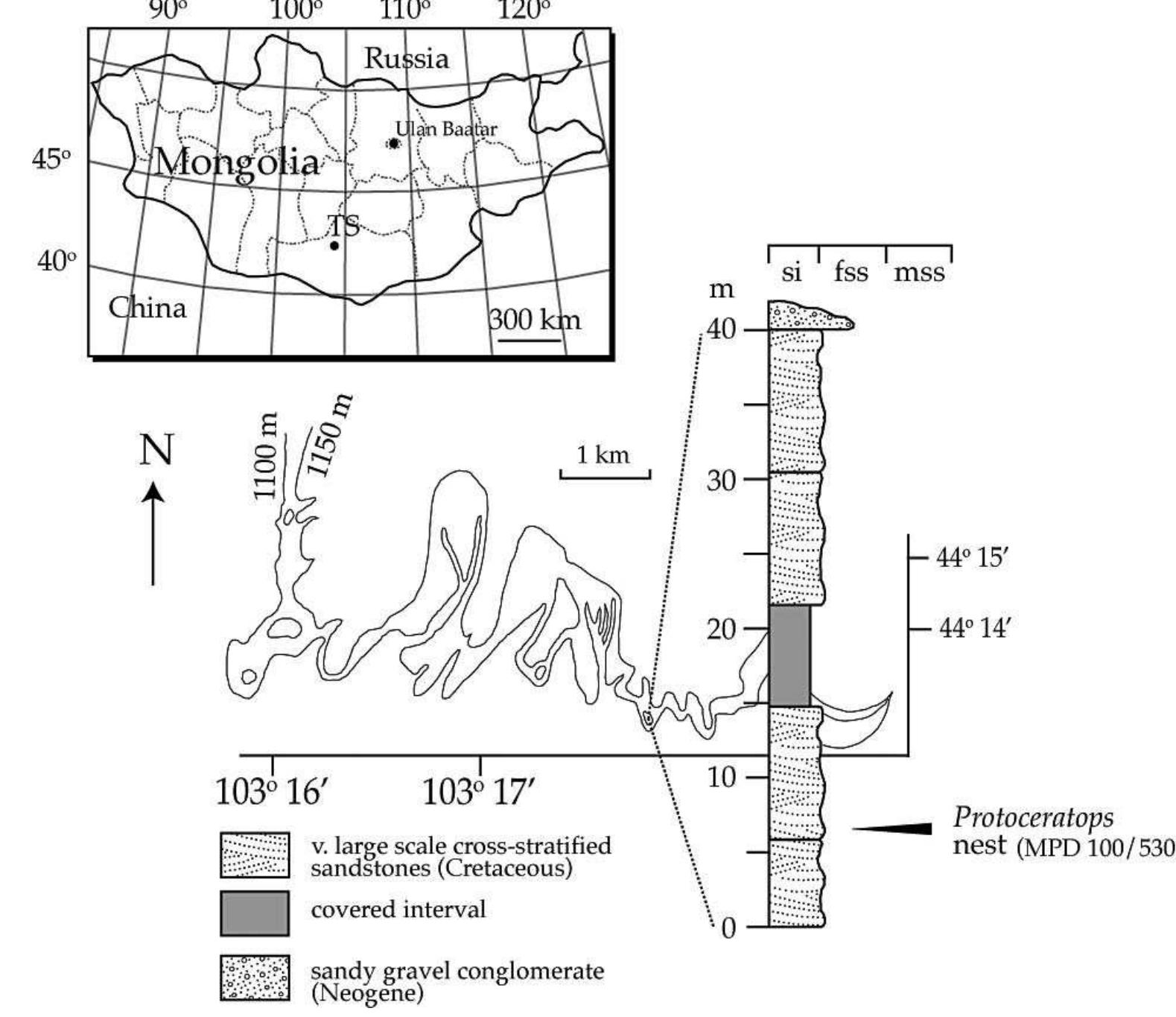
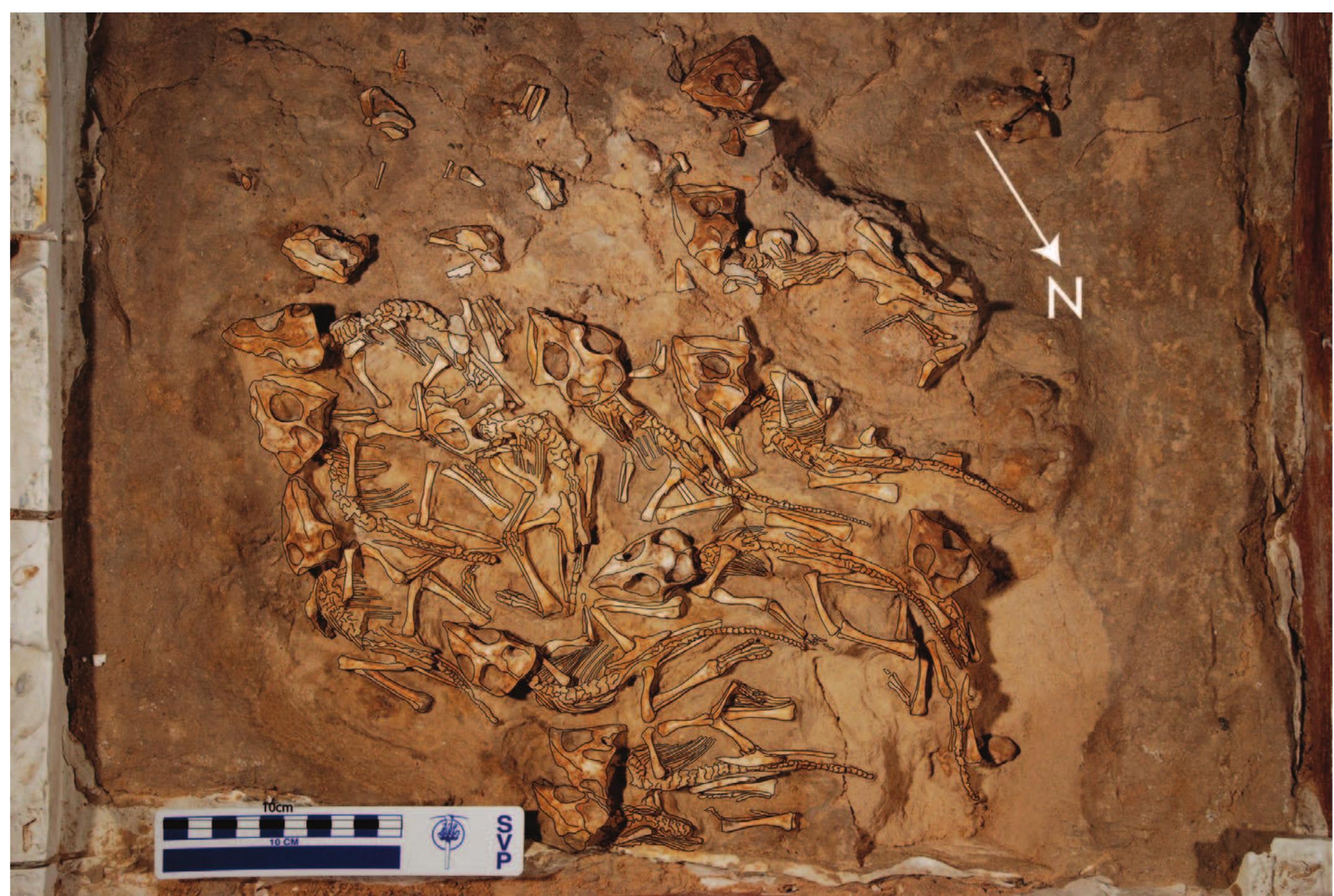
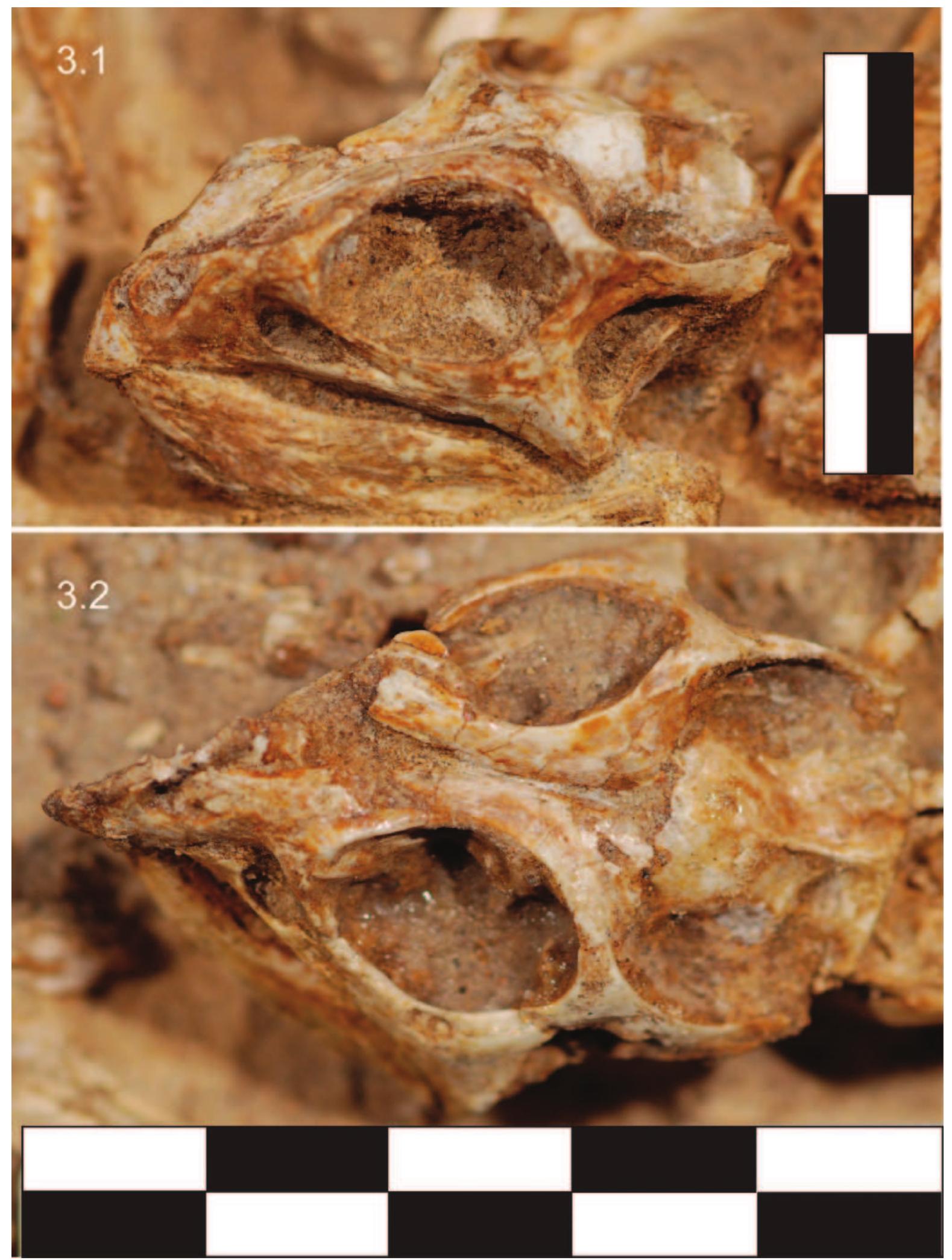
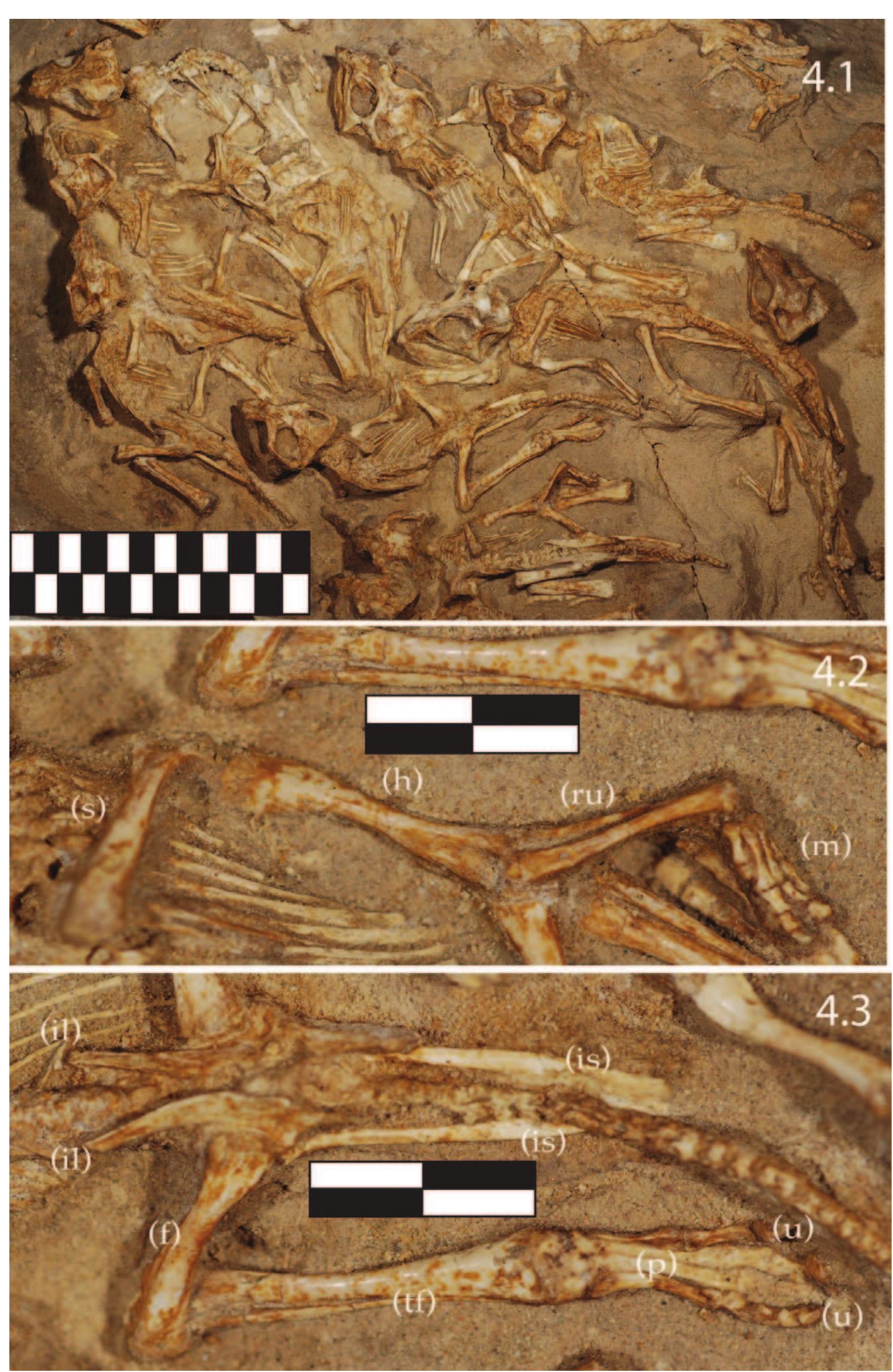
A remarkable specimen of the small neoceratopsian dinosaur Protoceratops andrewsi (Late Cretaceous, Mongolia) reveals the first nest of this genus, complete with fifteen juveniles. The relatively large size of the individuals and their advanced state of development suggests the possibility that Protoceratops juveniles remained and grew in their nests during at least the early stages of postnatal development. The nest further implies that parental care and sociality are phylogenetically basal behaviors in Ceratopsia. Finally, it reaffirms the conclusion that Protoceratops lived (and died) in the sandy aeolian dune fields of the central Asian craton.
Communications Biology
Ceratopsia is a diverse dinosaur clade from the Middle Jurassic to Late Cretaceous with early diversification in East Asia. However, the phylogeny of basal ceratopsians remains unclear. Here we report a new basal neoceratopsian dinosaur Beg tse based on a partial skull from Baruunbayan, Ömnögovi aimag, Mongolia. Beg is diagnosed by a unique combination of primitive and derived characters including a primitively deep premaxilla with four premaxillary teeth, a trapezoidal antorbital fossa with a poorly delineated anterior margin, very short dentary with an expanded and shallow groove on lateral surface, the derived presence of a robust jugal having a foramen on its anteromedial surface, and five equally spaced tubercles on the lateral ridge of the surangular. This is to our knowledge the earliest known occurrence of basal neoceratopsian in Mongolia, where this group was previously only known from Late Cretaceous strata. Phylogenetic analysis indicates that it is sister to all other ne...
Cretaceous Research, 2012
The Djadokhta Formation of the Gobi Desert is known for the number and diversity of dinosaur and other vertebrate bones and skeletons found there, but only theropod, hadrosaur and supposed ankylosaurid footprints have been reported from this stratum. Dinosaur footprints are also noted from the Nemegt Formation, and occur as typical dinosaur track accumulations (tracksites). An articulated protoceratopsid skeleton e specimen ZPAL Mg D-II/3 e was collected by the Polish-Mongolian Expedition of 1965 from the Djadokhta Formation of Flaming Cliffs in Mongolia. Recently, the natural cast of a tetradactyl digitigrade footprint was found underneath the pelvic girdle while the skeleton and matrix were being prepared. This is possibly the first find of a dinosaur track in close association with an articulated skeleton. Although Protoceratops is an extremely common dinosaur in Mongolia, its footprints have never previously been reported from the Late Cretaceous of the Gobi Desert.
PLoS ONE, 2014
Background: Monodominant bonebeds are a relatively common occurrence for non-avian dinosaurs, and have been used to infer associative, and potentially genuinely social, behavior. Previously known assemblages are characterized as either mixed size-classes (juvenile and adult-sized specimens together) or single size-classes of individuals (only juveniles or only adult-sized individuals within the assemblage). In the latter case, it is generally unknown if these kinds of sizesegregated aggregations characterize only a particular size stage or represent aggregations that happened at all size stages. Ceratopsians (''horned dinosaurs'') are known from both types of assemblages. Methods/Principal Findings: Here we describe a new specimen of the ceratopsian dinosaur Protoceratops andrewsi, Granger and Gregory 1923 from Mongolia representing an aggregation of four mid-sized juvenile animals. In conjunction with existing specimens of groups of P. andrewsi that includes sizeclustered aggregations of young juveniles and adult-sized specimens, this new material provides evidence for some degree of size-clustered aggregation behaviour in Protoceratops throughout ontogeny. This continuity of size-segregated (and presumably age-clustered) aggregation is previously undocumented in nonavian dinosaurs. Conclusions: The juvenile group fills a key gap in the available information on aggregations in younger ceratopsians. Although we support the general hypothesis that many non-avian dinosaurs were gregarious and even social animals, we
Journal of Vertebrate Paleontology, 2018
The species Auroraceratops rugosus was originally described based upon a single skull. With the recovery of over 80 individuals, a complete description of the postcranial skeleton is presented. Auroraceratops is currently the most complete exemplar we have of ceratopsian postcranial anatomy between Psittacosaurus and Leptoceratops. Adult Auroraceratops had a length of approximately 125 cm and an approximate hip height of 44 cm. Osteological correlates of stance in the fore-and hind limb unequivocally indicate a bipedal gait. The phylogenetically corrected quadrupedal massestimation equation modified for mass estimation of bipedal terrestrial vertebrates estimates an average mass of Auroraceratops at 15.5 kg. It has the phylogenetically and temporally earliest documentation of the syncervical in Ceratopsia. The mid-caudal neural spines are elongate and erect, a feature previously only known in Leptoceratopsidae and Protoceratopsidae. Despite being longer than in most ceratopsians, the mid-caudal neural spines are not as tall as in some leptoceratopsids. Most of the phylogenetically relevant characters of the postcranial skeleton in Auroraceratops are a mosaic of features plesiomorphic to Neoceratopsia and features previously considered to be unique to later diverging clades, such as Leptoceratopsidae and Protoceratopsidae.
Journal of Vertebrate Paleontology, 2018
Basal neoceratopsians are a relatively diverse group of small-to medium-sized herbivorous dinosaurs from the Early to Late Cretaceous of Asia and North America. Although known for over a century, this group has only relatively recently received intense independent study, tied to the rapid increase in known diversity since 1997. Auroraceratops rugosus is one of these recently discovered species and is one of the best-known basal neoceratopsians, being represented by over 80 specimens, and is also the most completely represented neoceratopsian from the Early Cretaceous. A phylogenetic analysis focusing on non-ceratopsid ceratopsians examines the phylogenetic context of Auroraceratops. The analysis is based on a new matrix of 41 taxa and 257 characters. The results recover an Auroraceratops-Aquilops-ZPAL MgD-I/156 clade within basal Neoceratopsia that is sister to a clade composed of Asiaceratops, Yamaceratops, Mosaiceratops, and the larger clades Leptoceratopsidae and Coronosauria. This phylogeny recovers a monophyletic Coronosauria, Leptoceratopsidae, and Protoceratopsidae. Helioceratops is recovered as sister to the rest of Leptoceratopsidae, Ischioceratops is recovered nested within Leptoceratopsidae, and the enigmatic genus Mosaiceratops is recovered as a basal neoceratopsian, sister to Yamaceratops. Yinlong, and Hualianceratops are recovered in an expanded Chaoyangsauridae, and the genus Psittacosaurus is recovered as the earliest diverging lineage in Ceratopsia. Ajkaceratops, the only European ceratopsian, is robustly recovered as sister to the rest of Ceratopsoidea.
PeerJ, 2019
Protoceratops andrewsi is a well-known ceratopsian dinosaur from the Djadokhta Formation (Upper Cretaceous, Mongolia). Since the 1920s, numerous skeletons of different ontogenetic stages from hatchlings to adults, including fully articulated specimens, have been discovered, but the postcranial anatomy of Protoceratops has not been studied in detail. A new, mostly articulated subadult individual provides an excellent opportunity for us to comprehensively describe the anatomy of the limb skeleton, to compare to other ceratopsian dinosaurs, and to study the ontogenetic and intraspecific variation in this species. New data provided by the specimen shed light on the lifestyle of P. andrewsi. The young subadult individuals present an array of morphological characters intermediate between the bipedal Psittacosaurus and fully quadrupedal adult P. andrewsi. We compare these observations with a broad range of non-ceratopsid Neoceratopsia (of various locomotor adaptations) and Psittacosauridae (obligate bipeds), which gives us insight into the evolution of the skeletal characters informative for the postural change in ceratopsian dinosaurs.
PloS one, 2015
Embryonic remains within a small (4.75 by 2.23 cm) egg from the Late Cretaceous, Mongolia are here re-described. High-resolution X-ray computed tomography (HRCT) was used to digitally prepare and describe the enclosed embryonic bones. The egg, IGM (Mongolian Institute for Geology, Ulaanbaatar) 100/2010, with a three-part shell microstructure, was originally assigned to Neoceratopsia implying extensive homoplasy among eggshell characters across Dinosauria. Re-examination finds the forelimb significantly longer than the hindlimbs, proportions suggesting an avian identification. Additional, postcranial apomorphies (strut-like coracoid, cranially located humeral condyles, olecranon fossa, slender radius relative to the ulna, trochanteric crest on the femur, and ulna longer than the humerus) identify the embryo as avian. Presence of a dorsal coracoid fossa and a craniocaudally compressed distal humerus with a strongly angled distal margin support a diagnosis of IGM 100/2010 as an enantio...
Palaeogeography Palaeoclimatology Palaeoecology, 2006
Although dinosaur eggs were first discovered and identified in the late 1800s, limited attention was given to the scientific value of oological fossils in contrast to observations based on skeletal features. Here, we offer a review of Mesozoic saurischian egg materials, in comparison with extant crocodilians and avians, and their paleobiological interpretation based either on the presence of embryos in ovo or brooding adults on egg clutches. Our study focuses on the eggs of the oviraptorid Citipati osmolka (Mongolia), the troodontid Troodon formosus (North America), the theropod oospecies Macroelongatoolithus xixiaensis (China), the ornithothoracine bird (Argentina), an indeterminate theropod (Thailand), and titanosaurs (Argentina). Results show that (1) many oological characters and reproductive behaviors associated with modern birds are rooted among non-avian theropods, (2) there is a reproductive evolutionary cline from crocodilians to modern birds with (3) a noticeable pattern of coeval development between the accretion of eggshell layers, origination and size increased of larger air cells (inferred from egg polar asymmetry), and brooding/incubating behaviors. Most of these pre-adaptations are grouped in two main clades of the saurischian cladogram: one at the level of Oviraptorosauridae and the other at Troodontidae. Although undeniably these two theropod taxa seem to represent two important phases for the evolution of avian reproduction, the phylogenetic distance between these clades and Titanosauria cannot be ignored. As such, the reproductive features that appeared in concert in oviraptorids might have gradually evolved across more basal theropod clades. Although Troodon formosus by its egg shape and nesting behavior seems to be in this study the precursors of modern avian reproduction, the importance of smallbodied theropods such as those who laid the Phu Phok eggs cannot be dismissed and the eggs of such dinosaurs could suggest a closer phylogenetic ties to Aves than troodontids. At a higher level of inferences, there is a strong possibility that the evolution of these reproductive features is concurrent with profound physiological and metabolic changes that occurred in saurischian dinosaurs throughout their evolution. D 2006 Published by Elsevier B.V.
Acta Palaeontologica Polonica
In 1991, Sabath described “larger avian eggs” from the Upper Cretaceous Barun Goyot and Djadokhta Formations of Mongolia. These were later included in the ootaxon Gobioolithus major. Here we recognize the larger avian eggs of Sa- bath as a distinct ootaxon, Styloolithus sabathi, oogen. et oosp. nov. These eggs differ from those of Gobioolithus in being larger (70 by 32 mm) and more elongate. Microscopically, the shell bears a third layer (possible external zone) thicker than the mammillary layer and nearly as thick as the second layer (possible squamatic zone); the continuous layer (in- cluding layers two and three) to mammillary layer thickness ratio is 3.1:1. Within the clutch, the tightly spaced eggs stand with their long axes steeply inclined. Adult remains are associated with two clutches, suggesting an incubation mode similar to that of troodontid maniraptorans, where adults sat atop largely buried eggs. S. sabathi provides evidence that relative egg size in Mesozoic non-ornithuromorph birds had increased markedly from the non-avian theropod condition in oviraptorids and troodontids, but had not yet reached the modern egg-adult proportions of Neornithes. Sediment-bound upright eggs appear common to Enantiornithes and more basal avians, suggesting that like non-avian theropods, these birds lacked chalazae, the chords of albumen allowing egg rotation in modern birds. Absence of this simple structure may have restricted these basal birds to ground nesting in areas with appropriate substrates and not permitted the type of nesting diversity found in Neornithes. Neornithes are the only Mesozoic clade of Dinosauria to nest completely free of sediment; this may have played a crucial role in their surviving the K-Pg mass extinction event.


The cratcr-like ncst of Protot'erotop.s, a primitivelookin-e ccratopsian dinosaur from the Upper Crctaccous of Mongolia, was first describcd more than 50 ycars ago and thcrealtcr came to be lcgarded as the standard textbook example of a dinosaur nest. The first rcasonably detailed accounts of Lhe Protot'erut.?,r nest. by Granger ( 1936) and by Brown and Schtaikjer ( 1940), were both illustrated witli a rcstoration that was subsequently reproduced in many popular and scientific publications. That lamiliar rcstoration of a cratcr-likc ncst. guarded by the mounted skele-
Geology
Colonial nesting behavior has been inferred in a variety of non-avian dinosaurs based on high concentrations of nests preserved in an area, but sedimentologic and taphonomic evidence demonstrating the contemporaneity of the nests is often lacking. A new nesting site discovered in the Upper Cretaceous Javkhlant Formation of the eastern Gobi Desert, Mongolia, preserves at least 15 egg clutches laid by a probable non-avian theropod, and provides strong evidence for colonial nesting in a non-avian dinosaur. The occurrence of the clutches at the top of a common paleosurface, the distribution of eggshell fragments within clutches, the presence of a consistent two-layer sediment infill within eggs, and a thin marker lithologic unit blanketing all the clutches indicate the clutches were laid and hatched in a single nesting season. Despite the absence of sedimentologic evidence indicative of nest structure, statistical analyses of egg characteristics and facies association reveal the clutche...
The basal neoceratopsian dinosaur Protoceratops hellenikorhinus nov. sp is described on the basis of material discovered by the Sino-Belgian Expeditions in Inner Mongolia, in Campanian (Upper Cretaceous) deposits at Bayan Mandahu (Inner Mongolia, P.R. China). This new species is characterised by its large size and by a series of cranial autapomorphies linked to the important development of the mandibular adductor musculature. The nasal horns and the fronto-parietal depression are better developed in adult males of Protoceratops hellenikorhinus than in P. andrewsi. Ontogenetic data indicate that development of the nasal horns is delayed after the appearance of sexual discriminant characters in P. hellenikorhinus. Two discriminant functions, based on only three measurements, were established: the first one separates the two species of Protoceratops, while the second one separates adult males from adult females and juveniles within the genus Protoceratops. Phylogenetic analysis indicates that the family Protoceratopsidae, including Protoceratops and Bagaceratops, is monophyletic. Basal Neoceratopsia appeared in Asia, then migrated to North America. The following migrations (from Asia to North America but also possibly the return to Asia) could have happened at different loci of the Neoceratopsia phylogenetic tree.
Paleontological Journal, 2013
Enantiornithes is the most speciose clade of Cretaceous birds, but many taxa are known from iso lated postcranial skeletons. Two embryonic enantiornithine bird skeletons of Gobipipus reshetovi gen. et sp. nov. from the Upper Cretaceous (Campanian) Barun Goyot Formation of the Gobi Desert in Mongolia provide new insights into the anatomy, radiation, and mode of development of early avialans. In recent times, both enantiornithine and ornithuromorph birds are known from the Barun Goyot Formation as well as from the Djadokhta and Nemegt Formations. The 80 million year old Gobipipus skeletons encased within eggshells shows several features characteristic of enantiornithine birds. The wing skeleton and shoulder girdle show morphological features indicating that Gobipipus achieved sophisticated powered flight. Gobipipus reshetovi gen. et sp. nov. is quite distinct from the sympatric enantiornithine species Gobipteryx minuta from the same strata in many anatomical features. Phylogenetic analysis of 26 avialan ingroup taxa based on distribution of 202 characters indicate that Gobipipus is a basal member of enantiornithine birds along with Confuciusornis and shares more characters with ornithuromorphs than previously recognized. The embryonic nature of Gobipipus specimens sheds new light on the developmental history of enantiornithine birds. The well ossified bones of the fore and hind limbs, and fusion of many skeletal elements indicate a precocial mode of devel opment in Gobipipus. Apparently Gobipipus hatchlings could walk away from the ground nests as soon as they emerged from their eggs. The asymmetry of egg poles are unique features of Gobipipus eggs (oogenus Gobioolithus) among Cretaceous avialans. The microstructure of the shell in Gobioolithus eggs with the embryos of Gobipipus is typical avian (of ornithoid basic type) and less ratite like in morphology of the spongy layer than is that in the other possible egg remains of enantiornitine birds (oofamily Laevisoolithidae).
Journal of Vertebrate Paleontology, 2011
Integrative Organismal Biology, 2019
SynopsisDinosaur nesting biology has been an intriguing research topic, though dinosaur behaviors were relatively less illuminated because of the constraints of the fossil record. For instance, hatching asynchrony, where eggs in a single clutch hatch at different times, is unique to modern neoavian birds but was also suggested to be present in oviraptorid dinosaurs based on a possible partial clutch of four embryo-containing eggs from Mongolia. Unfortunately, unequivocal evidence for the origination of these eggs from a single clutch is lacking. Here we report a new, better preserved partial oviraptorid clutch with three embryo-containing eggs—a single egg (Egg I) and a pair (Egg II/III)—from the Late Cretaceous Nanxiong Group of Jiangxi Province, China. Geopetal features indicate that the pair of eggs was laid prior to the single egg. Neutron tomographic images in combination with osteological features indicate that the embryo of the single egg is less developed than those of the p...
Proceedings of the Geologists' Association, 1997
Proceedings of the National Academy of Sciences of the United States of America, 2014
The reconstruction and timing of the early stages of social evolution, such as parental care, in the fossil record is a challenge, as these behaviors often do not leave concrete traces. One of the intensely investigated examples of modern parental care are the modern burying beetles (Silphidae: Nicrophorus), a lineage that includes notable endangered species. Here we report diverse transitional silphids from the Mesozoic of China and Myanmar that provide insights into the origins of parental care. Jurassic silphids from Daohugou, sharing many defining characters of Nicrophorinae, primitively lack stridulatory files significant for parental care communications; although morphologically similar, Early Cretaceous nicrophorines from the Jehol biota possess such files, indicating that a system of parental care had evolved by this early date. More importantly, burying beetles of the genus Nicrophorus have their earliest first record in mid-Cretaceous Burmese amber, and document early evol...
PLoS ONE, 2014
Background: Monodominant bonebeds are a relatively common occurrence for non-avian dinosaurs, and have been used to infer associative, and potentially genuinely social, behavior. Previously known assemblages are characterized as either mixed size-classes (juvenile and adult-sized specimens together) or single size-classes of individuals (only juveniles or only adult-sized individuals within the assemblage). In the latter case, it is generally unknown if these kinds of sizesegregated aggregations characterize only a particular size stage or represent aggregations that happened at all size stages. Ceratopsians (''horned dinosaurs'') are known from both types of assemblages. Methods/Principal Findings: Here we describe a new specimen of the ceratopsian dinosaur Protoceratops andrewsi, Granger and Gregory 1923 from Mongolia representing an aggregation of four mid-sized juvenile animals. In conjunction with existing specimens of groups of P. andrewsi that includes sizeclustered aggregations of young juveniles and adult-sized specimens, this new material provides evidence for some degree of size-clustered aggregation behaviour in Protoceratops throughout ontogeny. This continuity of size-segregated (and presumably age-clustered) aggregation is previously undocumented in nonavian dinosaurs. Conclusions: The juvenile group fills a key gap in the available information on aggregations in younger ceratopsians. Although we support the general hypothesis that many non-avian dinosaurs were gregarious and even social animals, we
PloS one, 2016
The chasmosaurine ceratopsid Chasmosaurus is known from the Upper Cretaceous (Campanian) Dinosaur Park Formation of southern Alberta and Saskatchewan. Two valid species, Chasmosaurus belli and C. russelli, have been diagnosed by differences in cranial ornamentation. Their validity has been supported, in part, by the reported stratigraphic segregation of chasmosaurines in the Dinosaur Park Formation, with C. belli and C. russelli occurring in discrete, successive zones within the formation. An analysis of every potentially taxonomically informative chasmosaurine specimen from the Dinosaur Park Formation indicates that C. belli and C. russelli have indistinguishable ontogenetic histories and overlapping stratigraphic intervals. Neither taxon exhibits autapomorphies, nor a unique set of apomorphies, but they can be separated and diagnosed by a single phylogenetically informative character-the embayment angle formed by the posterior parietal bars relative to the parietal midline. Althou...
PloS one, 2015
Embryonic remains within a small (4.75 by 2.23 cm) egg from the Late Cretaceous, Mongolia are here re-described. High-resolution X-ray computed tomography (HRCT) was used to digitally prepare and describe the enclosed embryonic bones. The egg, IGM (Mongolian Institute for Geology, Ulaanbaatar) 100/2010, with a three-part shell microstructure, was originally assigned to Neoceratopsia implying extensive homoplasy among eggshell characters across Dinosauria. Re-examination finds the forelimb significantly longer than the hindlimbs, proportions suggesting an avian identification. Additional, postcranial apomorphies (strut-like coracoid, cranially located humeral condyles, olecranon fossa, slender radius relative to the ulna, trochanteric crest on the femur, and ulna longer than the humerus) identify the embryo as avian. Presence of a dorsal coracoid fossa and a craniocaudally compressed distal humerus with a strongly angled distal margin support a diagnosis of IGM 100/2010 as an enantio...
Royal Society Open Science
Late Cretaceous trends in Asian dinosaur diversity are poorly understood, but recent discoveries have documented a radiation of oviraptorosaur theropods in China and Mongolia. However, little work has addressed the factors that facilitated this diversification. A new oviraptorid from the Late Cretaceous of Mongolia sheds light on the evolution of the forelimb, which appears to have played a role in the radiation of oviraptorosaurs. Surprisingly, the reduced arm has only two functional digits, highlighting a previously unrecognized occurrence of digit loss in theropods. Phylogenetic analysis shows that the onset of this reduction coincides with the radiation of heyuannine oviraptorids, following dispersal from southern China into the Gobi region. This suggests expansion into a new niche in the Gobi region, which relied less on the elongate, grasping forelimbs inherited by oviraptorosaurs. Variation in forelimb length and manus morphology provides another example of niche partitioning...
2021
Many dinosaurs may have shown ecological differentiation between hatchlings and adults, possibly because of the great size differential. The basal ceratopsian Psittacosaurus lujiatunensis is known from thousands of specimens from the Lower Cretaceous of China and these include many so-called ‘juvenile clusters.’ During the early stages of ontogeny, P. lujiatunensis underwent a posture shift from quadrupedal to bipedal, and a dietary shift has also been postulated. In this study, we made a 2D mechanical analysis of the jaws of a hatchling and an adult to determine the differences between the two systems; we found some differences, but these were only modest. The adult was better suited to feeding on tough plant material than the hatchling, based on its higher values of absolute and relative bite forces and higher values of mechanical advantage, but there were no substantial shifts in jaw shape
PeerJ
Three new chasmosaurines from the Kirtland Formation (~75.0–73.4 Ma), New Mexico, form morphological and stratigraphic intermediates between Pentaceratops (~74.7–75 Ma, Fruitland Formation, New Mexico) and Anchiceratops (~72–71 Ma, Horseshoe Canyon Formation, Alberta). The new specimens exhibit gradual enclosure of the parietal embayment that characterizes Pentaceratops, providing support for the phylogenetic hypothesis that Pentaceratops and Anchiceratops are closely related. This stepwise change of morphologic characters observed in chasmosaurine taxa that do not overlap stratigraphically is supportive of evolution by anagenesis. Recently published hypotheses that place Pentaceratops and Anchiceratops into separate clades are not supported. This phylogenetic relationship demonstrates unrestricted movement of large-bodied taxa between hitherto purported northern and southern provinces in the late Campanian, weakening support for the hypothesis of extreme faunal provincialism in the...
2019
ABSTRACTThree new chasmosaurines from the Kirtland Formation (∼75.0 - 73.4 Ma), New Mexico, form morphological and stratigraphic intermediates between Pentaceratops (∼74.7 - 75Ma, Fruitland Formation, New Mexico) and Anchiceratops (∼72 - 71Ma, Horseshoe Canyon Formation, Alberta). The new specimens exhibit gradual enclosure of the parietal embayment that characterizes Pentaceratops, providing support for the phylogenetic hypothesis that Pentaceratops and Anchiceratops are closely related. This stepwise change of morphologic characters observed in chasmosaurine taxa that do not overlap stratigraphically is supportive of evolution by anagenesis. Recently published hypotheses that place Pentaceratops and Anchiceratops into separate clades are not supported. This phylogenetic relationship demonstrates unrestricted movement of large-bodied taxa between hitherto purported northern and southern provinces in the Late Campanian, weakening support for the hypothesis of extreme faunal provinci...
PeerJ, 2019
Protoceratops andrewsi is a well-known ceratopsian dinosaur from the Djadokhta Formation (Upper Cretaceous, Mongolia). Since the 1920s, numerous skeletons of different ontogenetic stages from hatchlings to adults, including fully articulated specimens, have been discovered, but the postcranial anatomy of Protoceratops has not been studied in detail. A new, mostly articulated subadult individual provides an excellent opportunity for us to comprehensively describe the anatomy of the limb skeleton, to compare to other ceratopsian dinosaurs, and to study the ontogenetic and intraspecific variation in this species. New data provided by the specimen shed light on the lifestyle of P. andrewsi. The young subadult individuals present an array of morphological characters intermediate between the bipedal Psittacosaurus and fully quadrupedal adult P. andrewsi. We compare these observations with a broad range of non-ceratopsid Neoceratopsia (of various locomotor adaptations) and Psittacosauridae (obligate bipeds), which gives us insight into the evolution of the skeletal characters informative for the postural change in ceratopsian dinosaurs.
Canadian Journal of Earth Sciences, 2021
Tyrannosaurids were the apex predators of Late Cretaceous Laurasia and their status as dominant carnivores has garnered considerable interest since their discovery, both in the popular and scientific realms. As a result, they are well studied and much is known of their anatomy, diversity, growth, and evolution. In contrast, little is known of the earliest stages of tyrannosaurid development. Tyrannosaurid eggs and embryos remain elusive, and juvenile specimens — although known — are rare. Perinatal tyrannosaurid bones and teeth from the Campanian–Maastrichtian of western North America provide the first window into this critical period of the life of a tyrannosaurid. An embryonic dentary (cf. Daspletosaurus) from the Two Medicine Formation of Montana, measuring just 3 cm long, already exhibits distinctive tyrannosaurine characters like a “chin” and a deep Meckelian groove, and reveals the earliest stages of tooth development. When considered together with a remarkably large embryonic...
Ecology and Evolution, 2020
The fossil record provides ample opportunities for the study of the role of heterochrony at macroevolutionary scales, due to the presence of taxa with larger body sizes and more extreme morphologies than those known in extant biota. For example, the Irish elk Megaloceros gigantaeus, with its giant antlers, is frequently cited as an iconic example of peramorphosis (Gould, 1974). Nonavian dinosaurs (hereafter dinosaurs), some of which reached extreme body sizes, and many of which exhibited bizarre anatomical traits, have also been investigated with respect to heterochronic evolution
Canadian Journal of Earth Sciences
Dinosaurs have attracted varying degrees of scientific and public interest since their initial description in 1824. Interest has steadily increased, however, since the late 1960s when the Dinosaur Renaissance began, and when the Canadian Journal of Earth Sciences started to publish. Since then, there has been a feedback system (international in scope) promoting increased scientific activity and ever-increasing public attention. This has led to ever more dinosaur discoveries internationally; increased numbers of museums and parks displaying dinosaurs; more publications, blogs, and other media on dinosaurs; and (most importantly) increased numbers of people and institutions doing research on dinosaurs. About 30 new species of dinosaurs are now being described every year, adding to the more than 1000 species already known. Furthermore, it is now acknowledged by most biologists and palaeontologists that modern birds are the direct descendants of dinosaurs, and that they are classified a...
Scientific Reports, 2019
A Late Cretaceous-aged multi-taxon nesting site from Romania preserved in three dimensions reveals the earliest example of nest site sharing yet known from the vertebrate fossil record. eggshell and osteological evidence combined in this single accumulation demonstrate that at least four vertebrate taxa including enantiornithine birds and another avian of indeterminate affinities as well as crocodylomorphs and gekkotan squamates nested together in the same place. Colonial nesting in enantiornithines was previously described from this site; here, we present the first fossil evidence that other vertebrates also nested in the same place, perhaps exploiting the presence of the large bird colony. We describe four distinct eggshell morphotypes that have been collected from this site and draw palaeoecological inferences based on this unique multi-taxon nesting association. The eggs, hatchlings, nests, and nesting sites of extinct animals are relatively common in the vertebrate fossil record. Evidence of dinosaur reproductive activities have, for example, been interpreted, or inferred, from deposits that range in age from the Triassic to the Late Cretaceous, and are known from numerous sites around the world (e.g. Mongolia, China, Argentina, Montana, Portugal, and Romania) 1,2. Although it remains debated exactly when 'bird-like' parental care evolved within archosaurs 3-6 , current evidence shows that it was present within non-avialan maniraptoran theropods (e.g. members of Alvarezsauridae, Oviraptorosauria, Dromaeosauridae, and Troodontidae) 7-9 by the latest Cretaceous, 70 million years ago (Mya). Adult oviraptorosaurs are preserved in physical contact with neatly arranged eggs 10 , forelimbs protectively surrounding the clutch 11 , while fossil data shows that some non-avialan maniraptorans and Cretaceous stem-birds embedded their eggs individually into the substrate 9,10,12,13 and produced precocial (fully-independent) young 14,15. Much less information is presently available for other non-avialan theropod dinosaur lineages although evidence is consistent with their use of reproductive modes similar to those of living turtles, crocodiles, or lacertans. However, with just a few exceptions (e.g. Maiasaura) 16,17 , evidence of significant hatchling parental care in dinosaurs is limited, although some groups appear to have nested in large colonies 13,18-20. As far as it is known, both non-avialan theropod dinosaurs and Mesozoic birds had precocial young 2,10,13-15,21-27 ; this contrasts with the altricial 3,28-31 young of many living Aves where energetically demanding parental care is required. These behaviours include, but are not limited to, egg brooding and egg turning, both critical to improve hatching rate 32 , hatchling feeding, and the construction of complex nests 10,33. Most significantly for palaeontological studies, the identifiable bones of precocial neonates have frequently been found in association with fossil eggs while altricial young do not develop hardened bones until after they hatch 3,33. Their soft bones rarely form fossils. The vertebrate record is also dominated by single-species egg and nest associations 1,2 , with a few rare exceptions of in-situ fossil eggs and eggshells (e.g. 34,35). Among extant faunas, however, there are numerous examples of disparate taxa that share nesting areas and even the same nests; the South American gecko Homonota darwinii, for example, often lays eggs alongside nesting cormorants (Phalacrocorax spp.) and gulls (Larus spp.
Scientific Reports, 2019
Avimimids were unusual, birdlike oviraptorosaurs from the Late Cretaceous of Asia. Initially enigmatic, new information has ameliorated the understanding of their anatomy, phylogenetic position, and behaviour. A monodominant bonebed from the Nemegt Formation of Mongolia showed that some avimimids were gregarious, but the site is unusual in the apparent absence of juveniles. Here, a second monodominant avimimid bonebed is described from the Iren Dabasu Formation of northern China. Elements recovered include numerous vertebrae and portions of the forelimbs and hindlimbs, representing a minimum of six individuals. Histological sampling of two tibiotarsi from the bonebed reveals rapid growth early in ontogeny followed by unexpectedly early onset of fusion and limited subsequent growth. This indicates that avimimids grew rapidly to adult size, like most extant birds but contrasting other small theropod dinosaurs. The combination of adults and juveniles in the Iren Dabasu bonebed assemblage provides evidence of mixed-age flocking in avimimids and the onset of fusion in young individuals suggests that some of the individuals in the Nemegt Formation bonebed may have been juveniles. Regardless, these individuals were likely functionally analogous to adults, and this probably facilitated mixed-age flocking by reducing ontogenetic niche shift in avimimids. Avimimidae was an enigmatic, monogeneric family of oviraptorosaurs from China and Mongolia (Fig. 1). Avimimus was first described by Kurzanov 1 and its bird-like morphology immediately confused palaeontologists. Although regarded as a non-avian theropod by Kurzanov 1 , other workers interpreted its mosaic of features as similar to those of a flightless avian 2 , a sauropod 3 , and even an ornithopod dinosaur 3. These apparently contradictory hypotheses led several authors 4,5 to suggest that the holotype may have been a chimaera, a possibility Kurzanov considered himself 4. However, Vickers-Rich et al. 5 argued this claim, and the subsequent discovery of an articulated skeleton 6 indicated that the material did indeed belong to a single taxon. The oviraptorosaurian affinities of Avimimus were first recognized by Maryanska et al. 7 , although their analysis also placed oviraptorosaurs within Avialae, a conclusion no longer supported by broad-scale theropod phylogenies 8,9. Recent analyses 10-12 have recovered Avimimus as an intermediate oviraptorosaur, sister to Caenagnathoidea (=Caenagnathid ae + Oviraptoridae). The rarity of avimimid material and its poor history of description has led to several problems in the understanding of these animals. A series of detailed descriptions of Avimimus portentosus in Russian by Kurzanov 13-17 , and their translations, comprise most of the literature on avimimids. Despite the discovery of numerous additional specimens in the intervening years, few of these have been described until recently. An expedition led by the Hayashibara Museum of Japan collected a nearly complete skeleton including cranial material (MPC-D 100/129) from Shar Tsav in the eastern Gobi Desert of Mongolia, but it has not been described beyond conference abstracts 6. In 2006, the same organization discovered a second skeleton in the Nemegt Formation at Bugiin Tsav, in western Mongolia, the cranium of which was recently described 18. A bonebed of disarticulated avimimids from the Nemegt Formation of Mongolia was discovered in 2006 19 , but was not described until ten years later 20. Subsequent examination of that material determined that it represents a new species, Avimimus nemegtensis, based on a suite of cranial and postcranial differences from the holotype of Avimimus portentosus 21. A second bonebed from the Iren Dabasu Formation of China was briefly described by Ryan et al. 22 , but has not received further attention until now. The general age of the Iren Dabasu Formation is widely accepted as Late Cretaceous, but its precise age is debated. Granger and Berkey 23 indicated a Cretaceous age, but did not speculate
