Academia.eduAcademia.edu

Outline

Design Thinking as an effective Toolkit for Innovation.

https://doi.org/10.13140/2.1.2570.3361

Abstract

The research in this paper is based on a theoretical and practical approach to the concept of Design Thinking, its background, characteristics, process models and toolkit. Alongside the literature review, a qualitative analysis of five well-known models of the Design Thinking process and of ten of the most applied DT tools is made. The paper provides a critical approach to Design Thinking to help the innovation management community to understand better the potential the concept has for implementing and developing creative thinking in business, and in society in general. By describing in a synthetic way the evolution and key elements of the DT concept and its toolkit, the study contributes to the current literature in innovation management, and also provides practical advice.

Key takeaways
sparkles

AI

  1. Design Thinking (DT) integrates human needs, technical resources, and project constraints for innovative solutions.
  2. The paper critiques DT models and tools to aid innovation managers in creative problem-solving.
  3. Abductive thinking, pivotal in DT, emphasizes generating new ideas beyond existing frameworks.
  4. The IDEO HCD model promotes participatory design, involving users throughout the creative process.
  5. Collaboration and visual tools enhance team dynamics and understanding in innovation efforts.
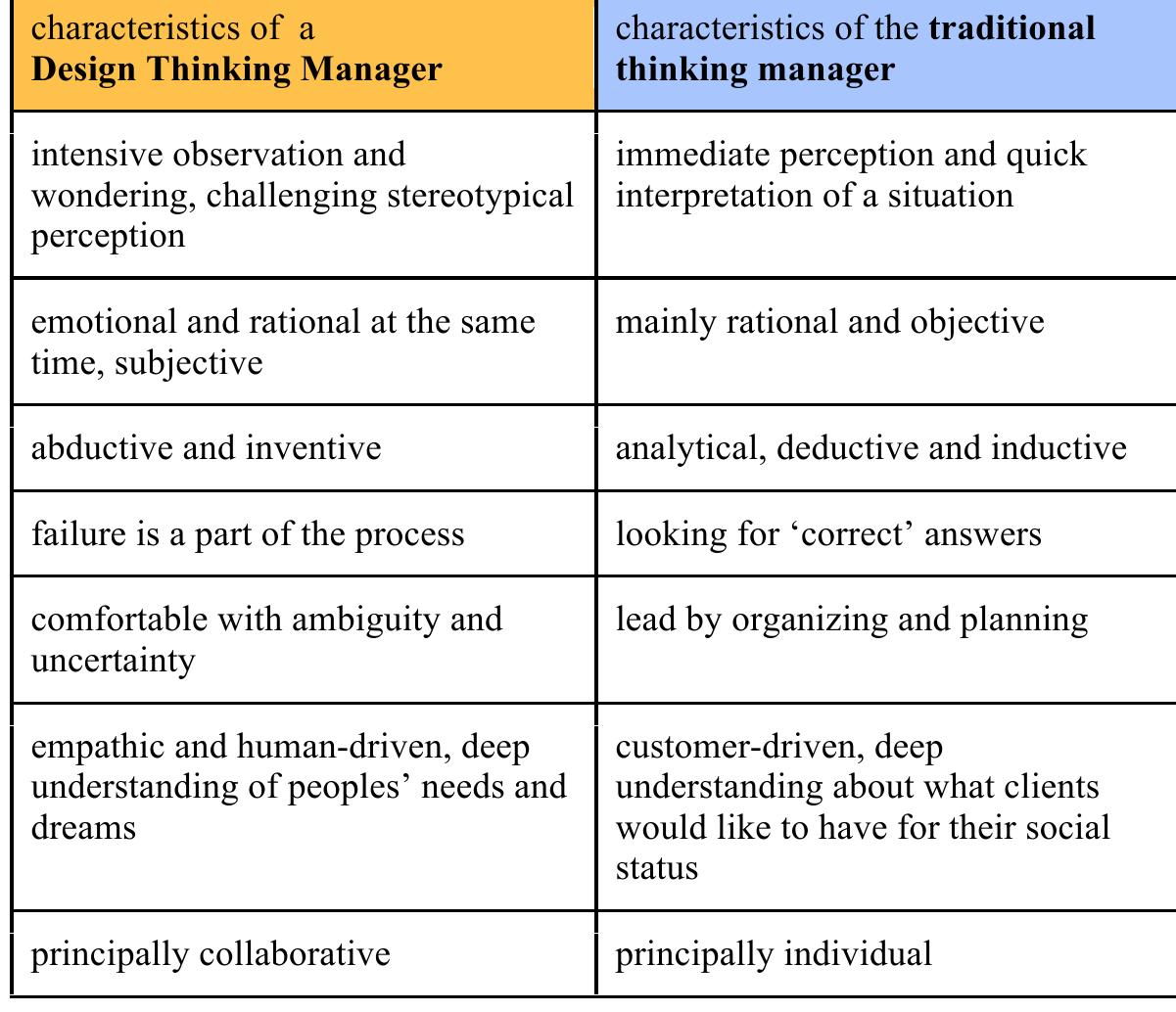
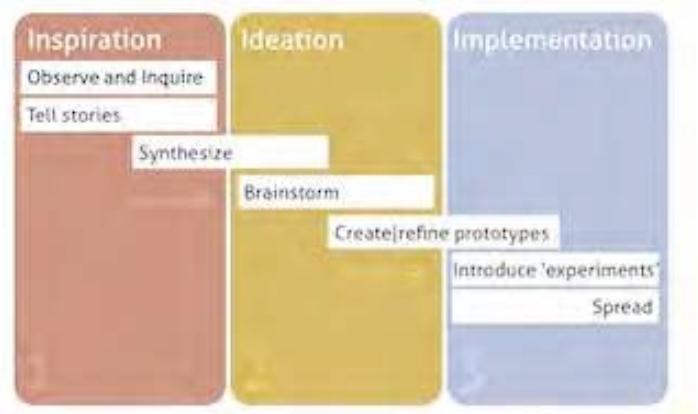
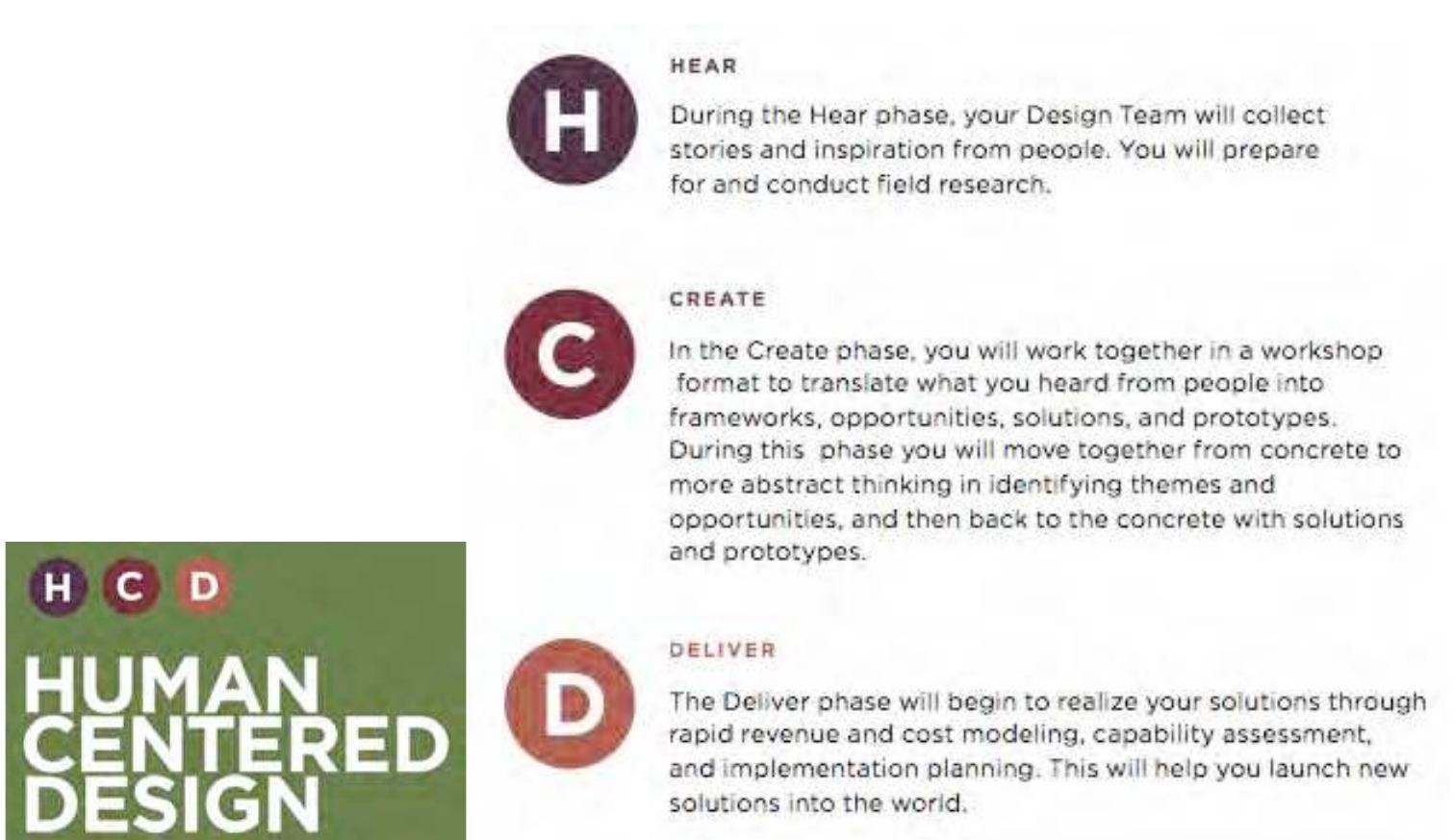
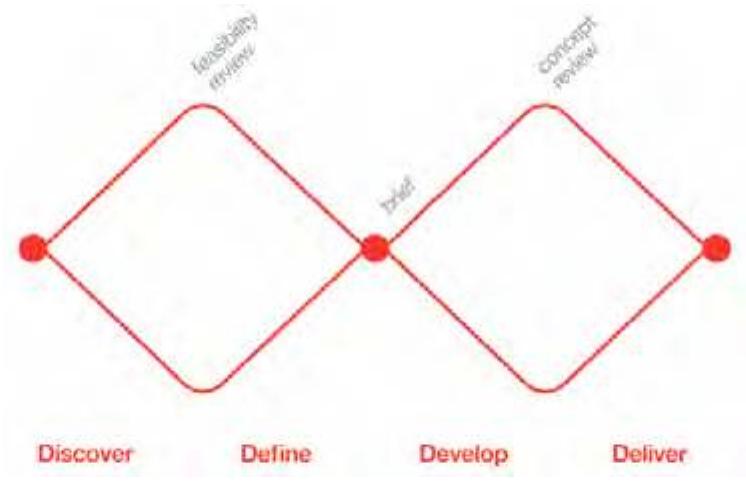
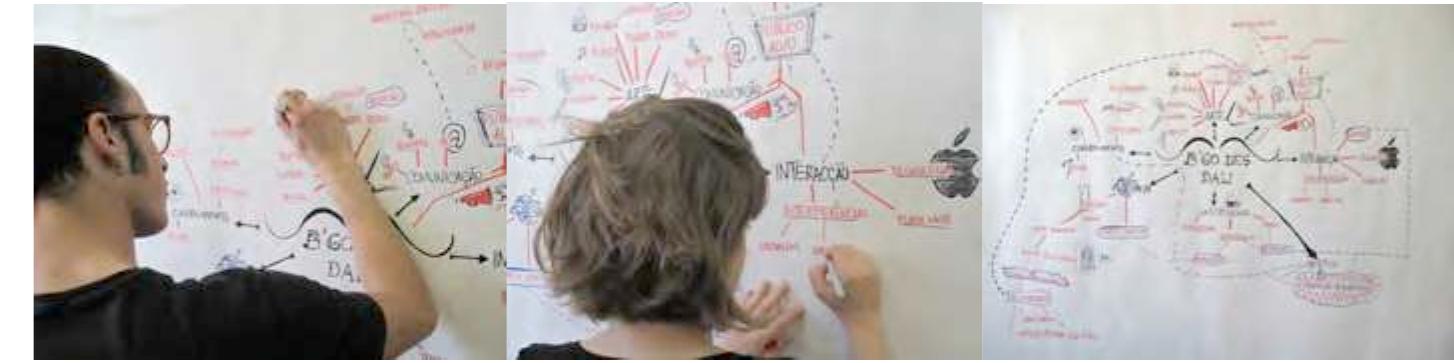
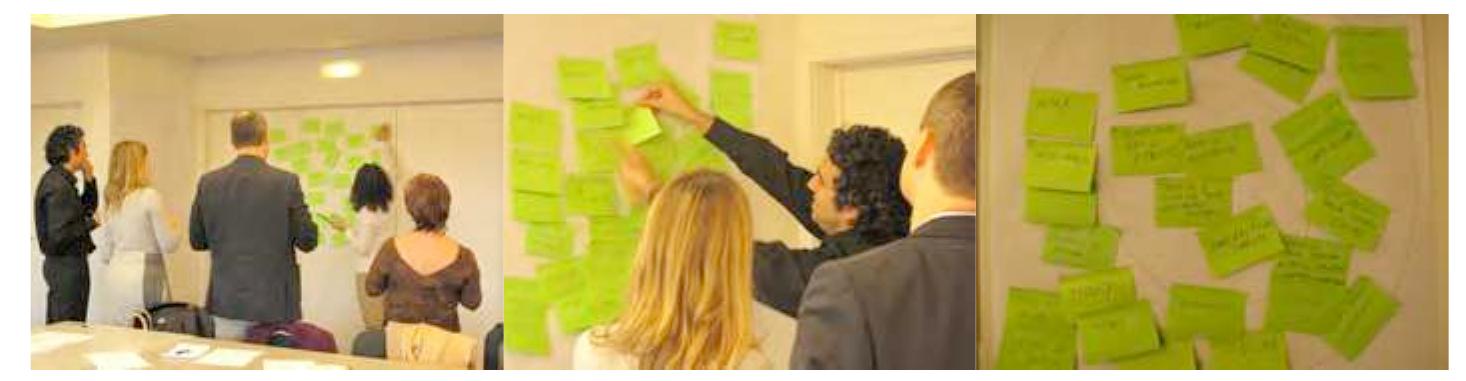
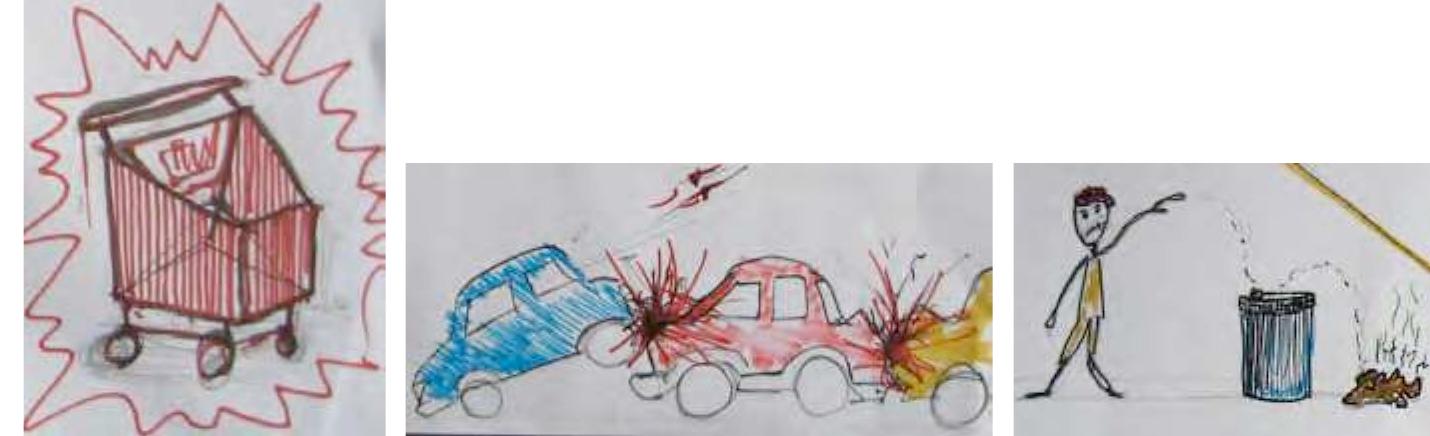
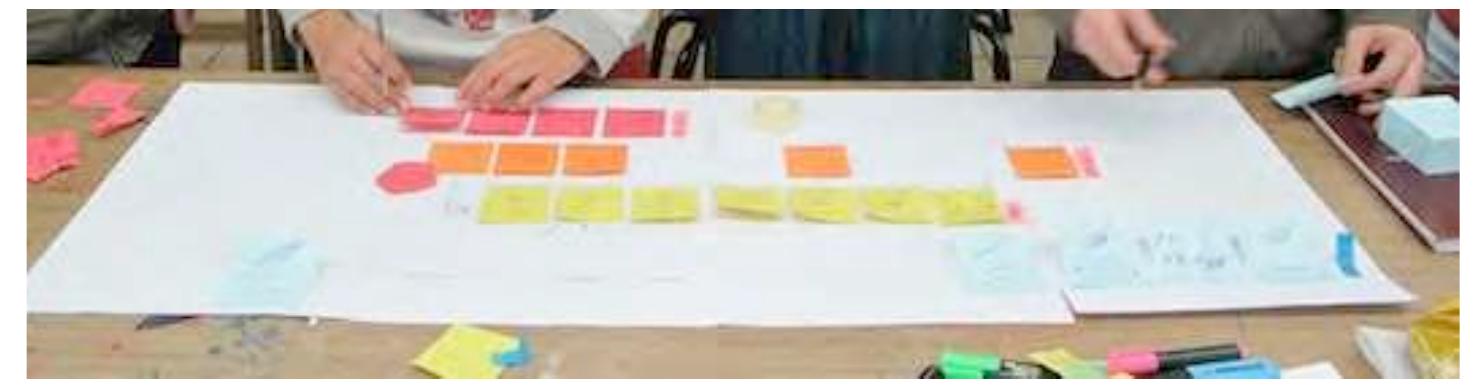
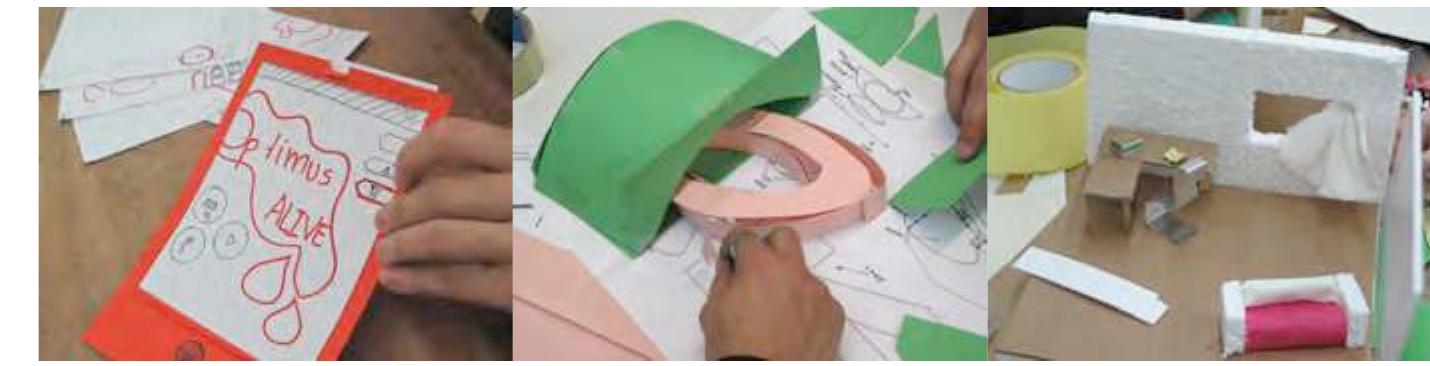
Tschimmel, K. (2012). Design Thinking as an effective Toolkit for Innovation. In: Proceedings of the XXIII ISPIM Conference: Action for Innovation: Innovating from Experience. Barcelona. ISBN 978-952-265-243-0. Design Thinking as an effective Toolkit for Innovation Katja Tschimmel Escola Superior de Artes e Design Matosinhos (ESAD), Av Calouste Gulbenkian, 4460-268 Senhora da Hora, Portugal. E-mail: [email protected] NA’MENTE (Consultancy and Training in Creative Thinking), Rua Padre Xavier Coutinho 61, 4150-751 Porto, Portugal. E-mail: [email protected] Abstract: The research in this paper is based on a theoretical and practical approach to the concept of Design Thinking, its background, characteristics, process models and toolkit. Alongside the literature review, a qualitative analysis of five well-known models of the Design Thinking process and of ten of the most applied DT tools is made. The paper provides a critical approach to Design Thinking to help the innovation management community to understand better the potential the concept has for implementing and developing creative thinking in business, and in society in general. By describing in a synthetic way the evolution and key elements of the DT concept and its toolkit, the study contributes to the current literature in innovation management, and also provides practical advice. Keywords: Design Thinking; innovation; creative process; models; tools; observation; idea generation; visualisation; prototyping; evolution. 1 Introduction Design was always a catalyst for innovation processes in product and service development. But over the last 7 years, with numerous publications about Design Thinking (Brown, 2009; Martin, 2009; Lockwood, 2010; Cross, 2011; Liedtka & Ogilvie, 2011) and the creation of special interest groups in social networks (for example the Design Thinking Group in LinkedIn since 2007), the term has gained popularity in business media and become a label for the awareness that any kind of business and organisation can benefit from the designers’ way of thinking and working (see for example in www.innovationmanagement.se). Today, Design Thinking is understood as a way of thinking which leads to transformation, evolution and innovation, to new forms of living and to new ways of managing business. This is one of the reasons that design schools, such as the Design Department of Stanford University (http:// design.stanford.edu/pd/designthinking.html) or the HPI School of Design Thinking of the University in Potsdam (http://www.hpi.uni-potsdam.de/d_school) offer graduate degrees in Design Thinking. There is no doubt that Design Thinking has much to offer innovation management, but what is still unclear to many managers is the added value of Design Thinking for innovation in practice, and how to evaluate and choose the most effective DT model for their individual innovation practices. 1 To the design community, the new DT concept offers an opportunity in their professional activities: instead of applying their knowledge merely to the creation of new products and services, they can develop new tools which help organisations to move with more creativity and efficiency in innovation processes. 2 The concept of Design Thinking (DT) The emergence and evolution of the concept Two decades before becoming a popular concept for innovation, design thinking (at that time written in lower case) had been defined and studied by an international research group, solely as the cognitive process of designers (Cross, Dorst & Roozenburg, 1992; Eastman, McCracken & Newstetter, 2001). The objective of these studies was to get more insights into the important attributes of Design Creativity. Instead of looking for universal design methods (as the movement of the 1970s had done), research in design thinking is interested in identifying the essential mental strategies of designers while working on a project. The objective of this research was the improvement of the designers thinking abilities in individual and collective design processes, in education and in practice. More recently (2005 - 2012), the concept of design thinking has been stretched, and has broken free from its domain limits. Today, Design Thinking (now written in upper case) is understood as a complex thinking process of conceiving new realities, expressing the introduction of design culture and its methods into fields such as business innovation. Two authors and their books have mainly contributed to the reconfiguration of design thinking: Change by Design: How Design Thinking Transforms Organizations and Inspires Innovation by Tim Brown (2009), CEO of IDEO, one of the world’s most influential design consultancies, and The Design of Business: Why Design Thinking is the Next Competitive Advantage (2009) by Roger Martin, Dean of the Rotman School of Management in Toronto, with a background in management consulting. Although both authors define and describe Design Thinking differently, they both explore its role and potential within organisations. Thus, Design Thinking (DT) is not only now a motor for innovation promoted by designers, but it offers new models of processes and toolkits which help to improve, accelerate and visualise every creative process, carried out not only by designers, but in multidisciplinary teams in any kind of organisation. The new use of the term DT, specifically the combination of "thinking" and "design", offers fields such as Innovation Management the opportunity to apply design tools to other problem-solving-contexts not directly related with the appearance and functionality of artefacts, but with the form of businesses, services and processes. Design Thinking today is not only a cognitive process or a mindset, but has become an effective toolkit for any innovation process, connecting the creative design approach to traditional business thinking, based on planning and rational problem solving. Although we note that the DT concept has declared its independence from the design discipline, and that it is these days more explored in the fields of management and marketing than in design, this doesn’t mean that through the training of design thinking, managers will transform themselves into professional designers. Training managers in the DT process with DT tools means giving them some of the abilities designers have, to 2 identify, to visualise, to solve and to preview problems in a systematic and creative way. And if we differentiate Design Thinking from Design, we leave the whole aesthetic and semantic dimension of product language to the professional designers, and we transport merely the way of thinking in new business possibilities to innovation managers. The main characteristics of Design Thinking Traditionally, design thinking relies on the designer’s capacity to consider at the same time 1. human needs and new visions of living well, 2. available material and technical resources, and 3. the constrains and opportunities of a project or business. The integration of these three factors demands from the designer, the ability to be at the same time analytical and emphatic, rational and emotional, methodical and intuitive, oriented by plans and constraints, but spontaneous (Pombo & Tschimmel, 2005). Some design researchers call this kind of dualistic reasoning designers’ use ‘abductive thinking’ to differentiate it from the rational deductive and inductive reasoning (Martin, 2009; Cross, 2011). Abductive reasoning is a concept developed by the philosopher Charles Sander Pierce, who defended that no new idea could be produced by deduction or induction using past data (in Martin, 2009: 64). Thus, abductive thinking is thinking in new and different perspectives and about future possibilities, which do not fit into existing models. And it is a way of thinking in which feelings and emotions are just as important as rationality. Related to the concept of abductive thinking is the important role of perception in Design Thinking. In earlier work, I defined ‘perceptive cognition’ as a basic skill in the creation of new realities and artefacts. For this reason, I defended that the training of conscious and directed perception, the searching for new nuances, should be the core of design education (Tschimmel, 2007). We can understand perceptive cognition as the complex process of exploiting at one and the same time the stimulus input, and also the reasoning about its properties. Both operations are applied at several points of the creative design process, which is the reason that I developed a model to explain design creativity as a Perception-in-Action Process (Tschimmel, 2011a). This model is merely a way of explaining the creative design process after it has happened, but it is not an operative model to lead an innovation process. Since visual perception is the dominant among the senses, perception in and through images plays a special role in Design Thinking. This is emphasised by several design researchers, such as Goldschmidt, Lawson or Cross. Lawson (1986, 2004) and Cross (2011) suggesting, that designers usually apply sketches, drawings and material models to explore the project problem and solution together. The act of visualising their thoughts seems to clarify designers’ ideas, an observation which Goldschmidt confirms (1991, 1994, 2003). In her various publications on the central role of visual representation in the formation and development of ideas in a design process, Goldschmidt defends that sketching is an extension of ‘mental imagery’. By visualising his thoughts about aspects of the project, the designer expands the problem space of the task, to the extent of including and even discovering, new aspects. According to Cross, thinking in multiple perspectives about future possibilities is difficult to conduct by purely internal mental processes; the designer needs to interact with an external representation. Thus, Cross concludes that visualising ideas through sketching “provides a temporary, external store for tentative ideas, and supports the ‘dialogue’ that the designer has between problem and solution” (Cross, 2011: 12). The activity of sketching is a kind of mental modulation of the problem-solution space of the task the design thinker is working on. Apart from the mental support that visualising offers, the playful aspect of sketching and model making gives pleasure to the designer, which in turn helps his concentration and perceptive sensitivity. In the same way that sketching helps the designer to think and elaborate ideas, early prototyping is another way of visualising and testing new solutions, and thus is a principal, and tool, of Design Thinking. It is a visual manifestation of concepts, the transformation of an idea in a testable model, and thus, according to Liedtka and Ogilvie (2011) indispensable to the creative design process. And as the designer never has enough information about a project, and probably never the crucial, rapid prototyping allows testing of early product or business details, forms and nuances. And as rapid prototyping materials are cheap, it permits early failure. The understanding and acceptance that failure and mistakes are important elements of Design Thinking, differentiates DT from the traditional way of thinking in business. Dealing with incomplete information, with the unpredictable, and with ambiguous situations, requires designers to feel comfortable with uncertainty (Pombo & Tschimmel, 2005). Another fundamental characteristic of Design Thinking is its human-centred approach, which expresses itself in the collaborative way designers work and in participatory methods of co-creation. We are witnessing a shift in attitude from designing ‘for users’ to the human centred approach of designing ‘with users’. In design practice the American design agency IDEO is an excellent example of this change of approach (see Brown 2009 and http://www.ideo.com/work/). Their HCD-model (introduced in chapter 4 of the paper) applied in social innovation processes, foresees the involvement and participation of impoverished communities in the whole design process, from identifying the problems and challenges, to idea generation, prototyping and evaluating the design outcomes. Designers not only develop innovative solutions by working in teams with colleagues (other designers, engineers, marketing specialists, etc.), researchers and stakeholders, but also often in collaboration with the final customers and users of their creations. In the participatory approach, the product user is seen as a ‘partner’ in the whole creative process, from data research on to prototyping the new ideas and design solutions. The general benefit of collaborative Design Thinking is obvious. Besides improving the image of a product, the well-being of the future users and their loyalty to the brand, co-creation increases the effectiveness of creative and innovation processes. In the design process users are considered as experts - experts in their interactions with, and experiences of, determined products and services. The following table compares the main characteristics of Design Thinking with the way of thinking a traditional manager applies. It shows side by side the changes in thought processes that managers have to make if they are to think as designers. Table 1 How could Managers think like Designers? characteristics of a characteristics of the traditional Design Thinking Manager thinking manager mainly visual, use of sketching and mainly verbal, use of diagrams and prototyping tools tables 4 characteristics of a characteristics of the traditional Design Thinking Manager thinking manager intensive observation and immediate perception and quick wondering, challenging stereotypical interpretation of a situation perception emotional and rational at the same mainly rational and objective time, subjective abductive and inventive analytical, deductive and inductive failure is a part of the process looking for ‘correct’ answers comfortable with ambiguity and lead by organizing and planning uncertainty empathic and human-driven, deep customer-driven, deep understanding of peoples’ needs and understanding about what clients dreams would like to have for their social status principally collaborative principally individual Source: Conceived by Katja Tschimmel for this paper. 3 Models of the Design Thinking Process Following on from classical design methodology, the design process has been divided into several stages to facilitate the planning of project tasks, collective and production activities, and timetables. The first references to a multiphase structure of the creative process in general, go back to Poincaré (1924), who through his reflections on his own creative thinking process in solving mathematical problems, gave the impulse to Wallas (1926) to divide the creative process into four phases: the preparation phase, the incubation, the illumination and the verification phase. This classification was the starting point of the research movements into design creativity, which looked for new models to best describe the phases of a creative problem solving process. The objective of this research was, and remains, the development of methods, which can guide the individual successfully and mean-fully through a creative process in design. As shown by several design researchers, the classification and respective visualisation of the different phases of the design process depend mainly on the methodological paradigm in which the creative process in design is analysed and described (Dorst & Dijkhuis, 1995; Dorst, 1997; Tschimmel, 2011a). In design methodology, we witnessed a change of paradigm in the 1980s, from the rational and analytical paradigm, to the holistic paradigm of the emergence of design solutions. The Problem Solving paradigm changed to the interpretation of the design process as a Reflective Practice (Schön, 1983) and as a Co- Evolution of the Problem-Solution Space (Dorst & Cross 2001). In the new Design Thinking Movement the Problem-Solving approach is still dominant, but in a holistic, non-linear way (see for example in Brown, 2009; Martin, 2009 or Liedtka & Ogilvie, 2011). Instead of process phases or stages, most of these models describe the Design Thinking process as a “system of overlapping spaces” (Brown & Wyatt, 2010: 33) and as an iterative process (Stickdorn & Schneider, 2010: 122), and thus we can also assign them to the new design paradigm of emergence. In the domain of Design Thinking applied in business and innovation, several process models have been published and defended as the most appropriate. Some of the best known models are the 3 I model (Brown & Wyatt, 2010) and the HCD model (http://www.ideo.com/work/human-centered-design-toolkit), both developed by the design agency IDEO, the Double Diamond model from the British Design Council (http://www.designcouncil.org.uk), the Design Thinking model of the Hasso-Plattner- Institute (http://www.hpi.uni-potsdam.de/d_school/designthinking) and the Service Design model proposed by Stickdorn and Schneider (2010). In the following, these models will be introduced and discussed, so that innovation managers can form an opinion about the model which they feel most comfortable about integrating into their creative working processes. IDEO’s 3 I Model The DT model of 3 I’s (Inspiration, Ideation, Implementation) was developed by IDEO in 2001 in the context of social innovation. As the design agency was increasingly being asked to work on problems far removed from traditional design (health care, learning environments, etc.), they wanted to distinguish this new type of experience oriented design work from industrial design (Brown & Wyatt, 2010). Inspiration, the first Design Thinking space of the model, includes the following design activities: the identification of the design problem or opportunity, the elaboration of the design brief to give the design team a framework, and the observation of the behaviour of the target group in their daily living environment. After identifying the context by observation and design research, the Ideation space of the Design Thinking process starts: an interdisciplinary team goes through a process of synthesis in which they distil what they have observed and learned, into insights that lead either to opportunities to change, or immediately to new solutions (id. ibid.: 34). During this brainstorming process, visual representations of concepts are encouraged, to help others to understand complex ideas. The third space of the IDEO DT model is Implementation, the space in which the best ideas are turned into a action plan. According Brown and Wyatt (ibid.), prototyping is the core of the implementation process. Through prototyping, new ideas and material solutions are tested, iterated and improved. After the final product or service has been created, the last activity of the implementation space is the development of a communication strategy, to help communicate the solution inside and outside the organisation. Figure 1 The DT model of 3 I’s (recreated from the bad quality example available in http://www.flickr.com/photos/9698909@ N02/, 02/05/2012). 6 On the positive side of IDEOs’ 3 I model is its easy memorable name and its associated spaces of acting, and that it was the first model, based on an acronym, on the market. The weak point of this model is in my opinion the terms used for the two first spaces, Inspiration and Ideation. Because of the etymological significance, they can lead to wrong interpretations: ‘Inspiration’ leads us to the false impression of easily formed ideas and an artistic approach of the creative process. ‘Ideation’ etymologically limits the second phase to idea generation, excluding the material and technical contributions to new ideas and concepts. We can even get the impression that the 3 I model does not describe the whole design process, but only the phase of idea generation, in which we must first observe human behaviour to get inspired, then generate ideas through combining the observed elements in new concepts, and finally develop a strategy to realise the new concept in practice. But this 3 I interpretation would exclude a lot of essential moments of the design process. IDEO’s HCD Model In response to a call from the Bill & Melinda Gates Foundation, IDEO developed another DT model as a toolkit for NGOs and social enterprises that work with impoverished communities in the developing world (Brown & Wyatt 2010). The kit is also based on 3 spaces which IDEOs’ designers find essential for an human-centred design process and which form the acronym HCD: Hearing, Creating and Delivering. In this process, the user is lead through a participatory design process, which is supported by activities such as building listening skills, running workshops, and implementing ideas (available in http://www.ideo.com/work/human-centered-design-toolkit/, 10/09/2011). The HCD- toolkit is available as a free download at the recently developed online platform HCD Connect (http://hcdconnect.org/, 02/05/2012). In the introduction of the toolkit (p. 2) we can find the following explanation of the HCD approach: “Human-Centered Design (HCD) will help you hear the needs of constituents in new ways, create innovative solutions to meet these needs, and deliver solutions with financial sustainability in mind.” The HCD model is composed of a kit of DT techniques, organised into the 3 process spaces, and all illustrated by examples of real projects in impoverished communities in Africa or India. There is even a facilitator version of the toolkit. The introduction also includes four possible scenarios in which to apply the method (pp. 13-16). Personally I don’t think that designers or interdisciplinary teams are using the toolkit as a rigid method to follow. But what I really appreciate in the HCD model is the invitation to choose some of the tools, which are explained in a project context. I think the HCD- toolkit a very good source from which to get more ideas about how to work in a collective design process, regardless of the social context of the design project. In comparison with the 3 I model, the HCD model is a lot more complex and comprehensive. The double meaning of the acronym HCD happily embraces the human centred design approach and the 3 spaces of the creative process. And the etymological associations of Hear, Create and Deliver are in my opinion much more appropriate to describe creative design thinking and process than Inspiration, Ideation and Implementation. Figure 2 The description of each of the 3 steps of the HCD model (available in http://www.ideo.com/work/human-centered-design-toolkit/, 10/09/2011). The Model of the Hasso-Plattner Institute Another DT model, similar to IDEOs’ 3 I, developed in an educational context, is the Design Thinking model of the d-school of the Hasso-Plattner-Institute at University of Potsdam in Germany, an institution directly connected with Stanford University and IDEO. In their model, based also on process experience from IDEO, the design thinking process is visualised in six steps, which are connected by curved lines to indicate that each step is performed in iterative loops. According to Thoring & Müller (2011), in the first step of the model, Understand, existing information about the topic is gathered through secondary research. The second stage, Observe, is based on a qualitative research approach that includes interviewing and observing techniques, to collect insights about the users’ needs (id. ibid.: 38). Through storytelling the insights are then shared among the group and subsequently synthesised into a visual framework called Point of View which reflects the user’s perspective. The stage of Ideation corresponds completely with the Ideation phase of the 3 I model. The next two steps Prototype and Tests contain the same activities and considerations as the Implementation space of the 3 I model. We could observe that the three models presented here are very similar in their space- phase sequences. Better than the other two models from IDEO, this model from the Hasso-Plattner Institute shows that the stages of a design process are not always undertaken sequentially, but that projects may loop back to earlier phases. The reason that this model is not so well known as the first two models is that there is no easily memorable name related to the phases. Thus, it is not so easy to promote. 8 Figure 3 The Design Thinking Model of the Hasso-Plattner-Institute (available in http://www.hpi.uni-potsdam.de/d_school/design_thinking/components.html?L=1, 10/09/2011). The 4 D or Double Diamond Model of the British Council The Double Diamond design process model, developed at the Design Council in 2005, is graphically based on a simple diagram describing the divergent and convergent stages of the design process, which gives the model the form of a double diamond (http://www.designcouncil.org.uk/about-design/How-designers-work/The-design- process/, 03.05.2012). The model is also called 4 D model because the name of each phase starts with a ‘D’: Discover, Define, Develop and Deliver. What differentiates this model from the one of 3 I’s or the HCD is the visual mapping of the divergent and convergent stages of the design process, characteristic for design thinking. Figure 4 The 4 D Model or ‘Double Diamond’ design process model, developed by the Design Council (http://www.designcouncil.org.uk/designprocess, 03/05/2012). The first quarter of the Double Diamond represents the initial divergent part of the project, the Discovery phase, in which the designer is searching for new opportunities, new markets, new information, new trends, and new insights. The second quarter, which closes the first Diamond, marks the Definition stage, a kind of filter where the first insights are reviewed, selected and discarded. The Define stage also covers the initial development of project ideas, in which the designer must engage with the wider context of the identified opportunity. The key activities during the definition phase are project development, project management and corporate sign-off, all described in detail at the Design Council site (http://www.designcouncil.org.uk/about-design/How-designers- work/The-design-process/Define/). The third quarter of the Double Diamond represents the period of Development. As in the Develop stage the project has been taken through a corporate and financial sign-off, we find ourselves again in a divergent period. Design- led solutions are developed, iterated and tested within the company by multi-disciplinary teams and under the use of DT tools such as brainstorming, sketches, scenarios, renderings or prototypes. In the last phase of the 4 D model, the convergent Deliver stage, the final concept is taken through final testing, signed-off, produced and launched. Every phase of the Double Diamond design process is much more detailed and complex than we can show here in this paper, and of course we can say the same for the other models. Of all the models presented here, the Double Diamond is the more complete one, probably because it was produced for designers’ use, while the other three models have been created with business and management in mind. Also the visual name, the diamond, and the possibility of using the acronym of 4 D’s is a positive argument for this model. For the introduction of Design Thinking to business and innovation management environments, perhaps the model is a little too complex to be easily used in workshops or facilitation processes. But for young designers, it is in my opinion the most interesting one to work with, as it is also for interdisciplinary groups. The Service Design Thinking (SDT) Model Another way of describing the Design Thinking process is as an iterative process, as it is in the Service Design Thinking model published by Stickdorn and Schneider (2010). The model is composed of the following phases: 1. Exploration (understanding the culture of the customer and the real service problem, and visualising the context), 2. Creation (generating, testing and retesting ideas and concepts), 3. Reflection (building on ideas and concepts, prototyping, and thus closely related to stage 2), and 4. Implementation (communicating and testing the new concept, improving the prototype). The authors point out that although it is possible to give an outline structure to the service design process, it is a non linear process, because it is iterative (id. ibid.: 124). In harmony with the paradigm of emergence, Stickdorn and Schneider emphasise that the first step of any SDT process is to design the process itself, since the process depends on the context of the service being created, and thus is different from project to project. The process which is described by service design researchers as a specific Service DT process is, in the same way as the process of DT, up to date and further developed variation of the Creative Problem Solving process with influences from the paradigm of emergence, adapted to the service area. The main difference is that the outcome from the SDT method is a process with interactions and not a finished product: services need to be understood and visualised as a sequence of interrelated actions, and thus the creative design process has to consider aspects of the whole dynamic of the system. As the SDT model was specially conceived for the service design field, it is in my opinion the most appropriate method for innovation managers working in the service area. The book related to the model, This is Service Design Thinking. Basics - Tools - Cases (Stickdorn & Schneider, 2010) gives a very good overview about the principals and tools to apply in service innovation processes, but it is not detailed enough to enable non-designers to work with these tools in creative processes without a professional facilitator. 10 A Conclusion From the methodological point of view, this study belongs to the research paradigm of constructivism. The constructivist perspective, that all knowledge is dependent on the social actors and the environment of the interaction, leads us to multiple interpretations of the DT models here presented; there is nothing objectively 'true', only meaning, depending on the disciplinary background of each professional who is involved in a innovation process. This is the reason why the assessment of the value of each DT model has to be done by each innovator himself. The opinions I gave about every model are only my opinions, somebody coming from a design and creativity background. There is no universal best DT process model, the choice innovation managers make depends on their disciplinary background and their personal taste. Criteria used to choose the more appropriate process model include, amongst others, the characteristics of the innovation task, its context, the number and composition of the team and its dynamic, and the available time for the innovation process. Although it can be misleading to synthesise the Design Thinking process into three, four or six steps or spaces, the advantage of these models is that they are making the DT process more accessible and explicit, easily understandable and applicable in organisations and business. In comparison to the classical design methods or the CPS approach of the 1970‘s, the focus of these process models is on the graphic synthesis of the dynamic and phases of the DT process, and the integration of the wide range of techniques and tools which have meanwhile been developed and which can help to make the creative process a lot more fluid and effective. Above all when applied in interdisciplinary groups and in situations in which the user enters the creative process. All DT tools presented in the next chapter could be integrated in every one of the DT models presented here. 4 Classification of the Design Thinking Tools The tools designers use to quicken and free up their thinking process, and to make their own internal dialogue and their communication with stakeholders more effective, didn’t all originate from the design field itself. Design, as a multidisciplinary field, took its methods and tools from several knowledge fields, such as from the arts, engineering, anthropology, psychology, etc. But most of the visually related tools, such as drawing, sketching, mapping, prototyping, etc., stretch right back to the beginning of design education, so we can say that they are design specific. These tools are so essential, because they enable the designer to inquire about a future situation or solution to a problem. They also serve to transform abstract immature and unrealised ideas into something to build on and to discuss with colleagues and other stakeholders. The method of Brainstorming and its variants Brainwriting and Brainsketching and the intensive use of Post It’s in idea generation processes come from design related disciplines such as publicity and marketing. They are based on collective processes and help participants to think more flexibly and radically. Other DT tools such as Audience Observation, Ethnography, Personas, Empathy Maps or Focus Group, important tools for the human- centred approach of design, can be linked to anthropology and the study of human interaction with social groups. In the following I will outline ten types of the most used DT tools, classifying them in relation to the phase-space inside the design process where they are applied: Tools for observing, getting empathy and clarifying the project task The basis of the human-centred approach of design is the idea of intense observation (with all the senses) and empathy. To understand better the essence of a project task or problem, designers try to get the widest possible range of information about the users of their future products. The research frequently starts with the review of existing literature on the project subject and context. Observation techniques, in-depth interviews with those observed, photographs and other visual registers and interpretations of the context of the users, are most important for getting empathy and for clarifying the project task. They are also vital for later use as an impulse for idea generation. 1. Observation and register on place There are many kinds of observation techniques, which are distinguished by the following characteristics: structured or unstructured, disguised or undisguised, natural or contrived, personal or mechanical, participant or non-participant (Collins, 2010: 132). The version of tool the designer is composing (and sometimes renaming), depends on the context in which the observation takes place: if the behaviour observation takes place in a natural or artificial environment, if the people are informed that they are being observed or not, if the researcher becomes part of the group that is being investigated or not, etc. In Service Design, observation tools got names such as Service Safaris (going out to explore good and bad service experiences) or Shadowing (immersion in the life of a customer) (Stickdorn & Schneider, 2010: 154). Every kind of observation demands and involves registration by photography or recording the behaviour pattern of people, objects and situations in a systematic way, to make it possible to learn from it. A very useful tool for learning from the outcome is Self-documentation: the user/customer observes himself guided by an outline, registering his observations in a diary, by photography or by video. The register can even be made through a mobile phone and send as a note, photo or film to the researcher (Mobile Ethnography). 2. Mind Maps and other kind of Information Maps Mapping, the systematic organisation of complex information in a communicable visual form, is a process of looking for patterns and extracting meaning from the quantity of collected information, by literature review, by observation or by interviews. The visualisation of collected information about a project not only helps to communicate inside a group, but also to give new insights about the project. Each visual interpretation of collected information is a synthesis, and serves as an impulse to new reflection. Maps, graphic representations of space or relationships of ideas or images can be simple Diagrams, Charts, verbal or visual Associograms (Affinity Map and Empathy Map), Expectation Maps (Stickdorn & Schneider 2010), complex Infographics as we can find in Complexity (Lima, 2011) or process maps, such as the Journey Map, a graphic representation of the customers’ experiences (Liedtka & Ogilvie, 2011). The use of different colours, lines, forms and the introduction of sticky-notes or photographs help to make the content of an information map more meaningful and a better stimulus for new perceptions. The kind of mapping managers probably know best, is the Mind Map, a method developed by Tony Buzan (Buzan & Buzan, 1993). Being simultaneously a verbal and visual tool, Mind Maps are very useful in the compilation of ideas and information, since 12 each keyword can be associated with other words and images. Starting from a central topic/theme, a Mind Map consists of labeled twigs and branches, which represent relationships. In its preparation, colours, images and symbols should be used to stimulate associative operations and to make the outcome of the Mind Map clearer and more legible. Mind Maps can be realised individually or in groups, as process maps or as concept presentations. Figure 5 Example of a group Mind Map, realised by students of the 2nd year at ESAD - School of Art and Design in Matosinhos, Portugal to explain a concept to their colleagues. 3. Personas and Empathy Map By applying the tools Personas and Empathy Maps, designers try to understand and interpret the perspectives of end users and the problems they face. Personas is a tool based on fictional characters, which helps to make the abstract idea of a group of users personal and human. Created out of the insights from observational activities, Personas permits certain attributes of the user of a product or service to be exemplified. A persona is not a representation of a concrete target group, but seeks to reveal deeper insights into the various kinds of experiences that users are having, with the objective of being an impulse for the generation of ideas about how to improve those experiences (Liedtka & Ogilvie, 2011: 56-73). The Empathy Map is a visual tool to organise the information got from Personas and/or through observation and interviews. To make the Map, designers work in a team, sometimes with the presence of potential customers. The objective is to have a visual impulse to reflect and discuss the perspective of a user, his influences, needs, emotions, desires and fears, related to the context of the project. Figure 6 Examples of Empathy Maps, realised by students of the 2nd year at ESAD - School of Art and Design in Matosinhos, Portugal. Tools for Idea Generation and Experimentation Probably, the DT tools for idea generation and experimentation of solutions through visualisation are the tools best known and applied by managers. There can be nobody working with innovation processes, who never participated in a Brainstorming session or never expressed an idea by a quick sketch. But even so, managers still can learn from the way designers work with Brainstorming tools, sketches or other visual thinking tools. 4. Brainwriting and Brainsketching Brainstorming sessions, as we all know, consist of a participatory idea generation session, without discussing the ideas or thinking them through to the end. The objective is to produce a large quantity of ideas in a short time, where emotions and intuition are more important than rational thinking. Although there are many groups who work enthusiastically and with great success with Brainstorming, there are also people who do not feel comfortable with the method in its traditional version. The reasons are, amongst others, the predominance of verbal communication and presentation of thoughts aloud; the presence of experts in the group, whose ideas strongly influence the other members, the reserved attitude of the more timid; inhibition of presenting unusual and fanciful thoughts, the frequent temptation to start discussions about the issues, the intense dependence on the moderator. Because of these drawbacks in classic brainstorming, variants arose such as Brainwriting and Brainsketching (production of ideas through drawings, made by the participants or the moderator). In the Brainwriting or Brainsketching version with Post-its’ all participants write or draw each idea on a Post-it, which they stick to the wall or large sheet of paper (see Fig.7). This procedure allows every participant to think more profoundly without the immediate influence of other associations. Each new Sticky note on the wall serves as a stimulus for new ideas. The advantage of this variant of Brainstorming is not only the procedure of visualising ideas, but also the facility of organising and categorising ideas, with or without a moderator. The Post-it variant is also the one, which best permits an emergent assessment, with for example the Target tool (Tschimmel, 2011b). As shown in the photographs, concentric circles are drawn on a paper. At the end of the evaluation process, the ideas with more potential should be in the interior of the target. Everybody is permitted to move and remove Post Its’, but in a limited time frame. Figure 7 Examples of a session of Brainwriting in a sensitisation workshop, realised by the author at INESC Porto, Portugal in 2011. 14 5. Sketching As we saw in chapter 2, the transformation of ideas and information into images plays a special role in Design Thinking. Some authors even call visualisation tools “the mother of all design tools”, because they are used in every stage of a DT process (Liedtka & Ogilvie, 2011: 49). Particularly for generating new ideas and perspectives, sketching, rapidly executed freehand drawing, is essential to make ideas tangible and concrete. Sketches don’t have to be sophisticated, simple drawing on a whiteboard or big paper can be a powerful tool to explain, clarify and discuss ideas. Figure 8 Examples of simple sketches, realised by students of the 2nd year at ESAD - School of Art and Design in Matosinhos, Portugal. 6. Visual and Semantic Confrontations Thinking of new combinations is one of the main strategies of Design Thinking. The underlying principle in the tools of semantic and visual confrontation is the alienation of customary perspectives and stereotypes (Tschimmel, 2011b). The most original ideas arise when elements of one knowledge domain are combined with elements of another knowledge domain, distant from the first. It is a diversion of attention to other areas, which later, with other associations in mind, returns to the initial problem. During a semantic confrontation, an associative relationship between a problem or task, and words, phrases, images, photographs, textures, flavours, etc., chosen from a particular perspective or found by chance. The remoter their relationship, the better the outcome. Well known tools, which encourage visual and semantic confrontation are, among others, the techniques of Visual Sinectics, Forced Relationship or Semantic Intuition (see Pricken, 2001). Tools for Elaboration and Development DT tools for elaborating and developing generated concepts are dominantly visual and material. Detailed Sketches, Storyboards, Technical drawings, 2D and 3D Drawings, and Rapid Prototyping are more frequently applied in design. 7. Storyboard A Storyboard is a series of images (drawings, illustrations or photographs), displayed in sequence, to visualise a process, service or event. In the elaboration of a concept it is very useful to test a sequence of users’ interactions with a new product, service or business model. This process of visual thinking and planning promotes a dialogue between the participants. The draft storyboard is frequently made with Post It notes (because of their mobility) (Fig. 9), which are replaced when the final sequence is decided. Fully elaborated Storyboards can be used in presentations to clients of a new product, a campaign, a new service or a new business. Figure 9 Examples of a storyboard, realised by web design students in a DT class at ESAD - School of Art and Design in Matosinhos, Portugal. 8. Rapid Prototyping As with Sketches and Draft Storyboards, Rapid Prototyping is a quick way of visualising and materialising concepts. Concept details, forms and nuances with a crude and unfinished appearance, are brought to life and tested. The sooner Rapid Prototyping is done the better, because early failure with the concept development saves a lot of money in later development. The purpose of Rapid Prototyping is to swiftly create something material that can facilitate conversations with partners, be tested with users, refined and improved, and final discussed with a broader audience. Figure 10 Examples of Rapid Prototyping, realised by students of the 2nd year at ESAD - School of Art and Design in Matosinhos, Portugal. Tools for Communicating and Delivering In the last phase of a DT process, new ideas and products are communicated to a public, composed of colleagues, stakeholders or customers/users. Before the final delivery to the marketplace, high-fidelity 2D or 3D prototypes are tested and improved. 16 9. Storytelling Storytelling is a tool, designers use for sharing new concepts, situating the new product or service within a narrative context. Presenting a project in an emotional context allows the public to follow much more closely the details of the new proposal. Stories are generally illustrative, symbolic and easily memorable to create a strong emotional bond with the audience. The Storytelling tool is frequently combined with Role Play or Storyboard to communicate visually the story about the use of the new product and the new experience. 10. Learning experiences/Test To test, demonstrate and promote a final product, product designers build mock-ups, a scale or full-size model, which provides the most important parts of the functionality of the design. Graphic designers call their high-fidelity prototype a proof. Mock-ups and proofs are very useful to get feedback from users and customers, to detect weak points and mistakes. To learn from a new concept, in service innovation, the prototype can even be launched at the market to be tried out and to promote feedback before the final commercial launch (Liedtka & Ogilvie, 2011). A provisional launch should feel real to both launchers and customers, and should be open to further changes. Another possibility of testing a new service, event or business idea is Role-play (Stickdorn & Schneider, 2010). In a project specific scenario, staff members interact with customers testing the dynamic and materialisation of the new service or process. The experience should be filmed to serve later for an evaluation and subsequent improvement of the new service. 5 The integration of Design Thinking into Innovation Processes For every entrepreneur and business manager, it is useful to apply Design Thinking when moving through a creative process of problem solving, or when looking for new opportunities and challenges. With deeper insights into the dynamic and power of the DT process and its tools, innovation managers can improve their participation in, and their facilitation of, innovation processes. As a synthesis of my academic and my professional approach of teaching and training Design Thinking, I apply three measures to give managers the possibility to experiment and to evaluate the DT process and its tools: 1. Teaching Creativity and Design Thinking for non-designers at University of Porto; 2. Running Sensitisation Workshops; and 3. Coaching creative processes in companies with the application of DT tools. Design Thinking as a discipline in Business and Engineering Courses After 3 years of teaching Creativity and DT tools in a Master Course of Technological Innovation and Entrepreneurship at the University of Porto, I have now also been teaching Creativity and Design Thinking in the Post-Graduation Course of Marketing Management in the University of Porto Business School for 2 years. Both teaching experiences, the first with engineers, the second with managers and marketers, showed me how important the procedural knowledge about creative processes and DT tools is for future innovation managers. The students confirmed to me several times that knowledge and conscience about the process dynamic, its characteristic and models, and the application of the related DT tools, help them in their professional life to participate more effectively in innovation processes and to give new impulses to their colleagues. Some of the students even started to implement systematic creative processes in their SMBs’ and to facilitate them. Design Thinking, in my opinion, should not only be a discipline in Business Schools, but also in other university courses, such as psychology, sociology or politics. Learning how to move in creative processes through the application of DT tools is useful to everybody who wants to identify new human needs, who wants to create and communicate new visions in a visual way; everybody who provides change in the material or immaterial world, who’s working in a collaborative way and who’s future oriented. Sensitisation workshops for companies As an introduction into the process dynamic of Design Thinking, I conceived a one day workshop for managers, in which they are conducted through a whole creative process and can try out DT tools in several exercises. The activities in the workshop should help them to decide which DT tools are useful and provide added value for their daily work life. If a manager understands that the designers visual output is rarely the result of a wish to produce a sketch or model, but rather to understand and discuss a problem, perhaps they wouldn’t be so afraid to include visual tool in their daily routines of thinking and speaking about problems. Thus, one of the objectives of the workshop is the better understanding of the skills of DT and an increased motivation to innovate in general. Concretely, the workshops aim to familiarise the participants with all the stages of a creative process and the techniques, which support collective creation. Coaching Creative Processes in companies Another way of raising awareness of the importance of Design Thinking in innovation processes is the facilitation of DT sessions, which are integrated into real creative sessions in companies. The moderation of sessions of Brainsketching or Storyboarding in which the participants are skilled in quick sketching in real project situations, or the moderation of a session of Empathy Map, where the participants are instructed in mapping techniques, is the best form to convince managers of the utility and potential of DT tools. But to get to this point is not always easy, above all in countries such as Portugal, where the design culture in companies is still very weak. How does a manager integrate Design Thinking in his innovation processes? At the end of this paper, I want to give some practical advice in a kind of resumé: 1. Design Thinking is not merely the designer’s mental ability, but can be developed and trained by anybody who wants to solve problems in a creative way, who wants to conceive new realities and who wants to communicate new ideas. The advice: encourage cross-training, which means giving design training to engineers and marketing people, and business training to your designers. 2. Innovation managers should encourage their teams to be more visual. Invite them to express their ideas on whiteboards, free walls and notebooks. To sketch 18 on wallpapers without fear that the drawings are not good enough to be seen. To create quick and rough prototypes. 3. An aesthetically stimulating working ambience is an impulse for more design thinking in companies. Free space on the walls invites everyone to fill it with Post It’s, Sketches, Mind Maps and other visualisations. 4. Because of their strong visual character, DT tools can help interdisciplinary teams to understand each other and to create together. Furthermore they support creative process in which the end-users are involved. 5. Every innovation process is guided by a kind of road map, which could be the Stage-Gate model or others. To get an idea of the potential of DT tools, managers could little by little introduce DT tools into the existing stages of their innovation processes, without being attached to a specific DT process model. 6 Future Research At the moment, I am working on my own DT process model, which I am testing in my methodology classes with design students and in workshops with innovation managers. 2 The model is called E.volution 4 : Evolution because the creative process is an evolutionary process in which a lot of individuals and situations are interacting. E.4, because in Portuguese language the division in 4 process spaces, which I consider the most appropriate ones, are starting with an ‘E’: Empatia (Empathy), Experimentação (Experimentation), Elaboração (Elaboration) and Entrega (Deliver, which I call in the english version ‘Exit’) (an visual model is available in www.namente.pt, Formação - Modelo de processo). Since there are moments of Exploration (divergence) and Entering (convergence) in every phase of the model, this model is called E.42. In future research, I have to examine whether it is easy for innovation managers to work with this model in practice, how to integrate some of the most important DT tools in the most understandable way, and whether the model could be used without an external facilitator in organisations. References BROWN, Tim (2009). Change by Design. How Design Thinking transforms Organizations and inspires Innovation. New York: Harper Collins Publishers. BUZAN, Tony, BUZAN, Barry (1993). The mind map book: Radiant Thinking – Major Evolution in Human Thought. London: BBC Books. COLLINS, Hilary (2010). Creative Research. The Theory and Practice of Research for the Creative Industries. Lausanne: AVA Publishing. CROSS, Nigel (2011). Design Thinking: Understanding How Designers Think and Work. Oxford: Berg. CROSS, Nigel, DORST, Kees, ROOZENBURG, Norbert (Eds.) (1992). Research in Design Thinking. Delft: Delft University Press. DORST, Kees (1997). Describing Design, A Comparison of Paradigms. Delft: Delft University Press. DORST, Kees, DIJKHUIS, Judith (1995). Comparing paradigms for describing design activity. In Design Studies Vol. 16, Elsevier Science Ltd., pp. 261-274. EASTMAN, C., MCCRACKEN M., NEWSTETTER, W. (Eds.) (2001). Design Knowing and Learning: Cognition in Design Education, Oxford: Elsevier Science Ltd. GOLDSCHMIDT, Gabriela (1991). The dialectics of sketching. In Creativity Research Journal, Vol. 4, Nº 2, pp. 123-143. GOLDSCHMIDT, Gabriela (1994). On visual design thinking. In Design Studies, Vol. 16, Nº 2, Elsevier Science Ltd., pp. 189-209. GOLDSCHMIDT, Gabriela (2003). The Backtalk of Self-Generated Sketches. In Design Issues. Vol. 19, Nº 1, Massachusetts Institute of Technology, pp. 72-88. LAWSON, Bryan (1986). How designers think. London: The Architectural Press. LAWSON, Bryan (2004). How designers know. Oxford: The Architectural Press. LIMA, Manuel (2011). Visual Complexity. Mapping Patterns of Information. New York: Princeton Architectural Press. LOCKWOOD, T. (Ed.) (2010). Design Thinking. Integrating Innovation, Customer Experience, and Brand Value. Design Management Institute. New York: Allworth Press. MARTIN, Roger (2009). The Design of Business. Why Design Thinking is the next Competitive Advantage. Boston, Massachusetts: Harvard Business Press. OSBORN, Alex F. (1993). Applied Imagination. New York: Creative Education Foundation Press (orig. 1953, Charles Scribner’s Sons). OXMAN, Rivka (2002). The thinking eye: visual re-cognition in design emergence. In Design Studies, Vol. 23, Nº 2. Elsevier Science Ltd., pp. 135-164. POINCARÉ, Henri (1924). The foundation of science. New York: Science Press. POMBO, Fátima, TSCHIMMEL, Katja (2005). Sapiens and demens in Design Thinking – Perception as Core. In Proceedings of the 6th International Conference of the European Academy of Design EAD’06. Bremen: University of the Arts Bremen. PRICKEN, Mario (2001). Kribbeln im Kopf. Kreativitätstechniken & Brain-Tools für Werbung & Design. Mainz: Ed. Hermann Schmidt. SCHÖN, Donald (1983). The Reflective Practitioner. New York: Basic Books. STICKDORN, Marc, SCHNEIDER, Jakob (Edts.) (2010). This is Service Design Thinking. Basic - Tools - Cases. Amsterdam: BIS Publisher. THORING, K., MÜLLER, R. M. (2011). Understanding the Creative Mechanisms of Design Thinking: An Evolutionary Approach. In Proceedings of the DESIRE’11 Conference Creativity and Innovation in Design. Eindhoven: ACM, pp. 137-144. TSCHIMMEL, Katja (2007). Training Perception – the Heart in Design Education. In Design Education: Tradition and Modernity. Papers from the International Conference DETM’05. Ahmedabad, India: National Institute of Design, pp. 120-127. TSCHIMMEL, Katja (2011a). Design as a Perception-in-Action Process. In Taura, T., Nagai, Y., Design Creativity 2010. London: Springer Verlag, pp. 223-230. TSCHIMMEL, Katja (2011b). Processos Criativos. A emergência de ideias na perspetica sistémica da criatividade. Matosinhos: ESAD. WALLAS, Graham (1926). The art of thought. New York: Harcourt. 20

References (11)

  1. BROWN, Tim (2009). Change by Design. How Design Thinking transforms Organizations and inspires Innovation. New York: Harper Collins Publishers. BUZAN, Tony, BUZAN, Barry (1993). The mind map book: Radiant Thinking - Major Evolution in Human Thought. London: BBC Books. COLLINS, Hilary (2010). Creative Research. The Theory and Practice of Research for the Creative Industries. Lausanne: AVA Publishing. CROSS, Nigel (2011). Design Thinking: Understanding How Designers Think and Work. Oxford: Berg.
  2. CROSS, Nigel, DORST, Kees, ROOZENBURG, Norbert (Eds.) (1992). Research in Design Thinking. Delft: Delft University Press.
  3. DORST, Kees (1997). Describing Design, A Comparison of Paradigms. Delft: Delft University Press.
  4. DORST, Kees, DIJKHUIS, Judith (1995). Comparing paradigms for describing design activity. In Design Studies Vol. 16, Elsevier Science Ltd., pp. 261-274. EASTMAN, C., MCCRACKEN M., NEWSTETTER, W. (Eds.) (2001). Design Knowing and Learning: Cognition in Design Education, Oxford: Elsevier Science Ltd. GOLDSCHMIDT, Gabriela (1991). The dialectics of sketching. In Creativity Research Journal, Vol. 4, Nº 2, pp. 123-143.
  5. GOLDSCHMIDT, Gabriela (1994). On visual design thinking. In Design Studies, Vol. 16, Nº 2, Elsevier Science Ltd., pp. 189-209.
  6. GOLDSCHMIDT, Gabriela (2003). The Backtalk of Self-Generated Sketches. In Design Issues. Vol. 19, Nº 1, Massachusetts Institute of Technology, pp. 72-88. LAWSON, Bryan (1986). How designers think. London: The Architectural Press.
  7. LAWSON, Bryan (2004). How designers know. Oxford: The Architectural Press.
  8. LIMA, Manuel (2011). Visual Complexity. Mapping Patterns of Information. New York: Princeton Architectural Press.
  9. LOCKWOOD, T. (Ed.) (2010). Design Thinking. Integrating Innovation, Customer Experience, and Brand Value. Design Management Institute. New York: Allworth Press. MARTIN, Roger (2009). The Design of Business. Why Design Thinking is the next Competitive Advantage. Boston, Massachusetts: Harvard Business Press. OSBORN, Alex F. (1993). Applied Imagination. New York: Creative Education Foundation Press (orig. 1953, Charles Scribner's Sons). OXMAN, Rivka (2002). The thinking eye: visual re-cognition in design emergence. In Design Studies, Vol. 23, Nº 2. Elsevier Science Ltd., pp. 135-164. POINCARÉ, Henri (1924). The foundation of science. New York: Science Press. POMBO, Fátima, TSCHIMMEL, Katja (2005). Sapiens and demens in Design Thinking -Perception as Core. In Proceedings of the 6th International Conference of the European Academy of Design EAD'06. Bremen: University of the Arts Bremen. PRICKEN, Mario (2001). Kribbeln im Kopf. Kreativitätstechniken & Brain-Tools für
  10. Werbung & Design. Mainz: Ed. Hermann Schmidt. SCHÖN, Donald (1983). The Reflective Practitioner. New York: Basic Books. STICKDORN, Marc, SCHNEIDER, Jakob (Edts.) (2010). This is Service Design Thinking. Basic -Tools -Cases. Amsterdam: BIS Publisher. THORING, K., MÜLLER, R. M. (2011). Understanding the Creative Mechanisms of Design Thinking: An Evolutionary Approach. In Proceedings of the DESIRE'11 Conference Creativity and Innovation in Design. Eindhoven: ACM, pp. 137-144. TSCHIMMEL, Katja (2007). Training Perception -the Heart in Design Education. In Design Education: Tradition and Modernity. Papers from the International Conference DETM'05. Ahmedabad, India: National Institute of Design, pp. 120-127.
  11. TSCHIMMEL, Katja (2011a). Design as a Perception-in-Action Process. In Taura, T., Nagai, Y., Design Creativity 2010. London: Springer Verlag, pp. 223-230. TSCHIMMEL, Katja (2011b). Processos Criativos. A emergência de ideias na perspetica sistémica da criatividade. Matosinhos: ESAD. WALLAS, Graham (1926). The art of thought. New York: Harcourt.

FAQs

sparkles

AI

What differentiates Design Thinking from traditional design methodologies?add

Design Thinking emphasizes a human-centered and iterative approach, contrasting with traditional methodologies' linear, analytical processes. This human-centered focus is evident in IDEO's 3 I model and HCD framework, highlighting user participation and collaboration.

How does rapid prototyping facilitate early failure in design processes?add

Rapid prototyping allows for quick testing of concepts, enabling designers to iterate based on immediate feedback. This approach reduces costs significantly by addressing design flaws early, thereby conventional estimates indicate savings of up to 40% in development costs.

What role does 'abductive thinking' play in the Design Thinking process?add

Abductive thinking enables designers to explore new possibilities beyond existing models, facilitating innovative solutions. This contrasts with conventional reasoning, as shown by Charles Sanders Peirce's work, which underscores the importance of emotions alongside rationality.

How have Design Thinking principles shifted towards a more collaborative approach?add

The movement from designing 'for users' to 'with users' fosters collaboration and co-creation, as exemplified by IDEO's HCD model. This participatory framework has resulted in enhanced user engagement and loyalty, significantly impacting product innovation outcomes.

What frameworks are considered effective models for implementing Design Thinking in business?add

Prominent frameworks include IDEO’s 3 I model, the Double Diamond model from the British Design Council, and the HCD model specifically for social contexts. Each model provides distinct structural insights that aid innovation managers in integrating Design Thinking into their processes.

About the author
Faculty of Engineering of the University of Porto, Faculty Member

Katja Tschimmel is consultant and executive trainer, researcher and lecturer, coach and conference speaker. Having a Ph.D in Design (University of Aveiro), a Master's in Applied Creativity (University of Santiago de Compostela) and a Bachelor in Product Design (ESAD Matosinhos), Katja has been researching the areas of Creative Thinking, Design Thinking, Creative Processes and Innovation for over 20 years. Katja is a Visiting Professor at the University of Porto/FEUP and at Porto Business School. For 3 years she taught at UP's Faculty of Economics on the Master's programme in Economics and Innovation Management, and for 9 years at Laurea University in Finland on the Master's programme in Service Design and Innovation. For 15 years she was Professor at ESAD, College of Arts and Design in Matosinhos (Portugal), where she coordinated the research project D-THINK (Design Thinking Applied in Education and Training). At ESAD Katja also coordinated the first Post Graduation Course in Design Thinking in Portugal. By invitation she teaches in several other educational institutions in Portugal and abroad. Katja supervises many Masters and Ph.D dissertations and participates in numerous academic juries. She is a member of several international scientific committees for peer reviews (International Journal of Design Creativity and Innovation, ICDC, ServDes, IDEMI, etc.). Katja is the (co-)author of 5 books - Creativity for a Sustainable Future (2024), Creativity and Innovation Affairs (2022), CriAtivaMente/TheCreativeMind/CreA(c)tivaMente (2020), The Creativity Virus (2019), Creative Processes (2011) - and numerous scientific articles on Creativity, Design and Innovation, and the author of the Design Thinking Model Evolution 6, licensed under Creative Commons (2015). Katja is the founder and partner of Mindshake (Consultancy and Training in Creative Thinking and Design). As a trainer Katja has extensive experience in designing and delivering courses and workshops related to Creativity and Innovation, Creative Processes in Organisations, Creative Thinking Techniques and (Service) Design Thinking. In the area of consultancy, she specialises in supporting the design of innovation frameworks and their organisational implementation. Mindshake's clients include various public and private organisations, such as BA Glass, dst group, Fauvea, Lipor, Natixis, Nos, Porto Digital, Roche, Sogrape, Sonae, etc. Since January 2023, Katja has been the Portuguese Ambassador for World Creativity and Innovation Week/Day (https://wciw.org/).

Papers
41
Followers
2,338
View all papers from Katja Tschimmelarrow_forward