Academia.eduAcademia.edu

Outline

The Roman conquest of Dalmatia and Pannonia under Augustus

Abstract

Die Deutsche Bibliothek verzeichnet diese Publikation in der Deutschen Nationalbibliografi e.

Key takeaways
sparkles

AI

  1. Tiberius' Pannonian War (12-11 BC) significantly expanded Roman control in the region.
  2. The Pannonian-Dalmatian Rebellion involved approximately 800,000 rebels; it notably challenged Roman authority.
  3. Roman provinces in Illyricum were established under military supervision before provincial governors were appointed.
  4. Ongoing military operations confirmed the strategic significance of Emona as a logistics hub during conquests.
  5. Augustus claimed to have expanded Illyricum's frontiers to the Danube, indicating military and diplomatic efforts.
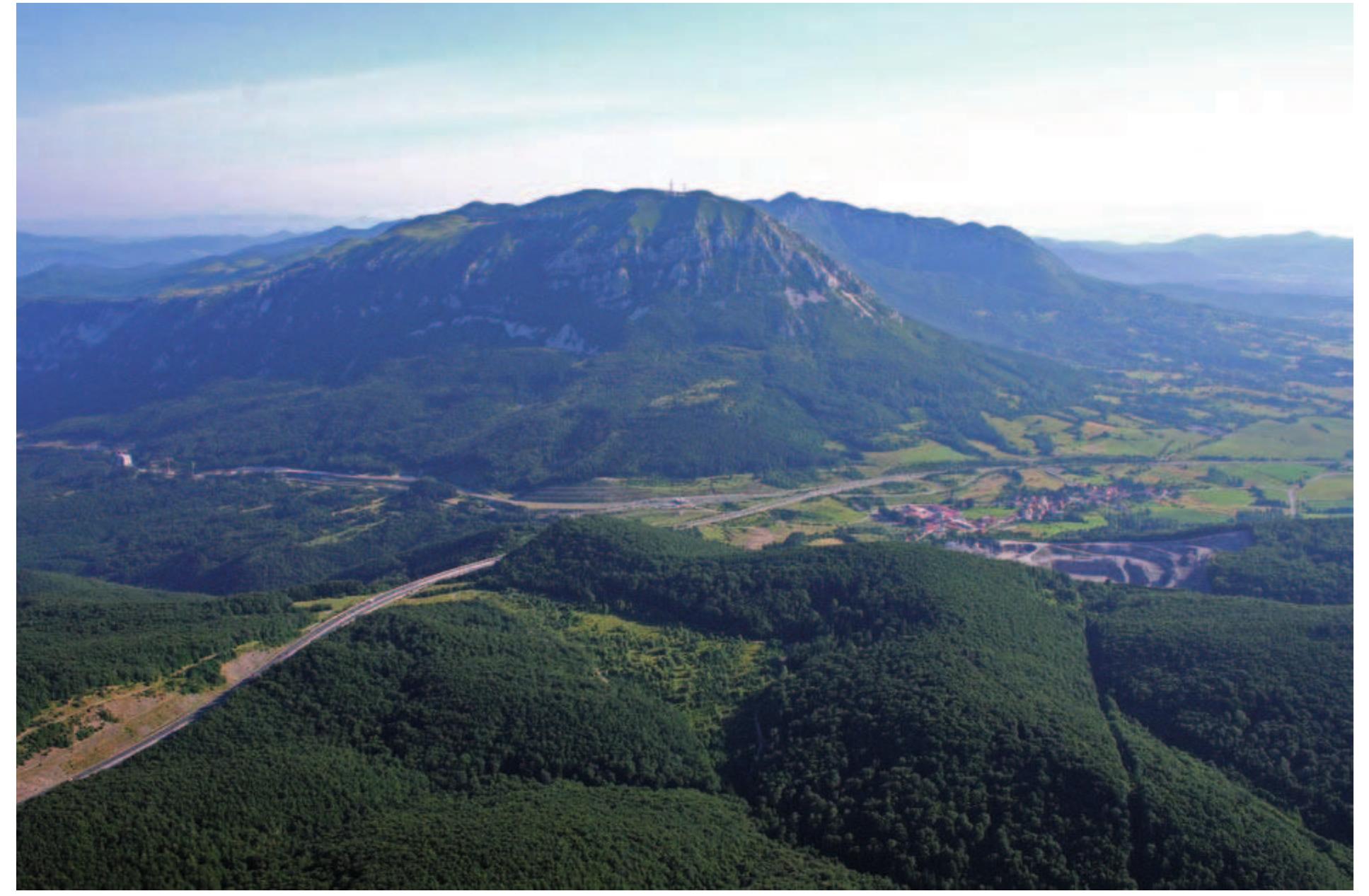
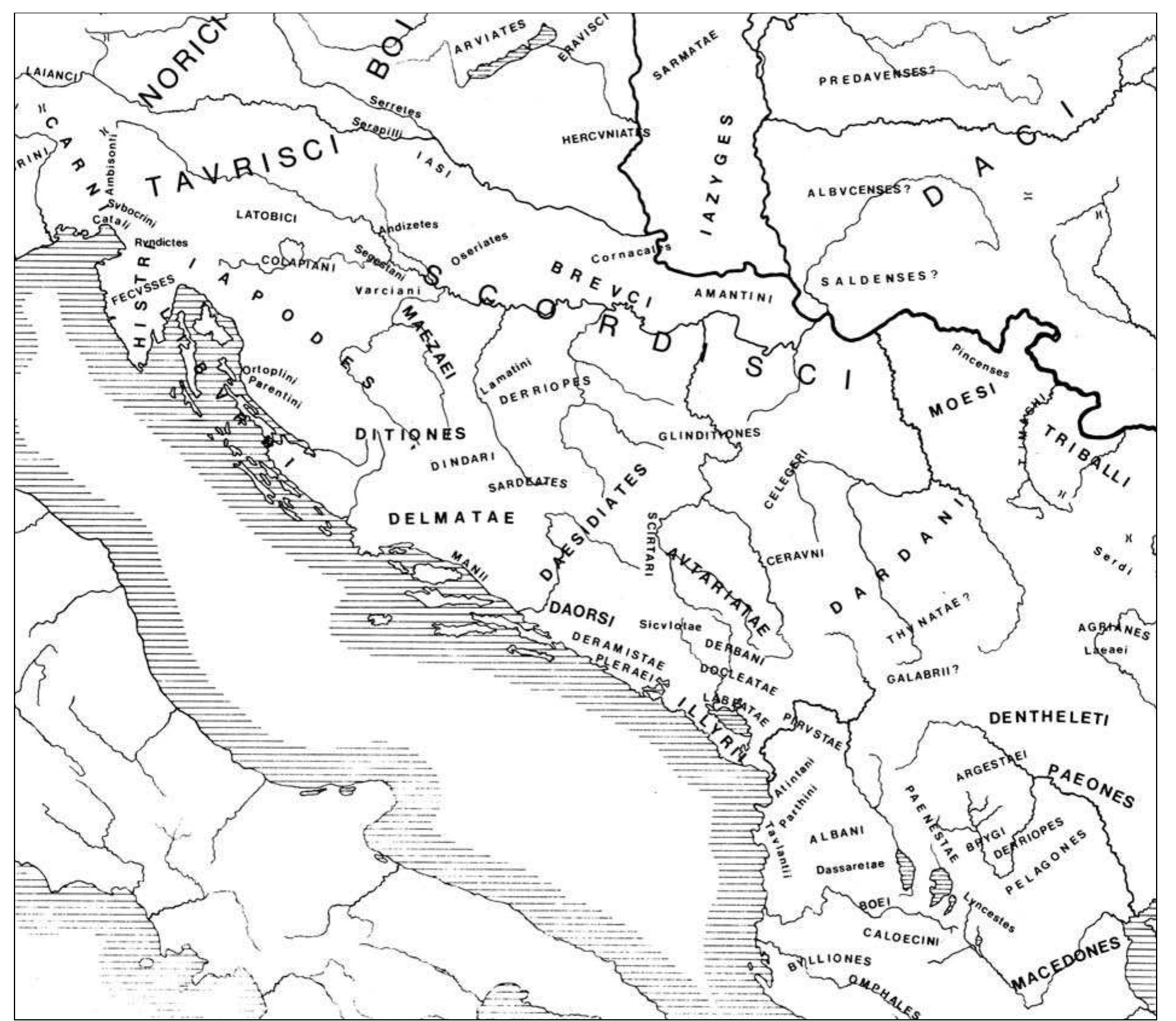
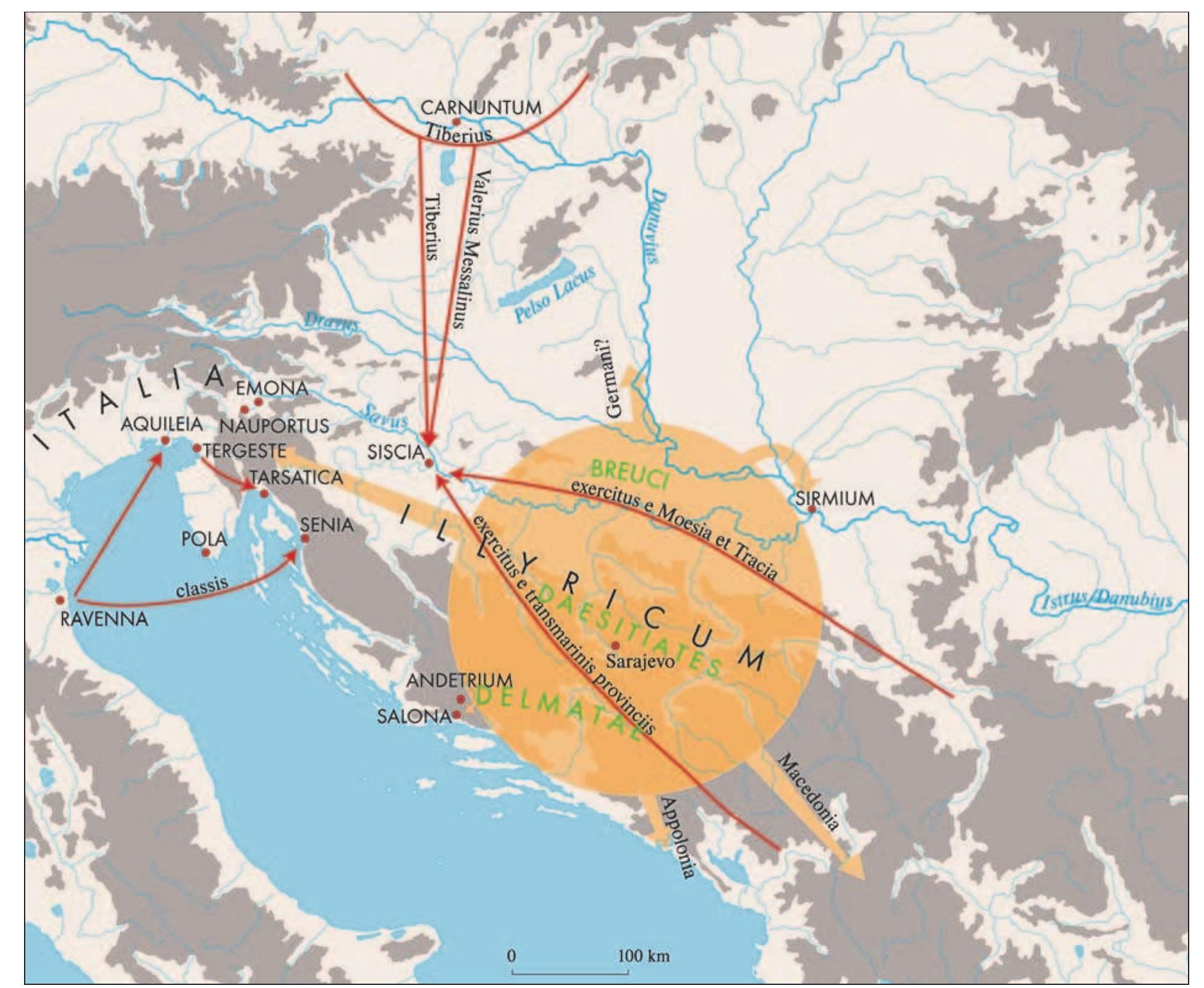
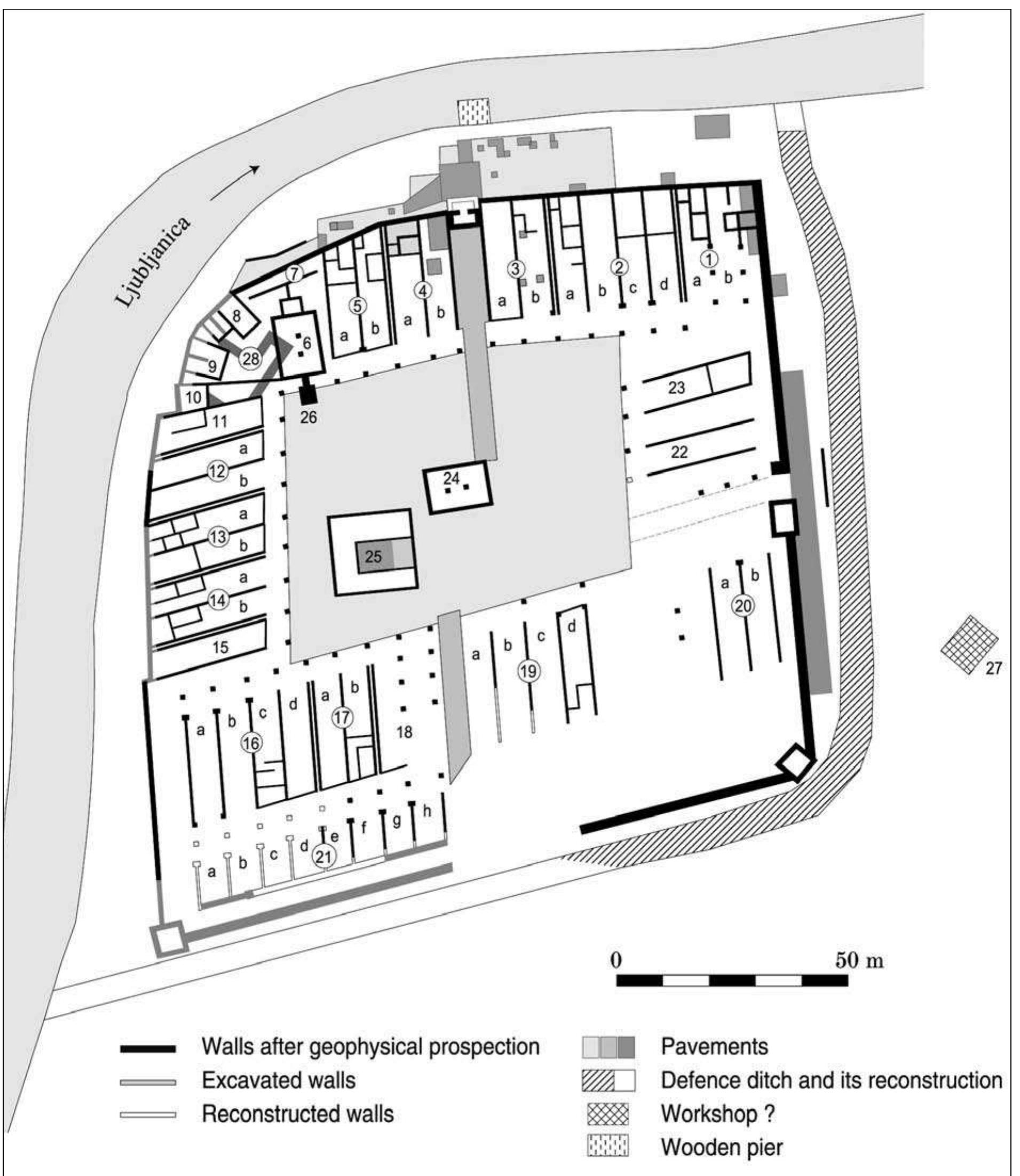
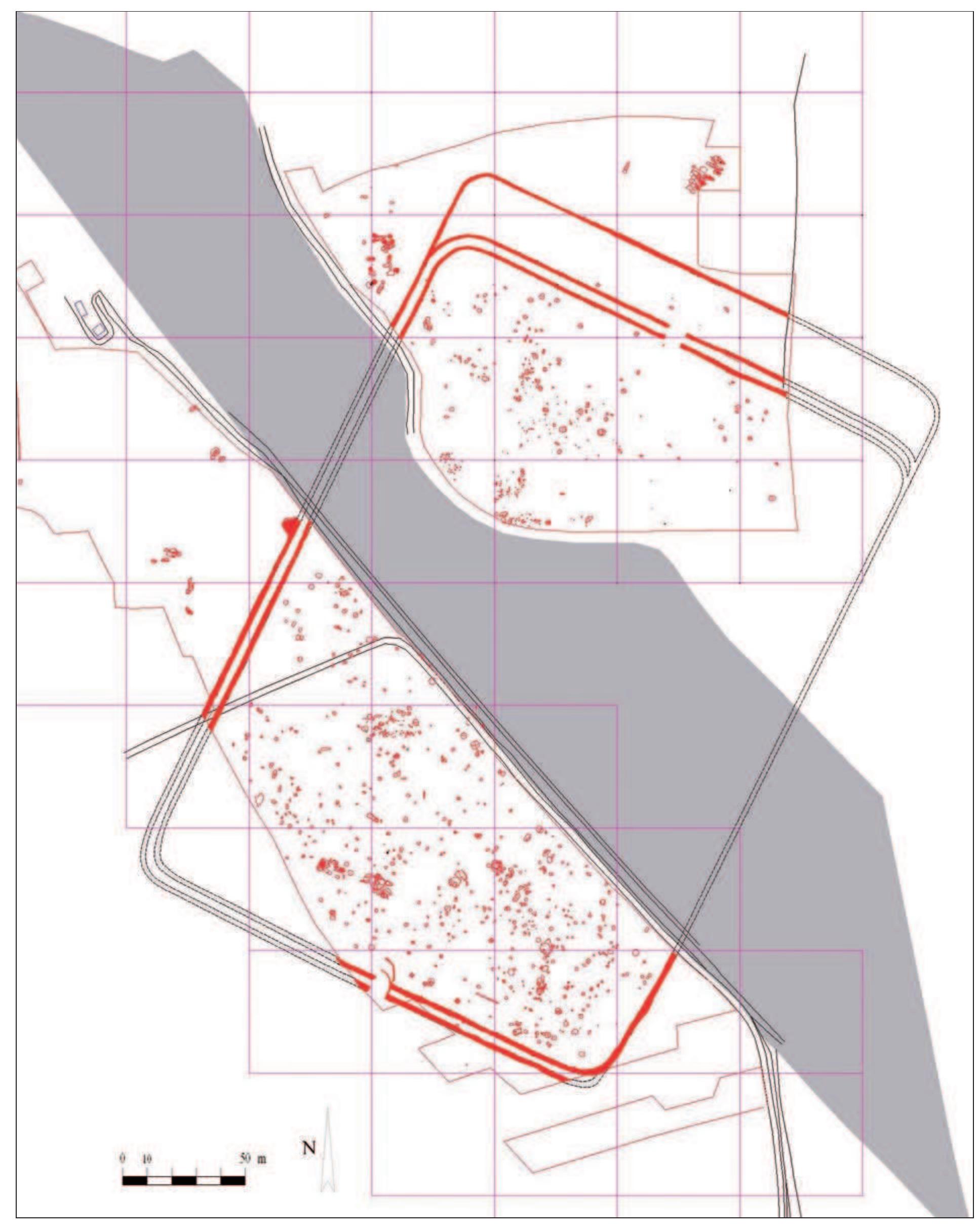
Günther Moosbauer und Rainer Wiegels (Hrsg.) Fines imperii – imperium sine fine? Osnabrücker Forschungen zu Altertum und Antike-Rezeption Band 14 Herausgegeben von Günther Moosbauer und Rainer Wiegels Günther Moosbauer und Rainer Wiegels (Hrsg.) Fines imperii – imperium sine fine? Römische Okkupations- und Grenzpolitik im frühen Principat Beiträge zum Kongress ‚Fines imperii – imperium sine fine?‘ in Osnabrück vom 14. bis 18. September 2009 Verlag Marie Leidorf GmbH . Rahden/Westf. 2011 338 Seiten mit 99 Abbildungen Gedruckt mit finanzieller Unterstützung der STADT OSNABRÜCK GÖTTINGER AKADEMIE DER WISSENSCHAFTEN VARUS-GESELLSCHAFT ZUR FÖRDERUNG DER VOR- UND FRÜHGESCHICHTLICHEN AUSGRABUNGEN IM OSNABRÜCKER LAND E.V., OSNABRÜCK Bibliografische Information der Deutschen Nationalbibliothek Moosbauer, Günther ; Wiegels, Rainer (Hrsg.): Fines imperii – imperium sine fine? Römische Okkupations- und Grenzpolitik im frühen Principat / hrsg. von Günther Moosbauer ... . Rahden/Westf. : Leidorf, 2011 (Osnabrücker Forschungen zu Altertum und Antike-Rezeption ; Bd. 14) ISBN 978-3-89646-735-5 Die Deutsche Bibliothek verzeichnet diese Publikation in der Deutschen Nationalbibliografie. Detaillierte bibliografische Daten sind im Internet über http://dnb.ddb.de abrufbar. Gedruckt auf alterungsbeständigem Papier Alle Rechte vorbehalten © 2011 Verlag Marie Leidorf GmbH Geschäftsführer: Dr. Bert Wiegel Stellerloh 65 . D-32369 Rahden/Westf. Tel: +49/(0)5771/ 9510-74 Fax: +49/(0)5771/ 9510-75 E-Mail: [email protected] Internet: www.vml.de ISBN 978-3-89646-735-5 ISSN 1863-074X Kein Teil dieses Buches darf in irgendeiner Form (Druck, Fotokopie, CD-ROM, DVD, I n t e r n e t oder einem anderen Verfahren) ohne schriftliche Genehmigung des Verlages Marie Leidorf GmbH reproduziert werden oder unter Verwendung elektronischer Systeme verarbeitet, vervielfältigt oder verbreitet werden. Umschlagentwurf: COMPUTUS Druck Service, 55595 Gutenberg Titelfoto: Buchisstele 13 vom 17. April 29 v. Chr. - Minas Nerpel, Abb. 1 (in diesem Band) aus: R. Mond/O.H. Myers, The Bucheum III, London (EES) 1934 Taf. 43 Redaktion: Achim Rost und Susanne Wilbers-Rost, Belm Satz und Layout: Enns Schrift & Bild GmbH, Bielefeld Internet: http://www.geschichte.uni-osnabrueck.de/80.htm Druck und Produktion: Druckhaus Breyer GmbH, Diepholz Inhaltsverzeichnis Vorwort . . . . . . . . . . . . . . . . . . . . . . . . . . . . . . . . . . . . . . . . . . . . . . . . . . . . . . . . . . . . . . . . . . . . . . . 7 The Roman occupation in the north of Hispania: war, military deployment and cultural integration Ángel Morillo . . . . . . . . . . . . . . . . . . . . . . . . . . . . . . . . . . . . . . . . . . . . . . . . . . . . . . . . . . . . . . . . . . 11 Römer und gentes Alpinae im Konflikt – archäologische und historische Zeugnisse des 1. Jahrhunderts v. Chr. Stefanie Martin-Kilcher . . . . . . . . . . . . . . . . . . . . . . . . . . . . . . . . . . . . . . . . . . . . . . . . . . . . . . . . . . 27 L’armée romaine et les peuples gaulois de César à Auguste Michel Reddé . . . . . . . . . . . . . . . . . . . . . . . . . . . . . . . . . . . . . . . . . . . . . . . . . . . . . . . . . . . . . . . . . . . 63 Römische und indigene Strategien der Herrschafts- und Friedenssicherung – Germanien – Siegmar von Schnurbein . . . . . . . . . . . . . . . . . . . . . . . . . . . . . . . . . . . . . . . . . . . . . . . . . . . . . . . . . . 75 ‘Perdomita Britannia…’: Roman and indigenous strategies and their outcomes in Britain from Caesar to Domitian and beyond Simon James . . . . . . . . . . . . . . . . . . . . . . . . . . . . . . . . . . . . . . . . . . . . . . . . . . . . . . . . . . . . . . . . . . . 87 The Roman conquest of Dalmatia and Pannonia under Augustus – some of the latest research results Marjeta Šašel Kos . . . . . . . . . . . . . . . . . . . . . . . . . . . . . . . . . . . . . . . . . . . . . . . . . . . . . . . . . . . . . . . 107 Domitian und die Donaugrenze Miroslava Mirković . . . . . . . . . . . . . . . . . . . . . . . . . . . . . . . . . . . . . . . . . . . . . . . . . . . . . . . . . . . . . . 119 Augustus, Prinzeps und Pharao zwischen politischer Realität und ideologischem Anspruch Martina Minas-Nerpel . . . . . . . . . . . . . . . . . . . . . . . . . . . . . . . . . . . . . . . . . . . . . . . . . . . . . . . . . . . . 131 Rome and Judaea during the First Century CE: A strange modus vivendi Moshe Fischer . . . . . . . . . . . . . . . . . . . . . . . . . . . . . . . . . . . . . . . . . . . . . . . . . . . . . . . . . . . . . . . . . . 143 The Transformation of Rural Structures in Southern Gaul between the 1st Century BC and the 1st Century AD. The Case of Eastern Languedoc. François Favory, Marie-Jeanne Ouriachi and Laure Nuninger . . . . . . . . . . . . . . . . . . . . . . . . . . . . . 157 Die Transformation der Landwirtschaft in Germanien und Raetien Günther Moosbauer . . . . . . . . . . . . . . . . . . . . . . . . . . . . . . . . . . . . . . . . . . . . . . . . . . . . . . . . . . . . . . 185 Integration der lokalen Eliten – individuelle und korporative Privilegierungen Helmut Halfmann . . . . . . . . . . . . . . . . . . . . . . . . . . . . . . . . . . . . . . . . . . . . . . . . . . . . . . . . . . . . . . . 195 Household specialisation in horse breeding: the role of returning veterans in the Batavian river area Maaike Groot . . . . . . . . . . . . . . . . . . . . . . . . . . . . . . . . . . . . . . . . . . . . . . . . . . . . . . . . . . . . . . . . . . . 203 Les dieux, la cité et le pouvoir impérial. Religions et intégration des provinces de l’Occident romain William Van Andringa . . . . . . . . . . . . . . . . . . . . . . . . . . . . . . . . . . . . . . . . . . . . . . . . . . . . . . . . . . . 219 6 Tradition – Persistenz – Resistenz: Kultmonumente, Kulte und Akkulturation in Nordafrika, Kleinasien und Lusitanien Günther Schörner . . . . . . . . . . . . . . . . . . . . . . . . . . . . . . . . . . . . . . . . . . . . . . . . . . . . . . . . . . . . . . . . 227 La violence et la guerre chez les Romains au temps d’Auguste Yann Le Bohec . . . . . . . . . . . . . . . . . . . . . . . . . . . . . . . . . . . . . . . . . . . . . . . . . . . . . . . . . . . . . . . . . . 239 Zwischen Integration und Segregation – eine Problemskizze zum Verhältnis zwischen römischem Heer und Zivilgesellschaft im Principat. Rainer Wiegels . . . . . . . . . . . . . . . . . . . . . . . . . . . . . . . . . . . . . . . . . . . . . . . . . . . . . . . . . . . . . . . . . . 253 Monumentalisierung römischer Macht – augusteische Stadtanlagen zwischen „Monotonisierung“ und imitatio Urbis Sabine Panzram . . . . . . . . . . . . . . . . . . . . . . . . . . . . . . . . . . . . . . . . . . . . . . . . . . . . . . . . . . . . . . . . . 275 Der Kaiserkult als Mittel der politischen Integration Peter Herz . . . . . . . . . . . . . . . . . . . . . . . . . . . . . . . . . . . . . . . . . . . . . . . . . . . . . . . . . . . . . . . . . . . . . . 297 The friendly kings. Politics, culture and religion in the East. Ariel S. Lewin . . . . . . . . . . . . . . . . . . . . . . . . . . . . . . . . . . . . . . . . . . . . . . . . . . . . . . . . . . . . . . . . . . 309 Peace as The Highest End and Good? The Role of Peace in Roman Thought and Politics Kurt A. Raaflaub . . . . . . . . . . . . . . . . . . . . . . . . . . . . . . . . . . . . . . . . . . . . . . . . . . . . . . . . . . . . . . . . 323 The Roman conquest of Dalmatia and Pannonia under Augustus – some of the latest research results Marjeta Šašel Kos The northeastern hinterland of Cisalpine Gaul was rum prima (both belonging to the Pannonian part of gradually conquered after the founding of Aquileia the army of Illyricum), was stationed in the Roman in 181 BC.1 Under the proconsulship of Caesar in emporium at Virunum/Magdalensberg.9 In the light both Galliae and Illyricum, Cisalpine Gaul was of the recent discussion of a passage from the Roman extended across the Ocra Pass (Fig. 1) towards the History of Velleius Paterculus (who had been Emona Basin, where Aquileia founded its eastern- Tiberius’ officer), where he says that Tiberius sub- most settlement (vicus) and an important emporium dued “Raetia and the Vindelici, the Norici and Pan- at Nauportus.2 After the pact of Brundisium in 40 nonia, as well as the Scordisci,” and added them as BC, Octavian acquired almost the entire Illyricum, “new provinces” to the Roman state,10 it can be while the southeastern part was assigned to Antony; argued that after the Alpine campaigns in 15 BC and in the course of his Illyrian War (35-33 BC),3 Octa- the subsequent Pannonian War, all these countries vian conquered (in addition to many less important came in one way or another under Roman dominion. peoples) the Iapodes, parts of Pannonia around Seg- However, contrary to the recent opinion that these estica/Siscia, as well as the Delmatae and, it seems, regions became provinces early in the reign of the part of Illyricum belonging to Antony.4 Most of Tiberius,11 Velleius’ claim perhaps implies Augus- the future Pannonia and Dalmatia, however, was tan involvement after Tiberius’ military victories.12 conquered by Tiberius in his Pannonian War and in These provinces were at first under military super- the Pannonian-Dalmatian Rebellion.5 vision, and only subsequently were provincial gov- ernors installed in them, in Noricum probably as late as Claudius; C. Baebius Atticus may still be Noricum regarded as the first presidial procurator.13 Noricum was more or less peacefully annexed shortly before the outbreak of the Pannonian War. The Pannonian War The Ambisontes were the only hostile Norican peo- ple, and Dio actually mentioned an incursion by the The Pannonian War, conducted by Tiberius, lasted Pannonians together with the Norici into Histria in for two years, from 12 to 11 BC,14 although the 16 BC.6 Regardless of who the Norican rebels had quelling of several uprisings in the Pannonian and been (they cannot be identified with certainty),7 Dalmatian parts of Illyricum is documented their insurrection was the reason for the annexation between 14 and 8 BC.15 By that time, most of Illyri- of the Norican kingdom. Indeed, the independent cum had been conquered. Cassius Dio is the best minting of Norican tetradrachmas ended around authority for this poorly attested war, even if his 16-15 BC.8 A vexillation of the legion VIII Augusta, summary account is short and devoid of all detail.16 together with a detachment of the cohors Montano- He mentioned that the Pannonians “again revolted” in 14 BC, probably referring to their incursion into 1 BANDELLI 2003; VEDALDI IASBEZ 2003; BANDELLI 2009; ZAC- Histria together with the Noricans two years previ- CARIA 2009. ously. It seems that the proconsul of Illyricum at 2 For Caesar‘s proconsulship: ŠAŠEL KOS 2000; for the Ocra Pass: Strabo 7. 5. 2 C 314; HORVAT / BAVDEK 2009; for Naupor- 9 tus: HORVAT 1990; MUŠIČ / HORVAT 2007. ŠAŠEL 1986 (1992); PICCOTTINI 2003. 10 3 ŠAŠEL KOS 2005, 393 ff. Velleius 2. 39. 3. 11 4 MIRKOVIĆ 1968; ŠAŠEL KOS 1999. BRAUNERT 1977; ROLLINGER 2001; SCHAUB 2001; GAMPER 2007. 12 5 ŠAŠEL KOS 2009a. GRAßL 2008. 13 6 Cassius Dio 54. 20. 2. See, recently, WEBER 2008; for a different opinion, however, 7 see ZACCARIA 2001, 146-148. M AINARDIS 2008, 135-141, parti- Perhaps the Norican Taurisci, mentioned by Strabo (4. 6. 12 cularly 138-139. C 208), or the Ambisontes (?) in the Aesontius (Soča/Isonzo) 14 valley, ŠAŠEL 1972 (1992). On the Ambisontes (?) in the terri- DOMIĆ KUNIĆ 2006. 15 tory of Iuvavum, see HÖGLINGER 2004. ŠAŠEL KOS 1986, 154 ff. 8 16 GÖBL 1973, 63; Kos 1977, 20. Cassius Dio 54. 28. 1-2; 31. 2-4; 34. 3-4; 36. 2; 55. 2. 4. 108 Šašel Kos, The Roman conquest of Dalmatia and Pannonia under Augustus Fig. 1 The Ocra Pass below Mt. Ocra (present-day Nanos). From HORVAT / BAVDEK 2009, 21. that time was M. Vinicius, since it is reported that ing from one battlefield to another. After the defeat he fought against them.17 Probably the military situ- of the Delmatae, Dalmatia came under the supervi- ation in Pannonia, on the fringes of Italy, became so sion of Augustus, since it needed a military garri- precarious that it demanded the presence of an son both on account of the unstable situation in the experienced army leader. One year later, command country and because of the vicinity to the danger- was given to the best Roman general, M. Vipsanius ous Pannonians.19 For the year 10 BC, Dio reported Agrippa, who inspired such terror among the Pan- that the Dacians crossed the frozen Danube and nonians that they acknowledged Roman authority plundered Pannonia, while the Delmatae refused to without further fighting. They rebelled again after pay tributes. Tiberius had to return from Gaul to Agrippa’s death in 12 BC, and the war continued cope with the situation.20 Revolts in both parts of under Tiberius; Dio, referring to 12 BC, wrote that Illyricum continued in the next year, and even in 8 Tiberius had put down the rebellion and then con- BC the Pannonians had to be subdued by Sex. quered most of the country with the help of the Appuleius.21 allied Scordisci, an important Celtic people living in the broad region around the confluence of the Most of Pannonia must have been conquered during Sava and the Danube (Fig. 2). Tiberius took away the Pannonian War, although no Pannonian peoples all the arms of the Pannonians and sold most of are specifically mentioned by name. The immediate their youth abroad. For his victories he was awarded neighbours of Tiberius’ allies, the Scordisci, were triumphal honours, although the Senate had voted the Breuci and Amantini, thus they were no doubt him a triumph.18 among the conquered peoples; the latter were settled in the region of Sirmium and Bassianae. Interesting Dio mentioned for 11 BC that Tiberius conquered light is shed on this problem by a cenotaph for a ten- the Delmatae, who had meanwhile rebelled against year-old boy of the Amantini (found in the village of Roman authority. He had to wage war against both Putinci in eastern Syrmia), who was drowned in the peoples, the Delmatae and the Pannonians, march- 19 Cassius Dio 54. 34. 3-4. 17 20 Velleius 2. 96. 2; Florus 2. 24; FITZ 1993, 44-46. Cassius Dio 54. 36. 2. 18 21 Cassius Dio 54. 31. 2-4. Cassiodorus, MGH, Chron. min. I 135. See FITZ 1993, 57. Osnabrücker Forschungen zu Altertum und Antike-Rezeption 14 109 Fig. 2 The peoples of Upper and Lower Illyricum. From ŠAŠEL, in Keltoi, 1983, 13. river at Emona, where he had been taken hostage.22 sised by Augustus in the inscription commemorat- The inscription is a unique epigraphic testimony to ing his deeds (Res gestae): “I subjected to Roman confirm the Roman practice of taking hostages, rule, through Tiberius Nero who was then my step- very well attested by Appian and other historians. son and legate, certain Pannonian tribes that had Emona was the last Italian city on the way to Pan- not been reached by a Roman army before my reign, nonia; that it belonged to Italy is now clear from the thereby extending the frontier of Illyricum as far as recently discovered boundary inscription.23 The boy the Danube.”25 However, not all of the later Panno- was called [S]cemaes of the gens Undia (perhaps nia was subdued during the Pannonian War, and it Scenas or Sceuas; the names may be corrupt), no is not quite clear how these famous words – “protu- doubt belonging to an upper class family. He was lique fines Illyrici ad ripam fluminis Danuvii” – from the second centuria, either referring to the should be correctly understood. How and when did number of hostages or, perhaps, to a tribal division the Romans reach the Danube, and which part of of some kind among the Amantini.24 the river was it? Appian had already mentioned that Octavian had ships constructed on the Savus River Illyricum, then the name of the undivided province, during his Illyrian War. He intended to use them in extended as far as the Danube. This was empha- his planned campaign against the Dacians to trans- port provisions for his army to the Danube.26 In the 22 CIL III 3224; ŠAŠEL KOS 2009, 93. 23 25 ŠAŠEL KOS 2002. Mon. Ancyr. 30; TÓTH 1977. 24 26 DUŠANIĆ 1967, 67. Appian Illyr. 22. 65-66; ŠAŠEL KOS 2005, 440. 110 Šašel Kos, The Roman conquest of Dalmatia and Pannonia under Augustus course of Octavian’s actions, which were to a large rienced commanders of this army planned – with extent also diplomatic, it would not be impossible part of it – to attack Italy, which was connected to that a detachment of Octavian’s army might have their territory by the border areas of Nauportus and reached the Danube, as he is said to have expressly Tergeste; part of the army would invade Macedo- claimed before the battle at Actium.27 In this con- nia, while the third part was intended to defend text, we should most probably understand “the Dan- their own territories.33 Their leaders, both Batos ube” to mean the river’s course near Sirmium. and Pinnes, enjoyed great authority; the army was disciplined – some even knew Latin and were In his Res gestae, Augustus was most probably acquainted with Roman culture.34 They attacked referring to the Pannonian peoples, of which the Roman citizens, killing merchants and many veter- Andizetes are known to have been the northern- ans, who were settled at some distance from the most, and not to the Celtic population of the later Roman garrisons. They occupied (parts of) Mace- Pannonia, living north of the Dravus River.28 Some donia, causing great damage everywhere.35 of these Celtic peoples may have been more or less dependent on the Norican kingdom and conse- Velleius first mentioned the victory of M. Valerius quently not hostile to the Romans; most of their Messalla Messallinus, praepositus of Illyricum, regions may have been peacefully annexed. The who had been trapped by the enemy with half of the Roman frontier in Pannonia shifted along with new 20th legion. Next he narrated the battles near Mons conquests, and it may well be that the entire course Claudius (Požeška brda [Požeška Hills], northeast of the Danube was not firmly in Roman hands of Siscia), occupied by the rebels, who almost before Claudius. Stages in the limes development defeated the army brought from the transmarine no doubt existed: first of all, a strong military line provinces by A. Caecina Severus and M. Plautius along the upper Sava River would certainly have Silvanus. This army consisted of five legions with been very important in order to capture Segesta/ auxiliary soldiers, accompanied by a detachment of Siscia and annex its territory. The lower course of horsemen under the Thracian king Rhoemetalces. the river, as well as the Drava and most of the Dan- For a short time, the entire army was stationed in ube, had not been conquered before the conquests one camp at Siscia, composed of ten legions, more of Tiberius. The legionary camp at Siscia, dating than seventy cohorts, ten alae, and over ten thou- back to Octavian,29 was much earlier than those at sand veterans. Since it was impossible to control Poetovio and Sirmium.30 such a huge force, however, Tiberius accompanied the new legions back to their provinces, returning to Siscia at the beginning of the winter. The next The Pannonian-Dalmatian Rebellion summer, Pannonia capitulated and the rebels depos- ited their arms at the Bathinus River (the Bosna). However, war preparations against Maroboduus, par- Command over the army in the winter camp at Sis- ticularly the recruitment of soldiers, triggered the out- cia was given to M. Aemilius Lepidus.36 break of the rebellion in Illyricum (Fig. 3), towards the end of which the large area with five legions was At the beginning of the summer of AD 9, Lepidus divided into an upper (Dalmatia) and a lower (Pan- set off to join Tiberius in Dalmatia, traversing nonia) province.31 According to Velleius Paterculus, regions as yet untouched by the war, where he had who himself took part in the war, bringing new to fight the enemy on all sides. Germanicus and C. recruits from Rome to Tiberius, the collective number Vibius Postumus, praepositus of Dalmatia, also of rebels would have amounted to 800,000, includ- successfully fought in the Dalmatian part of Illyri- ing 200,000 infantrymen and 9000 cavalry.32 Expe- cum. That summer saw the end of the war, with the Perustae, Desidiates and the Delmatae decisively 27 Cassius Dio 50. 24. 4; ŠAŠEL KOS, ib. 28 FITZ 1998; id. 1993, 13–14. 29 33 R ADMAN-LIVAJA 2007, 161 ff. DZINo 2010, 147 refuses to give credit to this plan, which, 30 Poetovio: some time after 15 BC, see HORVAT et al. 2003, however, is partly confirmed by subsequent Roman strategy 156; Sirmium: a Roman stronghold attested in AD 6: MIRKOVIĆ and actions, and indirectly also by the account of Cassius Dio 2004, 147. (see infra). 34 31 KOVÁÁCS 2008, with earlier literature; ŠAŠEL KOS 2010. Velleius 2. 110. 5: Velleius‘ optimistic remark could have 32 referred to a few only, cf. A LFÖLDY 1995, 26. Velleius 2. 110. 3. Appian, however, noted that there had 35 been a total of 100,000 men capable of fighting among the Pan- Velleius 2. 110. 36 nonians at the time of Octavian’s Illyrian war (Appian Illyr. 22. Velleius 2. 111-114; commentary in R ADMAN-LIVAJA / DIZ- 63). This is closer to reality, cf. also DŽINO 2006. DAR 2010; some aspects in Džino 2009. Osnabrücker Forschungen zu Altertum und Antike-Rezeption 14 111 Fig. 3 The outbreak of the Pannonian-Dalmatian rebellion in AD 6. Following ŠAŠEL KOS 1986, 191 (computer graphics M. Belak). defeated.37 Velleius intended to describe the “Pan- saved by Caecina Severus, commander of the army nonian and Dalmatian war” – as he calls it – in a from Moesia. Meanwhile, the Delmataean Bato, special volume. Shortly after the war in Illyricum who had been injured during the siege of Salonae, ended, news came of the defeat of P. Quinctilius where he had achieved nothing, plundered the coast Varus in Germany. as far as Apollonia, where he defeated the Romans. In a joint action with the Breucian Bato, they took The account of Cassius Dio, although fragmentary Mt. Alma (Fruška gora, to the far north of Sirmium), in parts, is nonetheless more comprehensive; it is but were defeated by Thracian Rhoemetalces, who partially different, but also partially complementa- had been sent ahead by Caecina Severus. Severus, ry. However, it is only possible to combine their dif- however, was unable to conquer them, and, moreo- fering data in a hypothetical manner.38 Dio men- ver, had to return to Moesia, which had been invad- tioned the attack of the Breuci under Bato on ed in his absence by the Dacians and Sarmatians. Sirmium, which must have become an important Rhoemetalces also checked the rebels’ invasion of Roman stronghold after the Pannonian War; it was Macedonia.39 The next year, AD 7, the young Germanicus was 37 Velleius 2. 115-117. sent with new recruits to Illyricum and eventually 38 The course of the rebellion is usually presented as a combi- conquered the Maezaei. Severus came from Moesia ned narrative in modern commentaries, from the earliest (cited in ŠAŠEL KOS 1986, 180-182) to the latest in DZINO 2010, 142 ff. Some of the hypotheses, however, already figure as facts, 39 which is misleading. Cassius Dio 55. 28. 7 – 31. 2. 112 Šašel Kos, The Roman conquest of Dalmatia and Pannonia under Augustus to the Volcaean Marshes, where he was attacked Evidence of the Roman army by both Batos, and defeated them. The Delmatae in Illyricum and Pannonians, who were suffering from hunger and diseases, wanted to negotiate for peace the next year. At this point there is a lacuna in Dio’s According to current estimation, the following five text. Shortly afterwards, Bato the Breucan betrayed legions were stationed in Illyricum at the outbreak Pinnes and was rewarded with command over the of the great rebellion in AD 6: IX Hispana, XIII and Breuci. However, the other Bato attacked him in XIV Gemina, XV Apollinaris and XX. Aquileia an ambush and had him killed. After the defeat of retained its great strategic role as an important mil- the Breuci by Silvanus, Bato lost all hope of being itary, administrative and logistic base during the able to retain Pannonia, so he installed guards at Pannonian War and the great rebellion; Roman all routes leading to Dalmatia and plundered the troops were temporarily stationed in or around the country. Soon the other Pannonian peoples also city, particularly legio XX, before it was transferred surrendered.40 to Burnum in Dalmatia under Augustus.45 Emona was not a camp of XV Apollinaris,46 since at that Dio’s account of the conquest of Dalmatia in the time the town was almost certainly a Roman colo- last year is much more detailed than that of Vel- ny, probably founded early in Augustus’ reign, if leius, ending with the description of Germanicus’ not soon after Actium. However, legions, or parts of conquest of Arduba, the fall of Andetrium, a natu- them, must have been temporarily stationed in and rally fortified hilltop stronghold not far from Salo- around Emona as well; it, too, must have had a sig- nae, and the surrender of Bato and his son Sceuas. nificant logistic role.47 IX Hispana was probably Bato gave a long speech in defence of his people, stationed in Siscia, where more than two legions and on being asked why they had started the rebel- had already been left by Octavian in 34 BC, and lion, he replied with the famous words that the where the summer camp of the three Pannonian Romans had sent wolves instead of shepherd dogs legions in AD 14 (the year of their revolt after the to the province.41 death of Augustus) was most probably located.48 Very few small finds can be directly related to The Emona Basin was situated at the far border Tiberius’ wars in Pannonia, mainly because Roman with the Pannonian part of Illyricum, and had to or Celtic weapons cannot be defined chronologi- be protected. Archaeological evidence indicates cally in an exact way. A coin hoard was found that Nauportus was fortified in the Augustan age between Osijek and Valpovo, in the territory of (Fig. 4).49 Recent excavations and new finds also Mursa (Osijek), the region of the Andizetes, where confirm the logistic role of Emona in Tiberius’ Pan- an auxiliary camp may have been located after nonian War.50 A camp from this period was located Tiberius’ Pannonian War.42 The hoard, which close to the Ljubljanica River,51 which in addition mainly contained coins from the late Republican to connecting Nauportus and Emona, could – since period (1st century BC), but included a few coins it flows into the Sava – easily have been used to minted by Augustus between 19 and 2 BC, may convey cargo and even troops directly from Nau- have been hidden during the great rebellion. There portus to Segestica/Siscia.52 Many important finds are pieces of weapons from Cibalae (Vinkovci), were discovered in the Ljubljanica, such as a medal- such as a sword, two long narrow-headed spears, a lion with a portrait of Augustus that could have short spear and a conical spear mount that could been worn by a Roman soldier fighting in the Pan- have belonged to an indigenous Celtic warrior or nonian War.53 Further camps have recently been an auxiliary soldier.43 A Weisenau type helmet of the early 1st century AD was found in the Sava 45 WILKES 1969, 92-93. River near the site of ancient Marsonia (Slavonski 46 According to the epigraphic, numismatic and other archaeo- Brod). Some weapons, particularly helmets, are logical evidence, Emona was most probably never a legionary known from Siscia (Sisak).44 fortress on any permanent basis: ŠAŠEL 1968, 561 ff. (1992, 571 ff.); ŠAŠEL KOS 1995; GASPARI 2010, 113 ff. 47 40 GASPARI 2010, passim, particularly 113 ff. and 141 ff. Cassius Dio 55. 34. 3 – 7. 48 41 ŠAŠEL 1974, 732-734 (1992, 615-616). Cassius Dio 56. 11 – 17. 2; Bato’s speech, although ficti- 49 tious, tells much about Roman organisation of the province and MUŠIČ / HORVAT 2007. 50 brutality after the Pannonian War. MIŠKEC 2009. 42 51 FILIPOVIĆ 2004, 157. HVALEC et al. 2009. 43 52 DIZDAR / R ADMAN-LIVAJA 2004. ISTENIČ 2009. 44 53 R ADMAN-LIVAJA 2004, 17-18. ISTENIČ 2003; ISTENIČ 2009a. Osnabrücker Forschungen zu Altertum und Antike-Rezeption 14 113 Fig. 4 Nauportus was fortified in the Augustan age. From HORVAT 2008, 114, Fig. 4 (computer graphics M. Belak). discovered at Sv. Urh and Čatež near Brežice, as Legion XX was stationed at Burnum (Šuplja Crkva well as at Obrežje (Fig. 5), all three of them along on the Krka River), having been brought there by M. the Sava River.54 According to the coin finds from Aemilius Lepidus from Lower Illyricum (Pannonia) the excavations, the latter should almost certainly in AD 9, on the great march to Dalmatia in the final be placed in the period of the great rebellion;55 it is year of the rebellion. It has recently been proposed situated at the present-day border between Slovenia that the native fortress at Puljane opposite Burnum, and Croatia. usually regarded as pre-Roman Burnum, may have been Arduba, conquered by Germanicus.56 Soon, 54 M ASON 2008. 55 56 MIŠKEc 2009. PERIŠa 2008, 513. 114 Šašel Kos, The Roman conquest of Dalmatia and Pannonia under Augustus Fig. 5 The Augustan military camp at Obrežje along the Sava River. From MASON 2008, 190. still in the same year, the legion had to leave Illyri- where a tropaeum commemorating Roman victory cum for Germany, after Varus’ defeat, and legion XI in Illyricum in AD 9 was found;58 before this legion, came to replace it. Excavations are continuing in the the IX Hispana may have been stationed there. Tilu- camp of legion VII, at Tilurium (Gardun near Trilj),57 rium is located near an important crossing of the 57 58 SANADER et al. 2003. CAMBI 1984; CAMBI 2007, 99 Fig. 89. Osnabrücker Forschungen zu Altertum und Antike-Rezeption 14 115 Cetina River that flows beneath it, Pons Tiluri, on in Vinkovci as a Contribution to Understanding the Process the road linking Salonae and the capital of the Del- of the Early Romanization of Eastern Slavonia), Prilozi Instituta za arheologiju u Zagrebu 21, 2004, 37-53. matae, Delminium, in Duvanjsko plain. DOMIĆ-KUNIĆ 2006 A. DOMIĆ-KUNIĆ, Bellum Pannonicum (12–11 B.C.). The All Tiberius’ wars in Illyricum had ended, as had final stage of the conquest of southern Pannonia (in Croat. the short-lived revolt of the Pannonian legions in with an English summary), Vjesnik Arheološkog muzeja AD 14. Urbanisation and the creation of provinces Zagreb 39, 2006, 59–164. went hand in hand; the coastal part of Dalmatia was DUŠANIĆ 1967 S. DUŠANIĆ, Bassianae and Its Territory, Archaeologia urbanised under Caesar and Augustus;59 Illyricum Iugoslavica 8, 1967, 67-81. was a Roman province under Augustus at the latest. DŽINO 2006 After the rebellion, it was divided into Upper and D. DŽINO, Velleius Paterculus and the Pannonii: Making up Lower Illyricum.60 Noricum was urbanised under the numbers, Godišnjak 35, Centar za balkanološka ispi- Claudius and organised as a province at the same tivanja 33, 2006, 145-159. time;61 an analogous process took place in Pannon- DŽINO 2009 ia, the former Lower Illyricum, but one generation D. DŽINO, The Bellum Batonianum in contemporary histo- riographical narratives. In a search for the post-modern Bato later, under Vespasian.62 the Daesitiate, Arheološki radovi i rasprave 16, 2009, 29-45. DZINO 2010 D. DZINO, Illyricum in Roman Politics – 229 BC–AD 68, Literature Cambridge 2010. ALFÖLDY 1995 FILIPOVIĆ 2004 G. ALFÖLDY, La Pannonia e l’Impero romano, in: G. Hajnóc- S. FILIPOVIĆ, Colonia Aelia Mursa, in: M. ŠAŠEL KOS / P. zi (Ed.), La Pannonia e l’Impero romano. Atti del convegno SCHERRER (Eds.), The Autonomous Towns in Noricum and intern. (Roma, 13–16 gennaio 1994), Milan 1995, 25-40. Pannonia / Die autonomen Städte in Noricum und Pannoni- en – Pannonia II (Situla 42), Ljubljana 2004, 157-168. BANDELLI 2003 FITZ 1993 G. BANDELLI, Aquileia colonia latina dal senatus consultum J. FITZ, Die Verwaltung Pannoniens in der Römerzeit I, del 183 a.C. al supplementum del 169 a.C., in: G. CUSCITO Budapest 1993. (Ed.), Aquileia dalle origini alla costituzione del ducato FITZ 1998 longobardo. Storia – amministrazione – società, (Antichità J. FITZ, Zur vorrömischen Geschichte der späteren Pannoni- Altoadriatiche 54), Trieste 2003, 49-78. en, Alba Regia 27, 1998, 7-9. BANDELLI 2009 G. BANDELLI, Aquileia da “fortezza contra i barbari” a GAMPER 2007 “emporio degli Iliri”, in: F. CREVATIN (Ed.), I luoghi della P. GAMPER, Tiberius ac Noricos imperio nostro armis mediazione. Confini, scambi, saperi (Fonti e studi per la sto- subiunxit – Neue Erkentnisse zur römischen Besetzung ria della Venezia Giulia, Studi 18), Trieste 2009, 101-126. Noricums durch die Grabungskampagne 2005 auf der Guri- BRAUNERT 1977 na, Arch. Korrespondenzblatt 37/3, 2007, 421-440. H. BRAUNERT, Omnium provinciarum populi Romani ... fines GASPARI 2010 auxi. Ein Entwurf, Chiron 7, 1977, 207-217. A. GASPARI, “Apud horridas gentis ...”. Začetki rimskega mesta Colonia Iulia Emona / Beginnings of the Roman CAMBI 1984 Town of Colonia Iulia Emona, Ljubljana 2010. N. CAMBI, Gardunski tropej (Military Triumphal Monu- GÖBL 1973 ment from Gardun [Dalmatia]), in: Cetinska krajina od pre- R. GÖBL, Typologie und Chronologie der keltischen Münz- thistorije do dolaska Turaka / La région de la Cetina depuis prägung in Noricum (Österr. Akad. Wiss., Phil.-hist. Kl., la préhistoire jusqu’à l’árrivée des Turcs (Izdanja Hrvatskog Denkschr. 113), Wien 1973. arheološkog društva 8), Split 1984, 77–92. GRAßL 2008 CAMBI 2007 H. GRAßL, Der Prozess der Provinzialisierung im Ostalpen- N. CAMBI, Urbanisierung, in: M. SANADER (Ed.), Kroatien in und Donauraum im Bild der neueren Forschung, in: C. der Antike (Zaberns Bildbände zur Archäologie / Sonder- Franek et al. (Eds.), Festschrift für Erwin Pochmarski (Ver- bände der Antiken Welt), Mainz 2007, 82–110. öffentlichungen des Instituts für Archäologie der Karl-Fran- zens-Universität Graz 10), Graz 2008, 343-348. DIZDAR / R ADMAN-LIVAJA 2004 M. DIZDAR, / I. R ADMAN-LIVAJA, Nalaz naoružanja iz Vrtne HÖGLINGER 2004 ulice u Vinkovcima kao prilog poznavanja rane romanizac- P. HÖGLINGER, Zum Problem der spätlatènezeitlichen-früh- ije istočne Slavonije (Warrior Equipment from Vrtna Street römischen Siedlungskontinuität auf Höhensiedlungen des oberen Salzach- und Saalachtales im Pinzgau, Land Salz- 59 WILKES 1969, 192 ff. burg, in: C.-M. HÜSSEN / W. IRLINGER / W. ZANIER (Eds.), 60 Spätlatènezeit und frühe römische Kaiserzeit zwischen See, recently, KOVÁÁCS 2008 and ŠAŠEL KOS 2010. Alpenrand und Donau. Akten des Kolloquiums in Ingol- 61 WEBER 2008. stadt am 11. und 12. Oktober 2001 (Kolloquien zur Vor- und 62 ŠAŠEL 1989, 57-60 (1992, 690-693). Frühgeschichte 8), Bonn 2004, 187-198. 116 Šašel Kos, The Roman conquest of Dalmatia and Pannonia under Augustus HORVAT 1990 MUŠIČ / HORVAT 2007 J. HORVAT, Nauportus (Vrhnika) (Dela 1. razr. SAZU 33), B. MUŠIČ / J. HORVAT, Nauportus – an Early Roman trading Ljubljana 1990. post at Dolge njive in Vrhnika. The results of geophysical HORVAT 2008 prospecting using a variety of independent methods, J. HORVAT, Early Roman horrea at Nauportus, Mélanges de Arheološki vestnik 58, 2007, 219-270. l’Ecole française de Rome 120/1, 2008, 111-121. HORVAT ET AL. 2003 PERIŠA 2008 J. HORVAT et al., Poetovio. Development and Topography, in: M. D. PERIŠA, Je li delmatsko područje presjekao rimski limes? ŠAŠEL KOS / P. SCHERRER (Eds.), The Autonomous Towns in (Did a Roman Limes Exist on Delmataean Territory?), Noricum and Pannonia / Die autonomen Städte in Noricum und Archaeologia Adriatica 2,2, 2008, 507-517. Pannonien – Pannonia I (Situla 41), Ljubljana 2003, 153-189. PICCOTTINI 2003 HORVAT / BAVDEK 2009 G. PICCOTTINI, Virunum l’ancienne: le site du Magdalens- J. HORVAT / A. BAVDEK, Okra. Vrata med Sredozemljem in berg, in: M. R EDDÉ et al. (Eds.), La naissance de la ville dans Srednjo Evropo / Ocra. The Gateway between the Mediter- l’Antiquité, Paris 2003, 171-194. ranean and Central Europe (Opera Instituti arch. Sloveniae 17), Ljubljana 2009. R ADMAN-LIVAJA 2004 HVALEC ET AL. 2009 I. R ADMAN-LIVAJA, Militaria Sisciensia (Musei Arch. S. HVALEC et al., Utrip Tribune. Doživetja arheološkega Zagrabiensis Catalogi et Monographiae 1), Zagreb 2004. vsakdana, Ljubljana 2009. R ADMAN-LIVAJA 2007 I. R ADMAN-LIVAJA, In Segestica..., Prilozi Instituta arheol. u ISTENIČ 2003 Zagrebu 24, 2007, 153-172. J. ISTENIČ, A uniface medallion with a portrait of Augustus R ADMAN-LIVAJA / DIZDAR 2010 from the River Ljubljanica (Slovenia), Germania 81/1, 2003, I. R ADMAN-LIVAJA, M. DIZDAR, Archaeological Traces of the 263-276. Pannonian Revolt 6–9 AD: Evidence and Conjectures, in: R. ISTENIČ 2009 ASSKAMP, T. ESCH (Eds.), Imperium – Varus und seine Zeit J. ISTENIČ, The early Roman military route along the River (Veröffentlichungen d. Altertumskomm. f. Westfalen 18), Ljubljanica (Slovenia), in: A. MORILLO / N. H ANEL / E. M AR- Münster 2010, 47–58. TIN (Eds.), Limes XX. Actas des XX Congreso Intern. de ROLLINGER 2001 Estudios sobre la Frontera Romana (Anejos de Gladius 13), R. ROLLINGER, Raetiam autem Vindelicos ac Noricos Panno- León 2009, 51-61. niamque et Scordiscos novas imperio nostro subiunxit pro- ISTENIČ 2009A vincias. Oder: Wann wurde Raetien (einschließlich Nori- J. ISTENIČ, The Ljubljanica and the Roman army, in: P. TURK cums und Pannoniens) als römische Provinz eingerichtet?, / J. ISTENIČ / T. K NIFIC / T. NABERGOJ (Eds.), The Ljubljanica – in: P.W. H AIDER / R. ROLLINGER (Eds.), Althistorische Studien a River and its Past, Ljubljana 2009, 86-91. im Spannungsfeld zwischen Universal- und Wissenschafts- geschichte. Festschrift für Franz Hampl zum 90. Geburtstag am 8. Dezember 2000, Stuttgart 2001, 267-315. KOS 1977 P. KOS, Keltski novci Slovenije/Keltische Münzen Slo- weniens (Situla 18), Ljubljana 1977. SANADER 2003 M. SANADER et al., Tilurium I. Istraživanja – Forschungen KOVÁÁCS 2008 1997.–2001., Zagreb 2003. P. KOVÁÁCS, Some Notes on the Division of Illyricum, in: J. Piso (Ed.), Die Römischen Provinzen. Begriff und Grün- SCHAUB 2001 A. SCHAUB, Die förmliche Provinzkonstitution Raetiens dung, Cluj-Napoca 2008, 237-248. unter Tiberius nach dem Zeugnis des Velleius Paterculus, Germania 79, 2001, 391-400. MAINARDIS 2008 ŠAŠEL 1968 (1992) F. M AINARDIS, Iulium Carnicum. Storia ed epigrafia (Anti- J. ŠAŠEL, Emona, in: RE Suppl. XI (1968), 540–578 (= Opera chità Altoadr., Monografie 4), Trieste 2008. selecta, Ljubljana 1992, 559–579). MASON 2008 ŠAŠEL 1972 (1992) P. M ASON, The Roman Fort at Obrežje and Augustan Milita- J. ŠAŠEL, Zur Erklärung der Inschrift am Tropaeum Alpium ry Activity in the Sava Valley in Slovenia, in: J.-S. KÜHL- (Plin. n.h. 3, 136-137. CIL V 7817), Živa antika 22, 1972, BORN (Ed.), Rom auf dem Weg nach Germanien: Geostrate- 135-144 (= Opera selecta, Ljubljana 1992, 288-297). gie, Vormarschstrassen und Logistik (Bodenaltertümer ŠAŠEL 1974 (1992) Westfalens 45), Mainz 2008, 187-198. J. ŠAŠEL, Siscia, in: RE Suppl. XIV (1974), 702–741 (= Opera MIRKOVIĆ 1968 selecta, Ljubljana 1992, 600–620). M. MIRKOVIĆ, Die südillyrischen Stämme im illyrischen ŠAŠEL 1986 (1992) Kriege Octavians in den Jahren 35–33 v. u. Z., Živa antika J. ŠAŠEL, Cohors I Montanorum, in: Studien zu den Mili- 18, 1968, 113-127. tärgrenzen Roms III. Forschungen und Berichte zur Vor- MIRKOVIĆ 2004 und Frühgeschichte in Baden-Württemberg 20, Stuttgart M. MIRKOVIĆ, Sirmium, in: M. ŠAŠEL KOS / P. SCHERRER et al. 1986, 782-786 (= Opera selecta, Ljubljana 1992, 478-482). (Eds.), The Autonomous Towns of Noricum and Pannonia. ŠAŠEL 1989 (1992) Pannonia II (Situla 42), Ljubljana 2004, 145-156. J. ŠAŠEL, Die regionale Gliederung in Pannonien, in: G. MIŠKEC 2009 GOTTLIEB (Ed.), Raumordnung im Römischen Reich. Zur A. MIŠKEC, The Augustan conquest of southeastern Alpine regionalen Gliederung in den gallischen Provinzen, in Räti- and western Pannonian areas: coins and hoards, Arheološki en, Noricum und Pannonien, München 1989, 57–73 (= Ope- vestnik 60, 2009, 283–296. ra selecta, Ljubljana 1992, 690–706). Osnabrücker Forschungen zu Altertum und Antike-Rezeption 14 117 ŠAŠEL KOS 1986 TÓTH 1977 M. ŠAŠEL KOS, Zgodovinska podoba prostora med Akvilejo, E. TÓTH, “... protulique fines Illyrici ad ripam fluminis Danu- Jadranom in Sirmijem pri Kasiju Dionu in Herodijanu / A vii.”, Arheološki vestnik 28, 1977, 278–287. Historical Outline of the Region between Aquileia, the Adriatic, and Sirmium in Cassius Dio and Herodian, Ljubl- VEDALDI IASBEZ 2003 jana 1986. V. VEDALDI IASBEZ, Aquileia dalla seconda guerra istrica ŠAŠEL KOS 1995 all’età postsillana, in: G. CUSCITO (Ed.), Aquileia dalle M. ŠAŠEL KOS, The 15th Legion at Emona – Some Thoughts, origini alla costituzione del ducato longobardo. Storia – ZPE 109, 1995, 227–244. amministrazione – società, (Antichità Altoadriatiche 54), ŠAŠEL KOS 1999 Trieste 2003, 119-154. M. ŠAŠEL KOS, Octavian’s Campaigns (35–33 BC) in Southern Illyricum, in: P. CABANES (Ed.), L’Illyrie méridio- WEBER 2008 nale et l’Épire dans l‘antiquité (Actes du IIIe colloque intern. E. WEBER, Die Anfänge der Provinz Noricum, in: J. PISO de Chantilly, 16–19 Octobre 1996), Paris 1999, 255-264. (Ed.), Die Römischen Provinzen. Begriff und Gründung, ŠAŠEL KOS 2002 Cluj-Napoca 2008, 225-235. M. ŠAŠEL KOS, The boundary stone between Aquileia and WILKES 1969 Emona (Mejnik med Akvilejo in Emono), Arheološki vest- J. J. WILKES, Dalmatia, London 1969. nik 53, 2002, 373-382. ŠAŠEL KOS 2005 M. ŠAŠEL KOS, Appian and Illyricum (Situla 43), Ljubljana ZACCARIA 2001 2005. C. ZACCARIA, Iulium Carnicum. Un centro alpino tra Italia e Norico (I sec. a.C. – I sec. d.C.), in: G. BANDELLI / F. FONTANA ŠAŠEL KOS 2009 (Eds.), Iulium Carnicum: centro alpino tra Italia e Norico M. ŠAŠEL KOS, The Ljubljanica in ancient sources, in: P. dalla protostoria all’età imperiale. Atti del Convegno, Arta TURK / J. ISTENIČ / T. K NIFIC / T. NABERGOJ (Eds.), The Ljubl- Terme – Cividale, 29–30 settembre 1995 (Studi e Ricerche janica – a River and its Past, Ljubljana 2009, 92-95. sulla Gallia Cisalpina 13), Roma 2001, 139-157. ŠAŠEL KOS 2009A ZACCARIA 2009 M. ŠAŠEL KOS, Mit geballter Macht. Die augusteischen Mili- C. ZACCARIA, Romani e non Romani nell’Italia nordorienta- täroffensiven im Illyricum, in: H. K ENZLER et al. (Eds.), 2000 le: la mediazione epigrafica, in: G. CUSCITO (Ed.), Aspetti e Jahre Varusschlacht. Imperium, Haltern am See / Stuttgart problemi della romanizzazione. Venetia, Histria e arco alpi- 2009, 180–187. no orientale (Antichità Altoadr. 68), Trieste 2009, 71-108. ŠAŠEL KOS 2010 M. ŠAŠEL KOS, Pannonia or Lower Illyricum?, Tyche 25, 2010, 123–130.

References (111)

  1. ŠAŠEL KOS 1995; GASPARI 2010, 113 ff.
  2. GASPARI 2010, passim, particularly 113 ff. and 141 ff. 48 ŠAŠEL 1974, 732-734 (1992, 615-616).
  3. MUŠIČ / HORVAT 2007. 50 MIŠKEC 2009. 51 HVALEC et al. 2009. 52 ISTENIČ 2009. 53 ISTENIČ 2003; ISTENIČ 2009a.
  4. G. ALFÖLDY, La Pannonia e l'Impero romano, in: G. Hajnóc- zi (Ed.), La Pannonia e l'Impero romano. Atti del convegno intern. (Roma, 13-16 gennaio 1994), Milan 1995, 25-40. BANDELLI 2003
  5. G. BANDELLI, Aquileia colonia latina dal senatus consultum del 183 a.C. al supplementum del 169 a.C., in: G. CUSCITO (Ed.), Aquileia dalle origini alla costituzione del ducato longobardo. Storia -amministrazione -società, (Antichità Altoadriatiche 54), Trieste 2003, 49-78.
  6. BANDELLI 2009
  7. G. BANDELLI, Aquileia da "fortezza contra i barbari" a "emporio degli Iliri", in: F. CREVATIN (Ed.), I luoghi della mediazione. Confi ni, scambi, saperi (Fonti e studi per la sto- ria della Venezia Giulia, Studi 18), Trieste 2009, 101-126.
  8. BRAUNERT 1977
  9. H. BRAUNERT, Omnium provinciarum populi Romani ... fi nes auxi. Ein Entwurf, Chiron 7, 1977, 207-217.
  10. CAMBI 1984
  11. N. CAMBI, Gardunski tropej (Military Triumphal Monu- ment from Gardun [Dalmatia]), in: Cetinska krajina od pre- thistorije do dolaska Turaka / La région de la Cetina depuis la préhistoire jusqu'à l'árrivée des Turcs (Izdanja Hrvatskog arheološkog društva 8), Split 1984, 77-92.
  12. CAMBI 2007
  13. N. CAMBI, Urbanisierung, in: M. SANADER (Ed.), Kroatien in der Antike (Zaberns Bildbände zur Archäologie / Sonder- bände der Antiken Welt), Mainz 2007, 82-110.
  14. DIZDAR / RADMAN-LIVAJA 2004
  15. M. DIZDAR, / I. RADMAN-LIVAJA, Nalaz naoružanja iz Vrtne ulice u Vinkovcima kao prilog poznavanja rane romanizac- ije istočne Slavonije (Warrior Equipment from Vrtna Street 59 WILKES 1969, 192 ff.
  16. See, recently, KOVÁÁCS 2008 and ŠAŠEL KOS 2010. 61 WEBER 2008.
  17. ŠAŠEL 1989, 57-60 (1992, 690-693). in Vinkovci as a Contribution to Understanding the Process of the Early Romanization of Eastern Slavonia), Prilozi Instituta za arheologiju u Zagrebu 21, 2004, 37-53.
  18. DOMIĆ-KUNIĆ 2006
  19. A. DOMIĆ-KUNIĆ, Bellum Pannonicum (12-11 B.C.). The fi nal stage of the conquest of southern Pannonia (in Croat. with an English summary), Vjesnik Arheološkog muzeja Zagreb 39, 2006, 59-164.
  20. DUŠANIĆ 1967
  21. S. DUŠANIĆ, Bassianae and Its Territory, Archaeologia Iugoslavica 8, 1967, 67-81.
  22. DŽINO 2006
  23. D. DŽINO, Velleius Paterculus and the Pannonii: Making up the numbers, Godišnjak 35, Centar za balkanološka ispi- tivanja 33, 2006, 145-159.
  24. DŽINO 2009
  25. D. DŽINO, The Bellum Batonianum in contemporary histo- riographical narratives. In a search for the post-modern Bato the Daesitiate, Arheološki radovi i rasprave 16, 2009, 29-45.
  26. DZINO 2010
  27. D. DZINO, Illyricum in Roman Politics -229 BC-AD 68, Cambridge 2010. FILIPOVIĆ 2004
  28. S. FILIPOVIĆ, Colonia Aelia Mursa, in: M. ŠAŠEL KOS / P. SCHERRER (Eds.), The Autonomous Towns in Noricum and Pannonia / Die autonomen Städte in Noricum und Pannoni- en -Pannonia II (Situla 42), Ljubljana 2004, 157-168. FITZ 1993
  29. J. FITZ, Die Verwaltung Pannoniens in der Römerzeit I, Budapest 1993. FITZ 1998
  30. J. FITZ, Zur vorrömischen Geschichte der späteren Pannoni- en, Alba Regia 27, 1998, 7-9.
  31. GAMPER 2007 P. GAMPER, Tiberius ac Noricos imperio nostro armis subiunxit -Neue Erkentnisse zur römischen Besetzung Noricums durch die Grabungskampagne 2005 auf der Guri- na, Arch. Korrespondenzblatt 37/3, 2007, 421-440.
  32. GASPARI 2010
  33. A. GASPARI, "Apud horridas gentis ...". Začetki rimskega mesta Colonia Iulia Emona / Beginnings of the Roman Town of Colonia Iulia Emona, Ljubljana 2010. GÖBL 1973
  34. R. GÖBL, Typologie und Chronologie der keltischen Münz- prägung in Noricum (Österr. Akad. Wiss., Phil.-hist. Kl., Denkschr. 113), Wien 1973. GRAßL 2008
  35. H. GRAßL, Der Prozess der Provinzialisierung im Ostalpen- und Donauraum im Bild der neueren Forschung, in: C. Franek et al. (Eds.), Festschrift für Erwin Pochmarski (Ver- öffentlichungen des Instituts für Archäologie der Karl-Fran- zens-Universität Graz 10), Graz 2008, 343-348.
  36. HÖGLINGER 2004
  37. P. HÖGLINGER, Zum Problem der spätlatènezeitlichen-früh- römischen Siedlungskontinuität auf Höhensiedlungen des oberen Salzach-und Saalachtales im Pinzgau, Land Salz- burg, in: C.-M. HÜSSEN / W. IRLINGER / W. ZANIER (Eds.), Spätlatènezeit und frühe römische Kaiserzeit zwischen Alpenrand und Donau. Akten des Kolloquiums in Ingol- stadt am 11. und 12. Oktober 2001 (Kolloquien zur Vor-und Frühgeschichte 8), Bonn 2004, 187-198.
  38. HORVAT 1990
  39. J. HORVAT, Nauportus (Vrhnika) (Dela 1. razr. SAZU 33), Ljubljana 1990.
  40. HORVAT 2008
  41. J. HORVAT, Early Roman horrea at Nauportus, Mélanges de l'Ecole française de Rome 120/1, 2008, 111-121.
  42. HORVAT ET AL. 2003
  43. J. HORVAT et al., Poetovio. Development and Topography, in: M. ŠAŠEL KOS / P. SCHERRER (Eds.), The Autonomous Towns in Noricum and Pannonia / Die autonomen Städte in Noricum und Pannonien -Pannonia I (Situla 41), Ljubljana 2003, 153-189.
  44. HORVAT / BAVDEK 2009
  45. J. HORVAT / A. BAVDEK, Okra. Vrata med Sredozemljem in Srednjo Evropo / Ocra. The Gateway between the Mediter- ranean and Central Europe (Opera Instituti arch. Sloveniae 17), Ljubljana 2009.
  46. HVALEC ET AL. 2009
  47. S. HVALEC et al., Utrip Tribune. Doživetja arheološkega vsakdana, Ljubljana 2009. ISTENIČ 2003
  48. J. ISTENIČ, A uniface medallion with a portrait of Augustus from the River Ljubljanica (Slovenia), Germania 81/1, 2003, 263-276.
  49. ISTENIČ 2009
  50. J. ISTENIČ, The early Roman military route along the River Ljubljanica (Slovenia), in: A. MORILLO / N. HANEL / E. MAR- TIN (Eds.), Limes XX. Actas des XX Congreso Intern. de Estudios sobre la Frontera Romana (Anejos de Gladius 13), León 2009, 51-61.
  51. ISTENIČ 2009A
  52. J. ISTENIČ, The Ljubljanica and the Roman army, in: P. TURK / J. ISTENIČ / T. KNIFIC / T. NABERGOJ (Eds.), The Ljubljanica - a River and its Past, Ljubljana 2009, 86-91.
  53. P. KOS, Keltski novci Slovenije/Keltische Münzen Slo- weniens (Situla 18), Ljubljana 1977.
  54. P. KOVÁÁCS, Some Notes on the Division of Illyricum, in: J. Piso (Ed.), Die Römischen Provinzen. Begriff und Grün- dung, Cluj-Napoca 2008, 237-248.
  55. MAINARDIS 2008
  56. F. MAINARDIS, Iulium Carnicum. Storia ed epigrafi a (Anti- chità Altoadr., Monografi e 4), Trieste 2008. MASON 2008
  57. P. MASON, The Roman Fort at Obrežje and Augustan Milita- ry Activity in the Sava Valley in Slovenia, in: J.-S. KÜHL- BORN (Ed.), Rom auf dem Weg nach Germanien: Geostrate- gie, Vormarschstrassen und Logistik (Bodenaltertümer Westfalens 45), Mainz 2008, 187-198.
  58. MIRKOVIĆ 1968
  59. M. MIRKOVIĆ, Die südillyrischen Stämme im illyrischen Kriege Octavians in den Jahren 35-33 v. u. Z., Živa antika 18, 1968, 113-127.
  60. MIRKOVIĆ 2004
  61. M. MIRKOVIĆ, Sirmium, in: M. ŠAŠEL KOS / P. SCHERRER et al. (Eds.), The Autonomous Towns of Noricum and Pannonia. Pannonia II (Situla 42), Ljubljana 2004, 145-156.
  62. MIŠKEC 2009
  63. A. MIŠKEC, The Augustan conquest of southeastern Alpine and western Pannonian areas: coins and hoards, Arheološki vestnik 60, 2009, 283-296.
  64. MUŠIČ / HORVAT 2007
  65. B. MUŠIČ / J. HORVAT, Nauportus -an Early Roman trading post at Dolge njive in Vrhnika. The results of geophysical prospecting using a variety of independent methods, Arheološki vestnik 58, 2007, 219-270.
  66. PERIŠA 2008
  67. D. PERIŠA, Je li delmatsko područje presjekao rimski limes? (Did a Roman Limes Exist on Delmataean Territory?), Archaeologia Adriatica 2,2, 2008, 507-517.
  68. PICCOTTINI 2003
  69. G. PICCOTTINI, Virunum l'ancienne: le site du Magdalens- berg, in: M. REDDÉ et al. (Eds.), La naissance de la ville dans l'Antiquité, Paris 2003, 171-194.
  70. RADMAN-LIVAJA 2004
  71. I. RADMAN-LIVAJA, Militaria Sisciensia (Musei Arch. Zagrabiensis Catalogi et Monographiae 1), Zagreb 2004. RADMAN-LIVAJA 2007
  72. I. RADMAN-LIVAJA, In Segestica..., Prilozi Instituta arheol. u Zagrebu 24, 2007, 153-172.
  73. I. RADMAN-LIVAJA, M. DIZDAR, Archaeological Traces of the Pannonian Revolt 6-9 AD: Evidence and Conjectures, in: R. ASSKAMP, T. ESCH (Eds.), Imperium -Varus und seine Zeit (Veröffentlichungen d. Altertumskomm. f. Westfalen 18), Münster 2010, 47-58.
  74. ROLLINGER 2001
  75. R. ROLLINGER, Raetiam autem Vindelicos ac Noricos Panno- niamque et Scordiscos novas imperio nostro subiunxit pro- vincias. Oder: Wann wurde Raetien (einschließlich Nori- cums und Pannoniens) als römische Provinz eingerichtet?, in: P.W. HAIDER / R. ROLLINGER (Eds.), Althistorische Studien im Spannungsfeld zwischen Universal-und Wissenschafts- geschichte. Festschrift für Franz Hampl zum 90. Geburtstag am 8. Dezember 2000, Stuttgart 2001, 267-315.
  76. SANADER 2003
  77. M. SANADER et al., Tilurium I. Istraživanja -Forschungen 1997.-2001., Zagreb 2003. SCHAUB 2001
  78. A. SCHAUB, Die förmliche Provinzkonstitution Raetiens unter Tiberius nach dem Zeugnis des Velleius Paterculus, Germania 79, 2001, 391-400.
  79. ŠAŠEL 1968 (1992)
  80. J. ŠAŠEL, Emona, in: RE Suppl. XI (1968), 540-578 (= Opera selecta, Ljubljana 1992, 559-579).
  81. ŠAŠEL 1972 (1992)
  82. J. ŠAŠEL, Zur Erklärung der Inschrift am Tropaeum Alpium (Plin. n.h. 3, 136-137. CIL V 7817), Živa antika 22, 1972, 135-144 (= Opera selecta, Ljubljana 1992, 288-297). ŠAŠEL 1974 (1992)
  83. J. ŠAŠEL, Siscia, in: RE Suppl. XIV (1974), 702-741 (= Opera selecta, Ljubljana 1992, 600-620).
  84. ŠAŠEL 1986 (1992)
  85. J. ŠAŠEL, Cohors I Montanorum, in: Studien zu den Mili- tärgrenzen Roms III. Forschungen und Berichte zur Vor- und Frühgeschichte in Baden-Württemberg 20, Stuttgart 1986, 782-786 (= Opera selecta, Ljubljana 1992, 478-482). ŠAŠEL 1989 (1992)
  86. J. ŠAŠEL, Die regionale Gliederung in Pannonien, in: G. GOTTLIEB (Ed.), Raumordnung im Römischen Reich. Zur regionalen Gliederung in den gallischen Provinzen, in Räti- en, Noricum und Pannonien, München 1989, 57-73 (= Ope- ra selecta, Ljubljana 1992, 690-706).
  87. ŠAŠEL KOS 1986
  88. M. ŠAŠEL KOS, Zgodovinska podoba prostora med Akvilejo, Jadranom in Sirmijem pri Kasiju Dionu in Herodijanu / A Historical Outline of the Region between Aquileia, the Adriatic, and Sirmium in Cassius Dio and Herodian, Ljubl- jana 1986.
  89. ŠAŠEL KOS 1995
  90. M. ŠAŠEL KOS, The 15th Legion at Emona -Some Thoughts, ZPE 109, 1995, 227-244.
  91. ŠAŠEL KOS 1999
  92. M. ŠAŠEL KOS, Octavian's Campaigns (35-33 BC) in Southern Illyricum, in: P. CABANES (Ed.), L'Illyrie méridio- nale et l'Épire dans l'antiquité (Actes du III e colloque intern. de Chantilly, 16-19 Octobre 1996), Paris 1999, 255-264.
  93. ŠAŠEL KOS 2002
  94. M. ŠAŠEL KOS, The boundary stone between Aquileia and Emona (Mejnik med Akvilejo in Emono), Arheološki vest- nik 53, 2002, 373-382.
  95. ŠAŠEL KOS 2005
  96. M. ŠAŠEL KOS, Appian and Illyricum (Situla 43), Ljubljana 2005.
  97. ŠAŠEL KOS 2009
  98. M. ŠAŠEL KOS, The Ljubljanica in ancient sources, in: P. TURK / J. ISTENIČ / T. KNIFIC / T. NABERGOJ (Eds.), The Ljubl- janica -a River and its Past, Ljubljana 2009, 92-95.
  99. ŠAŠEL KOS 2009A
  100. M. ŠAŠEL KOS, Mit geballter Macht. Die augusteischen Mili- täroffensiven im Illyricum, in: H. KENZLER et al. (Eds.), 2000
  101. Jahre Varusschlacht. Imperium, Haltern am See / Stuttgart 2009, 180-187.
  102. ŠAŠEL KOS 2010
  103. M. ŠAŠEL KOS, Pannonia or Lower Illyricum?, Tyche 25, 2010, 123-130.
  104. E. TÓTH, "... protulique fi nes Illyrici ad ripam fl uminis Danu- vii.", Arheološki vestnik 28, 1977, 278-287.
  105. VEDALDI IASBEZ 2003
  106. V. VEDALDI IASBEZ, Aquileia dalla seconda guerra istrica all'età postsillana, in: G. CUSCITO (Ed.), Aquileia dalle origini alla costituzione del ducato longobardo. Storia - amministrazione -società, (Antichità Altoadriatiche 54), Trieste 2003, 119-154.
  107. WEBER 2008
  108. E. WEBER, Die Anfänge der Provinz Noricum, in: J. PISO (Ed.), Die Römischen Provinzen. Begriff und Gründung, Cluj-Napoca 2008, 225-235.
  109. WILKES 1969 J. J. WILKES, Dalmatia, London 1969. ZACCARIA 2001
  110. C. ZACCARIA, Iulium Carnicum. Un centro alpino tra Italia e Norico (I sec. a.C. -I sec. d.C.), in: G. BANDELLI / F. FONTANA (Eds.), Iulium Carnicum: centro alpino tra Italia e Norico dalla protostoria all'età imperiale. Atti del Convegno, Arta Terme -Cividale, 29-30 settembre 1995 (Studi e Ricerche sulla Gallia Cisalpina 13), Roma 2001, 139-157. ZACCARIA 2009
  111. C. ZACCARIA, Romani e non Romani nell'Italia nordorienta- le: la mediazione epigrafi ca, in: G. CUSCITO (Ed.), Aspetti e problemi della romanizzazione. Venetia, Histria e arco alpi- no orientale (Antichità Altoadr. 68), Trieste 2009, 71-108.

FAQs

sparkles

AI

What were the main objectives of Tiberius during the Pannonian War?add

The Pannonian War aimed to quash revolts and secure Roman dominance in Pannonia, achieving significant territorial expansion by conquering Delmatae and allied Scordisci in 11 BC.

How did the Pannonian-Dalmatian Rebellion influence Roman military strategy?add

The rebellion, involving approximately 800,000 rebels, prompted a restructuring of military commands and led to the establishment of Upper and Lower Illyricum provinces by AD 6.

What archaeological evidence supports Augustan military activities in Illyricum?add

Excavations reveal fortifications at Nauportus and weapons finds at sites like Mursa, indicating Roman military presence and logistics during Augustus' reign.

When did Noricum get annexed and what prompted this change?add

Noricum was annexed around 16-15 BC following insurrections by local peoples, specifically the Ambisontes and conflicts with Pannonians.

What is the significance of the inscription found in relation to Augustus' campaigns?add

Augustus’ Res gestae highlights his achievements in extending Roman control over previously unconquered Pannonian tribes, emphasizing territorial gains by Tiberius.

About the author
Research Centre of the Slovenian Academy of Sciences and Arts, Faculty Member
Papers
108
Followers
1,455
View all papers from Marjeta Šašel Kosarrow_forward